Wedding brunch menu ideas
At Pancakes World, a wedding brunch menu should match the service style before it matches a theme. For a seated meal, choose one plated savory main, bread or pancakes, fruit, and one small dessert. For a buffet, choose food guests can serve cleanly—casserole squares, brunch sliders, fruit, and a clearly labeled vegetarian option—and replenish in small trays. For a casual post-wedding gathering, a bowl or toast bar can handle mixed preferences. Confirm caterer, venue, licensing, allergen, holding, and cleanup requirements before finalizing any recipe.
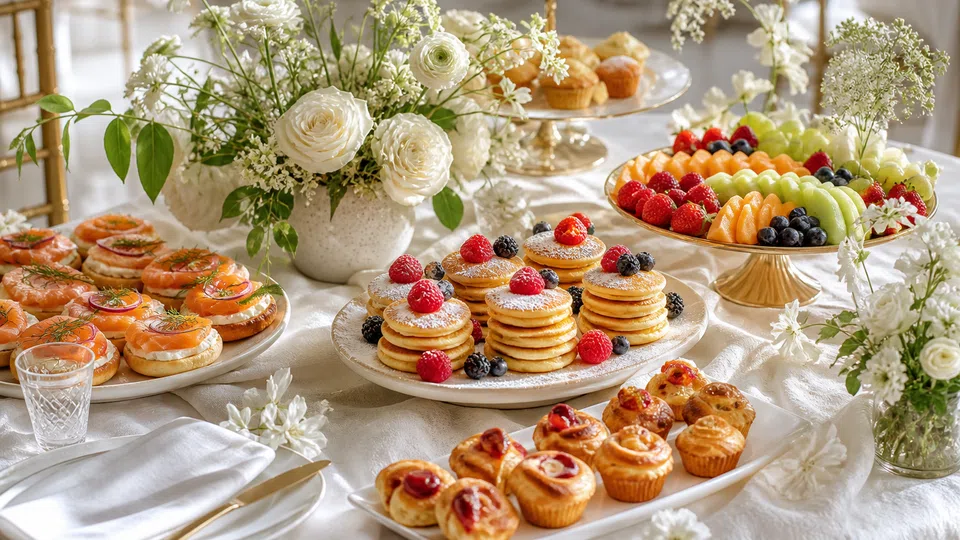
Direct answer for wedding brunch menu ideas
Three workable menu structures are: vegetable-and-egg bake with fruit and rolls; pancakes with one savory protein or bean dish and berries; or sliders with salad, fruit, and small cake pieces. Pick one structure, not all three. The menu should have contrast in color, temperature, flavor, and texture, and it should fit the available oven, refrigerator, serving line, and staff.
University of Minnesota Extension advises that quantity-food planning begin with the menu and recipes, but also consider equipment, location, time, labor, dietary concerns, and type of service. For groups of 25 or more, it recommends standardized quantity recipes rather than blindly multiplying family-size baking formulas.
What the term means
A wedding brunch can be the reception meal, a next-day gathering, or a pre-wedding meal. The reception requires formal venue and caterer coordination. A next-day household brunch may be smaller and more flexible. A pre-wedding meal needs a strict timeline and low cleanup.
“Wedding” does not make a home recipe suitable for commercial service. Venue contracts, local food codes, licensed kitchens, alcohol rules, and caterer procedures may apply. This article offers menu decisions only; it does not override the professionals responsible for the event.
For the wider meal category without wedding constraints, use the Brunch at Mr. Pancake Munich: A Focused Guide.
Practical options and examples
| Service style | Menu core | Advantage | Constraint |
|---|---|---|---|
| Plated | Savory main, fruit, bread, dessert | Portion and timing control | More staff and coordination |
| Staffed buffet | Casserole, protein, vegetables, bread | Choice and faster service | Holding and serving-line management |
| Self-serve buffet | Sliders, labeled sides, small sweets | Informal and flexible | Guest contact and portion loss |
| Family style | Shared frittata or bake, fruit, rolls | Warm and social | More serving pieces and table space |
| Next-day drop-in | Toast or bowl bar | Uses modular components | Requires clear labels and replenishment |
Choosing the right approach
Start with guest movement. Seated guests can use cutlery; standing guests need hand-held food. Then check the venue’s heat and cold capacity. A menu with chilled seafood, egg casserole, whipped desserts, and cut fruit needs more refrigeration than a hall may provide. Ask who monitors temperature and replaces trays.
Three scenarios:
- Seated morning reception: vegetable-and-cheese bake or catered egg main, herb potatoes, fruit, rolls, small citrus cake.
- Informal buffet: brunch sliders, a vegan potato-bean tray, fruit, salad, and cookies.
- Next-day family brunch: pancakes, eggs or tofu scramble, berries, coffee and tea, with the group small enough for batch cooking.
Common mistakes
Do not select a menu before knowing whether outside food is allowed. Do not let décor decide allergen safety: a shared “beautiful grazing table” can create cross-contact and temperature problems. Avoid several made-to-order stations unless staffing supports them.
Do not promise exact quantities from a generic online chart. Guest count, age, meal duration, time of day, service style, and recipe yield all matter. Use caterer calculations or standardized recipes. Do not top up an old buffet tray with fresh food.
Step-by-step checklist
- Define whether this is the reception, pre-event, or next-day meal.
- Confirm venue, caterer, kitchen, licensing, and outside-food rules.
- Collect guest dietary and allergen information.
- Choose plated, buffet, family, or drop-in service.
- Select one centerpiece and a verified alternative.
- Add fresh contrast, one starch, drinks, and one small dessert.
- Use standardized quantity recipes or the caterer’s production plan.
- Map every item to preparation, transport, holding, replenishment, and cleanup.
- Label ingredients and assign separate utensils.
- Assign a person responsible for food-safety monitoring.
- Cool and store leftovers only under venue/caterer procedures.
- Keep a final menu and allergen record.
Variations by event style
For a refined tea-style wedding, use finger sandwiches, scones, and small cakes, but ensure portions amount to the intended meal. Tea party brunch ideas explains that structure. For a standing reception, brunch sliders addresses assembly and holding. For a small next-day group, brunch ideas for small group is the narrower route.
A berry table can work when the fruit is handled and held safely; see berry brunch. A vegan option should be a complete dish, not just fruit and bread; vegan breakfast foods provides a modular plan. Pancakes World is the brand home and does not imply that every wedding needs pancakes.
Storage or planning notes
For a professional reception, follow the caterer’s food-safety plan and local regulation. For an exempt private gathering, Minnesota Extension still recommends suitable hot and cold holding, avoiding bare-hand contact with ready-to-eat food, individual utensils, clear allergen communication, and prompt leftover handling.
Prepare labels, signage, and stable décor early. Leave cut fruit, filled sandwiches, hot food, and final garnish to the documented production schedule. Keep crisp and wet components apart. If transportation is required, use equipment designed to hold temperature and secure containers against spills.
A coherent menu test
Read the final menu aloud and ask five questions: What is the main? What can a vegan or vegetarian guest eat as a real plate? Where is the fresh or acidic contrast? Which item requires the most last-minute work? Who controls its temperature? If any answer is unclear, simplify.
The wedding menu should support hospitality, photographs, speeches, and conversation. Operational clarity is part of elegance: short serving lines, readable labels, enough utensils, and food that remains pleasant during the actual service window.
Translate the menu into a production sheet
Give every dish an owner, quantity source, preparation location, transport container, holding method, serving vessel, utensil, label, setup time, and removal time. “Fruit platter” is not a complete task until someone knows who washes and cuts it, where it stays cold, and when the first tray goes out.
Professional caterers will normally maintain their own production and safety records. The couple’s planning sheet should align with—not replace—that system. One named coordinator should reconcile menu wording, dietary responses, venue requirements, and the caterer’s final proposal.
Design a fast buffet line
Put plates first, then the main, sides, bread, condiments, and cutlery. Drinks usually work better at a separate station. Duplicate a popular utensil or dish position only if service staff and table width support it. Place labels before the dish so guests can decide without stopping over the food.
Use small pans that staff can replace. Never pour fresh food over an old pan. Keep dietary alternatives in clearly separate vessels, ideally with distinct utensils and a service position that limits spillover. Decorative greenery must not obscure labels or touch food unless verified food-safe.
Questions for a caterer or venue
- Which kitchen and holding equipment are included?
- Who is legally and operationally responsible for food safety?
- How are allergies and cross-contact requests documented?
- May outside cake, cookies, or family dishes enter the venue?
- How long is the planned service window?
- What happens to leftovers, and may guests take them?
- Are coffee, tea, water, ice, cups, and staff included?
- When is the final guest count due?
These questions do not assume an answer. They expose costs and constraints early enough to change the menu.
Protect the morning timeline
If brunch precedes the ceremony, finish food service well before dressing, travel, and photography. Avoid raw-egg work, griddle stations, and extensive cleanup at home unless a separate team owns them. If brunch is the reception, build the schedule around the venue’s service and speech plan. If it is next-day, allow a flexible arrival window and select a menu that can be replenished safely.
Honest cost control
Use current written quotes and local prices; this article invents none. Cost can fall when the menu uses one main, seasonal produce, a simple bread, and a small dessert instead of multiple stations. But self-catering shifts cost into labor, equipment, transport, refrigeration, and responsibility. Compare the complete plan, not ingredient receipts alone.
Final approval boundary
Freeze the menu only after guest needs, venue permission, caterer feasibility, and service equipment agree. A mood board or tasting preference cannot bypass those gates. Keep the final version dated so staff do not work from an earlier draft.
Sources
- University of Minnesota Extension — Planning the quantity food occasion — https://extension.umn.edu/cooking-safely-crowd/planning-quantity-food-occasion — quantity recipes, equipment, location, labor, service, and dietary planning.
- University of Minnesota Extension — Cooking safely for a crowd — https://extension.umn.edu/home-kitchen/cooking-safely-crowd — event controls, transport, holding, ready-to-eat handling, and allergens.
- University of Minnesota Extension — Service style risks and safe practices — https://extension.umn.edu/cooking-safely-crowd/service-style-risks-and-safe-practices — plated, buffet, family, and potluck risk differences.
Evidence checked 16 August 2026. Venue, caterer, and local legal requirements control the actual event.