Mother's Day brunch recipes
Direct answer for Mother's Day brunch recipes
At Pancakes World, the easiest Mother's Day brunch is a small menu built around one hot centrepiece, one cold or make-ahead side, fresh fruit, and drinks. For a relaxed table, choose a pancake stack or croissant bake, add yoghurt and fruit, and prepare toppings before anyone sits down. For a savoury brunch, use one baked egg dish with toast and a crisp salad. For breakfast in bed, keep the tray compact: two small pancakes or toast, fruit in a bowl, and a drink with a secure lid. Choose recipes the guest of honour actually likes, check dietary needs first, and avoid a menu that needs every hob ring at the same time.
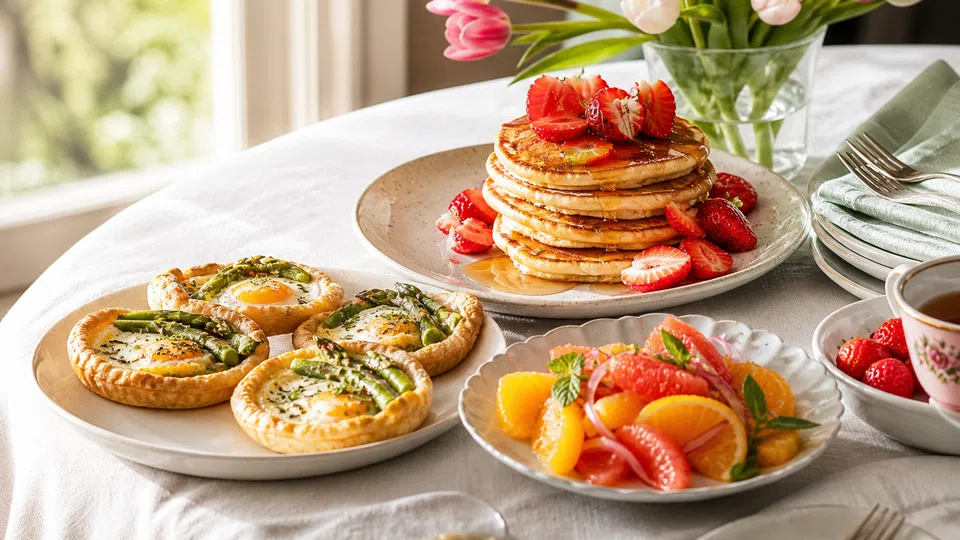
This is a menu-building guide, not a claim that one dish is the “best” Mother's Day choice. Good Food's Mother's Day collection shows that the intent spans pancakes, waffles, baked eggs, fritters, French toast, and fruit-led bowls. The practical job is to select a combination that fits the people, kitchen, and serving time. For more general planning, see the Brunch at Mr. Pancake Munich: A Focused Guide and the focused make-ahead brunch guide.
Start with the person, not a showpiece
Mother's Day menus often become complicated because the cook chooses impressive-looking dishes before checking what the recipient enjoys. Begin with four quiet questions:
- Does she prefer sweet, savoury, or a mixture?
- Would she enjoy breakfast in bed, a shared family table, or a later brunch?
- Are there allergies, dietary requirements, or foods she simply dislikes?
- How much cooking can happen without turning the celebration into a wait?
The answers decide the menu more reliably than a long recipe collection. A recipient who prefers a simple pot of tea and warm pancakes does not benefit from six competing dishes. A larger family may need a sliceable bake and self-service sides rather than individual eggs cooked to order.
Keep children involved through low-risk, age-appropriate jobs such as setting napkins, washing suitable fruit, spooning yoghurt, or arranging toppings under adult supervision. Raw flour, raw batter, knives, hot pans, and ovens remain adult-controlled tasks. If a recipe includes raw flour or egg, follow its cooking instructions and the relevant food-safety guidance.
Three workable Mother's Day brunch menus
Menu 1: Pancakes, fruit, and yoghurt
Use a familiar pancake recipe as the one item cooked close to serving. Prepare washed fruit, yoghurt, syrup, butter, and any labelled allergen information beforehand. Put toppings in small bowls so everyone can build a plate without the cook assembling each stack.
This menu works when the table is small and the cook can make pancakes in repeatable batches. Do not add waffles, fried eggs, and French toast unless someone else can own that equipment and timing. If several people are eating, keep early pancakes warm only by the method and duration the chosen recipe supports; otherwise serve in two fresh rounds.
For a more distinctive pancake table, the berry brunch guide can help separate juicy toppings from items that should stay crisp. Keep the Mother's Day page focused on the celebration menu rather than turning it into a berry-only route.
Menu 2: Baked savoury centrepiece
Choose one validated baked egg dish, vegetable tart, or breakfast casserole that can be portioned at the table. Add toast or rolls, a dressed salad, and fruit. The benefit is operational: the centrepiece cooks as one item instead of demanding several individual pans.
Do not combine timings from unrelated recipes. A frittata, croissant bake, and bread pudding may all be called brunch bakes, but their ingredients, depth, and doneness controls differ. Follow the complete recipe selected. If eggs are served lightly cooked, use ingredients and handling that comply with current local guidance and the needs of the people eating.
Menu 3: A compact breakfast tray
For breakfast in bed or a quiet two-person morning, choose food that can be carried without open pans, unstable glasses, or sauces likely to spill. A practical tray might hold two small pancakes or a slice of baked item, a bowl of fruit, yoghurt in its own cup, cutlery, napkin, and tea or coffee in a stable vessel.
Keep the tray lighter than a full buffet. Avoid a runny poached egg, overloaded pancake stack, or large bowl balanced near the edge. Carry hot drinks separately if needed. The point is a calm gesture, not a photographic arrangement that is awkward to eat.
Menu decision table
| Situation | Hot centrepiece | Make-ahead side | Last-minute job |
|---|---|---|---|
| Two people | Small pancake batch | Washed fruit and yoghurt | Brew drinks and cook the final pancakes |
| Family table | Sliceable egg or croissant bake | Fruit bowl and laid table | Bake or reheat exactly as the recipe directs |
| Vegetarian table | Vegetable egg dish or tested plant-based bake | Bread, fruit, and salad | Dress salad and portion the hot dish |
| Breakfast tray | Two small pancakes or one neat slice | Fruit cup | Add the hot item and drink immediately before carrying |
| Limited equipment | One-pan or one-dish recipe | Cold sides | Use the single heat source for the centrepiece only |
The table is a planning tool. It does not replace the recipe's ingredient, allergen, cooking, cooling, or reheating instructions.
A preparation timeline
The day before
- Confirm the guest count, serving time, preferences, and dietary needs.
- Choose one complete recipe for each prepared dish; do not assemble a hybrid from snippets.
- Shop, check labels, and make sure the necessary tin, pan, or griddle is available.
- Prepare only components the recipe explicitly allows to be made ahead.
- Set out non-food items such as plates, cups, napkins, a tray, and serving utensils.
If using a baked dish that is assembled ahead, refrigerate it as its recipe directs. Do not leave an egg- or dairy-containing dish on the counter simply to save time in the morning. If a baked cake or bread has different storage instructions, follow those rather than applying an egg-dish rule to everything.
Ninety minutes before serving
Clear the work area and empty the sink or dishwasher. Take out the serving dishes, but keep perishable food under controlled storage until it is needed. Read the final cooking sequence from start to finish. If the hot centrepiece needs the oven, avoid choosing a second item that requires a conflicting temperature at the same time.
Wash and prepare fruit with clean tools. Keep it separate from raw egg, raw meat, and raw flour work. Make cold sauces or dressings only as their recipe permits, then return them to the correct storage.
Thirty minutes before serving
Cook or finish the centrepiece. Set out cold items in portions appropriate to the table rather than exposing all reserves at once. Brew drinks late enough to serve them properly but early enough that the cook is not handling a hot pan and a full kettle simultaneously.
If pancakes are the centrepiece, cook one test pancake before guests sit down. Confirm the pan heat and portion, then repeat the batch. For a calmer service plan, review brunch for a small group rather than scaling a recipe by guesswork.
At the table
Serve the hot item promptly. Keep serving utensils with their own dishes, particularly where allergens or raw-to-ready separation matter. Tell guests which items meet their requirements without making unverified “free from” promises.
Practical recipe categories
Pancakes and waffles
These are attractive when the cook enjoys working in batches. Pick one batter and one appliance. Prepare toppings first, measure portions consistently, and avoid inventing holding times. A pancake board can be simple: fruit, yoghurt, syrup, butter, and one crunchy topping are enough.
Baked French toast or croissant bake
A bake can move work away from the hob and may suit a family table. Use a recipe that states whether it can be assembled ahead, how it must be stored, and how to judge that it is cooked. Do not assume every custard-soaked bread dish shares the same overnight or reheating rules.
Baked eggs, frittata, or shakshuka
These provide a savoury anchor. Choose among them by equipment and serving style: a sliceable dish is useful for a group, while a pan served immediately suits a smaller table. Follow local egg guidance and the selected recipe. The Food Standards Agency advises careful cooking and following recipe or packet instructions; its caterer guidance also distinguishes fully cooked egg dishes from lightly cooked ones using specified egg assurance routes.
Fruit, yoghurt, and cereal
Cold components give the menu colour and contrast without consuming the hob. Keep washed fruit in a clean container, use separate serving spoons, and maintain required refrigeration for yoghurt and other perishables. Do not make a nutrition claim merely because the table includes fruit.
Breads, scones, and pastries
These make useful supporting items when bought from a trusted source or prepared from a validated recipe. They should support the centrepiece, not create a second production line. Label or retain packaging information if guests need to check ingredients.
Food-safety boundaries for a celebration brunch
The UK Food Standards Agency advises following cooking temperature and time guidance from the recipe or packaging and checking that food is cooked properly before serving. Its current leftovers guidance says properly cooked food should be cooled and refrigerated within two hours, eaten within 48 hours or frozen, and reheated only once until steaming hot throughout. Those limits apply within the FSA's UK guidance and should not be stretched by appearance or smell.
Use that guidance only for the claims it supports. It does not say every Mother's Day recipe can be made ahead, nor does it validate a specific casserole, hollandaise, or pancake formula. The selected recipe remains the source for its method; official guidance supplies the safety boundary.
Keep raw egg, meat, and flour work away from ready-to-eat fruit and tableware. Wash hands and tools between tasks. If meat is part of the menu, use the applicable official endpoint rather than colour alone. If a guest is pregnant, older, very young, immunocompromised, or has a medical dietary restriction, use advice suitable to that situation rather than a general brunch article.
Common planning mistakes
- Choosing several dishes that all need the oven at different temperatures.
- Making pancakes, waffles, and individual eggs with only one cook.
- Assuming “make ahead” applies to a whole collection rather than a specific recipe.
- Waiting until the morning to ask about allergies or preferences.
- Copying attractive menu language without checking whether the dishes work together.
- Leaving hot drinks, knives, or raw batter as unsupervised children's tasks.
- Treating a large breakfast tray as easier to carry because it looks generous.
- Holding or reheating food by guesswork.
- Calling one menu “healthy,” “best,” or suitable for everyone without evidence.
Final Mother's Day brunch checklist
- Ask what the guest of honour would genuinely enjoy.
- Confirm dietary needs and current ingredient labels.
- Pick one hot centrepiece.
- Add one make-ahead or cold side, fruit, and drinks.
- Use complete, source-tested recipes.
- Assign equipment and cooking times before shopping.
- Prepare only what each recipe allows in advance.
- Keep raw work separate from ready-to-eat food.
- Give children safe, supervised tasks.
- Serve the celebration rather than performing an overbuilt menu.
Pancakes World treats celebration food as a practical act of care: a menu should fit the person and the kitchen before it tries to impress anyone.
Sources and editorial references
- Food Standards Agency — “Cooking your food” —
https://www.food.gov.uk/safety-hygiene/cooking-your-food - Food Standards Agency — “Safer food, better business for caterers” —
https://www.food.gov.uk/sites/default/files/media/document/sfbb-caterers-pack-fixed_0_3.pdf - Good Food — “Mother's Day brunch recipes” —
https://www.bbcgoodfood.com/recipes/collection/mothers-day-brunch-ideas - Good Food — “Mother's Day breakfast ideas” —
https://www.bbcgoodfood.com/howto/guide/top-10-breakfast-recipes-mothers-day