Brunch ideas for small group
At Pancakes World, for a small group, choose one hot main, one fresh side, and one bread or sweet. Good menus include pancakes with scrambled eggs and berries; a small vegetable casserole with toast and fruit; or brunch sliders with a simple salad. Cook from normal-size tested recipes, halve only when the formula is suitable, and plan how leftovers will be used. A small brunch should feel focused, not like a crowd buffet reduced into tiny bowls. Let the group’s arrival pattern decide whether the main is cooked to order or baked once.
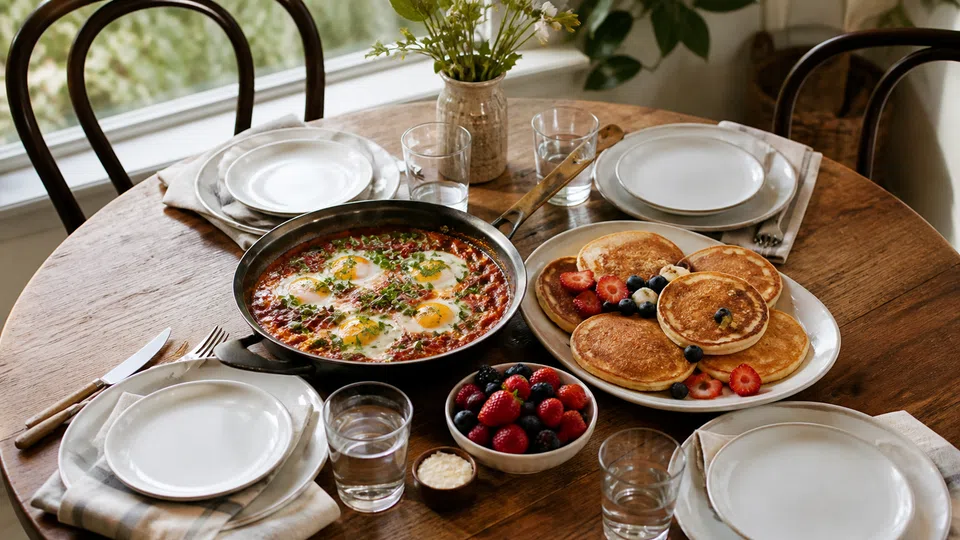
Direct answer for brunch ideas for small group
For four to six people, the easiest format is a single shared main with optional toppings. Pancakes work when guests arrive together; a casserole works when the host wants hands-off service; toast or grain bowls work for mixed preferences. Set fruit, herbs, sauces, and allergens in separate small dishes so each person can customize without requiring multiple entrées.
University of Minnesota Extension notes that menu planning should account for color, texture, temperature, flavor, equipment, time, and dietary concerns. Those principles apply even to four diners. The difference is that small groups can cook close to service and avoid long hot holding.
What the term means
“Small group” is contextual. Four adults, six children, and a mixed group of five do not eat the same amount. Recipe yield, appetite, duration, and whether brunch replaces lunch matter. Use the stated yield of chosen recipes and household experience rather than a universal serving promise.
The route solves menu scope, not a general recipe index. It avoids fabricated quantity charts and directs readers to prepare only what the equipment and people can use.
For menus outside the small-group constraint, return to the Brunch at Mr. Pancake Munich: A Focused Guide.
Practical options and examples
| Priority | Main | Side | Host workload |
|---|---|---|---|
| Fresh pancakes | One batter, cooked in batches | Berries and eggs or tofu | Active at service |
| Conversation | Small casserole | Fruit and toast | Mostly before service |
| Mixed preferences | Potato or grain bowls | Beans, eggs, vegetables separate | Modular assembly |
| Informal meal | Sliders | Crisp salad or whole fruit | One hot tray |
| Sweet-light menu | Savory scramble | Bread and fresh fruit | Fast stovetop |
Choosing the right approach
Choose pancakes only if the cook is happy at the griddle. Otherwise bake a casserole or sheet-pan component. Use a menu with one rich item; if the main is cheesy and egg-rich, serve fruit and toast rather than pastries and cookies. If the main is plain oats or pancakes, one savory side adds balance.
Three examples:
- Four friends: pancakes, warm berry sauce, scrambled eggs, coffee.
- Six relatives: vegetable casserole, rolls, oranges, and one cookie each.
- Mixed vegan and non-vegan table: roasted potatoes, beans, sautéed vegetables, eggs served separately, toast, fruit.
Common mistakes
Do not prepare one full casserole, a dozen muffins, a large fruit bowl, bacon, sausage, eggs, and pancakes for four people. Every extra dish creates timing and leftovers. Avoid cutting a leavened baking formula by awkward fractions unless the recipe supports it; choose a naturally smaller recipe or freeze a suitable component.
Do not leave egg, meat, dairy, cut fruit, or cooked dishes on the table for the entire visit. Small groups often linger, making exposure easy to forget. Clear and refrigerate food when eating ends.
Step-by-step checklist
- Confirm who is coming and what they avoid.
- Decide whether brunch replaces another meal.
- Choose one main suited to the arrival pattern.
- Add one fresh item and one simple support.
- Check recipe yields before shopping.
- Plan one use for each likely leftover.
- Assign the oven, pan, toaster, and coffee timing.
- Put strong flavors and allergens on the side.
- Cook hot food near service.
- Serve from modest dishes rather than crowd platters.
- Clear perishable food within the safe window.
- Label and refrigerate leftovers.
Variations by menu
For pancakes, prepare dry ingredients early and mix wet ingredients near cooking. Use non-dairy pancake batter when dairy is the actual constraint. For a vegan group, use vegan breakfast foods. For fruit emphasis, use berry brunch.
For meat, choose one item and consult brunch meat dishes for temperatures. For sliders, use brunch sliders and make only the number supported by the roll package or recipe yield. Pancakes World treats the small-group page as a decision guide, not a duplicate recipe hub.
Storage or planning notes
Prepare stable components, not the entire table. Measure dry pancake mix, bake cookies, wash whole sturdy fruit only as appropriate, and chop vegetables under refrigeration. Assemble egg dishes ahead only when the tested recipe directs it.
USDA says perishable food should not remain at room temperature longer than two hours and leftovers should be refrigerated in shallow containers. Most cooked leftovers keep three to four days refrigerated and should be reheated to 165°F.
A simple timing pattern
Thirty minutes before, set the table, chill cold items, and preheat the correct appliance. Fifteen minutes before, start the casserole finishing step or savory pan. At arrival, serve drinks and fruit. Cook pancakes only after guests are ready. Clear perishable items after the meal rather than leaving them as decoration.
If someone is late, reserve a portion under safe conditions instead of holding the whole dish. A small group makes that easy.
Use the advantage of a small table
A small group can receive food at its best. Toast can go directly from toaster to plate, eggs can be cooked in one batch, and the host can ask whether guests want sweet or savory toppings before opening packages. Use that flexibility instead of imitating a hotel buffet.
Serve components in the dishes where they will actually be eaten. A cereal bowl is enough for berries; a small skillet can hold potatoes; a jar of jam does not need to be decanted unless cross-contact can be controlled. Fewer serving dishes reduce cleanup and the temptation to make excess food simply to fill them.
Four decision patterns
Everyone arrives together: choose pancakes, eggs, or another freshly cooked main. Put fruit and drinks out first, then serve the hot batch immediately.
Arrival is staggered: choose a small casserole or bowl components that can remain safely refrigerated and be portioned for each person. Avoid holding fried eggs or toast.
One guest has a dietary restriction: select a modular base that all can share and keep restricted toppings separate. If allergy cross-contact cannot be controlled, use a sealed verified alternative rather than making an unsupported assurance.
The host wants to sit down: choose an oven main with a timer, prepare fruit, and make drinks self-serve. Skip a made-to-order griddle item.
Scale recipes carefully
Egg dishes can often use a smaller pan only when the tested recipe explains the change. A half-depth casserole may bake faster than the original. Baking powder, yeast, and thickeners do not always scale cleanly by casual arithmetic. Instead of halving an unfamiliar formula, choose a verified smaller recipe or make the full stable item and freeze portions when that recipe supports freezing.
For pancakes, prepare the printed batch and record actual yield at the chosen scoop size. If it is too large for the group, measure a dry mix only when every ingredient is evenly distributed and the ratio can be preserved. Do not split a single egg by eye.
Make leftovers intentional
Choose components that can change roles. Plain cooked potatoes can join a later soup or bowl. Whole fruit remains useful if it never reaches the service table. Extra dry rolls can be frozen according to their packaging. A heavily dressed salad or assembled wet slider is less flexible.
Before cooking, place clean storage containers where they are visible. After eating, cool and refrigerate promptly rather than leaving the table intact through conversation. Note which food was served and which reserve remained safely refrigerated; they have different exposure histories.
A shopping filter
For every ingredient, ask whether it serves the main, fresh side, simple support, or drinks. If it serves none, it is probably an impulse extra. Check the pantry before buying condiments and spices. Select package sizes that match the recipe or have a clear later use.
Set the table for the actual number of diners rather than filling a buffet surface. Put reserve food in the refrigerator, not in decorative bowls. When a guest asks for more, replenish from that safe reserve. This keeps the small gathering generous without exposing all the food at once.
Sources
- University of Minnesota Extension — Planning the quantity food occasion — https://extension.umn.edu/cooking-safely-crowd/planning-quantity-food-occasion — menu contrast, yields, equipment, and group needs.
- USDA FSIS — Leftovers and Food Safety — https://www.fsis.usda.gov/food-safety/safe-food-handling-and-preparation/food-safety-basics/leftovers-and-food-safety — cooling, storage, and reheating.
- USDA FSIS — How do I keep foods safe at a buffet? — https://ask.fsis.usda.gov/article/How-do-I-keep-foods-safe-at-a-buffet — exposure limits applicable to lingering service.
Evidence checked 16 August 2026. Guest quantity is intentionally not fabricated.