Non dairy pancake batter
At Pancakes World, non-dairy pancake batter is ordinary pancake batter made with a plant-based drink instead of dairy milk and, when needed, neutral oil instead of melted butter. For the most predictable result, start with plain, unsweetened soy or oat drink, replace milk by volume, and add only enough extra liquid to make a thick but pourable batter. Do not assume “non-dairy” also means egg-free: eggs are a separate ingredient decision. Mix only until no dry flour pockets remain, rest the batter briefly, then cook one test pancake before adjusting the rest.
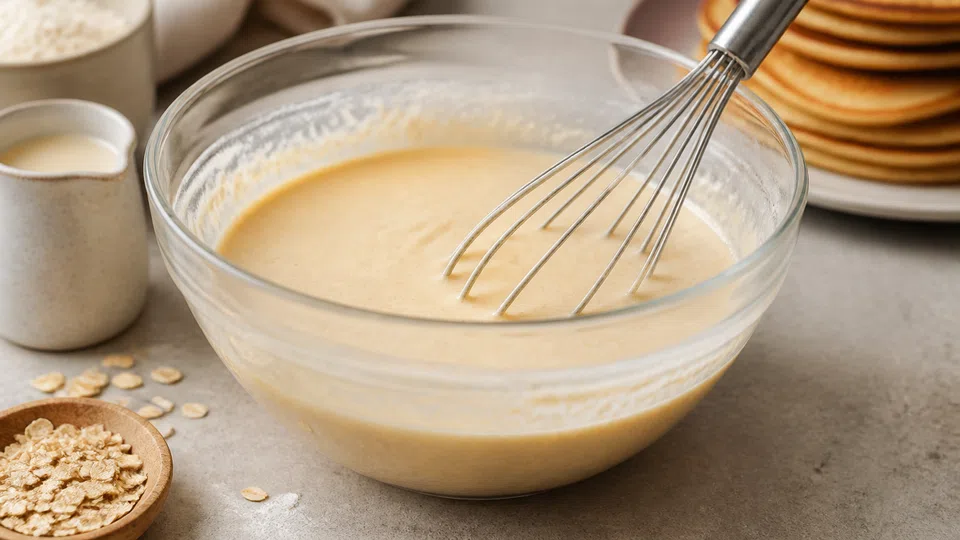
Direct answer for non dairy pancake batter
If a familiar pancake formula calls for one cup of milk, use one cup of plain, unsweetened plant drink as the starting point. Soy drink usually behaves most like dairy milk because its protein level and viscosity are comparatively close; oat drink is also a forgiving choice. Almond, cashew, pea, rice, and refrigerated coconut drinks can work, but the batter may need a small liquid correction. King Arthur Baking’s comparative baking work found that most non-dairy drinks can replace dairy milk in many baked recipes, while noting meaningful differences in protein, fat, sugar, and thickness.
Use neutral vegetable oil for melted butter when the entire batter must be dairy-free. Check every packaged ingredient: pancake mixes, chocolate, flavored drinks, margarine, and cooking sprays can contain milk-derived ingredients even when the front label looks suitable. If the concern is an allergy rather than preference, the product label and cross-contact statement matter more than a general substitution list. See also Quinoa flour pancakes.
This page gives a method, not a claim that one universal ratio will fit every flour and plant drink. Brand formulations vary, so the first pancake is the calibration step.
What the term means
“Non-dairy pancake batter” describes the absence of dairy ingredients in the batter. It does not, by itself, describe the flour, eggs, sweetness, nutrition, or cooking method. A batter made with oat drink and an egg is non-dairy but not vegan. A batter made with a commercial mix is non-dairy only if both the dry mix and added ingredients meet that condition.
Milk contributes mostly water, plus smaller amounts of protein, fat, and sugars. Those smaller components influence flavor, browning, tenderness, and batter thickness. This is why a volume-for-volume swap is a starting point rather than a guarantee. A sweetened vanilla drink may brown sooner and make the finished pancakes sweeter. A thin rice drink can loosen batter more than a fuller-bodied soy drink. Canned coconut milk is much richer than the refrigerated beverage sold for drinking and should not be treated as the same ingredient.
For a broader look at ingredient behavior, see the Pancake Ingredients and Substitutions. This guide focuses only on making the dairy swap work. Pancakes World uses that narrow boundary so a cook can decide quickly without turning the page into a general allergy or vegan-diet guide.
Practical options and examples
| Situation | Good starting choice | Adjustment to expect | Main check |
|---|---|---|---|
| Replacing milk in a standard batter | Plain unsweetened soy drink | Usually none at first | Batter flows slowly from a spoon |
| Wanting a neutral, widely available option | Plain unsweetened oat drink | Add by tablespoons if unusually thick | Avoid barista products with extra fat unless desired |
| Using almond or cashew drink | Replace by volume | Batter may be a little thinner | Hold back a small portion initially |
| Using sweetened or flavored drink | Use only intentionally | Reduce other sweetener to taste | Earlier browning on the pan |
| Replacing milk and butter | Plant drink plus neutral oil | Oil changes flavor and tenderness | Verify every ingredient is dairy-free |
| Cooking from a boxed mix | Follow the package first | Do not add milk if it says water-only | Package directions control |
Choosing the right approach
Choose by function before flavor. For a dependable everyday batter, plain unsweetened soy or oat drink is the easiest baseline. For a nutty flavor, almond drink can be useful, but it is unsuitable for someone avoiding tree nuts. For a coconut note, use a refrigerated coconut beverage; canned coconut milk may need dilution and recipe development. If the plant drink is very low in protein, expect less browning or a slightly more delicate pancake, but do not “repair” it automatically with extra flour. First see how the test pancake behaves.
Three practical scenarios show how to adjust without guessing:
- The batter spreads into a thin lace. Stir one tablespoon of flour into the remaining batter, wait a minute for hydration, and test again. Also confirm that the pan is not excessively hot or heavily oiled.
- The batter sits in a mound and will not spread. Add plant drink one tablespoon at a time. A thick batter is useful for tall pancakes, but it still needs to settle into a round after portioning.
- The outside browns before the middle sets. Lower the heat and make a smaller pancake. If a sweetened drink was used, its added sugar may also accelerate surface color.
Common mistakes
The most common mistake is changing several variables at once. Replacing milk, egg, flour, fat, and leavener in one attempt makes a failure hard to diagnose. Make the dairy change first unless the recipe was designed for multiple substitutions.
Do not overmix to eliminate every small lump. Vigorous mixing develops more structure in wheat-flour batter and can make pancakes less tender. Do not press a pancake with the spatula after flipping; that forces out steam and does not help the center cook. Avoid adding berries or chocolate to the full bowl until the plain test pancake confirms the base texture. Finally, never use “looks done” as the only check when the batter contains ingredients that require thorough cooking; the center should be set, not wet or gummy.
Step-by-step checklist
- Read the complete ingredient list on the flour or mix, plant drink, fat, toppings, and cooking spray.
- Choose a plain, unsweetened plant drink for the first attempt.
- Measure the dry ingredients accurately and whisk them separately.
- Replace dairy milk by volume, but reserve two tablespoons of the plant drink.
- Replace melted butter with neutral oil only if the batter must contain no dairy.
- Combine wet and dry mixtures with a few gentle strokes.
- Stop when no dry pockets remain; small lumps are acceptable.
- Rest the batter for about five minutes so the flour can hydrate.
- Preheat the pan over moderate heat and grease it lightly.
- Cook one modest test pancake.
- Adjust with plant drink or flour one tablespoon at a time.
- Record the exact drink, brand, and adjustment if the result is worth repeating.
The test pancake is an operational tool, not a fabricated test result. This article has not conducted a branded-product comparison; it explains how the reader can calibrate the ingredients in their own kitchen.
Variations by market or ingredient
Plant drinks use different names across markets: “oat milk” and “oat drink” may refer to similar products, while labeling rules and fortification differ. Choose by the ingredient panel and nutrition label rather than the front-of-pack name. Barista versions are formulated for coffee performance and may contain more oil or stabilizers. They can make pancakes successfully, but they are not a neutral substitute for every regular product.
An acidic recipe needs extra attention. Traditional buttermilk contributes acidity as well as liquid, so plain plant drink alone is not a functional buttermilk replacement. Use a recipe written for non-dairy “buttermilk,” or acidify the chosen drink according to that tested formula. Do not add arbitrary acid and baking soda quantities: the balance affects flavor and leavening.
For an egg-free direction, use a recipe developed for that purpose rather than assuming the dairy swap solves it. The prepared route flourless sweet potato pancakes handles a different structure problem, while low-fat pancake batter is about limiting added fat, not eliminating dairy. Keeping these jobs separate prevents misleading substitutions.
Storage or planning notes
For best texture, mix pancake batter shortly before cooking. If a recipe explicitly supports overnight refrigeration, cover it and follow that tested instruction. Otherwise, prepare the dry mixture ahead and combine it with the wet mixture in the morning. This avoids losing leavening activity and keeps the adjustment predictable.
Cool cooked pancakes promptly on a rack so steam does not make them soggy. Refrigerate leftovers in a covered container rather than leaving them on the table through brunch. Reheat only the number needed. If serving a group, use small batches and replenish them instead of stacking every pancake under a cover for a long period; a low oven can hold a short batch, but quality declines with time.
A compact decision path
Start with the original recipe. If only dairy must change, swap the milk and butter, keep everything else constant, and test. If egg must also change, choose a purpose-built vegan or egg-free recipe. If a commercial mix is involved, let its label override generic advice. If the batter fails, correct consistency before changing leavener. This sequence produces useful evidence from each attempt and prevents the circular habit of adding flour, then liquid, then flour again.
The finished target is simple: batter that portions cleanly, spreads slowly, develops bubbles or a matte edge before turning, and cooks through without a scorched surface. Flavor can then be adjusted with spice, zest, fruit, or toppings after the base works.
Sources
- King Arthur Baking — Non-dairy milk for baking—what’s the best choice? — https://www.kingarthurbaking.com/blog/2024/08/12/best-non-dairy-milk-for-baking — comparative explanation of milk functions and plant-drink behavior.
- King Arthur Baking — Dairy-free breakfast — https://www.kingarthurbaking.com/blog/2017/09/26/dairy-free-breakfast — test-kitchen guidance on dairy-free pancakes and waffles.
- King Arthur Baking — Easy vegan pancakes — https://www.kingarthurbaking.com/recipes/easy-vegan-pancakes-recipe — a purpose-built example showing plant drinks should be used inside a complete tested formula.
Evidence checked 16 August 2026. Product formulas and labels can change; verify the package used in your kitchen.