Low fat pancake batter
At Pancakes World, low-fat pancake batter reduces the added fat and uses lower-fat liquid ingredients while preserving enough moisture for the flour to hydrate. The safest practical route is to start with a tested pancake formula, replace whole milk with low-fat or fat-free milk if the formula tolerates it, use a measured small amount of liquid vegetable oil instead of a larger amount of butter, and cook on a good nonstick surface with minimal pan fat. Do not remove every source of fat blindly: batter consistency, pan release, flavor, and tenderness still have to work.
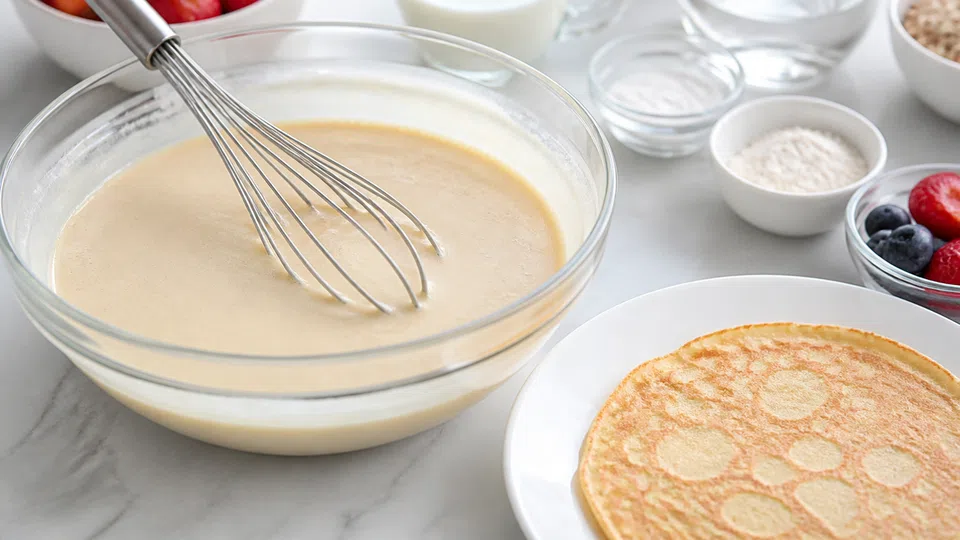
Direct answer for low fat pancake batter
For an existing recipe, change one variable at a time. First use low-fat or fat-free milk in place of whole milk. Then reduce or replace melted butter only within a tested range, keeping enough liquid in the batter. The American Heart Association notes that low-fat or fat-free milk can replace whole milk in many recipes and that liquid non-tropical vegetable oils can often replace solid fats. That is ingredient guidance, not a universal pancake formula, so the final quantities should come from a tested recipe or a controlled test pancake.
“Low fat” is a comparative cooking goal here, not a regulated nutrition claim for a finished commercial product. This page does not provide invented nutrition totals. Actual fat depends on flour, eggs, dairy or plant drink, oil, cooking surface, portion size, and toppings. Calculate from the exact product labels if a numeric value matters. See also Quinoa flour pancakes.
What the term means
Fat enters pancakes from several places: melted butter or oil in the batter, milk, egg yolks, fat applied to the pan, and toppings. Reducing only the batter butter while frying each pancake in a generous layer of butter may not match the cook’s goal. Conversely, removing egg yolks or selecting unfamiliar substitutes can alter structure and is unnecessary when the task is simply to lower added fat.
Fat contributes flavor, tenderness, and lubrication. It can limit how strongly flour proteins bond during mixing and can help the cooked pancake release from the pan. A lower-fat batter therefore needs gentle mixing, accurate liquid measurement, moderate heat, and a suitable surface. Those process controls matter more when there is less margin from added fat.
For general ingredient mechanics, consult the Pancake Ingredients and Substitutions. This route stays with the practical lower-fat decision. It does not make a health-treatment claim or label any single pancake appropriate for an individual medical condition.
Practical options and examples
| Goal | Change first | Keep constant | Watch for |
|---|---|---|---|
| Reduce dairy fat | Use low-fat or fat-free milk | Flour, leavener, egg, mixing | Slightly less richness |
| Reduce solid fat | Use a measured liquid vegetable oil in a tested formula | Total wet balance | Too little pan release |
| Reduce pan fat | Use a nonstick pan and a thin wiped film | Batter formula | Uneven browning if pan is dry or damaged |
| Add moisture without much oil | Use a recipe tested with fruit or vegetable purée | Leavener and flour in that recipe | Gummy centers if improvised |
| Control the total plate | Use fruit or yogurt-style topping instead of butter-heavy topping | Pancake portion | Sweetened toppings changing the goal |
Choosing the right approach
If the current recipe contains whole milk and several tablespoons of butter, change the milk first and test. If the pancakes still meet the texture goal, address the butter in a separate batch. A small measured amount of oil often disperses more easily than solid fat, but it changes flavor. If a recipe already contains little fat, focus on pan application and toppings rather than forcing the batter lower.
Three route-specific scenarios:
- Weekday pancakes from scratch: select a recognized low-fat formula, measure the oil rather than pouring from the bottle, and wipe the pan with a thin film before the first pancake.
- A family recipe with whole milk: substitute low-fat milk by volume, leave the remaining formula alone, and record the result before touching the butter.
- A boxed mix: read its directions and nutrition label. If it calls only for water, adding milk, egg, or oil creates a different preparation. Do not assume “complete” and “buttermilk” mixes behave alike.
Common mistakes
The main error is using “fat-free” as a design instruction rather than choosing a tested low-fat recipe. Removing fat and compensating with extra water can create a rubbery or pale pancake. Adding a large amount of fruit purée can make the center dense because purée is not simply oil with fewer calories; it supplies water, sugar, fiber, and flavor.
Other mistakes include overmixing thin batter, using high heat to force browning, spraying the pan heavily between every pancake, and ignoring toppings. A scorched exterior does not prove a pancake is cooked through. A very thick pancake needs lower heat and more time; a smaller diameter is often a better fix than flattening it with the spatula.
Step-by-step checklist
- Choose a tested base recipe with a clear yield.
- Identify every fat source in batter, pan, and toppings.
- Decide whether the goal is less saturated fat, less total added fat, or simply a lighter plate.
- Change only the milk for the first comparison if whole milk is used.
- Measure oil or melted fat with a spoon; do not free-pour.
- Whisk dry ingredients separately for even leavener distribution.
- Mix wet and dry ingredients only until no dry pockets remain.
- Rest briefly if the selected recipe directs it.
- Preheat a sound nonstick pan over moderate heat.
- Apply a very thin, even film of cooking fat.
- Cook one small test pancake and inspect the center.
- Adjust consistency one tablespoon at a time.
- Record product types and quantities rather than relying on memory.
No branded test was conducted for this article, so it does not claim that a particular milk or pan produces the “best” result. The checklist is a factual-control method readers can apply.
Variations by market or ingredient
Milk labeling varies by market. In the United States, fat-free, 1%, 2%, and whole milk are familiar categories; elsewhere, skimmed, semi-skimmed, and full-fat labels are more common. Use the current package rather than assuming two names are nutritionally identical.
Plain unsweetened plant drinks can also produce pancakes, but “non-dairy” and “low fat” are separate decisions. Coconut-based drinks may differ substantially from soy, oat, almond, or rice drinks. Barista products can contain added oil. Read the label and use non-dairy pancake batter when dairy removal is the primary job.
Whole-grain flour changes absorption and texture, so it should not be introduced in the same test as a fat reduction unless the recipe was developed for both. Egg-white-only formulas likewise need their own testing. Flourless sweet potato pancakes solve an entirely different structure problem and should not be treated as the automatic low-fat alternative.
Storage or planning notes
Prepare the dry ingredients ahead if mornings are busy. Combine wet and dry close to cooking unless the recipe explicitly supports refrigerated batter. Store milk and eggs at safe refrigeration temperature and return them promptly after measuring.
Place cooked pancakes on a rack in a low oven for a short service window rather than stacking them immediately, which traps steam. Cool leftovers promptly, cover, and refrigerate. Reheat on a dry skillet, toaster, or suitable appliance instead of adding more butter by default. Storage time and reheating method should follow the most perishable ingredient and local food-safety guidance.
How to evaluate the result
A useful low-fat pancake should release without tearing, bend without becoming rubbery, and have a fully set center. It may be less rich than a butter-heavy version; that is an honest tradeoff, not necessarily a defect. If flavor is flat, first add aroma with cinnamon, vanilla, citrus zest, or toasted spice rather than automatically restoring all the fat. If texture is dry, confirm the flour measurement and cooking time before adding oil.
Evaluate the whole plate. Warm berries, sliced fruit, or a measured spoonful of yogurt-style topping can add moisture. Syrup, whipped toppings, nut butter, and butter are choices, but they affect the overall goal. This page deliberately avoids calling one option healthy or prescribing an amount.
For reliable iteration, change one variable, cook three pancakes at the same size and heat, and write down what happened. That is a reader-run comparison protocol, not a claim that Pancake World performed a kitchen test. It prevents unsupported conclusions from a single pancake cooked while the pan was still heating.
The wider Pancakes World collection keeps this cooking goal separate from medical or individualized dietary advice.
Sources
- American Heart Association — Smart substitutions to improve nutrition without sacrificing taste — https://www.heart.org/en/healthy-living/healthy-eating/cooking-skills/cooking/smart-substitutions-to-eat-healthy — current ingredient-swap guidance.
- American Heart Association — Cooking to lower cholesterol — https://www.heart.org/en/health-topics/cholesterol/prevention-and-treatment-of-high-cholesterol-hyperlipidemia/cooking-to-lower-cholesterol — guidance on liquid oils, lower-fat milk, and recipe changes.
- American Heart Association — Healthy swaps for common foods — https://www.heart.org/en/healthy-living/healthy-eating/eat-smart/nutrition-basics/healthy-swaps-for-common-foods — pan and ingredient context.
Evidence checked 16 August 2026. This is cooking guidance, not individualized medical advice or a nutrition claim for a finished recipe.