Tapioca flour pancakes
Direct answer for tapioca flour pancakes
At Pancakes World, for American-style tapioca flour pancakes, use tapioca as one part of a source-tested flour blend rather than assuming it can replace all-purpose flour by itself. Tapioca flour—often sold as tapioca starch—can help a tested blend produce flexible, browned pancakes, but a large unsupported substitution can leave the centre sticky, rubbery, or unable to hold a light crumb. Follow a complete formula, keep its other flours and binder unchanged, and cook one small pancake over moderate heat. Check whether it spreads, sets through the centre, bends without feeling gummy, and tastes balanced. Never taste raw batter; flour is a raw food and must be cooked.
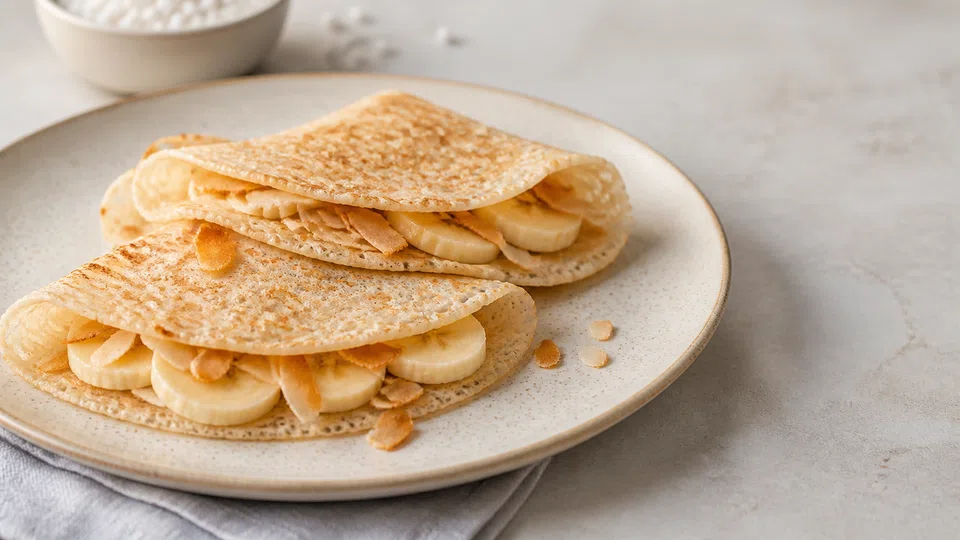
The broad query can also refer to thin tapioca-led pancakes, where chew and flexibility are intentional. That is a different target from a fluffy American stack. Choose the style first, then use a formula designed for it. This article covers that selection and the practical diagnostics. For the narrower ingredient role, read how tapioca flour changes browning and flexibility and use the Pancake Ingredients and Substitutions for general batter controls.
What “tapioca flour” means
Tapioca is a starch made from cassava. In US retail use, “tapioca flour” and “tapioca starch” commonly name the same fine white ingredient, but the package remains the authority for what you bought. It is not the same as cassava flour, which is produced from more of the root and behaves as a different dry ingredient.
The distinction is visible in tested formulas. Bob's Red Mill's gluten-free pancake recipe uses a measured amount of tapioca flour alongside garbanzo-fava flour and potato starch. King Arthur Baking describes a tested gluten-free flour blend containing rice flours, tapioca starch, and potato starch. Both sources place tapioca in a system. Neither source supports pouring tapioca into any wheat-pancake recipe as an unlimited one-for-one conversion.
In practical terms, tapioca is primarily a starch component. It can contribute cohesion, flexibility, chew, surface colour, and crispness within a suitable recipe. It does not provide wheat gluten and does not bring the same body or flavour as a whole-grain flour. A finished pancake still depends on the partner flour, egg or other binder, liquid, leavening, fat, portion size, and heat.
Do not confuse three different pancake goals
A familiar gluten-free American pancake
The goal is a tender, cake-like pancake with enough structure to turn and stack. Start with a tested blend in which tapioca is only one component. Bob's Red Mill's published pancake is a useful example of role division: a bean flour supplies part of the body, potato starch and tapioca occupy starch roles, and egg plus dairy or an allowed alternative complete that particular system.
You do not need to copy that formula to learn from it. The evidence-based lesson is that changing the tapioca amount also changes the balance with the other flour and starch. If you choose that recipe, follow its full quantities and method. If you choose another source, keep that other formula intact.
A thin, flexible pancake
The goal is a sheet that can bend or wrap around a filling. A higher proportion of tapioca may be deliberate in a recipe written for this texture. The batter will not necessarily look or cook like an American pancake, and a pleasantly elastic bite is not automatically a defect.
Assess a thin pancake after a short cooling moment. It should form a continuous sheet and bend for its intended use without a wet, glue-like centre. Make the first one small enough to turn with control. If it tears, distinguish between an under-set first side, a brittle formula, and an overloaded filling before changing the flour.
A tapioca-only experiment
The goal may be a deliberately chewy starch pancake rather than a fluffy stack. Do not present this as equivalent to an all-purpose-flour pancake. A formula built almost entirely around tapioca belongs to its own tradition or recipe system, with its own hydration and cooking method.
Use a credible source written for that specific result. Do not reverse-engineer it from the word “pancake” in an unrelated gluten-free recipe. This article does not supply an untested tapioca-only ratio.
Tapioca flour, cassava flour, and a gluten-free blend
| Ingredient label | Practical role to expect | What not to assume |
|---|---|---|
| Tapioca flour or tapioca starch | Fine starch used for texture in a tested system | That it replaces wheat flour one for one |
| Cassava flour | Different cassava-derived flour with more whole-root material | That it shares tapioca's hydration or chew |
| Gluten-free all-purpose blend | Multi-ingredient product designed for a stated range of recipes | That every brand has the same starches or binder |
| Potato starch | Another refined starch used in some blends | That it can be swapped evenly with tapioca |
| Rice, bean, oat, or other body flour | Supplies body and flavour according to the formula | That one body flour behaves like another |
For a detailed comparison of the first two labels, see cassava flour versus tapioca starch in pancakes. Read every package, because market terminology and blend composition can change. If avoiding gluten is medically important, verify all ingredients and cross-contact rather than relying on the tapioca label alone.
Choose a complete formula, not a magic percentage
A useful formula answers six questions:
- Which ingredient supplies the main body?
- What proportion and role does tapioca have in that exact system?
- What sets or binds the cooked pancake?
- How much liquid hydrates all of the dry ingredients?
- Is the intended result thick, thin, fluffy, crisp, or chewy?
- What pan, portion, and cooking cues were tested?
If a source answers only one of these, it is not yet a complete recipe. A product page may accurately describe tapioca's usual uses but still not validate a pancake ratio. A recipe photo may show a desired look but not establish that a substitution will work.
Prefer gram weights when a reliable source provides them. Fine starch compacts easily in a cup, so different scooping methods can shift the flour balance. If the source uses volume only, follow its measuring direction and avoid packing the cup. Record the brand or blend name because “gluten-free flour” is a category, not a single composition.
How each ingredient affects the diagnostic
Body flour: supplies the bulk that gives the pancake shape and flavour. A weak or gritty body cannot always be corrected by adding more tapioca. If rice flour is central, use the rice flour pancake guide for that ingredient's own problems.
Tapioca: changes the starch balance. In a suitable amount it can support flexibility and browning; too much relative to the rest of the system can move the result toward chew, elasticity, or gumminess. “Too much” belongs to the particular formula, not a universal percentage.
Binder: egg, a gum already included in a blend, or another specified binder helps hold the structure. Do not add a gum automatically when the commercial blend already contains one. Do not exchange egg for banana, flax, or commercial replacer without a tested instruction; each changes liquid and flavour as well as binding.
Liquid: hydrates all flours and starches. Tapioca can create a smooth-looking batter before the centre's final texture is known. Add liquid only in small increments allowed by the formula, and judge after the stated rest.
Leavener: supports a light American-style pancake when the batter can retain and set around the gas. More baking powder does not remove a gummy centre caused by excess liquid or an unbalanced starch blend.
Fat and pan grease: affect release and browning. A thin film helps the surface cook evenly; pools create fried patches and can make colour an unreliable clue to the centre.
Source-led mixing method
Follow the actual ingredient quantities and safety instructions of the tested formula you selected. Use this sequence to keep the outcome diagnosable.
- Confirm the product. Identify tapioca flour/starch, cassava flour, or a commercial blend. Do not proceed on package colour or memory.
- Read the whole recipe. Note its partner flours, binder, rest, portion, and intended texture. Check whether substitutions are explicitly allowed.
- Weigh dry ingredients. If weights are available, use them. Level volume measures rather than compressing starch.
- Distribute the dry mixture. Whisk or stir enough to break pockets of starch, salt, and leavener before liquid is added.
- Combine wet ingredients as directed. A separately mixed egg and liquid can distribute more evenly, but defer to the chosen formula.
- Mix to the stated endpoint. Scrape the bowl so no dry tapioca remains at the bottom. Do not continue beating just to make the surface glossy.
- Use the stated rest. Some blends need time to hydrate. An unsupported overnight rest is not a substitute for a short recipe rest.
- Preheat consistently. Use moderate heat and a thin, even layer of fat if the formula requires it.
- Cook a small first pancake. Keep the portion measurable and the diameter easy to support.
- Evaluate the centre. Let the cooked test stand briefly, then tear or cut it. Check for a set crumb versus a sticky, elastic core.
- Change one variable. If the problem is pan heat, do not also alter the blend. If the measured formula is wrong, correct that before inventing a new ratio.
FDA guidance says flour is a raw food and advises never eating raw flour, dough, or batter. It also calls for keeping raw flour and eggs away from ready-to-eat food and cleaning hands, tools, bowls, and work surfaces after contact. These safety facts apply even when the flour is gluten-free.
Read the batter by style
For thick American-style pancakes
A measured portion should settle into a round while remaining thick enough for the recipe's intended height. A rigid mound can cook unevenly; a fast-spreading puddle may become thin and fragile. Before adding anything, check whether the right blend, liquid, and measuring method were used.
Tapioca can make raw batter appear cohesive. That look does not prove the centre will be tender. Cook the diagnostic pancake fully, let it rest for a minute, and judge the bite. A translucent or glue-like streak needs a different response from a merely moist crumb.
For thin pancakes
The batter should move freely enough to form the recipe's sheet. Swirl or spread it only by the tested method. If it sets before covering the pan, the heat or thickness may be wrong. If it covers the pan but tears at every turn, wait for the first side to set, try a smaller diameter, and verify the binder before adding starch.
For crisp-edged pancakes
Use only the fat and heat the formula supports. A crisp edge should frame a set centre, not disguise an oily or raw one. If the outer ring darkens rapidly, reduce heat and wipe away pooled grease. If the whole pancake dries while remaining pale, confirm that the pan was properly preheated.
The six-part diagnostic pancake
Record the following for the first portion:
| Cue | Useful observation | What it does not prove |
|---|---|---|
| Spread | Diameter and edge shape from a measured scoop | That the centre will set |
| Surface | Loss of wet shine and bubbles in the source recipe | Universal doneness |
| Release | Whether a thin turner slides underneath | Food safety by itself |
| Turn | Whether the pancake bends, tears, or holds | That the starch balance is ideal |
| Centre | Set, tender, dry, or sticky after brief cooling | Why the problem occurred on its own |
| Bite | Tender, crisp, pleasantly chewy, or rubbery | A nutrition or allergen conclusion |
Use at least two related cues before diagnosing. A pancake that tears may be undercooked, too large, stuck to the pan, or structurally weak. A pale pancake may reflect low heat, little browning material, or a short cook. One cue narrows the next check; it rarely proves a single cause.
Troubleshooting tapioca flour pancakes
The centre is gummy or glue-like
First reduce the test size and cook it through at moderate heat. Let it stand briefly before cutting so steam is not mistaken for raw batter. If the centre remains sticky, verify the liquid measurement, tapioca amount, partner flour, binder, and pancake thickness.
If the formula was altered, return to its tested balance. If it was followed accurately but the result does not suit you, choose a formula designed for a more tender American-style pancake rather than making a large blind subtraction.
The pancake is rubbery
Rubbery usually describes an overly elastic chew, but it is still an observation, not a complete diagnosis. Compare a freshly cooked pancake with one that has cooled briefly. Check whether tapioca became a larger share because another flour was omitted or under-measured. Confirm that the pancake was not cooked for an unnecessarily long time after the centre set.
The pancake cracks when folded
Do not assume it needs more tapioca immediately. Overcooking, low hydration, insufficient binder, or a cold thick pancake can also crack. Test at a consistent cooling point, verify the formula, and compare a smaller, slightly shorter cook. Change the starch share only if the source method permits it.
The pancake tears during the flip
Wait until the top begins setting by the recipe's cues and the underside releases. Use a wider turner and make the next test smaller. If timing and handling are sound, review the binder and flour balance. Adding dry starch directly to the full bowl can create pockets and erase the original measurement, so make any formula trial in a new mini-batch.
The surface browns too fast
Lower heat, reduce pancake thickness, and wipe excess fat. Tapioca-containing formulas can brown readily in some systems, but colour is affected by sweetener, milk, fat, and pan material too. Keep the batter constant while adjusting the cooking surface.
The pancake is pale and dry
Allow the pan to preheat, then use a modestly higher stable heat if appropriate. Confirm that the formula's fat and sweetener were not omitted. A long cook on a cool surface can dry a pancake before it takes on much colour.
The batter thickens while standing
Record the time from mixing. Stir gently as the source allows; do not repeatedly pour in liquid without measuring. If a batch takes so long to cook that early and late pancakes differ, make a smaller batch next time or select a formula with preparation guidance suited to your service pace.
The texture is gritty
Tapioca itself is a fine starch, so look at the partner flour and hydration. Rice or another coarse flour may need the specific rest stated by the recipe. Do not blame the starch component automatically. Check whether dry pockets remained in the bowl or whether a substitution introduced a different grind.
Practical options for different meals
A stack with fruit
Use a tested American-style blend and keep fruit outside the first diagnostic pancake. Juicy berries or bananas inside the batter can change local moisture and make a sticky centre harder to interpret. Once the plain base works, add fruit only as the recipe supports or serve it on top.
A savoury folded pancake
Choose a thin formula designed to bend. Cook fillings separately so their moisture and weight are controlled. Add a modest amount after the pancake has set; overfilling can tear even a sound sheet. Serve promptly or store the filling and pancakes separately under appropriate guidance.
A gluten-free brunch for several people
Verify every ingredient and cross-contact point. Keep the tested blend in its original package until measuring is complete, retain labels, and use clean tools and a clean cooking surface. Make one diagnostic pancake before guests arrive, but do not hold a raw batter longer than its formula allows.
Run a controlled comparison when the source permits development
If you are developing a formula rather than simply following one, keep the work small and explicitly untested until the result has been documented. Begin with a credible baseline recipe that already works. Prepare two mini-batches, not two full bowls. Keep the body flour, binder, liquid, leavener, fat, sweetener, rest, scoop, and pan setting identical. Change only the tapioca share, and preserve the total dry weight if the comparison is designed that way.
Label the bowls before mixing. Cook the tests in alternating order so a steadily heating pan does not favour one version. Record the diameter after spreading, the time to the recipe's turn cues, the underside colour, the ease of lifting, and the texture after the same short cooling interval. Taste the cooked pancakes without syrup first.
Do not publish the comparison as a recipe result merely because one version seems better in a single pan. A useful development record includes exact weights, product names, date, equipment, batch count, and repeat outcome. Until repeated project testing exists, describe the exercise as a way for the cook to observe a personal batch, not proof of a universal ratio.
A simple comparison scorecard
| Feature | Batch A | Batch B |
|---|---|---|
| Spread from the same scoop | Record diameter and edge shape | Record diameter and edge shape |
| Release at the same cue | Clean, slight resistance, or stuck | Clean, slight resistance, or stuck |
| Centre after equal cooling | Tender, dry, elastic, or sticky | Tender, dry, elastic, or sticky |
| Fold response | Bends, cracks, or feels rubbery | Bends, cracks, or feels rubbery |
| Plain flavour | Neutral, flour-led, or off | Neutral, flour-led, or off |
The scorecard keeps texture language tied to an observed pancake. It does not turn preference into a nutrition claim, a safety conclusion, or a statement that one commercial product is superior.
Storage and reheating
Use the storage instructions for the actual formula and toppings. A tapioca pancake made with egg and milk has different perishable components from a dry mix or a plant-based thin pancake. No broad article can assign one safe life to all of them.
For quality, cool pancakes without trapping heavy condensation before packing, then separate layers if they tend to stick. Reheat a small portion by a method suitable to the style: a skillet can restore an edge, while a microwave often produces a softer and potentially chewier result. These are quality observations, not a substitute for applicable safety guidance.
If the safe history of a perishable pancake or filling is uncertain, do not use appearance as proof. Follow current official storage guidance for the jurisdiction and the selected recipe.
Common mistakes
- Treating tapioca flour and cassava flour as synonyms.
- Replacing the whole flour amount because a tested blend contains some tapioca.
- Ignoring a gum already included in a commercial blend.
- Combining the starch quantity from one recipe with the liquid from another.
- Diagnosing from colour without checking the centre.
- Adding flour, liquid, binder, and extra leavener after one failed pancake.
- Calling the finished dish gluten-free without label and cross-contact checks.
- Tasting raw batter to judge texture or sweetness.
- Using a long holding time that the selected batter does not support.
- Presenting an elastic tapioca-only pancake as a fluffy American-style equivalent.
Questions about tapioca flour pancakes
Is tapioca flour the same as tapioca starch?
They commonly refer to the same fine cassava-derived starch in US retail use, but read the package and manufacturer information. Do not extend that equivalence to cassava flour.
Can I make pancakes with only tapioca flour?
You can choose a tested recipe built for a tapioca-led or tapioca-only result, but it will not automatically mimic a wheat pancake. Expect the source to define its own liquid, binder, thickness, and intended chew. This article does not invent that formula.
How much tapioca should be in a gluten-free pancake blend?
Use the amount in a complete tested recipe or the commercial blend as sold. Bob's Red Mill's recipe demonstrates that tapioca can be a measured minority component, but its quantity belongs to that recipe and is not a universal percentage.
Does tapioca make pancakes crispy or chewy?
It can contribute to both qualities within a suitable formula. Pan heat, fat, partner flours, hydration, thickness, and cooking time determine which quality dominates. Treat “crisp” and “chewy” as outcomes to observe, not guarantees printed by the ingredient alone.
Why are my pancakes sticky after stacking?
They may be trapping steam, have a gummy centre, or contain a surface that naturally adheres as it cools. Check one pancake before stacking. Cool briefly on a rack or separate surface, inspect the centre, and avoid sealing a steaming pile. If the centre is sticky, return to the diagnostic sequence rather than blaming storage alone.
Final checklist
Before mixing:
- confirm tapioca flour/starch versus cassava flour;
- choose a complete tested formula for the intended style;
- keep its partner flour, binder, and liquid system together;
- weigh or measure exactly as directed;
- verify labels and cross-contact when gluten avoidance matters.
During cooking:
- never taste raw batter;
- use a small measured first portion;
- keep pan heat and grease repeatable;
- check release and surface set before turning;
- inspect the centre after brief cooling;
- change only one documented variable.
After cooking:
- decide whether chew is intended or excessive;
- keep fillings from obscuring the base diagnosis;
- record blend, brand, rest, portion, and pan behavior;
- follow recipe and official storage guidance;
- scale only after the actual formula works in the actual pan.
Pancakes World separates ingredient roles from universal promises so each batter can be judged by the style it is actually meant to produce.
Sources and editorial references
- U.S. Food and Drug Administration — “Handling Flour Safely: What You Need to Know” —
https://www.fda.gov/food/buy-store-serve-safe-food/handling-flour-safely-what-you-need-know - Bob's Red Mill — “Gluten-Free Pancakes” —
https://www.bobsredmill.com/recipes/how-to-make/glutenfree-pancakes - King Arthur Baking — “The secret to amazing gluten-free goods” —
https://www.kingarthurbaking.com/blog/2018/06/05/the-secret-to-amazing-gluten-free-goods