Vegan breakfast foods
At Pancakes World, vegan breakfast foods exclude meat, fish, dairy, eggs, and other animal-derived ingredients. A practical breakfast is easiest to build from four parts: a substantial base such as oats, whole-grain toast, potatoes, or pancakes; a plant protein such as beans, tofu, soy yogurt, nuts, or seeds; fruit or vegetables; and flavor from herbs, spices, salsa, or nut butter. You do not need a specialty imitation product. Choose one hot or assembled main, add produce, and check packaged-food labels for milk, egg, honey, gelatin, and other ingredients that may not fit your definition.
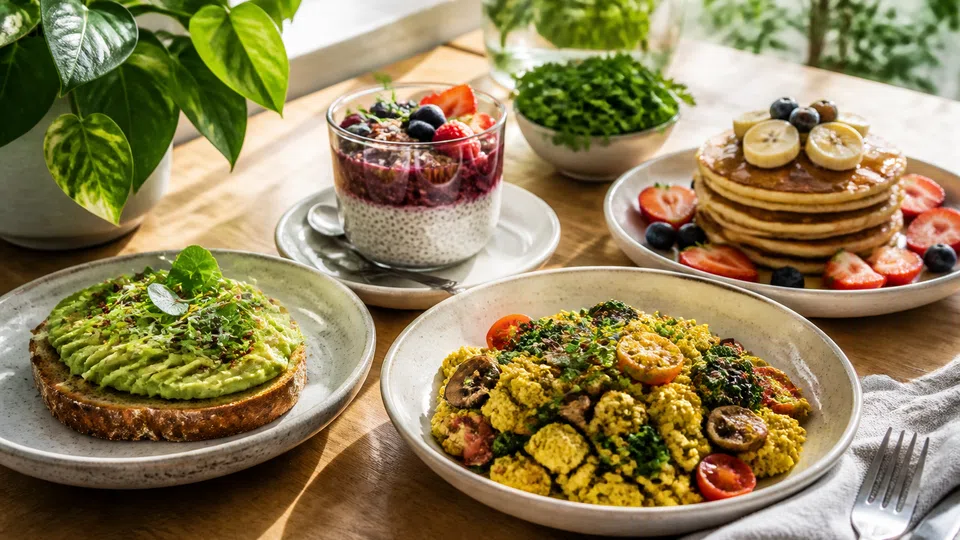
Direct answer for vegan breakfast foods
Good vegan breakfast choices include oatmeal with fruit and seeds, tofu and vegetable scramble, beans on toast, peanut-butter banana toast, chia pudding, breakfast potatoes with beans, dairy-free pancakes, savory grain bowls, and plant-yogurt parfaits. For busy mornings, pair two prepared components rather than cooking a large menu: overnight oats plus fruit, a frozen homemade pancake plus nut butter, or reheated potatoes plus black beans and salsa.
The useful question is not “What replaces bacon and eggs?” but “What combination will be satisfying, practical, and genuinely free of animal-derived ingredients?” Utah State University Extension emphasizes variety and meal planning in vegetarian and vegan patterns, including rotation among grains, legumes, vegetables, nuts, seeds, and fruit rather than reliance on a single protein source. See also Best camping breakfast.
What the term means
“Vegan” describes the ingredient boundary. It does not guarantee that a food is allergen-free, gluten-free, minimally processed, low in sugar, or nutritionally complete by itself. A vegan muffin may contain wheat and nuts. A plant-based sausage may have a long ingredient list. A bowl of plain fruit is vegan but may not function as a complete breakfast for every person.
Read compound ingredients. Bread can contain milk, egg, honey, or dough conditioners whose source is not obvious. Granola may contain honey. Chocolate chips and pancake mixes may contain milk. Flavored plant yogurts can contain substantial added sugar. The label resolves these questions; the product name does not.
This guide provides menu decisions and kitchen workflow, not individualized nutrition or medical advice. Anyone managing a diagnosed deficiency, food allergy, pregnancy, childhood diet, or other clinical concern should use qualified professional guidance rather than infer a prescription from a breakfast list.
For the narrower pancake branch of this topic, use the approved 7 Fluffy Vegan Pancake Variations.
Practical options and examples
| Breakfast job | Main option | Add for contrast | Prepare ahead |
|---|---|---|---|
| Five-minute weekday | Whole-grain toast with peanut or seed butter | Banana or berries | Portion toppings the night before |
| Warm and savory | Tofu scramble with peppers and spinach | Toast and salsa | Chop vegetables ahead |
| Pantry-based | Black beans on toast or potatoes | Tomato, herbs, hot sauce | Cook beans or potatoes in a batch |
| Portable | Overnight oats in a sealed container | Fruit and seeds | Assemble the previous evening |
| Brunch plate | Vegan pancakes | Warm fruit and nut butter | Pre-mix dry ingredients |
| No-cook | Unsweetened plant yogurt with oats | Fruit, nuts, or seeds | Keep components separate for texture |
Choosing the right approach
Start with the morning constraint. If time is short, use an assembled breakfast. If a group is eating, choose a base everyone can customize. If allergies are present, set nut and seed toppings apart with dedicated spoons and verify bread, drinks, and spreads separately. If cooking equipment is limited, one pan of potatoes and vegetables is easier than three imitation breakfast meats.
Use one of these three scenarios:
- Solo workday: microwave rolled oats with a plant drink, then add frozen berries and pumpkin seeds. Keep sweetness adjustable at the table.
- Family breakfast: serve toast, warm beans, sliced fruit, and separate toppings. People can assemble a sweet or savory plate without multiple entrées.
- Weekend brunch: make a purpose-built vegan pancake recipe, tofu-and-vegetable scramble, and fruit. That creates contrast without trying to veganize every conventional breakfast item.
Common mistakes
The first mistake is treating “vegan” as the entire menu plan. A table of only bread, pastries, and sweet drinks meets the ingredient boundary but has little contrast. Build around a main and produce, then add one optional treat.
The second mistake is making unverified substitutions in a conventional baking recipe. Removing milk and egg can change liquid, structure, browning, and leavening at once. Use a recipe developed without those ingredients. King Arthur Baking’s vegan pancake formula is one recognized-culinary example; it should be followed as a complete formula rather than mined for a universal substitution ratio.
Other avoidable problems include hidden honey in granola, shared utensils between allergen-free and nut-containing toppings, overcooked tofu, watery frozen fruit mixed into granola too early, and buying several expensive imitation products that all require separate pan time.
Step-by-step checklist
- Decide whether breakfast must be vegan only or also avoid specific allergens.
- Choose one base: oats, bread, potatoes, grain, or tested vegan pancakes.
- Choose one plant-protein component suitable for the diners.
- Add at least one fruit or vegetable for color, acidity, or freshness.
- Read labels on bread, cereal, granola, plant drinks, spreads, and baking mixes.
- Keep optional sweeteners and strong condiments at the table.
- Prepare one component in advance, not every component.
- Assign separate utensils to allergen-sensitive toppings.
- Cook hot food close enough to service that it remains pleasant.
- Refrigerate perishable leftovers promptly.
This method is intentionally modular. It lets a cook change the base without rewriting the whole menu and makes leftovers useful: roasted potatoes can become a breakfast bowl, cooked oats can be reheated, and rinsed beans can move from toast to a savory grain bowl.
Variations by market or ingredient
Breakfast customs differ. In the United States and Canada, oatmeal, pancakes, toast, breakfast potatoes, and cereal are common anchors. In Ireland and Britain, beans, grilled tomatoes, mushrooms, and toast can make a familiar savory plate when animal ingredients are omitted. In many other markets, rice, flatbreads, lentil dishes, vegetable porridges, and savory noodles already provide vegan starting points with fewer substitutions.
Plant drinks also differ in fortification, sweetness, protein, and allergens. “Barista” oat products behave differently from basic oat drinks. Coconut yogurt does not have the same flavor or protein profile as soy yogurt. These are product facts to verify on the current label, not reasons to declare a universal winner.
For pancake-specific liquid choices, use non-dairy pancake batter. For a celebration spread built around fruit, berry brunch addresses service and produce handling. These routes solve narrower jobs while Pancakes World remains the brand home.
Storage or planning notes
Separate crisp, wet, and hot components. Keep granola away from yogurt until serving. Store washed and thoroughly dried produce separately from cut bread. Cool cooked potatoes and tofu before covering and refrigerating. When reheating, heat only what will be served.
For a seven-day rotation, prepare building blocks rather than identical finished boxes: cooked oats, roasted potatoes, a washed whole-fruit supply, one bean dish, and a measured dry pancake mix. Rotate them across sweet and savory breakfasts. This supports variety and reduces the temptation to leave a perishable assembled breakfast in the refrigerator longer than its ingredients allow.
A one-week decision map
Monday can be oats, Tuesday toast and beans, Wednesday a tofu scramble, Thursday overnight oats, Friday reheated potatoes with vegetables, Saturday vegan pancakes, and Sunday a flexible leftovers bowl. The sequence is an example, not a nutritional prescription. Its advantage is operational: it reuses ingredients without repeating the same finished dish.
If a breakfast feels incomplete, add contrast instead of adding another full recipe. A rich nut-butter toast benefits from tart fruit. Soft oatmeal benefits from toasted seeds. Crisp potatoes benefit from beans and salsa. Sweet pancakes benefit from an unsweetened savory side or fresh fruit. Contrast makes a small menu feel deliberate.
When shopping, compare the role of products rather than treating every vegan-labeled item as interchangeable. A plant drink supplies liquid for oats or batter; it is not automatically a protein replacement. Tofu, beans, nuts, seeds, and soy products perform different jobs. Keep a few inexpensive pantry anchors—oats, beans, whole-grain bread, and spices—then choose fresh produce by availability. This makes the breakfast plan resilient if a specialty product is unavailable.
For guests, place a small ingredient card beside unfamiliar dishes. “Tofu scramble with peppers; contains soy” is more useful than “vegan eggs.” Name plant drinks and spreads because soy, tree nuts, sesame, and gluten can still matter. If cross-contact cannot be controlled, say so plainly. Vegan describes animal-derived ingredients; it is not an allergen-control system.
Sources
- Utah State University Extension — Plant-Powered—A Guide to Balanced Vegan and Vegetarian Eating — https://extension.usu.edu/nutrition/research/vegan-and-vegetarian-eating — variety, planning, and practical plant-food categories.
- King Arthur Baking — Easy vegan pancakes — https://www.kingarthurbaking.com/recipes/easy-vegan-pancakes-recipe — recognized test-kitchen example of a purpose-built vegan formula.
- King Arthur Baking — Non-dairy milk for baking — https://www.kingarthurbaking.com/blog/2024/08/12/best-non-dairy-milk-for-baking — functional differences among plant drinks in baking.
Evidence checked 16 August 2026. Verify current labels because packaged formulations change.