Best camping breakfast
Quick decision for the best camping breakfast
At Pancakes World, the best camping breakfast is the one your campsite can store, cook, serve, and clean up safely. For a first morning with uncertain weather or fuel, choose a shelf-stable no-cook breakfast such as bread or tortillas with shelf-stable spread and whole fruit. With potable water and a dependable stove, choose a one-pot dry breakfast prepared by its package directions. With a cooler that still holds ice and a stable cooking setup, eggs, sausage, or pancakes become realistic—but they add cold-chain, thermometer, pan, fuel, and cleanup work. Decide from storage and equipment first, then choose food; no single menu wins every kind of trip.
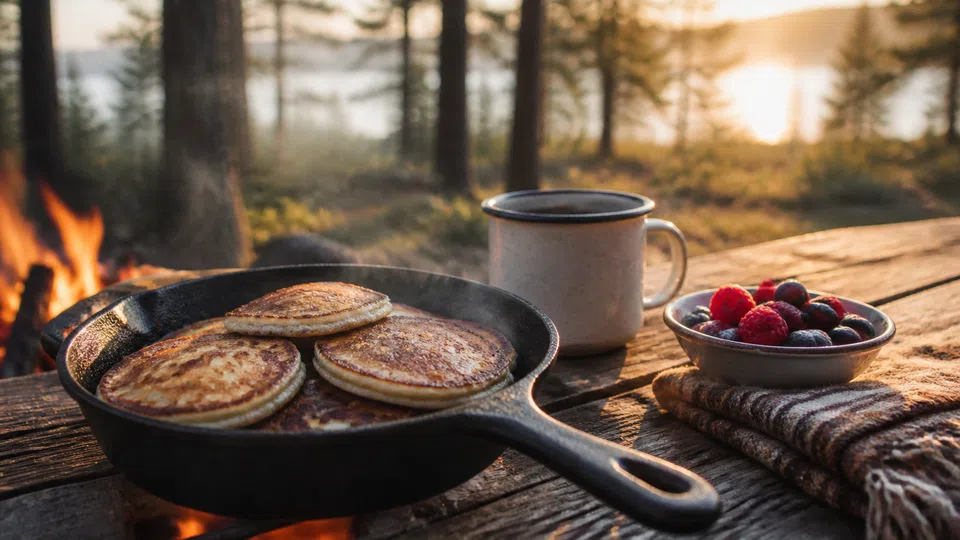
This is a comparison guide, not a universal product ranking or a nutrition prescription. Its evidence comes from USDA outdoor food-safety guidance and National Park Service camping rules. The practical meal examples are planning patterns, not claims that Pancake World tested a particular stove, cooler, mix, or packaged food.
The five criteria that decide the breakfast
“Camping” covers a car beside a developed site, a canoe with a cooler, a walk-in campground, and a multi-day backcountry route. A breakfast that feels effortless in one setting can be impossible in another. Compare candidates using five constraints before comparing flavors.
1. Storage reality
Does the meal stay shelf-stable until breakfast, or does it require a reliable cold source? USDA advises transporting cold foods chilled or frozen with ice, frozen gel packs, or another cold source. It also says that leftover food in a cooler is safe only while the cooler still has ice; otherwise it should be discarded. A menu with eggs, dairy, meat, or prepared leftovers therefore depends on an intact cold chain, not merely the presence of a plastic cooler.
For a multi-day backpacking trip, USDA specifically points toward shelf-stable choices after the first day and lists items such as peanut butter, dried foods, whole or dried fruit, nuts, powdered milk, and pancake or biscuit mixes. That list is not a complete meal plan and does not make every item suitable for every person. It supports the planning principle: without refrigeration, choose products designed to remain shelf-stable under the conditions stated on their labels.
2. Potable water
Breakfast may require water for drinking, mixing, cooking, and cleaning. USDA says not to depend on water from a lake or stream for drinking, food preparation, or cleaning no matter how clean it appears; campers should bring bottled or tap water or use an appropriate tested treatment plan. The National Park Service likewise places water for drinking, cooking, and cleaning on the packing list.
A “just add water” breakfast is not low-resource when water is scarce. Count the mixing volume, any boiling loss, hot drinks, handwashing, and dish cleaning before selecting it.
3. Heat, fuel, and permitted equipment
USDA advises deciding in advance whether the meal will use a portable stove or a campfire and checking whether campfires are prohibited. NPS recommends practicing with a new camp stove before the trip. A breakfast that requires steady low heat, two pans, and a long warm hold is a poor fit when the actual setup is one small burner in wind.
Treat fire restrictions and campground rules as current local facts. Check the specific land manager before departure and again when conditions can change. This article does not assert that a fire, stove, or food-storage method is permitted at a named destination.
4. Service and cleanup
Count people, portions per pan, utensils, wash water, and the time before departure. Pancakes are attractive but batch-cooked; one person can still be eating while the cook works. A pot of package-directed cereal can serve together but leaves a sticky pot. A no-cook assembly minimizes heat and pan cleanup but still produces wrappers, crumbs, knives, and food odors.
NPS instructs campers to keep a clean camp, remove food scraps and packaging, and store food and scented items properly. Cleanup is part of the meal, not an activity to postpone until after the hike begins.
5. Wildlife and site rules
NPS says food storage protects people and wildlife, advises never leaving food unattended, and requires campers to follow the specific campground’s storage rules. In bear country, some parks require lockers or approved containers; rules vary. Food, trash, cookware, and other scented items may all fall under local storage requirements.
The right breakfast therefore includes an after-breakfast destination for every ingredient, wrapper, crumb, pan, and scented item. A meal that cannot be secured after service is not a good fit even if it is fast to cook.
Explore the broader Breakfast Recipes to Start the Day for meal formats. The question here is narrower: which format survives real camping constraints with the fewest unsupported assumptions?
Side-by-side comparison
| Breakfast pattern | Cold source | Heat and water | Cook/serve complexity | Cleanup load | Strongest fit | Main limitation |
|---|---|---|---|---|---|---|
| Shelf-stable no-cook assembly | None for products labeled shelf-stable before opening | No heat; little preparation water | Low | Wrappers, knife, crumbs | Early departure, uncertain weather, minimal equipment | Product labels, allergens, opened-product storage, wildlife odors |
| Package-directed hot cereal or other one-pot dry meal | Usually none before opening when label says shelf-stable | Potable water and one dependable burner | Low to medium | One pot, bowls, utensils | Cool morning with controlled fuel and water | Water and cleanup demand; product-specific directions |
| Water-only pancake mix | Mix may be shelf-stable; verify label | Water, pan, burner, measured heat | Medium to high; batch service | Batter bowl or bag, pan, turner | Car camp or established site with time | Mix ingredients, pan management, fuel, and slow group service |
| Cooler-supported eggs or sausage | Yes, maintained cold | Pan, fuel, utensils; thermometer where applicable | High | Raw-food separation plus pan cleanup | Car camp with intact cooler and roomy workstation | Cold-chain and cross-contamination burden |
| Home-prepared chilled breakfast | Yes, continuously maintained cold | May be no-cook at camp | Low at service | Containers and cold storage | Short trip with verified cooling capacity | Time/temperature control and leftover decisions |
| Dehydrated or freeze-dried packaged breakfast | Usually shelf-stable before opening; verify | Often measured boiling water | Low to medium | Package and utensil | Weight-sensitive trip with adequate water/fuel | Package directions, cost, waste, and local disposal rules |
The table compares systems, not brands. “Shelf-stable” is a product and packaging condition, not a promise this article can assign. Always follow the current label, discard damaged packages, and reconsider any food whose storage conditions were not maintained.
A transparent scoring worksheet
Score each candidate from zero to two on six trip-specific questions. Zero means the requirement is not met, one means it is possible but fragile, and two means it is already confirmed. The questions are: storage, potable water, permitted heat, cooking capacity, cleanup, and wildlife-compliant storage after opening. Do not add flavor or novelty until a candidate has no zero in a safety- or rule-critical category.
For example, a pancake breakfast at a developed car site might receive two for storage when a water-only shelf-stable mix is used, two for potable water, two for a permitted tested stove, one for cooking capacity when the pan holds only two portions, one for cleanup, and two for a food locker. The score does not declare pancakes good or bad. It exposes the slow batch and wash-up as the two weaknesses to solve.
A cooler-supported egg-and-sausage meal might score two for taste preference but zero for storage if the cooler has no reliable ice on the second morning. That zero ends the comparison; preference cannot repair a failed cold chain. A no-cook fallback may score two across storage, heat, and service but one for wildlife odors after a jar is opened. The remedy is a compliant storage plan, not an unsupported claim that a wrapper is odor-proof.
Use the worksheet as a gate, not pseudo-science. The numbers represent confirmed trip facts, not universal performance data. Record the destination, date, group size, equipment, and exact products beside the score so it cannot be copied to a different trip without rechecking.
First breakfast versus later breakfasts
The same campsite can justify different answers on different mornings. Food packed frozen may support a perishable first breakfast while a shelf-stable option is reserved for day three. USDA explicitly distinguishes first-day chilled food from later multi-day shelf-stable planning. Build the menu as a sequence rather than choosing one “camping breakfast” for the whole trip.
Pack in reverse-use order when a cooler is involved, following USDA’s guidance: foods needed last go in first, and raw meat or poultry belongs in a separate cooler where possible or below ready-to-eat foods in a shared one. Put the first shelf-stable fallback somewhere accessible without exposing the cold compartment repeatedly.
At the end of each day, reassess ice, weather, water, fuel, departure time, and current restrictions. If one condition changes, move to the already packed lower-dependency option. This turns the fallback into an intentional control rather than a last-minute improvisation.
Also separate breakfast ingredients from emergency food. A delayed departure, stove failure, or damaged package should not consume the group’s only contingency supply. Define which sealed items belong to ordinary breakfast and which remain reserved under the trip’s safety plan. This article does not set that reserve because route length, weather exposure, group needs, and local guidance differ.
Best fit by use case
First morning of a car-camping weekend
A no-cook shelf-stable breakfast is the lowest-dependency choice when arrival was late, rain is possible, or the stove has not been used at the site. Pack the breakfast together where it can be reached without unloading the entire kitchen. Use whole fruit and sealed products whose labels permit the intended storage. Collect crumbs and packaging immediately.
If a cooler remains solidly cold and breakfast is leisurely, a cooked option can be reasonable. The comparison is not “real breakfast versus compromise.” It is whether the extra pan, fuel, cold storage, and cleanup serve the morning’s actual schedule.
Developed campsite with a table, cooler, and reliable stove
This is the strongest environment for griddle food. A water-only complete pancake mix can reduce refrigerated ingredients, but the package may still contain milk, egg, wheat, soy, or other components. Follow its own water ratio, rest, portion, and cooking directions. Do not assume every mix uses the same formula.
Plan the batch mathematically: usable pan positions multiplied by rounds. Serve children or other waiting diners deliberately rather than promising that the stack will appear at once. The three ingredient pancakes guide explains transparent batter counting, while milkless pancakes offers a from-scratch water formula when that exact pantry route fits the campsite.
Cold morning with one burner and potable water
A package-directed one-pot breakfast can put everyone on the same service rhythm. Choose a dry product that is shelf-stable before opening, measure the required water at home in the trip plan, and keep the pot covered or managed exactly as its directions state. Add no universal cooking time here because grain type, processing, serving number, elevation, and product instructions differ.
Before committing, reserve water for drinking and cleanup. If the morning route requires an immediate departure, a hot meal’s comfort may not justify cooling, washing, repacking, and securing scented gear.
Multi-day backpacking trip
Weight, shelf stability, water, fuel, waste, and wildlife storage dominate. USDA notes that cold foods may work on the first day but points multi-day campers toward shelf-stable items thereafter. NPS recommends dry foods because they can save weight and space and avoid cold-storage needs.
Choose a breakfast whose packaging, preparation water, cooking time, and waste are known before departure. Test only the equipment workflow at home if desired; do not claim a field performance result without a documented test. Check the exact park or land-manager food-storage rule, since a hanging method, locker, or approved container may be required or preferred depending on location.
Group or family camp
The practical winner is usually the meal that can be served in a predictable window without leaving one cook trapped at the stove. A self-serve no-cook station can work only when ingredients remain supervised and are promptly secured. One-pot food can synchronize service. Pancakes can work if the griddle has capacity and the group accepts waves.
Assign roles before heat starts: water and handwashing, cooking, clean serving utensils, waste collection, and food storage. USDA emphasizes separating raw foods from ready-to-eat foods and using clean hands and utensils. A group breakfast should make that separation visible.
Morning after cooler ice has melted
Do not rescue a menu through optimism. USDA’s camping guidance says leftover food is safe only if the cooler still has ice; otherwise discard it. Switch to unopened shelf-stable foods whose packages remain intact and whose label conditions were met. The shelf-stable fallback is part of the plan, not an admission that the original menu failed.
No campfire allowed
Use the permitted stove if local rules allow it and the equipment is ready, or select a no-cook breakfast. Do not bring a meal whose safe preparation depends on a fire that may be prohibited. USDA explicitly recommends checking whether campfires are allowed before relying on them.
Detailed performance comparison
No-cook shelf-stable assembly
This pattern has the fewest moving parts, but it is not zero-work. Verify that each unopened product is shelf-stable, keep it dry and protected, read allergen labels, bring a clean spreading utensil if needed, and plan storage after opening. Peanut butter is on USDA’s example list, but peanuts are a major allergen and the choice is not universal. Other shelf-stable spreads must be evaluated from their own labels.
Whole fruit avoids a cooking pot, but peels, cores, juice, and crumbs still attract wildlife. Pack out waste and clean the eating area. Never leave the food station unattended.
One-pot dry breakfast
This format consolidates heat into one vessel. Its true cost is potable water, fuel, bowls, spoons, a hot-pot handling plan, and cleaning. Pre-portion dry ingredients only when labels and storage allow it, and retain cooking directions. If multiple products have different instructions, do not average them.
The method fits cool weather and a stable burner. It fits poorly when water must be carried long distances or a rapid departure matters more than hot service.
Camping pancakes
USDA identifies powdered pancake and biscuit mixes as easy to carry and prepare, while reminding campers to check required ingredients. That is the strongest authoritative claim this comparison needs. The mix may require only water, or it may require eggs, milk, oil, or another ingredient. Read before packing.
Pancakes require measured liquid, a batter container, a pan or griddle, a turner, controlled heat, batch time, and cleanup. They are a good format when cooking itself is part of the morning and the site supports it. They are a weak format when fuel is marginal, the group must leave together at dawn, or wash water is scarce.
Cooler-supported cooked breakfast
Eggs, sausage, cheese, and other perishables raise the cold-chain and raw-food handling burden. Pack cold or frozen with a cold source, keep raw items separated, and use a thermometer for foods whose safe endpoint requires one. Do not rely on color or campsite intuition.
The best breakfast sausage recipe route is separate because recipe selection and safe cooking need more evidence than a comparison table. A fry-up breakfast is likewise a high-equipment plate, not a default recommendation for every campsite.
Care, durability, and equipment fit
The brief’s “care and durability” question applies to the breakfast system rather than a product endorsement. A robust system still works when one condition degrades. It includes a backup ignition method where permitted, sufficient potable water, a shelf-stable fallback, a way to secure odors, and a cleanup kit.
Practice with unfamiliar stoves at home, as NPS recommends. Inspect fuel connections and cookware according to manufacturer instructions. Bring only equipment permitted at the destination. Do not operate combustion equipment inside a tent or another enclosed sleeping space; follow the appliance and land-manager safety rules.
Use containers that close securely and fit the required wildlife-storage method. NPS advises airtight, sealable bags, containers, and coolers, never leaving food unattended, and checking bear-country regulations. A rigid cooler may be appropriate for car camping but impossible for a hike; a light package may save weight but still need an animal-resistant container.
For washing at a developed site, NPS describes wash, rinse, and sanitize stages and gives a bleach-solution procedure. In the backcountry it advises biodegradable soap and thorough rinsing, while local rules can add requirements. Plan the cleanup method before choosing greasy or sticky cookware.
Actionable planning checklist
Trip facts:
- Identify car camping, walk-in camping, backpacking, paddling, or another mode.
- Check current fire, stove, food-storage, waste, and wildlife rules for the exact destination.
- Count people and breakfast mornings.
- Confirm potable water volume for drinking, preparation, and cleaning.
- Confirm whether cold storage will still be reliable at each breakfast.
- Note departure times, forecast exposure, and cooking-space limits.
Meal selection:
- Choose shelf-stable no-cook when storage, fuel, or time is uncertain.
- Choose one-pot only when water, burner, fuel, and washing are available.
- Choose pancakes when pan capacity and batch time are acceptable.
- Choose perishable cooked food only with an intact cooler, separation plan, and needed thermometer.
- Keep one unopened shelf-stable fallback.
- Read every package for storage, ingredients, allergens, required additions, and preparation.
Packing order:
- Put first-morning food where it is accessible.
- Pack cold foods cold or frozen with adequate cold sources.
- Keep raw meat or poultry separate and below ready-to-eat food when one cooler must be used.
- Keep potable water and hand-cleaning supplies accessible.
- Pack clean utensils separately from raw-food tools.
- Include waste bags and the required wildlife-storage system.
At breakfast:
- Wash hands with soap and safe water when available; USDA also advises at least 60% alcohol sanitizer when that is the practical backup.
- Keep the cooler closed and shaded.
- Prepare food only in the designated area.
- Follow product directions and safe cooking endpoints.
- Serve cooked food with clean utensils.
- Secure food and scented items whenever they are unattended.
- Clean crumbs, cookware, tables, and waste immediately.
Common planning failures
Choosing the menu before checking restrictions
A campfire breakfast cannot work under a fire prohibition. A cooler menu cannot work after the cold source fails. Check rules and resources first, then food.
Treating a cooler as a refrigerator without evidence
Ice and temperature control matter. Minimize opening, shade the cooler, and consider separating drinks from perishables because USDA notes that frequently opening a drink cooler lets warm air in and melts ice faster.
Depending on untreated surface water
Clear appearance is not proof of potability. Bring safe water or a validated treatment method and enough capacity for breakfast plus cleanup.
Packing ingredients but not the method
A pancake mix without its required egg, oil, or water measure is not a meal. Photograph or retain package directions, portion ingredients deliberately, and check fuel duration.
Ignoring service order
One small pan can turn a simple recipe into a long queue. Count batches at home from pan capacity and portion size. Change the meal format if the schedule cannot absorb them.
Forgetting post-meal storage
Opened food, wrappers, wash water, cookware, and crumbs all need a compliant destination. Follow the exact site’s rules; do not leave scented items in or near a sleeping area.
Calling one breakfast universally “best”
The term only becomes honest when tied to a use case. No-cook is the lowest-dependency option, not always the most desired. Pancakes are a high-engagement group option, not always the fastest. Cooler cooking expands variety, not reliability.
Limitations and disclosure
No stove, cooler, packaged breakfast, cookware, or outdoor brand was tested, ranked, sponsored, or endorsed for this article. Product availability, formulations, labels, park rules, fire conditions, and wildlife requirements can change. The cook must check current primary information for the destination and the actual products.
The meal patterns make no calorie, protein, energy, hydration, athletic-performance, weight-loss, or medical claim. People with allergies or specific dietary needs should use labels and qualified guidance. “Shelf-stable” and “no-cook” do not mean allergen-free, nutritionally complete, or safe after opening under any condition.
The guide also does not replace emergency planning, stove instructions, fire rules, bear-safety rules, or local food codes. Its decision framework is limited to matching breakfast complexity to storage, water, heat, service, and cleanup capacity.
The practical recommendation
For the largest range of uncertain camping mornings, pack a shelf-stable no-cook breakfast plus potable water as the dependable baseline. Upgrade to a one-pot meal when water, fuel, and cleanup are assured. Choose pancakes when a stable pan setup and batch time are part of the experience. Choose eggs or sausage only when the cold chain, separation, safe cooking, and cleanup plan are real rather than assumed.
For more planning-focused food guides, visit Pancakes World and use easy make-ahead brunch ideas only when its storage evidence matches the trip rather than treating home make-ahead convenience as campsite clearance.
Sources and editorial references
- USDA Food Safety and Inspection Service, “Food Safety While Hiking, Camping & Boating.” Planning, cold sources, cooler management, danger-zone time boundaries, potable water, cleaning, shelf-stable foods, pancake mixes, cooking setup, and leftovers checked 2026-08-16.
https://www.fsis.usda.gov/food-safety/safe-food-handling-and-preparation/food-safety-basics/food-safety-while-hiking-camping - U.S. National Park Service, “Cooking in Camp.” Stove practice, site organization, spoilage, wildlife storage, preparation areas, and cleanup guidance checked 2026-08-16.
https://www.nps.gov/subjects/camping/cooking-in-camp.htm - U.S. National Park Service, “What to Bring.” Water, dry-food, cooler, packaging, organization, weight, and destination-specific storage guidance checked 2026-08-16.
https://www.nps.gov/subjects/camping/what-to-bring.htm - U.S. National Park Service, “Storing Food.” Location-specific bear-country storage boundary checked 2026-08-16.
https://www.nps.gov/subjects/bears/storingfood.htm
Editorial boundary: this is an Article-schema comparison guide based on government outdoor-safety sources. It contains no independent Pancake World field test, product ranking, affiliate selection, nutrition prescription, venue fact, or universal “best” claim. Publication and media clearance remain outside this draft.