Three ingredient pancakes
Direct answer for three ingredient pancakes
At Pancakes World, the clearest genuine three-ingredient pancakes are thin pancakes made from plain flour, egg, and milk. Good Food's classic tested formula uses 100 g plain flour, 1 large egg, and 300 ml milk; oil or butter is used only to grease the pan. Whisk half the milk with the flour and egg into a smooth thick batter, add the remaining milk, then cook a thin layer in a lightly greased pan over moderate heat. This produces flexible crêpe-style pancakes, not thick American stacks. Count pan grease and toppings separately and say so. For a fluffy result, choose another complete tested recipe rather than hiding leavener, salt, or fat outside the ingredient count.
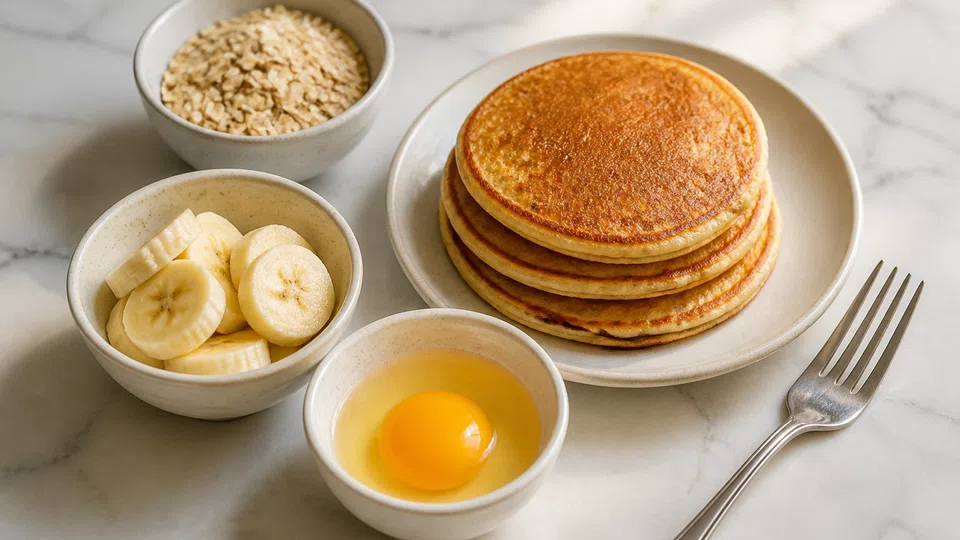
Three ingredients can produce several kinds of pancake, but the count is only useful when each ingredient has a clear job. Flour supplies body, egg helps the cooked sheet hold, and milk hydrates the batter. A banana-led shortcut answers a different question and may require self-rising flour or leavener. For general ingredient behavior, use the Pancake Ingredients and Substitutions and compare the stricter two-ingredient pancake guide.
What “three ingredient pancakes” means
An ingredient count is not a recipe style. It can describe:
- a thin flour, egg, and milk pancake;
- banana, egg, and self-rising flour mini pancakes;
- a complete commercial mix plus liquid and egg;
- oat flour, banana, and egg pancakes;
- self-rising flour, egg, and a liquid in a source-tested system.
These versions do not produce the same texture. The first is thin and flexible. Banana versions are small, soft, and fruit-forward. Oat versions lack wheat gluten and depend more heavily on egg and manageable size. A complete mix may already contain flour, salt, leavener, sweetener, and milk solids, so “three ingredients” describes what the cook adds, not everything in the finished pancake.
Be transparent about counting. If oil greases the pan, call it pan grease. If salt is added to the batter, the batter has four ingredients. If a “self-rising flour” blend contains flour, leavener, and salt, it is one purchased ingredient but a multi-component product. That is not dishonest when the label is clear; it simply answers a convenience query rather than a from-scratch minimalism query.
The source-tested three-ingredient baseline
Good Food's classic pancake provides a narrow, reproducible answer:
- 100 g plain flour;
- 1 large egg;
- 300 ml milk;
- a small amount of oil or melted butter for the pan, explicitly outside the batter count.
The source also mentions a pinch of salt in the method. A strict counter should include that as a fourth batter ingredient if used. To preserve the exact three-ingredient promise, omit the optional pinch and season through fillings or toppings after the base has been evaluated. The resulting pancake will taste plainer.
This article attributes the formula rather than presenting it as Pancake World testing. Follow the original source's current method and use the quantities above as one tested example, not a universal flour-to-liquid rule.
Method, paraphrased from the source
- Put the flour in a bowl and form a well.
- Add the egg and about half the milk.
- Whisk from the centre outward until the thick batter is smooth.
- Add the remaining milk gradually while whisking.
- Heat a lightly greased medium frying pan over moderate heat and tip out excess fat.
- Add roughly two tablespoons of batter and tilt the pan so a thin layer covers the base.
- Cook until the underside is set and coloured, then turn with a palette knife or broad turner.
- Cook the second side, transfer to a plate, and repeat.
The source recipe is designed for thin pancakes. Do not pour the same batter into small thick rounds and expect American-style height. A thicker portion increases the distance heat must travel and can leave the centre pasty.
Ingredient roles in the baseline
Plain flour: body
Plain wheat flour supplies starch and gluten-forming proteins. Once hydrated and mixed, it helps the thin pancake form a continuous sheet. The formula does not include baking powder, so the goal is not a high rise.
Measure the 100 g by scale. A packed cup introduces unnecessary variation. Do not exchange plain flour for self-rising flour or a gluten-free blend while calling it the same recipe; each replacement changes the system.
Egg: set and cohesion
Egg contributes liquid, protein, fat, and emulsifying components within the formula. As the thin pancake cooks, it helps the sheet set and turn. Egg size matters because the source specifies one large egg.
Do not remove the egg and add more milk. An egg-free pancake needs a formula designed around another structure. Use homemade pancakes without eggs for that separate intent.
Milk: hydration and flavour
Milk turns the flour and egg into a pourable batter and contributes its own solids and flavour. Add it in stages because the initial thick paste is easier to smooth than a bowl of thin liquid with floating flour lumps.
Water or a plant drink is not an automatic equal replacement. Use a tested version designed for that liquid. The milkless pancake guide handles that decision without changing this route's three-ingredient baseline.
Decision table for other three-ingredient styles
| Desired result | Three counted ingredients | What must be verified | Expected style |
|---|---|---|---|
| Thin classic pancake | Plain flour, egg, milk | Source ratio and pan grease disclosure | Flexible and thin |
| Banana mini pancake | Banana, egg, self-rising flour | A complete tested formula; whether extra leavener is added | Soft, small, banana-led |
| Oat pancake | Oat flour, banana, egg | Grind, banana weight, and gluten-free label if needed | Tender and delicate |
| Mix-based pancake | Complete pancake mix, liquid, egg | Package instructions and mix ingredients | Product-specific |
| Savoury thin pancake | Plain flour, egg, milk | Filling cooked separately and batter count unchanged | Neutral wrapper |
The table shows route choices, not interchangeable formulas. Only the thin baseline on this page includes a verified quantity set. Choose another source-tested recipe for the other rows.
Counting rules that prevent misleading shortcuts
Count batter ingredients
Anything mixed into the batter counts: salt, sugar, baking powder, vanilla, cinnamon, oil, or melted butter. A recipe that lists banana, egg, flour, and baking powder has four batter ingredients even if the headline emphasizes three main ingredients.
Disclose pan grease
Grease used only on the cooking surface can be disclosed separately. The pan may require oil or butter for release, and pretending otherwise can cause a reader's first pancake to stick. “Three batter ingredients plus oil for the pan” is accurate.
Keep toppings outside the count
Syrup, fruit, yoghurt, cheese, or cooked vegetables are serving additions. They do not change the batter count, but they should not be hidden if the page promises a complete three-item shopping list.
Explain composite ingredients
Self-rising flour and pancake mix contain several components. Count the purchased product as one convenience ingredient while stating that it is a formulated blend. Readers with allergies or dietary requirements must inspect the full label.
Count substitutions, not alternatives
If the recipe says milk or a plant drink, the cook uses one liquid. If it says milk plus water, that is two ingredients. Do not merge alternatives into one vague category after they enter the bowl.
Mixing the thin batter without lumps
The order matters because three ingredients leave little room to hide a process error. Begin with flour in the bowl. Add egg and only part of the milk. The whisk first makes a thick paste. Flour lumps are easier to press and disperse in this thicker phase.
When the paste is smooth, add the remaining milk in two or three additions. Scrape the bowl between additions. The final batter should flow easily enough to coat the pan in a thin film.
If flour lumps remain, let the bowl stand briefly and whisk again rather than forcing the batter through excessive high-speed mixing. A sieve can remove stubborn dry clumps, but record that step if consistency is important.
Do not taste raw batter. FDA guidance says flour is a raw food and advises against eating raw flour, dough, or batter. Keep the bowl and whisk away from ready-to-eat toppings, and wash hands, utensils, and surfaces after contact.
Pan setup and first pancake
Use a medium flat frying pan. Heat it over moderate heat, then add a small amount of oil or butter and wipe or tip away the excess. Pooled fat fries patches of the surface and makes the batter slide unevenly.
Measure the first portion. Good Food's classic recipe uses about two tablespoons for a thin pancake. Add it near the centre and immediately tilt the pan in a controlled circle. Stop once the base is thinly coated.
Watch the edge and underside. The first side must form a continuous sheet before turning. Slide a palette knife or broad thin turner underneath and turn in one movement. Cook the second side until set.
The first pancake calibrates:
- pan heat;
- portion size;
- batter flow;
- coating speed;
- release;
- cooked flexibility.
Do not change the batter after a single pale first pancake if the pan was still heating. Cook a second measured portion under stable conditions.
Diagnostic table
| Observation | Likely first check | Reversible response |
|---|---|---|
| Batter will not cover pan | Flour weight and milk measure | Verify quantities before adding liquid |
| Batter runs into holes | Pan heat and over-thinning | Lower heat or return to measured formula |
| Pancake sticks | Pan preheat and grease film | Stabilize heat and re-grease lightly |
| Pancake tears | First-side set and turner width | Cook slightly longer and support more area |
| Centre remains pasty | Layer too thick | Use the source portion and tilt promptly |
| Pancake is rubbery | Overcooking or prolonged mixing | Shorten cook after set; mix only as needed |
| Colour varies across pan | Uneven heat or pooled fat | Rotate position or improve the grease film |
These are diagnostic possibilities, not guarantees. Confirm the documented measurement and pan condition before changing a formula.
Banana-led three-ingredient pancakes
Banana shortcuts deserve a separate section because search results often group them with classic three-ingredient pancakes. Good Food publishes a fast blender banana pancake using banana, egg, self-raising flour, and baking powder in the batter, with butter for the pan. That is a useful tested quick recipe, but by a strict count it has four batter ingredients.
Other banana recipes may omit the separate baking powder and use banana, egg, and a flour. Choose one of those only from a complete source. Banana ripeness and weight affect moisture and sweetness, while self-rising flour composition affects lift. “One banana” is less precise than a weighed ingredient.
Make banana pancakes small. A fruit-rich centre can stay soft, and a small diameter is easier to turn. Cook fully rather than using surface colour alone. Do not transfer the 100 g flour, one egg, and 300 ml milk ratio from the thin classic pancake to a banana formula.
Oat-led three-ingredient pancakes
Oat flour, banana, and egg is another common three-item system. It produces a different batter because oat flour does not create a wheat-gluten network and banana adds both moisture and solids. Use a tested oat formula with a specified grind and banana quantity.
If gluten avoidance matters, use oats labelled gluten-free and control cross-contact. “Three ingredients” does not mean allergen-free. Egg remains present, banana is not a medical substitute, and shared blender residue can matter.
Allow only the rest the recipe directs. Oats can continue hydrating, so an early liquid correction may make the batter too loose later. See flourless oat pancakes for the full diagnostic.
Mix-based three-ingredient pancakes
A commercial complete mix may reduce the number of additions. Follow the package instructions exactly and count the mix as one purchased ingredient. Retain the package so the internal flour, leavener, milk, soy, egg, or other allergen statements remain available.
King Arthur's all-purpose baking-mix pancake recipe illustrates why counting must stay exact: the published batter uses mix, milk or almond milk, egg, and oil or butter. That is four counted ingredients, not three. A different package may call for only water or for mix plus two additions. The label controls.
Do not remove the oil from a four-item product formula merely to meet a headline. Its role belongs to that tested system.
Three practical serving routes
Sweet thin pancakes
Cook the classic three-ingredient baseline. Serve with fruit, yoghurt, syrup, or sugar and lemon according to preference and dietary needs. Keep toppings separate until the plain first pancake has been checked.
Savoury wrappers
Use the same neutral thin batter and fill the cooked pancakes with prepared mushrooms, spinach, cheese, beans, egg, or meat. Cook fillings separately to applicable safety endpoints. Avoid wetting the pancake long before serving.
Make-ahead stack
Good Food's classic source provides advance preparation and reheating options. Follow its current directions rather than inventing a universal holding time. Cool and store perishable pancakes under official guidance. Layer them so they can separate without tearing.
Scale the classic formula without changing its style
The attributed baseline makes eight thin pancakes in its source context. If the actual pan and portion differ, use the source yield only as a planning reference. Count the first pancake as calibration and avoid promising an exact yield from a different diameter.
To scale, multiply flour, egg, and milk together. Two batches use 200 g flour, two large eggs, and 600 ml milk. Do not round only one component. Weigh the flour and measure milk accurately; a growing error is more visible in a larger bowl.
Mix large quantities in stages. Make a smooth paste with eggs, flour, and part of the milk before adding the rest. A bowl that is too full is difficult to whisk without dry pockets. Two smaller bowls may be more dependable than one oversized batch and also reduce the time raw batter stands while pancakes cook.
Keep the same pan, portion, and coating movement. If several pans are used, calibrate each one; burner power and pan material can produce different colour and release. A second cook should own a complete pan rather than changing the heat beneath someone else's batch.
A small-group service plan
Prepare fillings and toppings first, keep them under suitable storage, and set out plates before cooking. Cook the thin pancakes in a steady sequence. If the source-approved make-ahead method is used, follow it exactly; otherwise serve in fresh rounds.
For savoury service, keep fillings warm or cold according to their own requirements. Do not leave cooked meat, egg, dairy, or other perishable fillings at the table simply because the pancakes are still being made. The three-ingredient count controls the batter, not the whole meal.
Run an honest controlled comparison
The base formula can teach process without becoming fabricated testing. Divide one accurately mixed batch into comparable portions only after the full milk has been incorporated.
Compare portion size
Cook one pancake with the source's approximate two-tablespoon portion and a second with a deliberately larger measured portion. Keep pan heat and grease stable. Record coverage, turn time, centre, and flexibility. The larger one may require different handling; that observation does not authorize a new published recipe.
Compare pan heat
Use the same portion on a fully stabilized pan at two modest settings. Let the pan reach the new setting before the second test. Record underside colour when the top is ready to turn. Avoid a dangerously hot surface and never use bare-hand water tests.
Compare batter standing
Cook one portion soon after mixing and another after the source-permitted interval. Stir as directed before scooping. Record whether flour settles, whether the batter spreads differently, and whether the cooked sheet changes. If the source does not support a long rest, do not extend it simply to complete the comparison.
| Variable | Keep constant | Record |
|---|---|---|
| Portion | Batter, pan, heat, grease | Diameter, turn, centre |
| Heat | Batter, portion, pan, grease | Colour at set, sticking, dryness |
| Standing | Formula, portion, pan, heat | Settling, spread, flexibility |
These comparisons are kitchen diagnostics. Pancake World is not claiming a test result because no controlled project record was supplied.
How to choose among three-ingredient formulas
Choose the classic flour–egg–milk formula when the priority is a neutral thin pancake for sweet or savoury fillings. It has the strongest route-level evidence here and a precise source formula.
Choose a banana formula when banana flavour and small soft pancakes are wanted. Verify whether self-rising flour, baking powder, pan fat, or flavouring makes the actual count more than three. Do not omit a source ingredient for marketing neatness.
Choose an oat formula when avoiding wheat flour or using oats is the true goal. Verify labelled gluten-free status if required, and expect a more delicate structure. Use a recipe with a specified oat grind and banana or egg quantity.
Choose a complete mix when convenience matters more than from-scratch minimalism. Follow the package, retain its label, and count the mix honestly as a composite purchased ingredient.
If none of these matches the dietary requirement, do not force the number three. A four- or five-ingredient tested recipe that meets the eater's needs is preferable to an unsafe or structurally unsupported shortcut.
Fillings and toppings without intent drift
The classic thin pancake is a base. For a sweet plate, use cooked fruit, fresh fruit, yoghurt, syrup, or a simple sugar-and-citrus finish according to preference. Add these after cooking so the batter remains the tested three-item system.
For a savoury plate, fill with cooked mushrooms, spinach, beans, cheese, fish, meat, or egg only after each component is prepared safely. Avoid excessive wet filling, which can soften and tear the sheet. Roll or fold close to serving.
For portable food, cool the pancake and filling appropriately before assembly, keep sauces separate, and choose a filling that will not leak. The storage rules belong to the perishable components, not to the number of batter ingredients.
Retain labels when serving a group. Flour, milk, and egg are major allergens in many jurisdictions, and a three-item list does not make the dish allergy-friendly.
Common mistakes and recovery
Calling four batter ingredients three
List the leavener or fat honestly. If the fourth ingredient is essential, the recipe is still useful. Accuracy matters more than the number in the title.
Expecting fluffy American pancakes
Flour, egg, and milk without leavener make thin pancakes. Choose a complete American-style recipe if height is the priority. Do not add random baking powder to the finished bowl and claim the original formula was tested.
Removing pan grease from the instructions
Disclose it separately. A suitable nonstick surface may need very little, but the source method uses oil or butter. Sticking is a practical failure, not a moral victory for a lower count.
Substituting multiple ingredients at once
Changing flour, milk, and egg simultaneously creates a new formula. Use the exact three first, then move to a tested free-from route if required.
Making the pancake too thick
Use the source portion and tilt immediately. Thickening a thin-pancake batter changes the cooking problem and can leave a pasty centre.
Tasting the batter
Do not. FDA guidance treats raw flour as a safety concern. Judge seasoning from a fully cooked small pancake.
Storage and reheating boundaries
The classic batter contains egg and milk. Follow current official food-safety guidance for mixing, cooking, cooling, storage, and reheating. The article does not assign a new duration or temperature.
For quality, cool cooked pancakes before sealing so excess condensation does not make them wet. Separate layers if needed. Reheat only the amount being served, using the selected source's method.
Banana, oat, and mix-based versions may store differently. A similar ingredient count does not establish identical storage. Toppings and fillings add their own requirements.
Questions about three ingredient pancakes
Do oil and salt count?
If they enter the batter, yes. Pan oil can be disclosed outside the batter count. An optional pinch of salt still becomes a fourth batter ingredient when used.
Are three-ingredient pancakes fluffy?
The verified flour, egg, and milk baseline is thin. A fluffy three-item formula generally relies on a composite ingredient such as self-rising flour or complete mix. Use a tested recipe and disclose the product.
Can I replace milk with water?
Not within the cited baseline without changing the formula. Choose a tested water-based route rather than assuming equal performance.
Can I omit the egg?
No substitution is authorized by the classic source. Use an eggless recipe designed around another binder and liquid system.
Can the batter be made overnight?
Only when the selected source provides that option and safe storage instructions. Do not infer it from the ingredient count.
Final checklist
- Define whether “three” means batter ingredients or purchased items.
- Use 100 g plain flour, one large egg, and 300 ml milk only as the attributed classic-source formula.
- Disclose oil or butter for the pan.
- Expect a thin pancake.
- Add milk in stages to prevent lumps.
- Use a measured thin portion.
- Calibrate pan heat with the first pancake.
- Cook fully and never taste raw batter.
- Keep banana, oat, and mix formulas separate.
- Do not hide leavener, salt, or fat to protect the count.
Write the count clearly.
Pancakes World treats a short ingredient list as a clarity constraint: the count should explain the recipe, not conceal the ingredients that make it work.
Sources and editorial references
- Good Food — “Classic pancakes” —
https://www.bbcgoodfood.com/recipes/classic-pancakes - Good Food — “Are pancakes healthy?” —
https://www.bbcgoodfood.com/health/healthy-food-guides/are-pancakes-healthy - Good Food — “Three-minute blender banana pancakes” —
https://www.bbcgoodfood.com/recipes/three-minute-blender-banana-pancakes - King Arthur Baking — “Quick-and-Easy Pancakes made with All-Purpose Baking Mix” —
https://www.kingarthurbaking.com/recipes/quick-and-easy-pancakes-made-with-all-purpose-baking-mix-recipe - U.S. Food and Drug Administration — “Handling Flour Safely: What You Need to Know” —
https://www.fda.gov/food/buy-store-serve-safe-food/handling-flour-safely-what-you-need-know