
Quick answer
You can make soft, golden pancakes without dairy milk by replacing the usual milk with water or an unsweetened plant beverage and keeping enough egg and oil in the batter for structure and tenderness. The recipe below makes about eight medium pancakes. It is intentionally mild so it works with sweet or savory toppings, and it includes a first-pancake test so you can correct the batter before cooking the whole bowl.
“Without milk” describes the formula, not every possible dietary requirement. If you need a dairy-free, vegan, nut-free, soy-free, or gluten-free breakfast, check the labels on the flour, beverage, fat, baking powder, and toppings. This recipe contains egg; it is not vegan as written.
Easy pancakes without milk
Ingredients
- 150 g plain or all-purpose flour, about 1 1/4 cups when measured lightly
- 2 teaspoons baking powder
- 1 tablespoon sugar, optional for a savory plate
- 1/4 teaspoon fine salt
- 1 large egg
- 240 ml water or unsweetened plant beverage, about 1 cup
- 2 tablespoons neutral oil, plus a little more for the pan
- 1 teaspoon vanilla extract, optional
Choose one liquid for the first batch. Water gives the cleanest proof that milk is not required, but its flavor is neutral and the pancakes may look a little paler. Oat, soy, almond, or another plant beverage can add its own flavor, sugar, protein, fat, and thickness. Those products are not interchangeable in every recipe, so start with the listed amount and judge the batter rather than assuming an identical result.
Equipment
Use a medium mixing bowl, a whisk, a flexible spatula, a measuring jug or scale, a skillet or griddle, and a roughly 60 ml scoop. A wide, flat turner makes flipping easier. The pan does not need to be expensive; it needs a stable surface and heat you can control.
Complete method
- Whisk the flour, baking powder, sugar, and salt in the bowl. Break up obvious lumps and distribute the baking powder before adding liquid.
- In a jug, whisk the egg, chosen liquid, oil, and vanilla. Pour the wet mixture into the dry ingredients.
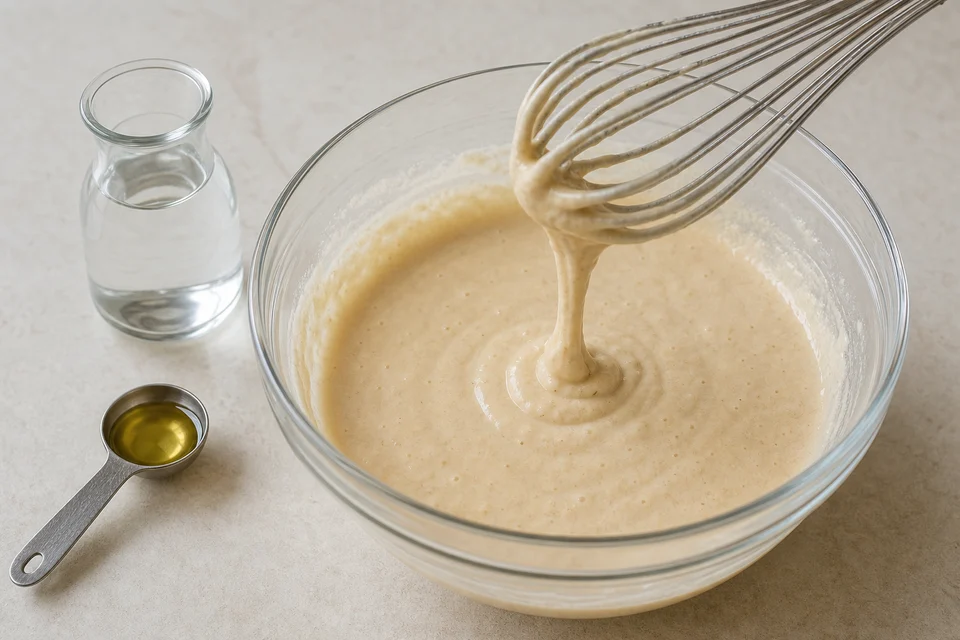
- Stir just until no dry pockets remain. Small flour lumps are less troublesome than prolonged beating. The finished batter should fall from the whisk in a thick ribbon and slowly settle back into the bowl.
- Let the batter stand for five minutes while the pan heats. This short pause gives the flour time to hydrate and makes it easier to judge whether the consistency is truly too thick or thin.
- Warm a skillet over medium-low heat. Add a thin film of oil and wipe away any puddle. Flicking water at a pan is not necessary; instead, cook a teaspoon of batter as a heat test. It should sizzle gently and color gradually, not scorch on contact.
- Scoop about 60 ml batter for one test pancake. Let it spread on its own. Cook until the edge looks set, bubbles appear across the upper surface, and the underside is evenly golden. Slide the turner underneath and flip once.
- Cook the second side until the center feels springy and no wet batter squeezes from the edge. Open the test pancake if you are unsure. A cooked interior should look set and tender rather than glossy and paste-like.
- Adjust only one variable if needed, then cook the remaining pancakes. Keep portions consistent and leave space between them so the turner can move cleanly.
- Serve promptly. If the batch must wait, place the pancakes in a single loose layer on a rack or warm plate instead of sealing them while steaming hot.
Why this formula works without milk
Milk is useful in pancakes, but it is not the only ingredient doing important work. Flour builds the main cooked framework once hydrated and heated. Egg helps bind the batter and contributes to the set interior. Oil limits dryness and gives tenderness. Baking powder supplies leavening, while the water or plant beverage hydrates the flour and controls how easily the batter spreads.
Removing dairy milk changes flavor and can change browning, richness, and batter thickness. It does not make a pancake impossible. The useful question is not “What copies milk perfectly?” but “Does this complete batter spread, rise, set, and taste good?” The test pancake answers that question under your flour, liquid, pan, and heat conditions.
Do not add extra baking powder simply because the recipe has no milk. More leavener can produce a coarse texture or a noticeable aftertaste. The listed amount is a starting formula, while texture corrections should first address measurement, consistency, and pan heat.
Water or plant beverage?
Water is inexpensive, widely available, and neutral. It makes the easiest baseline, especially when toppings carry most of the flavor. Because water contributes no fat, sugar, or dairy solids, the result may be less rich and less brown than a milk-based comparison. Oil, vanilla, fruit, spice, and toppings can supply flavor without trying to disguise the batch.
An unsweetened plant beverage may give a rounder flavor or different color. Oat beverages can taste gently cereal-like; soy beverages may have more body; almond beverages can bring a distinct nut note; coconut beverages vary dramatically between thin drinking products and rich canned coconut milk. Use the drinking-style product unless a recipe specifically calls for canned coconut milk.
Sweetened or flavored beverages change more than the liquid. They can increase sweetness, affect browning, and compete with savory toppings. If that is what you have, reduce or omit the tablespoon of sugar and cook the test pancake at slightly gentler heat if it colors too quickly.
For a more detailed comparison, see liquid milk substitutes for pancakes. If you want to understand the water-only option in isolation, read making pancakes with water.
Diagnose the batter before changing it
The written quantity is a controlled starting point. Flour can be packed into a cup, eggs vary in size, and plant beverages vary by formula. Make the batter, pause, and then observe.
If the batter sits like soft dough and will not fall from the whisk, stir in one tablespoon of liquid. Wait thirty seconds, then check again. Repeat only if necessary. Large unmeasured splashes make it easy to overshoot.
If the batter runs like cream and the test pancake spreads into a thin, lacy disk, first confirm that all the flour was added. Then whisk one tablespoon of flour with a spoonful of the loose batter in a small cup before stirring that smooth paste back into the bowl. This avoids scattering dry lumps through the entire batch.
If the consistency seems right but the pancake remains flat, inspect the baking powder and mixing method. Confirm the leavener was added, check that it is not an old open tin of uncertain performance, and avoid pressing the pancake after flipping. For a deeper diagnosis, use the Pancake Troubleshooting hub, then compare how buttermilk changes pancake batter before altering acidity or leavener.
Pan control and the first-pancake test
The first pancake is calibration, not a failure. If its outside is dark before the center sets, lower the heat and allow the pan to settle before the next portion. Making smaller pancakes also shortens the path heat must travel to the center. If the surface stays pale and the batter barely sizzles, raise the heat a small step and wait before pouring again.
A greasy halo around each pancake means there is too much oil in the pan. Wipe the excess into a thin sheen. A dry, sticking surface may need a little more fat, but sticking can also happen when you try to turn the pancake before its underside has formed a stable crust.
Flip when the signals agree: the edge is set, the upper bubbles are beginning to hold open, and the turner can slide under the cake. Bubbles alone are not a timer. Pan temperature, pancake size, and batter thickness all change when those bubbles appear.
Current-batch fixes
The pancakes are pale
Cook them a little longer at a controlled temperature before adding more heat. Water-based batter may not match the color of a milk-based batch. If flavor and texture are good, paler color is not automatically a defect. A plant beverage or modest amount of sugar may increase browning in a future batch, but either also changes the formula.
They are browned outside and wet inside
Lower the heat, make the next pancakes smaller, and avoid pouring a second scoop on top of a partly cooked portion. Give the pan a minute to cool after a scorched test. The guide to pancake size and yield explains why portion diameter must be planned alongside heat and cooking time.
They are dense or chewy
Stop stirring as soon as the dry flour disappears. Check that the batter can spread into a medium round; an extremely stiff batter often cooks as a heavy mound. Do not press the pancakes with the turner after flipping. Pressing expels steam and compresses a structure that is still setting.
They fall apart during the flip
Make the next pancake slightly smaller and wait until the first side is properly set. Slide the turner fully beneath the center, then turn with one confident motion. If the raw batter is extremely thin, correct its consistency before blaming the pan.
Flavor paths that keep the recipe flexible
For a bright sweet batch, add finely grated lemon or orange zest to the dry ingredients and serve with fruit. For warm spice, add cinnamon, cardamom, or a small pinch of nutmeg. For savory pancakes, omit the sugar and vanilla, add sliced herbs or spring onion, and choose toppings with enough moisture to balance the plain cake.
Add-ins can change cooking. A heavy handful of frozen berries cools the batter and releases moisture; large fruit pieces can tear the pancake during flipping; chocolate can scorch where it touches the pan. Begin with a modest amount and use the test pancake. Alternatively, keep the base simple and put fruit, compote, nuts, or sauces on top, as shown in the finished-dish hero.
Limits and planning the next batch
This recipe is not a universal one-for-one substitute for every milk-based formula. A recipe built around buttermilk and baking soda has a different acid balance. A very rich recipe may rely on milk solids or butter for its intended taste. A gluten-free or egg-free conversion changes the structure beyond the single milk substitution addressed here.
Record which liquid you used, whether it was sweetened, the measured flour and liquid, the scoop size, and the useful heat setting on your stove. Those notes turn a successful experiment into a repeatable breakfast. If you want to store extras, follow the separate pancake storage guide rather than leaving a warm sealed stack on the counter.
Frequently asked questions
Can I use only water instead of milk?
Yes. Use 240 ml water in this formula and keep the egg and oil. Expect a mild flavor, then judge the first pancake for spread, color, and doneness before adjusting the whole bowl.
Which plant beverage works best?
There is no universal winner because products differ in sweetness, fat, protein, flavor, and thickness. An unsweetened drinking-style oat, soy, or almond beverage is a practical starting point. Choose according to flavor and dietary needs, check the label, and make a test pancake.
Can I make these pancakes vegan?
Not without another recipe change: this formula contains egg. Replacing both milk and egg changes hydration, binding, and texture. Use a recipe developed for an egg-free batter instead of treating an untested swap as guaranteed.
Why is my batter lumpy?
Small soft lumps are normal after brief mixing. Dry flour pockets are not. Fold until the visible dry streaks disappear, but do not keep whisking solely to make the batter perfectly smooth.
Why did the second batch cook faster?
The pan may have continued heating while the first pancakes cooked. Reduce the heat slightly or pause between rounds. Judge every round by edge, surface, and underside rather than relying on the first timing.
Can I double the recipe?
Yes, but mix two bowls if your largest bowl encourages aggressive stirring. Keep the ingredient ratios exact, test the first pancake, and expect the pan temperature to drift during a longer cooking session.
Related Pancake World guides
- Start from the American Pancakes hub for technique and serving ideas.
- Compare the broader choices in liquid milk substitutes for pancakes.
- See what changes when making pancakes with water.
- Diagnose texture and heat problems through Pancake Troubleshooting.
Sources and editorial references
- King Arthur Baking Company ingredient weight chart —
https://www.kingarthurbaking.com/learn/ingredient-weight-chart
For more practical food and breakfast guides, visit Pancakes World.
For the wider topic, start with Guides/pancake Ingredients.
For a closely related guide, see Can You Make Pancakes Without Milk?.
A useful next comparison is No-Milk Pancakes: Ingredients, Substitutions, and Method.
You can also continue with How to Make Pancakes Without Eggs: A Reliable Method.
For another practical angle, read How to Make Pancakes: A Step-by-Step Beginner’s Guide.
