
Quick answer: can you make pancakes with water?
Yes. Water can hydrate flour and produce a cookable pancake batter, but it does not bring the fat, protein, sugar, flavor, or acidity that milk or buttermilk may contribute. A water-based pancake can therefore taste plainer, brown less readily, and feel less rich. The result depends on everything else in the recipe: eggs, oil or butter, flour, sugar, leavener, and any flavoring.
The safest practical approach is to use a recipe written for water or to make a small test when replacing the liquid in an existing recipe. Do not assume one universal water-to-flour ratio. Flour type and measurement method change absorption, while eggs, mashed fruit, yogurt, and other ingredients also count toward the batter’s total liquid.
What milk usually contributes
Milk is more than flavored water. Its solids participate in flavor and browning, its proteins affect the cooked structure, and its fat contributes richness when the milk is not fat-free. Buttermilk also brings acidity, which matters in recipes designed around baking soda. Removing dairy can therefore change several variables at once.
Water handles the essential hydration job. Flour starches and proteins need liquid before heat can set the pancake. Water also turns to steam during cooking and helps the batter flow. If a recipe has egg, oil, sugar, and baking powder, those ingredients still provide structure, tenderness, sweetness, and lift. That is why water pancakes can work even though they do not copy a milk-based batch exactly.
| Ingredient function | Milk or buttermilk | Water-only liquid choice |
|---|---|---|
| Hydration | Yes | Yes |
| Dairy flavor | Present | Absent |
| Fat | Varies by milk | None from the water itself |
| Milk sugar and proteins | Present | Absent |
| Acidity | Low in ordinary milk; higher in cultured buttermilk | Usually neutral |
| Recipe adjustment need | Formula already accounts for it | Depends on the remaining ingredients |
This is a functional comparison, not a claim that one version is healthier or suitable for every diet.
A careful way to adapt an existing recipe
First, read the leavener. If the recipe depends heavily on baking soda plus buttermilk, replacing the buttermilk with plain water removes an important acidic ingredient. Choose a recipe designed around baking powder, or use a tested substitution that restores the recipe’s intended acid balance. Do not add arbitrary amounts of acid and soda by guesswork.
Second, replace only the named liquid in a small portion of batter. Keep the flour, egg, oil, sugar, salt, leavener, mixing method, scoop size, and pan heat unchanged. Starting with the same weight of water as the named milk is a sensible controlled test, not a universal guarantee. Mix, rest if the recipe calls for it, then inspect the batter before making further changes.
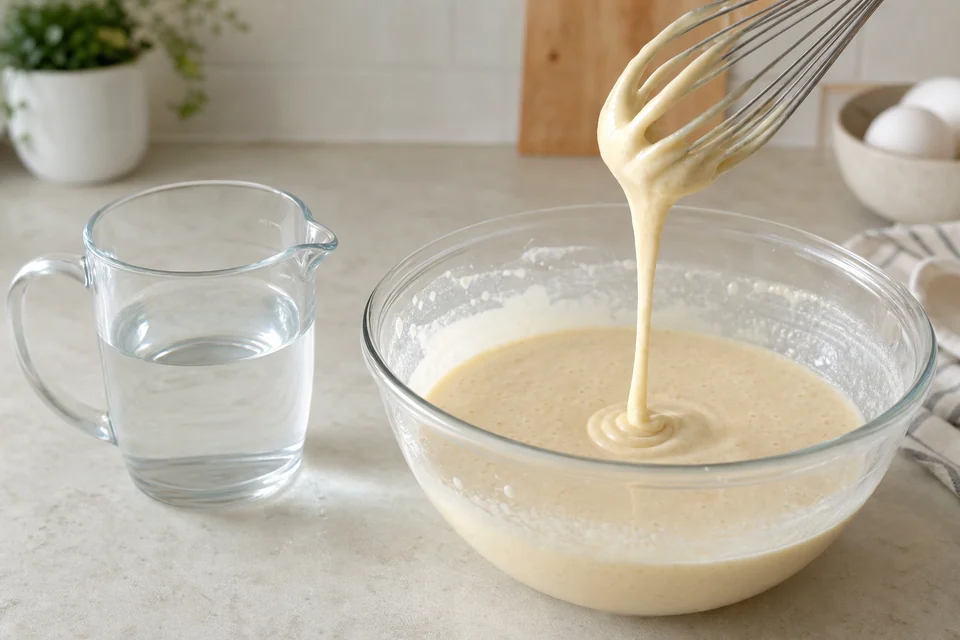
A useful batter falls from a spoon or whisk in a thick, continuous ribbon and slowly levels in the bowl. It should not behave like kneadable dough, but it should not run like plain water. Cook one small pancake. Its spread and center tell you more than trying to perfect the raw batter by eye.
If the test spreads into a very thin disk, recheck that the flour was measured correctly before adding more. If it barely spreads and stays raw in a thick mound, add water in very small measured increments. Record the adjustment so the next batch is repeatable.
Water-pancake cooking method
Preheat a flat skillet or griddle over moderate heat. A properly warmed surface should set the batter steadily without scorching its first contact points. Lightly grease if the recipe or pan requires it. Stir the rested batter gently only if it has separated; aggressive remixing can remove useful bubbles.
Portion one test pancake. Watch for the edge to lose its wet shine and for bubbles to appear and remain open near the center. Slide a spatula underneath and flip once the underside is set enough to lift cleanly. Cook the second side until the center is set. Because water-based batter may brown differently, do not use deep color as the only doneness signal.
Break open the test pancake. A cooked crumb should not show a line of wet batter. If the exterior is dark while the center is raw, reduce the heat and, if necessary, make smaller or thinner pancakes. If the cake is cooked but dry, consider a modest fat-bearing topping or revisit the oil or egg in the recipe rather than adding random water after the whole batch is mixed.
Troubleshooting by observation
| Result | Likely variables | Next controlled check |
|---|---|---|
| Thin, lacy spread | Too much total liquid, low-absorption flour, or undermeasurement | Verify flour weight; test one small addition of flour only if the recipe permits |
| Thick mound with raw middle | Too little liquid, oversized portion, or excessive heat | Add a small measured amount of water or use a smaller scoop; lower heat |
| Pale surface | Water removed milk solids and sugar may be low | Accept lighter color or use a tested formula; do not burn the pancake chasing brownness |
| Tough texture | Overmixing, too much flour, or too little tenderizing fat | Mix only until combined and verify measurements |
| Dry texture | Low fat, overcooking, or a thin portion | Shorten cooking once the center is set; serve with a moist topping |
| Flat pancake | Inactive leavener, wrong acid balance, or batter held too long | Check leavener date and use a recipe whose leavening system matches water |
| Bland flavor | Water contributes no dairy flavor | Add vanilla, spice, citrus zest, or a savory seasoning appropriate to the recipe |
Change one variable at a time. Adding more flour, more leavener, extra egg, and higher heat together makes it impossible to learn what fixed or worsened the batch.
Flavor and serving ideas
Water pancakes benefit from deliberate seasoning. For sweet pancakes, vanilla, cinnamon, cardamom, citrus zest, or a small amount of sugar can create aroma without depending on milk. For savory pancakes, herbs, black pepper, scallions, or spices may fit the recipe. Flavor additions do not repair an incorrect batter ratio, so solve structure first.
Moist toppings can compensate for a leaner eating experience. Fruit compote, sliced ripe fruit, yogurt if dairy is acceptable, nut or seed butter where allergies allow, or a small amount of syrup can work. For savory pancakes, consider cooked mushrooms, tomato, an egg prepared separately, or a spoonable vegetable mixture. These are serving options, not health prescriptions.
If the reason for using water is an empty refrigerator, keep the adjustment simple. If the reason is an allergy or dietary requirement, check every ingredient and shared surface. A water-based batter can still contain egg, wheat, dairy in a mix, or cross-contact from equipment.
Water versus other substitutes
Water is the most neutral liquid choice. Plant-based drinks can contribute flavor, solids, sugar, and sometimes fat, but products vary widely. Juice can add sweetness and acidity and may brown quickly. Yogurt, sour cream, or cultured substitutes are thicker and can change both hydration and acid balance. None is a drop-in universal equivalent.
Choose water when you want the least added flavor and the recipe’s remaining ingredients provide enough richness. Choose a specifically tested alternative when you want dairy-like flavor or when the leavening system depends on acidity. Read product labels when sweetness, fortification, thickeners, allergens, or flavorings matter.
Preparation, storage, and food-safety limits
Mix only as much batter as you plan to cook. Raw batter containing flour and egg should not be tasted. Clean bowls, whisks, counters, and hands after contact with raw batter. Cook until the center is set rather than serving a wet interior because the outside looks golden.
Cool leftover pancakes before packing them so trapped steam does not create a soggy surface. Refrigerate or freeze using a reliable cooked-pancake method, separating layers for easier reheating. Texture may become firmer after chilling because water alone contributes no fat. Reheat until suitably hot for serving, but avoid repeated cycles that dry the cakes.
This page does not give a universal storage duration because recipe ingredients, cooling, packaging, and local food-safety guidance matter. Follow the shortest applicable guidance for the actual recipe.
Common mistakes
The first mistake is treating water as nutritionally or functionally identical to milk. The second is swapping water into a buttermilk-and-baking-soda formula without addressing the acid balance. The third is judging doneness only by color, even though water pancakes can brown less than the original.
Other common problems include changing too many variables, pouring the whole batch before cooking a test, overmixing to remove every lump, and trying to repair a dry cooked pancake by making the remaining batter extremely thin. A measured test pancake is faster than guesswork.
Frequently asked questions
Can I replace milk with the same amount of water?
It is a reasonable starting test for some baking-powder pancake recipes, but not a universal rule. Flour, eggs, fat, and leavener determine whether the batter needs adjustment.
Will water pancakes be fluffy?
They can rise when the recipe has an effective leavener, suitable batter consistency, and proper cooking heat. Water alone does not guarantee or prevent fluffiness.
Can I use sparkling water?
Some tested recipes use carbonated water, but carbonation is not a replacement for correct leavener and batter structure. Use it only in a recipe designed for it.
Do water pancakes need oil?
Water adds no fat. A recipe may therefore include oil, melted butter, egg yolk, or another tenderizing ingredient. Follow the formula rather than assuming the pan grease is enough.
Why are my water pancakes pale?
Removing milk also removes milk sugars and proteins that can contribute to browning. The cakes may be fully cooked at a lighter color.
Are water pancakes dairy-free?
Only if every ingredient and preparation surface meets that requirement. Pancake mix, toppings, cooking fat, and shared equipment may contain or contact dairy.
Can I save water-based batter overnight?
Use a recipe that explicitly supports that storage plan. Leavener activity, raw egg, flour, and refrigeration all matter; cooking the pancakes and storing the cooked result is often easier.
What is the fastest fix for batter that is too thick?
Add water a teaspoon or small measured splash at a time, stir gently, and cook another test pancake. Large additions are hard to reverse.
Related Pancake World pages
Compare milk and buttermilk in pancakes and explore milk substitutes for pancakes.
Sources and editorial references
- King Arthur Baking, Buttermilk substitute: What to use —
https://www.kingarthurbaking.com/blog/2019/01/28/buttermilk-substitute - King Arthur Baking, How to substitute whole wheat for white flour in baking —
https://www.kingarthurbaking.com/blog/2020/06/22/how-to-substitute-whole-wheat-for-white-flour-in-baking
For more practical food and breakfast guides, visit Pancakes World.
For the wider topic, start with Guides/pancake Ingredients.
For a closely related guide, see Eggless Pancakes: A Reliable Fluffy Recipe and Troubleshooting Guide.
A useful next comparison is How Milk Fat Changes Pancake Browning and Tenderness.
You can also continue with How to Make Pancakes Without Eggs: A Reliable Method.
