
Quick answer
These three-ingredient protein pancakes use rolled oats, cottage cheese, and eggs. Blend them into a pourable batter, let it stand briefly so the oats hydrate, then cook small pancakes over medium-low heat. The recipe contains no protein powder, banana, or separate flour. It makes a practical breakfast with a hearty oat texture and a mild cultured-dairy flavor.
“Protein pancakes” describes the ingredient direction, not a universal nutrition promise. Protein varies with egg size, cottage-cheese brand, portion, and toppings. Calculate from the labels on the products you actually use if a precise total matters.
Three-ingredient starting formula
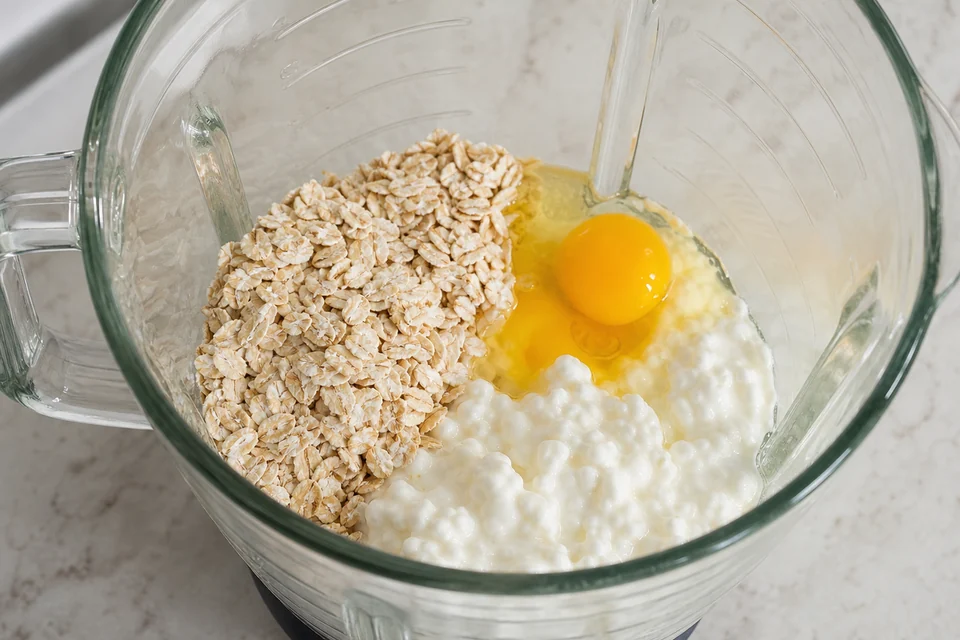
For about eight small pancakes, use:
- 100 g rolled oats;
- 225 g cottage cheese;
- 2 large eggs.
Optional cooking fat, salt, toppings, and flavorings are not counted among the core three ingredients. They are optional and should be disclosed if you describe the finished dish to someone with dietary restrictions.
This is a starting formula designed around ordinary rolled oats and full-size eggs. Quick oats can absorb differently, steel-cut oats are not a direct replacement, and very wet or very dry cottage cheese changes batter flow. The first pancake is the calibration step.
Method
- Put the oats, cottage cheese, and eggs in a blender. Blend until no large oat flakes remain and the batter looks mostly smooth. Tiny oat and curd texture is acceptable.
- Leave the batter for five minutes. This gives the oats time to absorb liquid and makes the first-pancake result more representative.
- Heat a nonstick skillet or well-seasoned griddle over medium-low heat. Add a thin film of cooking fat if the surface requires it.
- Spoon small portions—about two tablespoons each—onto the pan. Small pancakes are easier to turn because this batter has no wheat-flour gluten network.
- Cook until the outer edge looks set and the underside releases cleanly. Turn once with a thin spatula, then cook the second side until the center is fully set.
- Open the first pancake. If the middle is wet while the outside is dark, lower the heat and make the remaining pancakes smaller. If it is firm and dry, shorten the cooking time slightly or make the batter a little thicker next time by allowing a longer rest.
What each ingredient does
Rolled oats provide the dry base and much of the structure after blending. Their particle size and hydration affect thickness. Certified gluten-free oats may be required for people avoiding gluten, but the current label and kitchen cross-contact still matter.
Cottage cheese supplies moisture, dairy solids, and a gentle tang. Small-curd and large-curd products both blend, but water content varies. A very wet product can produce a looser batter; draining it changes the formula, so record that choice.
Eggs bind the mixture and set as the pancakes cook. They also help the batter emulsify in the blender. An egg-free variation is a separate recipe-development problem; removing eggs without a tested replacement is likely to change structure substantially.
The University of Illinois Extension publishes a protein-oriented pancake formula using yogurt, egg, milk, whole-wheat flour, and baking soda. It supports the broader idea that cultured dairy and egg can contribute to a protein-focused pancake, but it is not the same three-ingredient formula and should not be presented as such.
Batter and pan diagnostic table
| What you see | Likely issue to check | Next controlled move |
|---|---|---|
| batter pours like a thin drink | wet cottage cheese, short rest, large eggs | wait five more minutes before changing ingredients |
| batter sits in a stiff mound | highly absorbent oats or dry cottage cheese | blend again; add only a measured spoonful of water if necessary |
| outside dark, center wet | pan too hot or pancakes too large | lower heat and reduce portion size |
| pancake tears when turned | turn attempted before the underside released | cook smaller and wait for a set edge |
| texture is rubbery | prolonged high-speed blending or overcooking | blend only until combined and shorten the second side |
| pancakes stick | unsuitable or insufficiently prepared surface | use a sound nonstick pan or a thin film of fat |
Change one variable at a time. Adding liquid, extra oats, baking powder, and banana at once may rescue a bowl, but it creates a different recipe and teaches little about the original problem.
Why small pancakes work better
Wheat pancakes often rely on a flour-and-liquid network that becomes firm enough to span a broad circle. Here, blended oats and egg do most of that work. A small diameter keeps the center closer to the hot surface and gives the spatula more support during turning.
Use the same scoop for every pancake. Consistent portions make timing more repeatable. The pan should be hot enough to set the underside but gentle enough to cook the center before the exterior becomes too dark. Medium-low is a useful verbal starting point, but pans and burners differ, so the first pancake remains the real calibration.
Do not press the pancake after turning. Pressing can force out moisture and flatten the structure. If a pancake is too thick to cook, reduce the portion in the next round rather than compressing it in the pan.
Flavor variations that keep the core visible
The basic batter is mild and slightly tangy. Cinnamon, vanilla, lemon zest, or cocoa can be added in small measured amounts, but they technically take the recipe beyond three ingredients. That is fine when the label is honest. A pinch of salt can sharpen flavor, and a little cooking fat can improve release.
For fruit, put berries on the plate or add only a few small pieces to each pancake after portioning. A large amount of frozen fruit cools the batter and creates wet pockets. Banana changes both moisture and sweetness, so “three-ingredient banana protein pancakes” is a different formula, not a casual garnish.
Toppings can provide contrast without changing the cook. Yogurt and berries echo the cultured flavor. Nut or seed butter adds richness, but allergens must be named. Syrup adds sweetness; use the amount that suits the meal rather than framing it as forbidden or required.
Nutrition, allergen, and dietary limits
Do not publish a protein number without calculating the exact products and yield. “High protein” also has regulatory and dietary meanings that vary by jurisdiction and context. This article uses the established search question while keeping the factual claim narrow: eggs and cottage cheese are protein-containing ingredients, and oats also contribute some protein.
The recipe contains egg and milk. Oats may carry gluten cross-contact unless specifically controlled and labeled. A change to dairy-free cottage cheese, egg substitute, or another grain alters the formula and requires a new test. It may still produce a good pancake, but this guide does not promise equivalent structure.
People managing kidney disease, allergies, metabolic conditions, medication interactions, or a prescribed diet should use advice tailored to them. A breakfast recipe is not individualized medical guidance.
Food safety and storage
Do not taste the raw batter. Eggs require safe handling, and oats can carry the same raw-grain concern described by the U.S. Food and Drug Administration for flour. Keep raw batter away from ready-to-eat toppings, clean the blender and utensils, and cook the center fully.
Serve the pancakes promptly. For leftovers, cool them without leaving them at room temperature for an extended period, then refrigerate or freeze in a sealed container. Use the complete freezing homemade pancakes guide for separating, labeling, and reheating a batch.
Freeze in a single layer first or separate pancakes with parchment so you can remove only what you need. Reheat until the center is hot, not merely until the outside softens.
Frequently asked questions
Can I make these without a blender?
You can use oat flour and mash the cottage cheese thoroughly, but the texture will differ. A blender gives the most even oat particle size and disperses the curds.
Can I replace cottage cheese with yogurt?
Not as an equal swap in this formula. Yogurt has a different water and solids balance. Use a recipe tested with yogurt, such as the cited Illinois Extension direction.
Do I need protein powder?
No. This version relies on oats, cottage cheese, and eggs. Protein powder would change absorption, sweetness, and cooking and needs its own formula.
Why do the pancakes fall apart?
They may be too large, too wet, turned too early, or cooked on a surface that does not release cleanly. Start smaller and review the pancakes falling apart guide.
Can I make the batter ahead?
The oats continue absorbing liquid, so the batter changes as it stands. For the most repeatable result, cook it soon after the short rest and store cooked pancakes instead.
Related Pancake World pages
Read why pancake recipes include eggs for ingredient function, why pancakes fall apart for turning and structure, or freeze homemade pancakes for a make-ahead plan.
Sources and editorial references
University of Illinois Extension — Recipe Rescue: Pancakes — https://extension.illinois.edu/blogs/live-well-eat-well/2014-07-17-recipe-rescue-pancakes
U.S. Food and Drug Administration — Handling Flour Safely — https://www.fda.gov/food/buy-store-serve-safe-food/handling-flour-safely-what-you-need-know
For more practical food and breakfast guides, visit Pancakes World.
For the wider topic, start with Guides/healthy Pancakes.
For a closely related guide, see How to Make Protein Pancakes with Cottage Cheese.
A useful next comparison is Breakfast Recipes to Start the Day.
You can also continue with How to Make Cottage Cheese Pancakes.
