
Quick answer
Cottage-cheese pancakes are tender griddle pancakes with cottage cheese folded through the batter. The curds add moisture and a soft, slightly uneven interior, while flour and egg provide enough structure to turn. Success depends on the cottage cheese: a wet large-curd product can loosen the bowl, while a dry fine-curd product can make the same formula feel thick.
This recipe keeps some curds visible instead of blending the batter completely smooth. It is a Pancake World home formula, not a claim to reproduce syrniki or any other culturally specific curd pancake. Use modest portions and gentle heat so the centre sets before the outside becomes dark.
Ingredients
- 250 g cottage cheese
- 2 large eggs
- 120 ml milk, with 30 ml held back
- 1 teaspoon vanilla, optional
- 20 g sugar, or less for a savoury direction
- 150 g plain all-purpose flour
- 1 1/2 teaspoons baking powder
- 1/2 teaspoon fine salt
- 25 g melted butter, cooled, or 2 tablespoons neutral oil
- A little suitable fat for the pan
The batch makes about ten small pancakes. Use actual scoop size to establish yield. Cottage-cheese brands differ in curd size, cream dressing, salt, fat, and water, so the held-back milk is intentional.
Choose and prepare the cottage cheese
Open the container and inspect the product. If liquid pools freely, drain it through a fine sieve for several minutes, then weigh the 250 g used. Do not press it bone-dry. If the curds are very large, break them gently with a fork. Avoid turning them into a smooth paste unless that is the texture you want.
Taste a small amount only while it remains safely handled and before it contacts raw egg or flour. A salty cottage cheese may need less added salt, while an especially tangy product may need no extra flavouring. Check the current label for allergens, sodium, and serving information rather than assuming all products match.
Mix the wet ingredients
Whisk eggs, 90 ml milk, vanilla, sugar, and melted cooled butter. Fold in the cottage cheese. The mixture should look lumpy because the curds remain visible. If you prefer a more even crumb, mash only half the curds and leave the rest intact.
Do not use a blender by default. Complete blending can make the batter thinner, eliminate curd texture, and encourage overmixing once flour is added.
Add the dry ingredients
Whisk flour, baking powder, and salt separately. Fold them into the wet mixture until no dry flour remains. Let the batter stand for five minutes. It should be thick and scoopable but fall from a spoon with gentle encouragement.
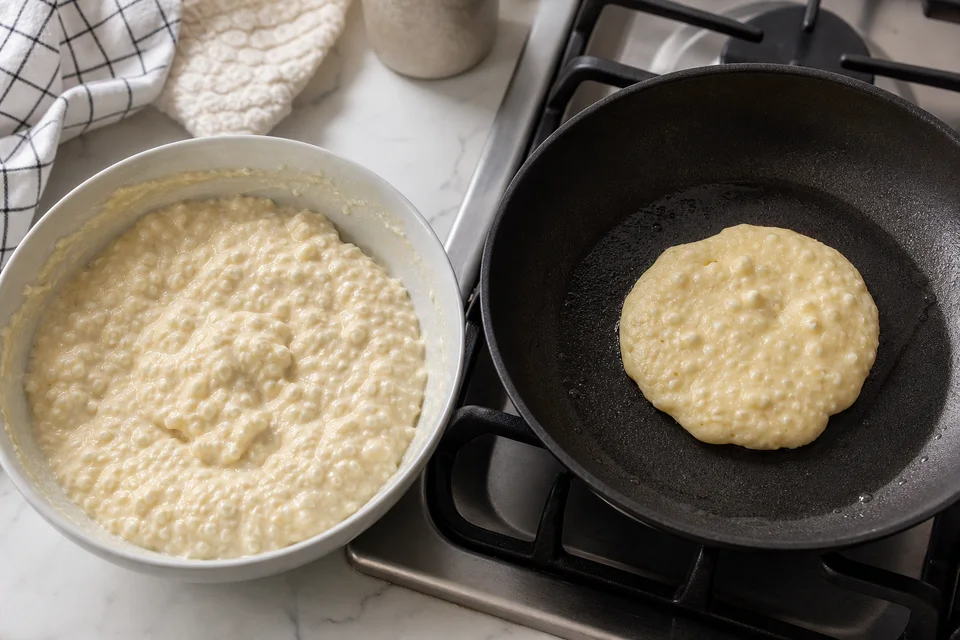
If the rested batter is rigid, add the held-back milk one tablespoon at a time. If it looks loose, do not add a large handful of flour immediately. Cook a small test because the egg and curds may still set into a tender pancake.
Cook a small test pancake
Warm a skillet gradually over medium-low to moderate heat. Add a thin film of fat. Spoon a small portion into the pan and spread it only enough to make an even round. Cottage-cheese batter benefits from a smaller diameter because its centre is moist.
Wait until the edge looks set, bubbles or small openings appear, and the underside is browned. Slide a broad turner underneath and flip once. Cook the second side, then cut the test pancake. The centre should be moist and curd-speckled but not glossy with raw batter.
If the outside darkens first, lower heat and make the next pancake smaller. If the pancake spreads too far, stir the bowl and allow another minute of hydration before a measured flour correction.
Cook the remaining batch
Stir gently before every panful because curds settle. Leave room between pancakes and keep the scoop consistent. Add only enough pan fat to prevent sticking. Cheese solids at the surface can brown quickly, so remove burnt residue between rounds.
Move cooked pancakes to a rack or loose platter. A deep covered stack traps steam and can make the tender curd crumb feel wet. Serve promptly with toppings beside or lightly over the pancakes.
What the ingredients do
Cottage cheese supplies moisture, curds, dairy flavour, and product-specific protein and fat. It is not a dry flour replacement.
Egg helps bind the wet curds and flour. Adding more egg can make the result firmer or rubbery rather than automatically stronger.
Flour creates the continuous structure around the curds. Too little can produce fragile pancakes; too much hides the cheese and creates a doughy centre.
Baking powder provides moderate lift. The goal is tenderness, not a towering American pancake.
Milk adjusts consistency. Because cottage cheese already contains water, it is safer to hold some back.
Fat softens the crumb and helps surface browning, but excess pan fat can fry the cheese solids.
Sweet serving ideas
Serve with berries, sliced stone fruit, apple compote, lemon zest, cinnamon, or a modest amount of syrup. A spoonful of yogurt can be pleasant but adds another soft dairy element; use fruit or toasted seeds for contrast.
The fruit toppings guide explains fresh, macerated, cooked, and compote options. Keep juicy toppings off the stack until service so they do not saturate the crumb.
Savoury serving ideas
Reduce sugar, omit vanilla, and add chopped chives or dill. Serve with sautéed mushrooms, roasted tomato, cucumber, smoked fish, or a crisp salad. Choose one salty topping and check the cottage cheese before adding more salt.
Do not fold large amounts of wet vegetables into this base. A cottage-cheese-and-spinach version needs drained spinach and a dedicated formula.
Nutrition and label boundary
Cottage cheese can raise the protein contribution compared with some plain pancake recipes, but the exact value depends on product, portion, flour, egg, yield, cooking fat, and toppings. “Cottage cheese” is not a universal nutrition number.
Compare the complete batch using current labels. The protein pancakes versus regular pancakes guide explains why a recipe name alone cannot rank nutrition. For another dairy-and-oat direction, use oat, banana, and yogurt pancakes.
Current-batch fixes
Pancakes spread into thin puddles: Stir the bowl, reduce the scoop, and let it stand. If the test still lacks structure, fold in flour one measured tablespoon at a time.
Pancakes are thick and dry: Add reserved milk gradually and stop cooking as soon as the centre is set. Extra syrup cannot restore an over-floured crumb.
Curds leak or scorch: Lower heat, use a little less pan fat, and clean browned cheese from the surface between batches.
Pancakes break during turning: Make them smaller, wait for a set edge and browned underside, and support with a broad turner.
The centre looks wet: Return the pancake to gentle heat. Reduce portion size for the remaining batter. Do not confuse a visible white curd with raw flour paste.
The flavour is too salty: Stop adding salt and use unsalted fruit or vegetables at service. Choose a lower-salt product next time.
Use the Pancake Troubleshooting hub for symptoms shared with other batters.
Prevent the next batch from drifting
Record cottage-cheese brand, fat level, drained weight, curd size, milk adjustment, scoop, pan, and heat setting. Take a photograph of the rested batter or note how it falls from a spoon. That evidence is more useful than “one tub,” because tubs and products vary.
Change only one factor in the next batch. If you want more cheese flavour, increase cottage cheese through a tested adjustment rather than simultaneously reducing flour and adding yogurt. If you want a smoother pancake, mash curds first while keeping all weights stable.
Storage and reheating
Cool cooked pancakes promptly in one layer and refrigerate or freeze them under current official leftovers guidance. Store fruit and sauces separately. Reheat gently in a skillet, oven, or microwave until hot throughout; prolonged high heat can make the cheese-and-egg crumb firm.
Do not store raw batter for later unless a tested recipe explicitly supports it. Raw flour and egg require safe handling, while leavening and curd moisture continue changing in the bowl.
FAQ
Do I have to blend cottage cheese?
No. Leaving small curds gives the pancake a recognizable texture. Mash or blend only when you deliberately want a smoother crumb.
Why are my cottage-cheese pancakes wet inside?
The pancakes may be too large, the heat too high, the cottage cheese too wet, or the batter under-structured. Diagnose with a small cut test.
Can I use low-fat cottage cheese?
Yes if the formula remains balanced, but products differ in water and texture. Hold back milk and adjust after the rest.
Can I make them savoury?
Yes. Reduce sugar, omit vanilla, add herbs, and choose toppings that account for the cottage cheese’s salt.
Are cottage-cheese pancakes high in protein?
They may contain more protein than some plain formulas, but the exact amount depends on the complete recipe, yield, portion, and product label.
Related Pancake World guides
Compare protein and regular pancakes, choose from fruit toppings, or try the separate oat, banana, and yogurt pancake formula.
Sources and editorial references
- Academy of Nutrition and Dietetics: What to Look for in Cottage Cheese —
https://www.eatright.org/food/food-groups/dairy-and-alternatives/what-to-look-for-in-cottage-cheese - U.S. Food and Drug Administration: Handling Flour Safely —
https://www.fda.gov/consumers/consumer-updates/handling-flour-safely-what-you-need-know - U.S. Food and Drug Administration: What You Need to Know About Egg Safety —
https://www.fda.gov/food/buy-store-serve-safe-food/what-you-need-know-about-egg-safety
For more practical food and breakfast guides, visit Pancakes World.
For the wider topic, start with Guides/healthy Pancakes.
For a closely related guide, see Easy 3-Ingredient Protein Pancakes with Oats and Cottage Cheese.
A useful next comparison is Green Savory Pancakes with Spinach and Herbs.
You can also continue with How to Make Protein Pancakes with Cottage Cheese.
