
Quick answer
These oat, banana, and yogurt pancakes are a practical “healthy pancake” choice because they use familiar ingredients, need no added sugar in the base, and can be served with fruit, yogurt, nuts, seeds, eggs, or savory sides. They are not objectively the healthiest pancakes for every person. Individual nutrition needs, allergies, portion preferences, and the rest of the meal matter more than a headline.
The recipe makes about eight small pancakes. Rolled oats are blended into flour, banana supplies sweetness and moisture, yogurt adds body and tang, and eggs help the tender oat batter hold together. The first pancake is a texture test: oat flour continues absorbing liquid, so a measured splash may be needed after the batter rests.
What “healthy pancakes” can reasonably mean
“Healthy” is not one ingredient, calorie threshold, or topping ban. A breakfast can be useful because it fits someone’s overall eating pattern, tastes satisfying, respects medical or cultural needs, and is realistic to prepare. For one person, that may mean fruit and yogurt with oat pancakes. For another, it may mean a savory plate, a gluten-free formula with verified labels, or a portion that works with guidance from a clinician.
USDA MyPlate provides one broad planning framework that encourages variety across fruits, vegetables, grains, protein foods, and dairy or fortified soy alternatives. It is not a command to force every food group onto one pancake plate. It is a reminder that a stack is part of a meal, not a complete verdict on the eater’s diet.
This article therefore focuses on controllable kitchen choices: whole oats, ripe banana, plain yogurt, moderate added fat, useful toppings, and clear portions. It avoids promises about weight loss, blood sugar, cholesterol, athletic performance, or disease prevention.
Oat, banana, and yogurt pancake recipe
Ingredients
- 180 g rolled oats
- 1 teaspoon baking powder
- 1/2 teaspoon ground cinnamon
- 1/4 teaspoon fine salt
- 1 medium ripe banana, peeled, about 100 to 120 g
- 2 large eggs
- 120 g plain yogurt
- 80 ml milk or unsweetened plant beverage, plus more if needed
- 1 teaspoon vanilla extract, optional
- 1 teaspoon neutral oil for the batter
- additional oil for the pan
Choose rolled oats labeled for your dietary needs. Ordinary oats are naturally different from wheat, but products can be processed in shared systems and recipes can include gluten from other ingredients. “Oat pancakes” are not automatically safe for someone with celiac disease or wheat allergy. Check every label and follow personal medical advice.
Plain dairy yogurt, lactose-free yogurt, or an unsweetened plant-based yogurt can work, but each has a different thickness and ingredient list. The first-pancake test handles that variation better than pretending every pot is identical.
Equipment
Use a blender or food processor, mixing bowl, whisk, flexible spatula, nonstick or well-seasoned skillet, and a roughly 45 ml scoop. A kitchen scale improves repeatability. If your blender cannot grind dry oats safely, follow its manufacturer’s instructions and use purchased oat flour instead.
Complete method
- Blend the rolled oats until they resemble coarse flour. A few small flakes are fine; large whole patches make the pancakes more fragile.
- Whisk the oat flour, baking powder, cinnamon, and salt in a bowl.
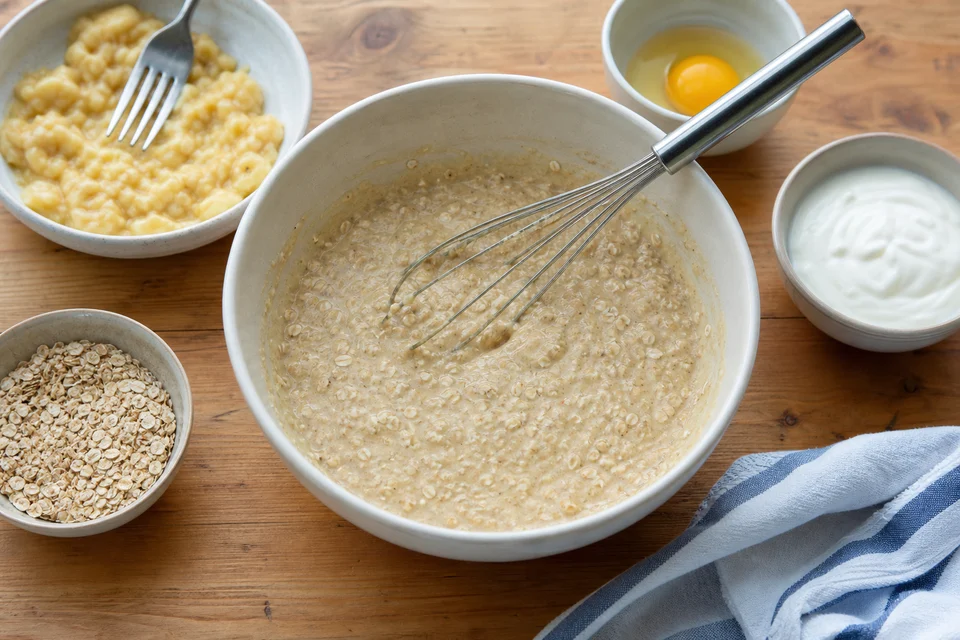
- Mash the banana until mostly smooth. Whisk in the eggs, yogurt, 80 ml milk or plant beverage, vanilla, and one teaspoon oil.
- Add the wet mixture to the oat mixture and fold until evenly combined. The batter will look looser at first and thicken as the oats absorb liquid.
- Rest for ten minutes. Do not skip the rest and then add extra flour; oat batter needs time to reveal its final consistency.
- Heat a skillet over medium-low and wipe it with a thin film of oil.
- Check the rested batter. It should fall from a scoop in a thick ribbon and spread slowly. If it sits as a stiff mound, stir in one tablespoon liquid. Repeat only if necessary.
- Scoop one small test pancake. Let it spread to about 8 to 10 cm rather than forcing a large round.
- Cook until the edges look set, the surface loses its wet shine, and the underside is golden. Slide a wide turner fully underneath and flip once.
- Cook the second side until the center feels springy. Open the test pancake to confirm the interior is set, then adjust heat or consistency before continuing.
- Cook the remaining pancakes in small rounds. Stir gently once if the bowl thickens while standing; add a measured splash of liquid if needed.
Why this batter behaves differently
Oat flour does not build the same elastic network as ordinary wheat flour. The batter can feel tender and moist, but it may also be more fragile during the flip. Banana adds moisture and soft solids, which makes a very large pancake harder to turn. Yogurt thickness varies and the oats continue taking up liquid while the bowl waits.
Those differences explain the small scoop, short rest, and patient first side. Making the pancakes wider does not make the breakfast more substantial; it makes the flip less forgiving. If you want a large diner-style pancake, choose a formula developed for that size.
The eggs matter to this particular recipe. They help the oat and banana mixture set into a cake that can be moved. Removing them is a second major formula change. Use a tested egg-free oat pancake recipe rather than assuming a mashed banana will replace every function.
Build the finished plate
The hero shows a practical pattern, not a prescribed meal: three small pancakes, berries, a spoonful of fruit compote, chopped walnuts, and plain yogurt. Each part contributes flavor and texture. The fruit supplies brightness; the yogurt is cool and creamy; walnuts provide crunch; the pancakes carry the warm oat-and-banana base.
Other useful combinations include:
- sliced apple, cinnamon, and plain yogurt;
- orange segments, toasted almonds, and a small drizzle of honey;
- warm berries, pumpkin seeds, and cottage cheese;
- pear, tahini, and sesame seeds if suitable for the eater;
- sautéed mushrooms, spinach, and an egg for a savory plate;
- tomato, herbs, and plain yogurt with the cinnamon and vanilla omitted.
USDA MyPlate identifies eggs, nuts, seeds, soy products, beans, peas, and lentils among protein-food examples. That does not mean every topping portion suits every person. It simply widens the planning options beyond syrup alone.
For more combinations, see practical pancake toppings. If nutrition numbers matter, calculate them from the exact brands, quantities, and servings used rather than copying a generic estimate.
Current-batch fixes
The batter became very thick
Oats continued absorbing liquid. Add one tablespoon milk or plant beverage, fold gently, and wait. The batter should spread slowly instead of staying in the shape of the scoop. Avoid large unmeasured pours.
The pancakes spread too far
Confirm the oats were blended and the batter rested. If it remains runny, mix one tablespoon oat flour with a spoonful of batter, then return the smooth paste to the bowl. Make the next pancake smaller.
They break during flipping
Wait longer on the first side. Use a wide turner, make smaller rounds, and slide underneath the center before lifting. If the raw batter is very loose, correct it first. Trying to flip from the edge with a narrow tool encourages tearing.
The outside browns before the center sets
Banana can make the surface color quickly. Lower the heat, reduce the scoop size, and let the pan settle before the next pancake. Do not press the top to speed cooking; pressing compacts the soft center.
The pancakes are gummy
Check for an undercooked center before changing the recipe. Smaller pancakes and gentler heat help the middle set. If the test is fully cooked but unpleasantly wet, the banana may have been very large or the yogurt extremely loose. Record the weights and reduce one moisture source in the next batch.
They taste bland
Salt and cinnamon should be present but restrained. Add fruit, yogurt, toasted nuts, spice, citrus zest, or a savory topping to the cooked batch. Do not keep sweetening the entire raw bowl before tasting one finished pancake.
The Pancake Troubleshooting hub can help separate heat, spread, flipping, and doneness problems.
Ingredient swaps and their limits
Banana
Ripe banana sweetens and moistens this formula. Applesauce or pumpkin purée are not automatic one-for-one replacements; their water and solids differ. Use a recipe written for the ingredient or make a half-batch experiment.
Yogurt
A thinner yogurt may need less additional milk, while a very thick strained yogurt may need more. Plant yogurts can contain starches, gums, sugar, or coconut fat. Read the label and use batter cues.
Oats
Quick oats can blend readily but may absorb differently. Steel-cut oats are not a direct substitute because their hard pieces do not become flour in every blender and do not hydrate on the same schedule. Purchased oat flour can replace the blended oats by weight as a test, but brand fineness may change the liquid need.
Eggs
This recipe uses two eggs for structure. An egg substitute changes binding and moisture. Choose a tested recipe if egg-free cooking is necessary.
Sweetness
The base contains no added sugar because ripe banana supplies sweetness. That is a flavor choice, not a moral category. If the banana is barely ripe or you plan a plain serving, a small measured sweetener may make the recipe more enjoyable. Toppings count too.
Preparing ahead without overpromising texture
Oat batter thickens as it stands, and baking powder begins working after mixing. For the most predictable result, blend the dry oats ahead and combine the wet and dry mixtures near cooking time. Cooked pancakes can be cooled and stored using the separate pancake storage guide.
If you prepare components for a group, set out fruit, yogurt, nuts, seeds, and savory toppings separately. Label ingredients when allergies or dietary restrictions are involved. A communal topping bar is convenient, but shared spoons and crumbs can defeat an allergen plan.
How to personalize the recipe thoughtfully
Start with a purpose. If you want more fruit, add it on top where the quantity is visible and the pancake still cooks reliably. If you want a savory meal, omit vanilla and cinnamon and choose vegetables, herbs, or egg. If you want more protein, pair the plate with a suitable food rather than packing an arbitrary amount of powder into the batter.
Protein powders absorb liquid and vary in sweetener, flavor, and heat behavior. They are not plain flour. For the distinction, read protein pancakes versus regular pancakes.
Record the exact adjustment and judge taste, texture, cost, effort, and how the breakfast fits the eater’s needs. The “best” version is the one you can reproduce and enjoy, not the one with the longest list of virtuous-sounding ingredients.
Limitations
This recipe is not medical nutrition therapy. It does not provide a diabetes, heart-health, weight-loss, sports, child-feeding, pregnancy, or allergy treatment plan. Needs differ, and some readers require advice from a qualified health professional.
The finished plate can become very different depending on portions and toppings. “No added sugar in the batter” does not describe syrup, sweetened yogurt, compote, or beverages served with it. “Made with oats” does not establish gluten-free status. “High protein” cannot be claimed without calculating the actual formula and serving under the applicable labeling rules.
Frequently asked questions
Are oat pancakes healthier than regular pancakes?
Not automatically. They use a different grain base and have different texture and nutrition, but the full recipe, serving, toppings, and eater’s needs determine relevance.
Can I make these without banana?
Not as the same recipe. Banana supplies moisture, sweetness, and solids. Use a tested non-banana oat pancake formula or run a careful half-batch conversion.
Can I use oat flour?
Yes, replace the blended oats by weight as a starting test. Purchased flour may be finer, so judge the rested batter and add liquid only in measured increments.
Are these pancakes gluten-free?
Only if every ingredient and preparation condition meets the eater’s requirements. Check the oats, baking powder, toppings, and shared equipment.
Can I add protein powder?
It changes liquid absorption, sweetness, and texture. Use a recipe developed for that powder or replace only a small measured portion in a test batch.
Why are my oat pancakes fragile?
They may be too large, too wet, or flipped before the first side sets. Use a smaller scoop, a wide turner, and a patient medium-low heat.
Related Pancake World guides
- Try the focused easy oatmeal pancake recipe.
- Build a plate with practical pancake toppings.
- Compare protein pancakes and regular pancakes.
- Use the Pancake Troubleshooting hub.
- Return to the American Pancakes hub.
Sources and editorial references
- USDA MyPlate —
https://www.myplate.gov/ - USDA MyPlate, Protein Foods —
https://www.myplate.gov/web/web/eat-healthy/protein-foods
For more practical food and breakfast guides, visit Pancakes World.
For the wider topic, start with Guides/healthy Pancakes.
For a closely related guide, see Oatmeal Pancakes: A Tender Rolled-Oat Recipe.
A useful next comparison is Egg and Banana Pancakes: A Two-Ingredient Method.
You can also continue with How to Make Balanced Pumpkin Pancakes.
