
Quick answer
Good oatmeal pancakes should taste clearly of oats without crumbling like a bowl of loose porridge. The easiest guide is to soak rolled oats in the recipe’s milk before mixing, then combine them with enough wheat flour and egg to hold the pancakes together. The soaked oats remain visible and tender, while the flour provides a dependable turning structure.
This is not a health claim disguised as a recipe. Oats, toppings, serving size, and packaged ingredients all affect the finished meal. The aim here is practical: a warm, gently textured pancake that cooks evenly and can be adapted with fruit or spice.
Rolled-oat pancake recipe
The recipe makes about 12 small pancakes:
- 90 g old-fashioned rolled oats, about 1 cup
- 300 ml milk or unsweetened plant beverage, about 1 1/4 cups
- 120 g all-purpose flour, about 1 cup
- 2 teaspoons baking powder
- 1/2 teaspoon fine salt
- 1 teaspoon ground cinnamon, optional
- 2 large eggs
- 25 g brown sugar or maple syrup, about 2 tablespoons
- 30 ml neutral oil or melted butter, 2 tablespoons
- 1 teaspoon vanilla extract, optional
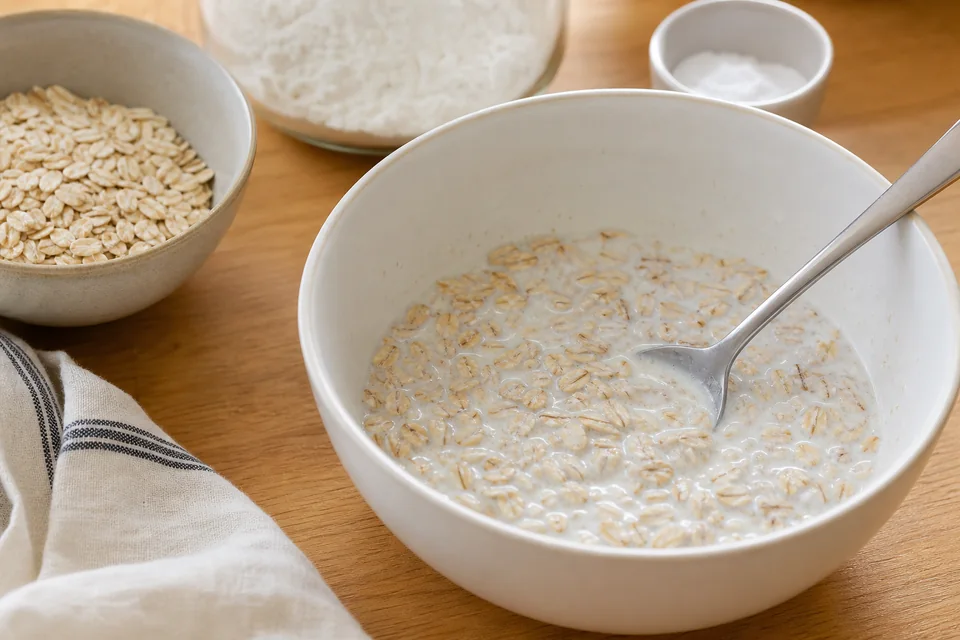
Put the oats and milk in a bowl and leave them for ten minutes. The flakes should soften and absorb some liquid but remain recognizable. Whisk flour, baking powder, salt, and cinnamon in another bowl. Beat eggs, sugar, oil, and vanilla into the soaked oats.
Pour the dry mixture into the oat mixture and fold until the flour disappears. The batter will look more textured than a plain pancake batter. Rest it for three minutes, then lift a spoonful. It should drop slowly and settle into a small round. If it stands in a mound, add milk one tablespoon at a time. If liquid gathers around the oats, fold once, wait another minute, and test before adding flour.
Heat a lightly greased nonstick skillet over medium heat. Portion about 3 tablespoons per pancake. Oat batter spreads less than many plain batters, so nudge the top into a round with the back of the scoop rather than pressing it thin. Cook until the edge appears set and the top shows bubbles between the flakes. Turn with a broad spatula and cook until the second side is golden and the centre is set.
Open the first tester. You should see a moist but defined crumb with softened flakes, not a wet oatmeal pocket. If the outside is already dark while the centre looks pasty, lower the heat and make the next pancake smaller. Finish the batch with the same scoop so the cooking cues remain comparable.
Rolled oats, quick oats, and oat flour
Old-fashioned rolled oats give the clearest oatmeal texture. Their larger flakes benefit from the short soak, which prevents them from pulling too much liquid from the batter during cooking. They also make the interior look different from a wheat-only pancake; that visible texture is expected.
Quick oats are rolled thinner and cut smaller. They hydrate faster and produce a more uniform, softer crumb. If they are the only oats available, shorten the soak and check thickness before cooking. A cup-for-cup swap by volume may not match the weight of the original flakes, so a scale remains the better guide.
Oat flour distributes oats throughout the batter but does not behave like intact flakes. Replacing all the wheat flour with oat flour changes structure and turning strength. That can be a useful separate recipe, but it is not a direct substitution for this one. The guide to gluten-free flour swaps explains why a flour name alone does not guarantee identical performance.
Steel-cut oats are not suitable as a direct swap here. Their hard pieces need a different hydration and cooking plan. Use them in a recipe that cooks or soaks them appropriately before they enter a pancake batter.
Texture corrections for the current batch
The pancakes fall apart when turned
First make them smaller and wait longer for the first side to set. The broad spatula should support most of the round. If a carefully cooked tester still breaks, the formula may be short on binding structure because the flour was under-measured or a substitute was used. Do not solve a timing problem by adding flour until a properly set tester proves the batter itself is fragile.
The centres stay gummy
Oat flakes hold moisture, and a large pancake can color before that moisture is evenly heated. Lower the burner, reduce the portion, and allow the first side to develop open bubbles and a dry rim. Do not press the pancake after turning; compression makes the crumb harder to read and can create a dense band.
The batter becomes much thicker while it waits
The oats are continuing to absorb liquid. Fold the bowl once and add milk a tablespoon at a time until the batter returns to a slow-dropping consistency. Avoid pouring a large amount at once. A slightly thick oat batter is easier to correct than one made suddenly runny.
The texture is heavy rather than tender
Review both measurement and mixing. Too much flour can overwhelm the softened oat texture, while hard stirring can make the wheat portion firmer. Stop once the dry flour is incorporated. For a diagnosis beyond this oat-specific formula, see why pancakes turn dense.
The oats feel dry or chewy
Confirm that old-fashioned oats received their soak. If very thick flakes remain firm after ten minutes, give them a few minutes longer rather than adding more liquid immediately. Next time, note the oat brand and measured weight; flake thickness varies.
Flavor directions
For apple-cinnamon oatmeal pancakes, fold 75 g finely diced apple into the mixed batter. Keep the pieces small so they heat during the pancake’s normal cooking time. A large quantity of wet fruit can make turning difficult, so test one round before adding more.
For blueberry pancakes, scatter berries on individual portions after pouring. This prevents berry juice from tinting and loosening the full bowl. Frozen berries can cool the local batter; keep the pancakes small and allow the visual cues to lead.
For banana flavor, serve sliced banana on top or mash a modest amount into a half batch. Mashed banana changes sweetness, moisture, and browning, so it should not be treated as a decoration-only addition. Record the weight if you want to reproduce it.
For a savory version, omit sugar, vanilla, and cinnamon. Add sliced scallion and black pepper, then serve with cooked mushrooms or tomatoes. Keep the oat, flour, egg, and liquid balance unchanged on the first savory test.
Gluten-free wording needs care
Oats can be used in foods labeled gluten-free only when the finished food meets the applicable standard. FDA guidance notes that oats labeled gluten-free must contain less than 20 parts per million gluten. This recipe is not gluten-free as written because it includes all-purpose wheat flour.
If gluten avoidance is medically important, changing the wheat flour is only one part of the task. Use oats and every other packaged ingredient that meet the required labeling standard, account for kitchen cross-contact, and choose a tested gluten-free pancake formula. Do not infer safety from the fact that an ingredient is called “oats.”
Plan the next batch
Record the oat type, weight, soak time, and final tablespoon corrections. Those details explain the batter more clearly than a description such as “one cup oats.” If the last pancakes become thicker than the first, begin the next batch with the additional liquid you actually needed, but retain a small reserve until after the soak.
Use the same scoop and pan for the comparison. If you want to test quick oats, change only the oat type. If you want to test a plant beverage, keep the oats constant. Small controlled experiments are how a personal “best” version becomes repeatable rather than accidental.
Food safety and storage
Do not taste batter containing raw flour or raw egg. FDA and USDA guidance support safe handling and thorough cooking. Wash the tools and surfaces that contacted the mixture, and use a cut tester to confirm that the centre has set; browning alone does not establish that.
Refrigerate cooked leftovers promptly rather than leaving them on the breakfast table. Oregon State University Extension advises refrigerating or freezing pancake leftovers within two hours in its tested recipe. Cool the pancakes on a rack, then pack them when the steam has dissipated. For reheating and texture choices, consult tips for storing pancakes.
Frequently asked questions
Do I have to blend the oats?
No. Rolled oats are intentionally visible in this recipe. Blending creates oat flour and changes the crumb. If you prefer a smoother pancake, use a formula developed with oat flour rather than assuming the same liquid amount will work.
Can I make the batter overnight?
The oats would continue hydrating, and the baking powder would follow a different timeline. This recipe is designed for a short soak and immediate cooking. To save time, measure the dry ingredients and oats separately the night before, then combine in the morning.
Why do the bubbles look less obvious?
Oat flakes interrupt the smooth surface, so bubbles can be harder to see than on plain batter. Watch the edge as well: it should lose its wet shine, and the underside should release cleanly. A single timer is less informative than the combined cues.
Can I freeze oatmeal pancakes?
Yes, once fully cooked and cooled. Separate them so they do not freeze into a solid stack, seal against freezer drying, and label the date. Reheat until hot throughout, following the method appropriate to your appliance and portion.
Related help
If the tester reveals a symptom not covered by oat hydration—burning, flatness, or an undercooked centre—use Pancake Troubleshooting and keep the oat-specific notes beside the broader diagnosis.
More practical guides
Sources and editorial references
- Oregon State University Extension Service, “Favorite Pancakes (without eggs)” —
https://extension.oregonstate.edu/imported-publication/favorite-pancakes-without-eggs - Oregon State University Extension Service, “Banana Pancakes” —
https://extension.oregonstate.edu/node/177126 - U.S. Food and Drug Administration, “Questions and Answers on the Gluten-Free Food Labeling Final Rule” —
https://www.fda.gov/food/nutrition-food-labeling-and-critical-foods/questions-and-answers-gluten-free-food-labeling-final-rule - U.S. Food and Drug Administration, “Handling Flour Safely” —
https://www.fda.gov/consumers/consumer-updates/handling-flour-safely-what-you-need-know - U.S. Department of Agriculture Food Safety and Inspection Service, “Shell Eggs from Farm to Table” —
https://www.fsis.usda.gov/food-safety/safe-food-handling-and-preparation/eggs/shell-eggs-farm-table
For more practical food and breakfast guides, visit Pancakes World.
For the wider topic, start with Guides/healthy Pancakes.
For a closely related guide, see Baked Oatmeal: A Flexible Breakfast Formula and Four Ideas.
You can also continue with The Best Healthy Pancakes Ever: Oat, Banana, and Yogurt Recipe.
