
Quick answer
Baked oatmeal is a spoonable breakfast casserole made by baking rolled oats with liquid, egg, fruit or other flavourings, a little fat, and optional sweetener. A useful starting framework for a 20-centimetre square dish is 200 grams rolled oats, 480 millilitres milk or an unsweetened alternative, 2 eggs, 2 tablespoons melted butter or oil, and about 300 grams fruit. Bake at 180°C until the centre is set and the edges are lightly golden.
The finished texture sits between stovetop porridge and a soft oat bar. More liquid and juicy fruit make it spoonable; a shallower dish and longer bake make it sliceable. The four ideas below use one framework but retain clear adjustment points, so you can choose breakfast texture deliberately instead of hoping every add-in behaves alike.
Why bake oatmeal instead of cooking one bowl?
A baking dish makes several portions at once and lets the top and edges develop a toasted character. It also accommodates chunks of fruit that would break down during constant stovetop stirring. Once cooled, the oatmeal can be portioned cleanly for later breakfasts.
This convenience does not turn every version into a nutritionally identical dish. Added sugar, sweetened beverages, nuts, seeds, fruit, and serving toppings all change the result. “Nutritious” is best treated as a recipe-design question: use recognizable ingredients, choose sweetness intentionally, and select additions that fit the people eating it.
The dependable base
Use old-fashioned rolled oats for a distinct, tender grain. Instant oats absorb liquid quickly and can become pasty in this framework; steel-cut oats need more liquid and a different baking time. Do not swap either one-for-one unless the recipe was designed for that oat.
For a dish serving six, assemble:
- 200 grams old-fashioned rolled oats
- 1 teaspoon baking powder
- 1 teaspoon ground cinnamon
- 1/4 teaspoon fine salt
- 480 millilitres milk or unsweetened plant beverage
- 2 large eggs
- 2 tablespoons melted butter or neutral oil
- 2 to 4 tablespoons maple syrup or brown sugar, according to the fruit and desired sweetness
- 1 teaspoon vanilla
- 250 to 300 grams fruit or another planned mix-in
Egg helps bind the hydrated oats into portions. For an egg-free breakfast, use a recipe tested with its own binder rather than simply omitting both eggs; otherwise the centre may remain loose. The liquid can be dairy or non-dairy, but sweetened products affect flavour and browning.
Step 1: prepare the dish and oven
Heat the oven to 180°C. Lightly grease a 20-centimetre square baking dish or a similarly sized two-litre dish. A dark metal pan generally browns edges faster than pale ceramic or glass, so begin checking early when changing materials.
If using frozen berries, keep them frozen until folding them in. Thawing releases juice into the bowl and can turn the whole mixture grey or purple. Large frozen fruit may add enough water to lengthen baking, so judge the centre rather than relying only on a timer.
Step 2: mix dry and wet components
Stir oats, baking powder, cinnamon, and salt in a large bowl. In a second bowl, whisk the liquid, eggs, fat, sweetener, and vanilla until the eggs are fully blended. This separate step prevents a concentrated streak of egg or leavener in the finished dish.
Pour wet into dry and stir until every oat is moistened. Fold in fruit gently. Let the mixture stand for five minutes, then scrape it into the prepared dish and level the oats so no dry mound remains above the liquid.
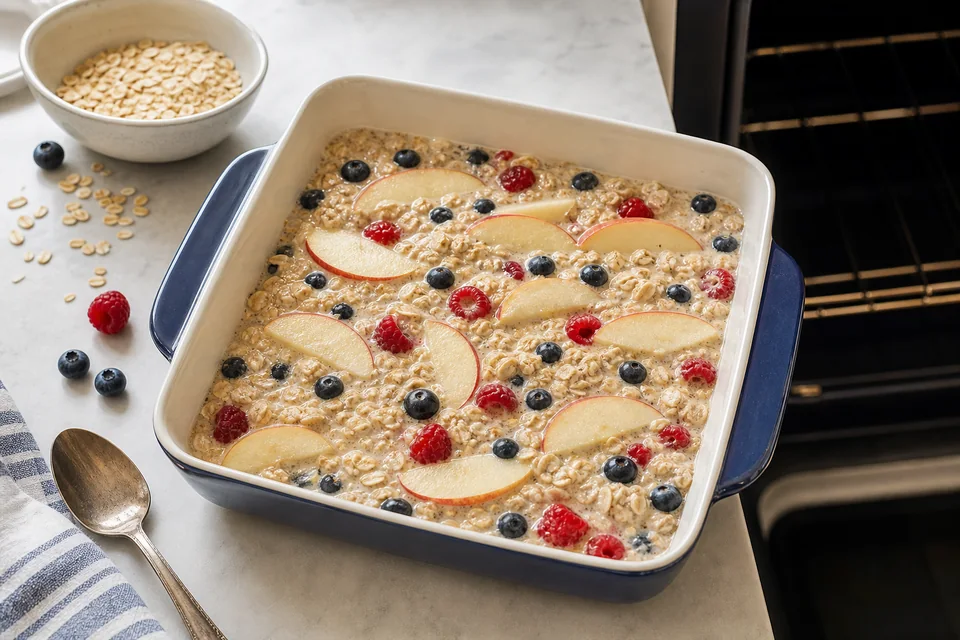
Do not leave the assembled egg mixture at room temperature for an extended soak. If you want to prepare ahead, combine dry components in the dish and refrigerate wet components separately, then mix them close to baking time.
Step 3: bake by doneness, not colour alone
Bake until the centre no longer ripples as liquid when the dish is nudged, the top oats look hydrated, and the edges are lightly golden. In many kitchens this takes about 35 to 45 minutes, but dish depth, fruit temperature, and oven calibration all matter.
Insert a thin knife near the centre. It may emerge moist from fruit, but it should not carry raw egg mixture. Let the dish rest for ten minutes after baking. The oats continue absorbing free moisture, and the portions become easier to lift without drying the breakfast further in the oven.
For a soft bowl, serve warm with a spoon and a little extra milk. For squares, cool longer and cut with a thin knife. The same pan can produce both textures; serving temperature and rest time are part of the method.
Idea 1: berry and lemon
Use 300 grams blueberries, raspberries, or a mixture. Add the finely grated zest of one lemon to the wet ingredients. Keep the juice for serving rather than adding it to the base, where extra acid and liquid would change the set.
Frozen berries work, but the baking time may increase. Scatter a small handful over the surface after levelling the mixture so the flavour remains visible. Avoid a heavy layer that shields the centre from heat.
This is the easiest variation to keep moderately sweet because ripe fruit contributes its own flavour. Taste the fruit before choosing the lower or higher sweetener amount, but never taste the raw egg mixture.
Idea 2: apple, walnut, and spice
Replace the berries with two medium apples, cored and cut into small cubes. Add 1/4 teaspoon ground ginger or nutmeg along with the cinnamon. Fold in 50 grams chopped toasted walnuts if nuts are appropriate for everyone being served.
Apple pieces should be small enough to soften within the oat baking time. Large wedges can remain firm while the centre is already set. A tart apple benefits from the higher sweetener range; a very sweet apple may not.
Walnuts introduce a major-allergen and cross-contact consideration. Label the dish clearly for a shared table and offer a nut-free pan when needed rather than trying to pick pieces out after baking.
Idea 3: banana and cocoa
Mash two very ripe bananas into the wet mixture and reduce the added sweetener to taste. Stir 2 tablespoons unsweetened cocoa powder into the oats, breaking up every lump. Add 30 to 50 grams chocolate chips only if you want a distinctly sweeter version.
Banana adds both solids and moisture. If the mixed base looks much thicker than the berry version, add two tablespoons liquid before transferring it to the dish. The goal is fully wet oats with a little visible liquid between them, not a dry mound.
Cocoa makes surface colour a poor doneness cue. Use the centre movement and knife tests. Let the finished dish stand before judging whether it is too soft; hot banana oatmeal firms noticeably as it cools.
Idea 4: carrot, raisin, and orange
Use 150 grams finely grated carrot and 75 grams raisins. Add the zest of one orange and 1/4 teaspoon ground ginger. Carrot should be finely shredded so it softens in step with the oats.
Raisins concentrate sweetness, so begin at the lower sweetener amount. If they are very dry, cover them with hot water for five minutes, drain thoroughly, and blot before mixing. Adding their soaking water would upset the liquid calculation.
This version is pleasant with plain yogurt at serving time. Add the yogurt to individual bowls rather than baking it into a base that was not formulated for its acidity and extra moisture.
How to change the sweetness thoughtfully
Fruit ripeness and beverage labels matter more than a single universal sugar amount. Unsweetened plant beverage plus tart frozen berries may need a different balance from sweetened vanilla oat beverage plus banana. Read the package, taste components that are safe to eat, and record what you used.
Sweetness is easier to increase at the table with maple syrup or fruit than to remove from a baked pan. Begin conservatively when the dish will be served with sweet toppings. Cinnamon, citrus zest, vanilla, and toasted nuts add aroma without performing the same role as sugar.
Texture fixes
A wet pool in the middle after the expected time can come from an undersized, deep dish, very juicy fruit, or an inaccurate oven. Continue in five-minute intervals and shield the top loosely if it is already dark. Next time, drain exceptionally wet additions and use the stated dish size.
A dry, crumbly result usually means too little liquid, too many oats, or excessive baking. Weigh oats, measure liquid at eye level, and begin checking earlier. Serve a slightly dry portion with milk or yogurt rather than pouring liquid into the whole stored pan.
If the edges set but the centre is soft, the dish may simply need its ten-minute rest. If the centre still resembles raw custard after resting, return it to the oven. Do not call a wet egg mixture “creamy” to avoid completing the bake.
If fruit sinks, that is usually cosmetic. Smaller pieces distribute more evenly. Coating fruit in extra flour is not necessary here and would change the oat-to-liquid balance.
Storage and reheating
Cool leftovers promptly and refrigerate them in a covered container. Divide the pan after it has set so individual portions cool and reheat evenly. For a broader planning framework, the site’s breakfast storage tips explain how moisture and container choice affect cooked breakfast foods.
Reheat a portion until hot throughout, adding a spoonful of milk if it has firmed in the refrigerator. A microwave is fastest; a covered low oven preserves a larger portion without hardening the edges. More options appear in the guide to reheating breakfast portions.
Do not leave the baked dish on a breakfast table for hours and then treat it as shelf-stable. It contains cooked egg and liquid. When in doubt about time or temperature control, discard rather than relying on smell.
Gluten-free and allergen boundaries
Oats themselves are distinct from wheat, but a gluten-free claim requires oats and every addition to meet the relevant labeling and cross-contact needs. Choose oats specifically labeled gluten-free when that assurance is required, and inspect baking powder, beverages, chocolate, and spices as well.
The same whole-recipe check underlies gluten-free ingredient checks. Milk, egg, soy beverage, almond beverage, and nuts introduce different allergens. One substitution does not make the pan suitable for all dietary needs.
Frequently asked questions
Can baked oatmeal be assembled overnight?
For the most predictable texture and safer handling, refrigerate the wet mixture separately from the dry mixture, then combine before baking. A tested overnight recipe may account for the longer hydration, but this base is designed for a short rest.
Can I use quick oats?
They can produce a softer, more uniform result, but they are not a neutral replacement in this framework. Use old-fashioned rolled oats for the intended texture or follow a recipe written specifically for quick oats.
Why did my serving fall apart?
It may be very hot, too wet, or low in binder. Allow the pan to rest before cutting. If you want firm meal-prep squares, cool completely and use the measured egg amount rather than reducing it casually.
Is baked oatmeal a pancake?
No. It belongs to the broader cooked-breakfast collection, but its oat casserole method, doneness cues, and storage needs differ from griddle cakes. Use Pancake Troubleshooting for pancake problems, not for diagnosing this baked centre.
Sources and editorial references
- Oregon State University Extension, “Baked Berry Oatmeal” —
https://extension.oregonstate.edu/imported-publication/baked-berry-oatmeal - Iowa State University Extension and Outreach, “Baked Oatmeal Muffins” —
https://spendsmart.extension.iastate.edu/recipe/baked-oatmeal-muffins/ - U.S. Food and Drug Administration, “Questions and Answers on the Gluten-Free Food Labeling Final Rule” —
https://www.fda.gov/food/nutrition-food-labeling-and-critical-foods/questions-and-answers-gluten-free-food-labeling-final-rule - U.S. Department of Agriculture Food Safety and Inspection Service, “Shell Eggs from Farm to Table” —
https://www.fsis.usda.gov/food-safety/safe-food-handling-and-preparation/eggs/shell-eggs-farm-table
For more practical food and breakfast guides, visit Pancakes World.
For the wider topic, start with Guides/healthy Pancakes.
For a closely related guide, see Breakfast Recipes to Start the Day.
A useful next comparison is Oatmeal Nutrition Facts: Portions, Nutrients, and Pancake Context.
You can also continue with Oatmeal Pancakes: A Tender Rolled-Oat Recipe.
Related reading
Image note: Editorial images were created and refined with AI.
