10 Practical Pancake Toppings for Fruit, Protein, Crunch, and Savory Flavor
Choose pancake toppings by what the plate needs: fruit for brightness, a creamy addition for contrast, or a dry finish for crunch. These ten combinations include sweet and savoury choices without treating one ingredient as a health guarantee. Explore more breakfast ideas on the The Pancake World Home Page.

Choose by role, not a health halo
Balance the plate
Combine one bright or savoury element with one creamy, protein-rich or crunchy element when that suits your meal; none of these combinations is a medical or diet claim.
Check the item in hand
For packaged yogurt, granola, nut butter, seeds or spreads, use the ingredient and allergen statement on that exact product rather than treating a generic name as a guarantee.
Ten practical combinations
1. Berries and plain yogurt
Drain the berries so excess juice does not soak the pancake. Spoon on plain yogurt just before serving, then add the fruit. Thaw frozen fruit according to the product instructions and account for its extra liquid. A sharper berry suits a sweet batter; a very tart mix may work better with ripe banana alongside.
2. Banana and peanut butter
Spread peanut butter thinly over the warm pancake, then add banana slices so the spread does not pull the slices around. A small amount goes a long way texturally. For a guest avoiding peanuts, ask them which alternative is suitable; a seed spread is not automatically an allergy-safe substitute.
3. Apple and cinnamon
Slice the apple thinly for a crisp raw topping, or cook it separately until it reaches the texture you want. Add cinnamon sparingly so it does not mask the pancake. Drain cooked fruit before plating; use its juices as an optional sauce rather than flooding the whole stack.
4. Pear and ricotta
Use ripe pear cut into small slices so it is easy to eat with a fork. Ricotta gives a mild, creamy base; stir it before spooning if it has separated. Black pepper makes this combination more savoury, while a little citrus zest can keep it fresh without another sweet sauce.
5. Compote and toasted oats
Add compote first and toasted oats last. The contrast disappears if the oats sit in sauce while the pancakes cook. Cool toasted ingredients before storing them, and keep them dry. Choose a compote whose sweetness suits the batter rather than assuming all fruit sauces need extra syrup.
6. Orange and tahini
Remove tough citrus membrane where practical and drain the segments. Stir the tahini before using a small drizzle; its savoury bitterness can balance sweet fruit. Tahini and sesame seeds both introduce sesame, so identify them clearly rather than calling the topping a generic fruit sauce.
7. Tomato and cottage cheese
Drain excess tomato juice and pair the tomato with cottage cheese and chopped herbs. This suits a plain or savoury pancake better than an already very sweet batter. Add the tomato near service so it does not make the pancake wet. Check the particular cheese label if sodium or other nutrition information matters to you.
8. Mushroom and egg
Cook the mushrooms separately until their released moisture has reduced, then add a thoroughly cooked egg prepared according to food-safety guidance. Do not rely on the heat of a finished pancake to cook raw egg. Keep mushroom liquid out of the plate unless you deliberately want a sauce.
9. Avocado and lime
Mash or slice the avocado shortly before service and add lime to taste. A little salt and herbs can make this a savoury alternative to sweet spreads. Keep the portion easy to cut with the pancake. Lime changes flavour and slows some visible browning; it does not make unsafe storage safe.
10. Yogurt, nuts and seeds
Choose one or two crunchy ingredients instead of emptying every packet onto the plate. Chop large pieces to make the pancake easy to eat, then add them to yogurt at the last moment. Check the exact products and guest requirements; granola can include ingredients not obvious from its name.
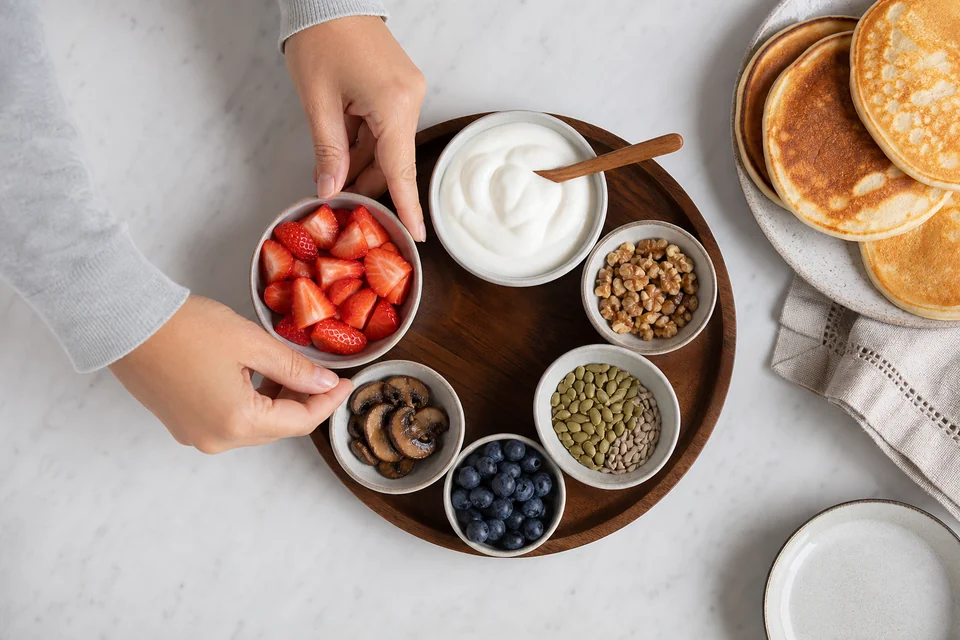
Make the list flexible
Fruit
Use fresh fruit, compote or citrus for brightness; choose ripe fruit when you want less cutting at the table.
Creamy or protein-rich
Yogurt, ricotta, cottage cheese, egg and nut butter change the plate differently; choose by taste and the label, not by a universal ranking.
Crunch and savory
Oats, nuts, seeds, mushrooms and herbs add contrast, but they are optional rather than required for a good pancake.

Allergen and storage boundary
Milk, egg, peanut, tree nuts, sesame and wheat can matter here. FDA requires major allergen sources on regulated packaged-food labels; check the product and avoid making substitutions for someone with an allergy without their direction.
This list does not certify any combination as allergy-safe, gluten-free, high-protein or suitable for a particular medical need.
For the connected preparation step, see thin foldable pancakes.
Assemble in an order that keeps the pancake pleasant
Put a creamy topping down first when you want it to stay in place. Add drained fruit next, then a small amount of crunch immediately before serving. Keep very juicy toppings beside the pancake if you want the surface to stay dry. This is an assembly choice, not a rule that every plate needs three separate toppings.
Taste the pancake itself before adding a sweet sauce. A sweet or fruit-filled batter may need acidity or plain yogurt more than additional syrup. A plain pancake can carry a more pronounced topping. Start with a small portion and offer extra at the table; that makes the plate adjustable without burying the pancake.
For the connected preparation step, see planning a small-kitchen brunch.
What to prepare before the pan gets busy
Wash and dry fruit, measure crunchy ingredients and set out clean serving spoons before cooking. Slice ingredients that brown quickly closer to service. Keep moist components separate from toasted oats, nuts and seeds until the last moment. For a group, label the actual ingredients rather than calling a mixed bowl simply “healthy topping”.
Keep dairy, cooked egg and other perishable ingredients refrigerated until needed. Follow current food-safety guidance for time and temperature during service. Do not put a spoon used for a nut spread into a shared yogurt bowl. Avoiding a listed ingredient is not the same thing as controlling cross-contact, particularly for a guest with an allergy.
For the connected preparation step, see American pancake recipes.
How to build a topping plate with a reason for every choice
A topping list becomes useful when each item has a job. Fruit can bring brightness and moisture; yogurt or another creamy element can soften a dry pancake; nuts or seeds can add crunch only while they stay dry; savoury additions need their own cooking and serving plan.
Build a plate with contrast rather than a pile. Pair one moist element with one richer or creamy element, then add a dry crisp component just before serving. A wet fruit compote and syrup may be delicious, but together they can overwhelm a deliberately thin pancake.
Selection criteria are practical, not medical claims. Check labels for allergens and added ingredients, and do not call a topping healthy simply because its name sounds wholesome. Individual dietary needs call for individual professional advice.
Exclude a topping when it cannot be prepared, held or served safely in the available time. Cold yogurt needs chilled handling; a cooked savoury filling needs a separate pan or advance preparation. The best shortlist for a small brunch differs from a quick solo breakfast.
State the reason for each recommendation: fruit for a fresh soft topping, toasted nuts for crunch, a savoury egg or vegetable component for a more substantial plate. This lets a reader with another preference substitute deliberately instead of being handed an unexplained ranking.
Choose different toppings for two different pancakes
For a thin folded pancake, start with pear and ricotta or a modest amount of fruit compote: the filling can sit inside a loose fold while extra fruit stays beside it. Keep toasted oats outside until the plate reaches the table. Filling the fold with a large spoonful of juice changes a tender wrapper into a wet one; the useful adjustment is less liquid, not more toppings.
For a thicker savoury pancake, mushrooms with a cooked egg or tomato with cottage cheese create a different plate. Decide whether the pancake itself is seasoned before adding a salty topping. Offer sauces separately so the diner can taste the underlying pancake first. These choices are about flavour, texture and workload, not a claim that every version supplies a particular amount of protein.
For a shared table, label bowls by their actual ingredients rather than broad names such as healthy mix. Keep a separate spoon in each bowl. Someone avoiding an ingredient needs to know about the whole topping, including sauces and packaged blends; offering a seed spread in place of nuts does not by itself establish an allergen-free meal.
Sources and editorial references
These are editorial flavor combinations. FDA material supports the label boundary only; this article makes no nutrition, allergy-safety or medical claim. R3.1 extension: scenario-specific decision support is editorial; it does not claim unpublished tests or transfer a local observation to every setup.
- FDA — Food Allergies: https://www.fda.gov/food/nutrition-food-labeling-and-critical-foods/food-allergies
- FDA — Are You Storing Food Safely?: https://www.fda.gov/consumers/consumer-updates/are-you-storing-food-safely