
Quick answer: the difference is the complete recipe, not the word protein
Protein pancakes contain more protein-providing ingredients than the comparison recipe or product. That may come from whey, casein, soy, pea or another protein powder; eggs or egg whites; cottage cheese or yogurt; legumes; or a high-protein packaged mix. Regular pancakes usually center flour, liquid, egg, fat, and leavener, but they already contain some protein from flour, milk, and eggs.
There is no universal protein pancake. Adding a scoop of powder can change liquid absorption, browning, flavor, and tenderness. A food-based oat-and-cottage-cheese pancake behaves differently from a wheat pancake enriched with whey, and both differ from a commercial mix. Compare the actual recipe, portion, and label rather than assuming “protein” means healthier, lower calorie, better for weight loss, or suitable for every person.
Side-by-side comparison
| Question | Regular pancake | Protein-enriched pancake |
|---|---|---|
| Main formula | Often flour, liquid, egg, fat, leavener | Regular-style base plus concentrated or food-based protein ingredients |
| Protein amount | Depends on flour, milk, egg, and portion | Intended to be higher, but amount must be verified |
| Batter behavior | Familiar flow for the recipe | May thicken quickly or need different liquid |
| Texture | Can be tender and cake-like | May be firmer, drier, springier, or custardy depending on ingredients |
| Flavor | Grain, dairy, egg, butter, sweet or savory additions | Protein ingredient may add dairy, legume, sweetener, or flavored notes |
| Browning | Recipe-specific | Some powders brown quickly while egg-white-heavy formulas can dry |
| Best use | General breakfast, snack, dessert base | When a specific recipe and portion fit the eater’s plan and preference |
Neither column is automatically the winner. A well-designed recipe matters more than the marketing category.
What counts as a protein pancake?
The phrase has no single culinary threshold in ordinary recipe use. One product may advertise protein per serving; a homemade recipe may simply use cottage cheese or extra egg. To make a meaningful claim, state grams of protein for a defined serving based on a reliable product label or recipe analysis.
Compare like with like. If one serving is two small pancakes and another is a four-pancake stack, the headline number does not reveal ingredient density. Check serving weight, number of pancakes, preparation instructions, and whether the nutrition panel assumes water, milk, egg, or added toppings.
A recipe is not “high protein” merely because it contains one fashionable ingredient. The entire batch, yield, and serving calculation determine the amount. This article does not set a regulatory claim threshold; packaged foods must follow the rules that apply where they are sold.
Common protein ingredients and what they do
Whey and casein powders come from milk and are allergens for people with milk allergy. They absorb water and can make a batter set firmly. Whey-rich batters may brown quickly. Casein-containing blends can thicken during a rest. Exact effects vary by powder processing, flavoring, and the rest of the formula.
Pea, soy, and other plant protein concentrates have different water needs and flavors. Soy is a major allergen in many labeling systems. Pea products may add an earthy note. Blended powders can contain gums, sweeteners, cocoa, flavorings, or vitamins that influence batter and label comparison.
Eggs and egg whites add protein and structure without powder. Too much egg white relative to flour and fat can produce a firm or rubbery texture. Cottage cheese and yogurt contribute moisture as well as protein, so they cannot be swapped gram-for-gram with dry powder. Oats and legumes change both starch and fiber as well as protein.
Batter consistency and liquid absorption
Protein powder often competes for water. A batter that looks correct immediately may become much thicker after a short rest. That does not mean every protein batter needs a fixed extra amount of liquid; powder type, flour, eggs, and product thickeners all matter.
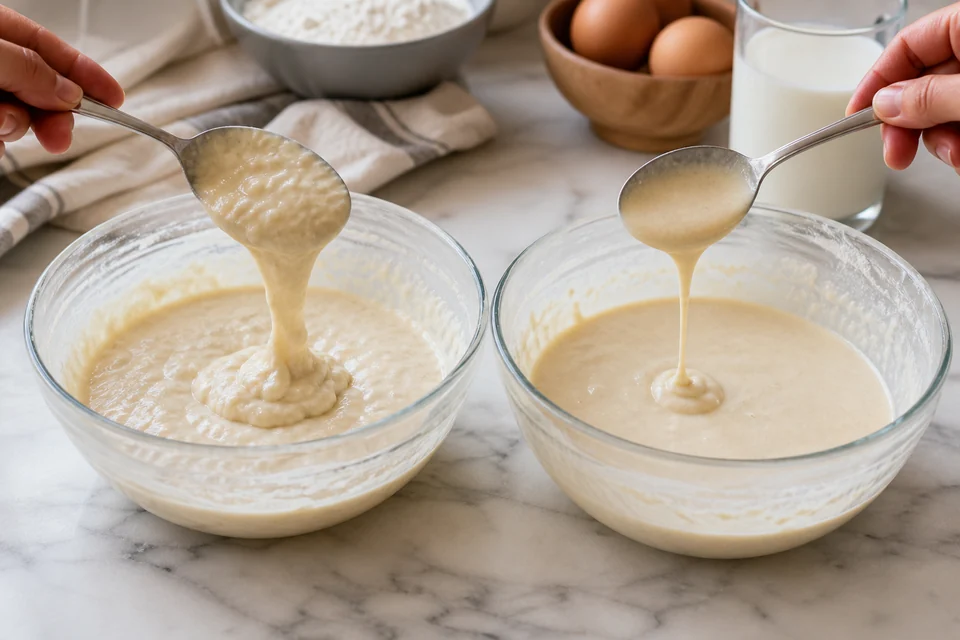
Use the tested recipe’s visual cue. Batter should usually fall from a spoon in a thick ribbon and spread gradually on the pan. If it pours like water, the pancakes may spread thin. If it sits as a rigid mound, the center can remain wet while the outside overcooks.
When adapting, make one small pancake before changing the bowl. Add liquid in measured small amounts only if the test confirms poor spread. Record the adjustment with the exact powder brand and flavor; changing products can change the next batch.
Texture and flavor differences
Regular wheat pancakes can be tender because starch sets while egg and gluten provide structure and fat limits toughness. A concentrated protein ingredient shifts that balance. Too much can create dryness, chewiness, a squeaky or springy bite, or a firm custard-like center. The result is recipe-specific, not an inevitable flaw.
Sweetened flavored powders also change taste. Vanilla, chocolate, or artificial-sweetener notes may dominate a plain batter. An unflavored plant powder may need spices, fruit, or savory seasoning. Do not hide a poor base under excessive syrup before deciding whether the formula works.
For a fair kitchen comparison, keep pancake diameter, pan, heat, cooking fat, and toppings constant. Compare batter flow, spread, time to set, browning, central crumb, flavor, and texture after five minutes. That reveals practical trade-offs without pretending to run a laboratory nutrition trial.
Cooking adjustments
Use moderate heat. A powder-containing batter can darken before a thick center sets, especially when it also includes sweeteners. Make smaller pancakes for easier turning and more even cooking. Wait until the edge is set and the underside supports a spatula, then flip once.
Do not press the pancake after flipping; that squeezes out steam and can compact the crumb. Split the first pancake. If it shows wet batter, reduce heat or portion size. If it is fully set but dry, the formula may need more liquid, fat, or a lower proportion of powder—changes best made through a tested recipe rather than guesswork.
Raw flour and egg should not be tasted. Protein powder does not make raw batter safe. Clean utensils and cook the center fully.
Reading a packaged mix label
Start with serving size. Note whether the nutrition information covers dry mix only or the prepared pancakes. Then check protein, total energy, carbohydrates, fat, sodium, sugars, and fiber in the context relevant to you. More protein does not erase high sodium, a disliked sweetener, or an allergen.
Read the ingredient list from the top. Identify the protein source and any milk, egg, soy, wheat, nuts, or other allergens. Look for preparation additions: a mix used with water can have a different prepared profile from one requiring milk, eggs, and oil.
Price should be compared per prepared serving, not per package front. A larger tub may use a larger scoop or yield fewer pancakes. A homemade regular pancake with yogurt or cottage cheese on the side may meet a diner’s preference at a different cost, but only actual quantities allow comparison.
Choosing between them
Choose regular pancakes when you want a familiar texture, a flexible base for toppings, or a recipe you already know. Choose a protein-enriched recipe when its ingredients, verified serving information, flavor, and cooking method fit your needs. You can also keep the pancake regular and add a protein-containing food alongside it, such as yogurt, cottage cheese, egg, beans in a savory meal, or a nut or seed spread where suitable.
| Your priority | More useful question than “which is better?” |
|---|---|
| Texture | Do I want tender and cake-like, firm and filling, or custardy? |
| Nutrition tracking | Is the protein amount verified for the prepared serving I will eat? |
| Allergies | What is the protein source and what shared equipment is used? |
| Cost | What is the cost per prepared serving with required additions? |
| Convenience | Does the recipe require a blender, rest, special powder, or only water? |
| Flavor | Is the powder sweetened or flavored, and does it suit my toppings? |
People with kidney disease, metabolic conditions, allergies, eating disorders, or other medical needs should use individualized professional guidance rather than an internet “more is better” rule.
Toppings and meal context
Protein pancakes are often topped with high-protein foods and then marketed by a large total. That may be useful for a specific plan, but it can obscure portion size. State whether a calculation includes yogurt, nut butter, eggs, syrup, or fruit.
Regular pancakes can become part of a substantial meal with cottage cheese and fruit, an egg and tomato, or savory beans. Protein-enriched pancakes can be served simply if the base is already rich. Balance flavor and moisture: a dry protein pancake may benefit from fruit compote or yogurt, while a sweetened powder may need tart fruit rather than more syrup.
No topping transforms the dish into medical treatment. Use labels, portions, and personal context.
Storage and reheating
Cool both styles before packing. Protein-enriched pancakes may firm more noticeably in the refrigerator, especially when based on dry powder or egg whites. Store according to the shortest guidance for all ingredients and freeze separated portions when the recipe supports it.
Reheat gently. A microwave is fast but can toughen a lean, high-protein cake if used too long. A covered skillet or low oven may preserve moisture better. Add fresh fruit, yogurt, or crisp toppings after reheating.
Do not store raw batter unless the recipe explicitly supports it. Leavener activity changes, powders continue hydrating, and raw egg and flour require proper refrigeration and handling.
Common mistakes
The first mistake is adding a full scoop of powder to a finished recipe without reducing flour or adjusting liquid. The second is comparing protein numbers from different serving sizes. The third is believing protein language proves weight-loss, muscle-building, or health outcomes for every eater.
Other mistakes include cooking too hot, making oversized cakes with raw centers, ignoring sweeteners and allergens in flavored powder, and assuming plant protein means allergen-free. The practical fix is a tested recipe and a complete label comparison.
Frequently asked questions
Are protein pancakes healthier than regular pancakes?
Not automatically. Health depends on the full recipe, portion, overall diet, and individual needs. Compare verified nutrition and ingredients rather than the category name.
Do protein pancakes have more protein?
They are intended to, but the amount varies. Check a defined prepared serving or calculate a tested homemade recipe.
Can I add protein powder to any pancake recipe?
Not without possible changes. Powder can replace some flour behavior and absorb liquid. Use a tested adaptation or start with a small controlled batch.
Why are my protein pancakes dry?
The powder proportion may be high, liquid or fat may be low, or the cakes may be overcooked. Heat and portion size also matter.
Are protein pancakes good for weight loss?
This article does not make weight-loss claims. Energy intake, portions, appetite, medical context, and the wider eating pattern all matter.
Can protein pancakes be dairy-free?
Yes when a complete recipe uses verified non-dairy ingredients, but whey and casein are dairy and many mixes contain milk. Check labels and cross-contact.
Is cottage cheese a substitute for protein powder?
It can be a protein-providing recipe ingredient, but it also adds water, fat, salt, and curds. Use a formula designed for cottage cheese rather than swapping by weight.
Which type tastes better?
Preference depends on recipe and toppings. Run a same-size side-by-side test and compare texture, sweetness, flavor, and aftertaste.
Related Pancake World pages
Try a 3-ingredient protein pancake recipe and review why pancake recipes include eggs.
Sources and editorial references
- Academy of Nutrition and Dietetics, Chocolate Chip Banana Pancakes Recipe —
https://www.eatright.org/recipes/breakfast/chocolate-chip-banana-pancakes-recipe - Academy of Nutrition and Dietetics, What to Look for in Cottage Cheese —
https://www.eatright.org/food/food-groups/dairy-and-alternatives/what-to-look-for-in-cottage-cheese
For more practical food and breakfast guides, visit Pancakes World.
For the wider topic, start with Guides/pancake Ingredients.
For a closely related guide, see Eggless vs Traditional Pancakes: Flavor, Texture, and Practical Choices.
A useful next comparison is Pancake Nutrition: How Ingredients Change the Numbers.
You can also continue with Grocery Store Pancake Mixes: How to Compare Them.
