
Quick answer
Eggless pancakes do not have one fixed flavor, just as egg-containing pancakes do not. In a simple side-by-side recipe, the traditional version may taste slightly richer and more rounded because a whole egg contributes yolk fat, solids, color, and egg flavor. The eggless version may taste more directly of flour, dairy or plant milk, vanilla, spice, and the cooking fat. Its texture can be tender and light, but only when the recipe replaces the liquid and structural work that the egg performed.
The most important distinction is formulation. Removing an egg from a recipe written for egg is not the same as using a tested eggless recipe. A successful eggless formula balances flour, liquid, fat, leavening, and sometimes a binder or puree. A successful traditional formula uses the whole egg as one ingredient among many. Neither style is automatically fluffier, healthier, sweeter, drier, or better.
For a fair taste test, cook both batters with the same flour, flavorings, pan, portion size, and heat. Taste them plain before adding syrup. Compare aroma, browning, tenderness, spring, moisture, and aftertaste rather than looking only at height.
What a whole egg changes
A whole egg supplies water-rich white and a yolk containing fat, solids, flavor, and emulsifying components. Egg proteins set as the pancake cooks and can contribute to the structure that holds a round together. Yolk can help fat and water remain dispersed in the mixed batter. Those roles are explained in more detail in why pancake recipes include eggs.
That contribution is noticeable only in relation to the rest of the formula. In a highly spiced banana batter, egg flavor may be difficult to identify. In a restrained flour-and-milk pancake, it may be clearer. Sugar, milk solids, pan temperature, cooking fat, and contact time also affect surface color, so a darker pancake is not proof that it contains egg.
An extra egg is not a universal upgrade. It adds liquid and protein as well as yolk. Too much for a particular formula can make the pancake firmer, more egg-forward, or unlike the intended result. Use the recipe amount for the control batch before experimenting.
What changes in an eggless formula
An eggless recipe needs to account for the missing egg rather than pretending nothing changed. Some formulas simply use a little more liquid and rely on hydrated flour and starch for structure. Others include yogurt, mashed banana, applesauce, ground flax or chia, a commercial egg replacer, or an additional starch. These ingredients are not interchangeable: each changes flavor, moisture, color, and texture differently.
An eggless pancake made with yogurt may be tangy and tender. Banana makes fruit flavor obvious and can create a moist, soft center. Applesauce adds sweetness and fruit notes. Hydrated seeds add visible flecks and may make the texture more gel-like. A commercial replacer is product-specific and should be used according to its instructions. A plain no-egg batter can keep the cleanest pancake flavor, but it must still be designed to flip and cook through.
The label “eggless” also needs a boundary. It can mean no egg was deliberately added to the recipe; it does not prove that every packaged ingredient or the cooking environment is free from egg cross-contact. People managing an allergy need exact product labels and kitchen controls, not an inference from the title.
Side-by-side sensory comparison
| Quality | Egg-containing control may show | Eggless version may show | What else can cause the difference |
|---|---|---|---|
| Flavor | mild egg richness, especially in a plain batter | clearer grain, dairy, fruit, spice, or vanilla notes | ingredient brands, salt, fat, toppings |
| Aroma | subtle cooked-egg note | substitute-specific aroma or a more neutral base | pan fat and browning |
| Structure | cohesive set supported partly by egg proteins | relies more on flour, starch, or added binder | undercooking and early flipping |
| Tenderness | balanced when egg ratio suits the recipe | tender, gummy, or fragile depending on substitute | mixing and batter thickness |
| Color | yolk can warm crumb color | often paler unless other ingredients add color | milk, sugar, heat, contact time |
| Moisture | whole egg contributes water and solids | depends strongly on replacement | portion depth and cooking time |
These are comparison prompts, not guaranteed outcomes. A well-designed eggless pancake can be more tender than a poorly designed traditional one. A whole-egg pancake can be pale if the pan is cool. Record what you actually observe.
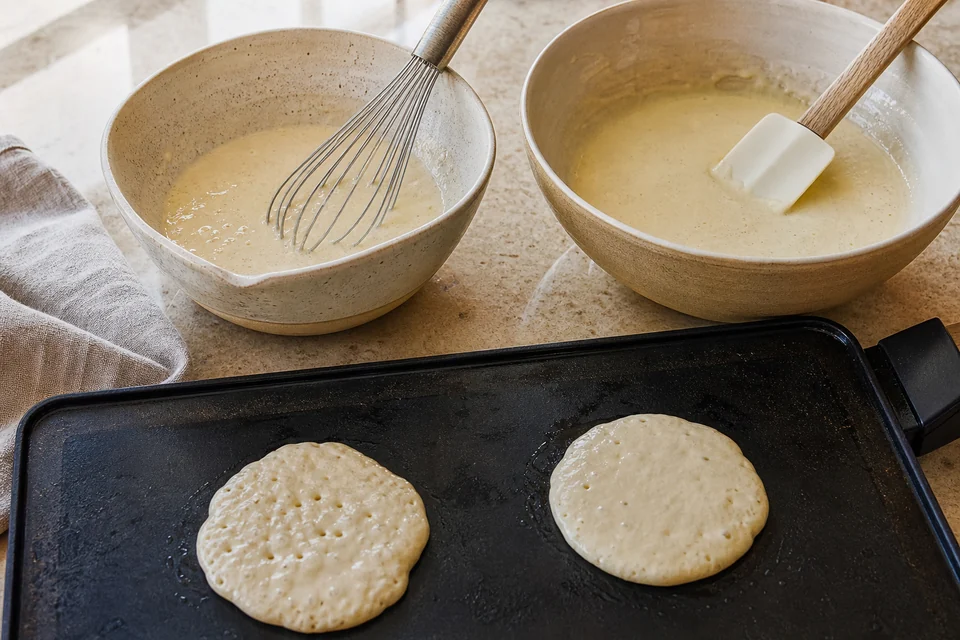
A controlled tasting workflow
Begin with one proven traditional recipe and one proven eggless recipe that are otherwise reasonably similar. Avoid comparing a banana-oat eggless pancake with a plain wheat pancake and attributing every difference to egg. Match the flour type, sweetness, salt, vanilla, and cooking fat where the formulas allow.
Measure by weight. Mix each batter in the sequence specified by its recipe, using separate utensils if allergy control is required. Rest only as directed. Portion the same mass or volume into the same pan. Keep the burner setting steady and cook one test pancake from each batter before committing the full batch.
Taste the first pair without toppings while warm, then again after a few minutes. Break each pancake instead of judging only its surface. Note whether the crumb tears cleanly, compresses and rebounds, crumbles, or feels wet. Smell the interior. Only then add the same small amount of butter, fruit, or syrup to learn whether the distinction remains on a finished plate.
Change one variable in a future trial. If the eggless pancake is fragile, do not simultaneously add binder, reduce liquid, raise heat, and make smaller rounds. One measured change produces useful evidence; four changes produce a new mystery.
How to choose an eggless approach
Choose a plain recipe-designed eggless batter when you want a neutral base for toppings. Choose yogurt when dairy is suitable and a slight tang fits the meal. Choose banana or applesauce only when fruit flavor belongs in the finished pancake. Use a seed gel when its taste, texture, and allergen profile suit the diners. Use a commercial replacer when you can follow that exact product’s instructions.
Do not describe any substitute as universally equivalent to one shell egg. Equal volume does not mean equal water, protein, fat, emulsification, or flavor. The recipe must define the role and amount.
For diners who avoid yolks rather than all egg, an egg-white pancake is a third category. It keeps white proteins and removes yolk components, so it should not be grouped with genuinely eggless batter.
Troubleshooting the current batch
Eggless pancakes break during the flip: wait until the underside supports the round, use a broad thin spatula, and make a smaller test pancake. If the recipe consistently fails, use a tested formula rather than adding random binder. The pancake troubleshooting hub separates handling clues from formula problems.
The center is gummy: the portion may be too thick, heat may be high enough to brown before the middle cooks, or a wet puree may be excessive. Lower the heat, reduce portion depth, and verify the recipe measurement.
The traditional pancakes taste strongly of egg: confirm egg size and batch scaling. Do not mask the result with extra vanilla before checking whether the recipe was doubled incorrectly or the pancakes remain undercooked.
The eggless version is bland: check salt first, then the intended flavor ingredient. A substitute should not be expected to provide the yolk’s flavor. Browning and serving temperature also affect perception.
Either version is dense: compare leavening freshness, batter thickness, mixing, and pan heat. Egg status alone is not a diagnosis. Use the Pancake World troubleshooting hub to follow the dominant symptom.
Mistakes and limitations
The biggest mistake is deleting egg from an unrelated recipe and declaring all eggless pancakes inferior when the damaged formula fails. The second is adding a strongly flavored substitute and then describing the flavor change as the absence of egg. A third is using toppings so assertive that the tasting question disappears.
This comparison cannot predict nutrition or allergy suitability from the recipe name. Nutrition depends on the full formula and serving. Eggless pancakes may still contain dairy, soy, wheat, nuts, sesame, or other allergens. Traditional pancakes may use pasteurized egg products or shell eggs; follow the recipe and local safety guidance.
Do not taste raw batter. FDA guidance notes that flour is a raw food and advises cooking flour-containing batter before eating. Raw egg brings an additional reason to avoid tasting the traditional batter.
Frequently asked questions
Do eggless pancakes taste very different?
They can, but the substitute and complete recipe determine how much. A plain designed eggless batter may be close to a traditional pancake after toppings; banana or seed-based versions are easier to distinguish.
Are eggless pancakes always less fluffy?
No. Height depends on formula, leavening, batter consistency, handling, portion depth, and cooking. Egg proteins can support structure, but egg alone does not guarantee lift.
Can I leave the egg out of pancake mix?
Follow the package directions. If the manufacturer provides an eggless method, use it. Otherwise use a tested eggless recipe rather than guessing how much liquid or binder to add.
Which egg substitute has the least flavor?
That depends on the recipe and product. A neutral commercial replacer or recipe-designed starch approach may be less obvious than banana, but there is no universal substitute rule.
Why are my eggless pancakes pale?
The missing yolk may affect crumb color, but surface browning also depends on sugar, milk solids, pan heat, fat, and cooking time. Check the whole method before adding color ingredients.
Is “eggless” safe for an egg allergy?
Not by itself. Verify every ingredient label, equipment, cooking surface, and cross-contact control appropriate to the person’s medical plan.
Which style should I choose?
Choose a traditional formula when egg suits the diners and you want that recipe’s balance. Choose a tested eggless formula for dietary needs or a different flavor profile. Judge the specific pancake, not the category label.
Related Pancake World pages
Use the American pancakes hub as a reference for the wider style, read why recipes include eggs for ingredient function, and use the egg-white guide when yolk removal—not complete egg removal—is the real question.
Sources and editorial references
- American Egg Board, Coagulation and thickening —
https://www.incredibleegg.org/professionals/manufacturers/real-egg-functionality/coagulation-thickening/ - American Egg Board, Emulsification —
https://www.incredibleegg.org/professionals/manufacturers/real-egg-functionality/emulsification/ - U.S. Food and Drug Administration, Flour is a raw food and other safety facts —
https://www.fda.gov/consumers/consumer-updates/flour-raw-food-and-other-safety-facts
For more practical food and breakfast guides, visit Pancakes World.
For the wider topic, start with Guides/pancake Ingredients.
For a closely related guide, see Brown Sugar Versus White Sugar in Pancakes: Function and Texture Control.
A useful next comparison is Milk vs Buttermilk in Pancakes: What Changes and How to Choose.
You can also continue with Which Flours Work for Savory Pancakes?.
For another practical angle, read Ube Pancakes: Choose Real Ube, Powder or Extract.
