
Quick answer
The best milk substitute for flavor is the one that suits the recipe and the flavor you want. Oat drink tends to sit quietly behind vanilla, cinnamon, apple, and pear. Soy drink can bring a fuller, bean-derived background that works well with cocoa or toasted spices. Almond drink can add a light nutty note, coconut milk can make coconut unmistakable, and fruit or cultured liquids can take the pancake in a sharper direction. None is a universal one-for-one replacement because sweetness, thickness, fat, protein, acidity, and added ingredients differ.
Start with an unsweetened, unflavored product when you want a controlled comparison. Use the amount in a recipe already written for that liquid, or replace only part of the milk in a familiar recipe and cook one small test pancake. Read the label every time: “plant-based” does not answer allergy, fortification, sugar, gluten cross-contact, or cooking-performance questions.
What this guide does—and does not—cover
This is a flavor-oriented decision guide. It helps you choose a liquid that contributes something deliberate rather than merely making the batter wet. It does not certify a recipe as dairy-free, vegan, gluten-free, low sugar, or safe for an allergy. Those depend on every ingredient, the current product label, and preparation conditions.
It also does not say that alternative drinks are nutritionally equivalent to milk. Products vary widely. USDA MyPlate treats fortified soy beverage as a specific dairy-group alternative; that policy does not make every plant drink equivalent in nutrition or cooking. If nutrition is the reason for the swap, compare labels and obtain individualized advice where needed.
Finally, this page keeps distinct questions distinct. A water-only pancake is about making a workable recipe with water. A buttermilk comparison is about dairy acidity and flavor. Here, the central question is: which liquid helps the planned pancake taste intentional?
Flavor map for common alternatives
| Liquid | Flavor direction | Good starting pairings | Watch before you pour |
|---|---|---|---|
| Oat drink | mild cereal sweetness | pear, apple, cinnamon, vanilla | sweetened versions can change total sweetness; viscosity varies |
| Soy drink | fuller, sometimes bean-like | cocoa, coffee, warm spice | flavor differs by brand; check allergen label |
| Almond drink | light nutty background | berries, citrus zest, almond spice | almond is a tree nut allergen; thin products may change spread |
| Coconut beverage | soft coconut note | banana, pineapple, lime, cardamom | carton beverage and canned coconut milk are not equivalent |
| Canned coconut milk | rich, distinct coconut | pandan, mango, palm sugar | much richer and thicker; use a recipe designed for it |
| Cashew or other nut drink | creamy nut direction | stone fruit, vanilla, cinnamon | allergen and thickness vary |
| Cultured non-dairy product | tangy | berries, lemon, warm spice | acidity and thickness alter the formula; choose a tested recipe |
| Apple or pear juice blend | fruit-forward sweetness | oats, cinnamon, nuts | sugar and acid can speed browning; partial use is easier to control |
The table offers directions, not guarantees. A product called oat drink may be watery, creamy, sweetened, vanilla-flavored, or barista-formulated. Treat the actual carton as the ingredient, not the category name.
Oat drink: the flexible background
Oat drink is useful when you want a cereal-like flavor that does not dominate. It often fits pancakes built around oats, apples, pears, raisins, cinnamon, or vanilla. A neutral version can also disappear under a strong topping, which is helpful when the substitute should not announce itself.
Check sweetness first. If the product contains added sugar, the batter may taste sweeter and may color sooner on the griddle. That does not mean the pancake is cooked inside. Use moderate heat and judge the center separately. Also note thickness: a creamy product and a thin everyday product may not produce the same batter flow.
Soy drink: body and savory potential
Plain soy drink can contribute more body and a distinctive background. It works with cocoa, coffee, sesame, warm spices, or lightly savory pancakes. The flavor may be more noticeable when the pancake is eaten plain, so test without syrup before deciding how much vanilla or spice to add.
Soy is a major allergen. Do not describe a soy-based pancake as broadly allergy-friendly. Sweetened and flavored versions also change the recipe; vanilla soy drink is already a flavoring ingredient, not simply a neutral liquid.
Almond and other nut drinks
Almond drink can reinforce almond, berry, cherry, citrus, or stone-fruit combinations. It is often subtle, so a teaspoon of almond extract is not the same decision as using almond drink; extract is far more concentrated. Keep the liquid choice separate from concentrated flavoring so you can identify which change you actually like.
Tree-nut drinks require explicit allergen attention. A low-viscosity product may make a familiar milk batter spread farther. If that happens, do not add large amounts of flour blindly. Cook a small pancake, record the result, and compare the formula with one designed for the product.
Coconut: beverage versus canned milk
Coconut beverages sold as drinks are usually much thinner than canned coconut milk. They cannot be treated as the same ingredient. A carton product may provide a gentle coconut note; canned coconut milk can add substantial richness, opacity, and coconut flavor. Full-fat canned milk can also separate, so stir it smooth before measuring when a recipe calls for it.
Coconut pairs naturally with banana, pineapple, lime zest, pandan, palm sugar, or toasted coconut. These are editorial pairing ideas, not claims of one cultural tradition. For a regional pancake such as serabi, follow a culturally grounded recipe rather than importing a generic coconut pancake formula.
Fruit and cultured liquids
Fruit juice can replace part of a recipe’s liquid when the goal is clear fruit flavor, but it also adds sugar and acid. Apple or pear juice works more quietly than orange or pineapple. Strong acids can interact with leaveners and change browning, so partial substitution in a tested formula is safer than replacing every drop.
Cultured dairy-free products can add tang similar in direction—but not identical—to cultured buttermilk. Their acidity, thickness, stabilizers, and base ingredients vary. A spoonable yogurt alternative may need dilution in a recipe built for a pourable liquid. Again, choose directions written for the product or test a small batch.
A controlled way to test flavor
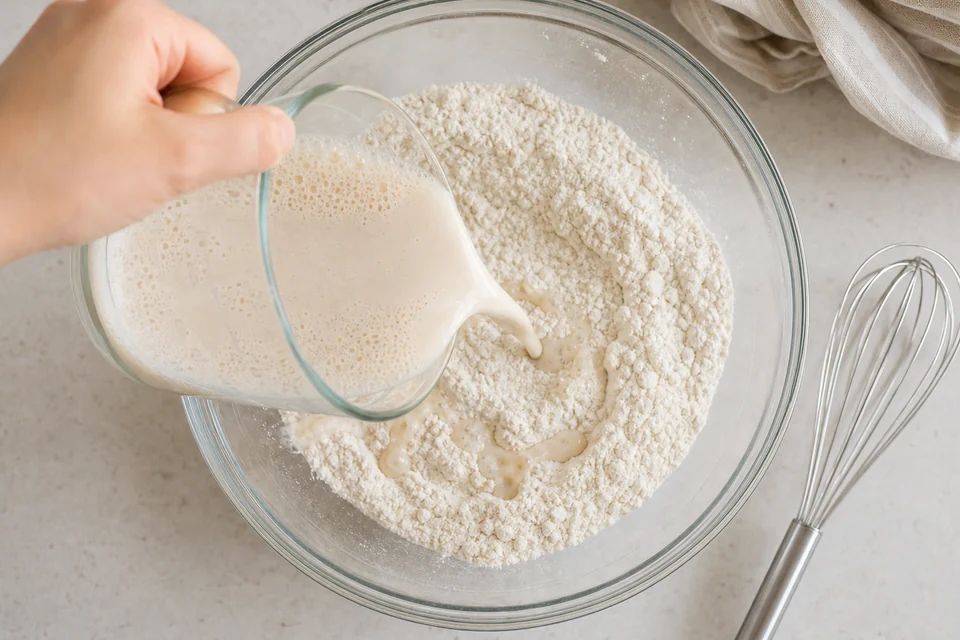
Use one reliable pancake formula as the control. Divide the dry mixture evenly by weight. Keep egg, fat, salt, sweetener, leavener, portion size, rest time, and pan heat fixed. Prepare the control with its original liquid and one comparison batter with the chosen alternative. If the original recipe depends on buttermilk or another acid, use a version whose leavener balance has already been adjusted.
Smell and taste the liquid before mixing. Record whether it is sweetened, flavored, fortified, refrigerated, or shelf-stable. Then note batter flow from the scoop, cooked diameter, surface color, crumb, and flavor. Taste a pancake plain, then with the planned topping. A subtle liquid can disappear under syrup but remain useful in a lightly topped breakfast.
Make only one liquid change at a time. If you also replace the egg, flour, sweetener, and fat, you will not know which change caused a thin, fragile, or dark pancake. A comparison notebook is more valuable than a ranking because it can be repeated with your actual products.
Building flavor without overloading the batter
A liquid can set the direction, while restrained additions make the idea legible. Oat drink with diced pear and cinnamon is coherent. Coconut beverage with lime zest is coherent. Almond drink with blueberry is coherent. Problems start when every available flavor is added to one bowl.
Use zest, spice, cocoa, or extract deliberately. Concentrated extracts should be measured; more does not automatically taste better. Wet fruit can change batter moisture, and frozen fruit can cool the batter and bleed color. Fold additions in gently and keep pieces small enough that the pancake cooks evenly.
Toppings are often the easiest place to add a strong flavor because they do not change the batter’s structure. If the substitute is required for availability rather than taste, a fruit compote, toasted nuts, or a modest syrup can provide the main flavor while the liquid stays neutral.
Troubleshooting by observable symptom
The batter is much thinner. Confirm the liquid measure and product type. A thin beverage may not match dairy milk’s solids or a creamy alternative’s viscosity. Let the measured batter stand for the recipe’s normal rest, cook one small pancake, then make a modest documented adjustment only if necessary.
The pancake browns too quickly. Check whether the substitute is sweetened and whether fruit juice was added. Lower the pan heat and reduce pancake size. Browning is not proof that the center is done.
The flavor is unexpectedly strong. Taste the liquid itself and review vanilla or other added flavors on the label. Pair a strong base with simple toppings next time rather than masking it with more ingredients.
The pancake falls apart. Do not assume the liquid alone is responsible. Check flour type, egg or binder, portion size, flip timing, and pan release. The Pancake Troubleshooting hub and flavorless pancake guide separate structural problems from seasoning problems.
Allergen, dietary, and safety boundaries
Read the full ingredient and allergen statement. Almond and cashew drinks involve tree nuts; soy drink involves soy; oat drinks may require a specific gluten-free certification for people who need it; shared equipment and formulation can change. A recipe is vegan only if every ingredient and process meets that definition, not merely because the liquid lacks dairy.
Do not taste raw batter. The U.S. Food and Drug Administration identifies flour as a raw food and advises cooking foods made with flour and raw eggs. Use clean utensils, keep uncooked batter away from finished toppings, and cook pancakes through.
Store each liquid according to its current package directions. Shelf-stable before opening does not necessarily mean shelf-stable after opening. Do not transfer a storage rule from one product to another.
Frequently asked questions
What is the best milk substitute for pancakes?
There is no universal best. Choose by recipe compatibility, desired flavor, label requirements, and the texture of the actual product. Oat is often mild, coconut is more distinctive, and soy or nut drinks bring their own backgrounds.
Can I use the same amount as milk?
Sometimes a tested recipe does, but it is not a promise for every product. Thickness, sugar, acidity, and solids vary. Use a recipe written for the substitute or run a small controlled test.
Which substitute adds the most flavor?
Canned coconut milk and fruit juices are often more assertive than plain carton drinks, but intensity varies. Stronger is not automatically better for the planned topping.
Are plant drinks dairy-free?
They may contain no dairy ingredients, but the current label and cross-contact statement control. This page does not certify any product or kitchen as safe for an allergy.
Can I use flavored plant milk?
Yes, in a recipe that can accommodate its sugar and flavor. Treat vanilla or chocolate drink as both liquid and flavoring, then reduce competing additions if needed.
Related Pancake World pages
Compare dairy liquids in milk versus buttermilk, diagnose a bland result with why pancakes taste flavorless, or browse the international Pancakes World collection.
Sources and editorial references
U.S. Food and Drug Administration — Handling Flour Safely — https://www.fda.gov/food/buy-store-serve-safe-food/handling-flour-safely-what-you-need-know
USDA MyPlate — Move to Low-Fat or Fat-Free Dairy — https://www.myplate.gov/sites/default/files/2024-06/TipSheet-6-Move-To-Low-Fat-Or-Fat-Free-Dairy.pdf
For the wider topic, start with Guides/pancake Ingredients.
For a closely related guide, see Pancake Ingredient Substitutions: A Practical Guide.
A useful next comparison is Alternative Milks for Pancakes: How to Choose and Adjust.
You can also continue with Pancake Batter Consistency Without Milk: A Practical Guide.
