
Before the list: what “keto pancake” can and cannot promise
These 17 ideas are pancake variations built around ingredients often used in lower-carbohydrate or ketogenic eating patterns. The label does not guarantee that every recipe fits every person’s target, medical need, or definition of net carbohydrate. Product labels, exact weights, serving size, toppings, and individual plans matter.
Alternative flours also do not behave like wheat flour. Almond flour is rich in fat and has no gluten network. Coconut flour is highly absorbent and cannot be exchanged one for one with almond flour. Ground seeds, cheese, protein powder, and vegetables each change water, binding, flavor, and heat tolerance. The most dependable approach is a purpose-built small-batch formula, small diameter, patient first-side cooking, and a cut test.
No medical outcome is promised here. Anyone using a ketogenic diet for a diagnosed condition, medication management, pregnancy, or another clinical reason should use guidance from a qualified professional. This article focuses on cooking choices and label literacy.
Two practical base batters
Almond-flour base
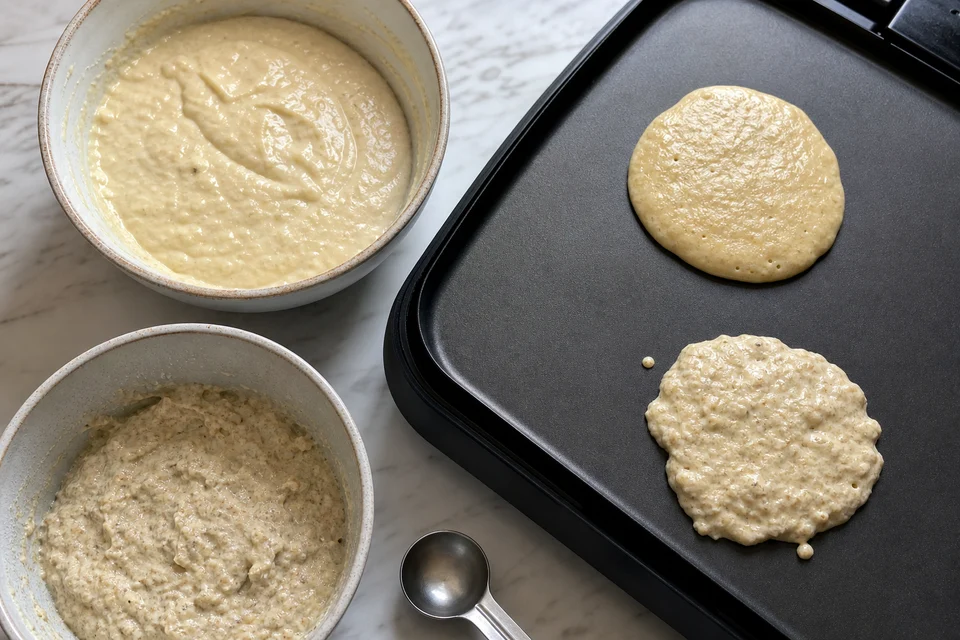
For six small pancakes, whisk 120 g fine blanched almond flour, 1 teaspoon baking powder, and 1/4 teaspoon salt. In another bowl whisk 2 eggs, 80 ml unsweetened milk or suitable alternative, 20 g melted butter or neutral oil, and optional vanilla. Combine and rest for five minutes. The batter should be thick but spoonable. Add liquid one teaspoon at a time only if it will not settle into a small round.
Almond pancakes are fragile before their eggs set. Keep them 8–9 cm wide, use moderate-low heat, and wait until the edge is firm. A full technique guide is available in how to make almond flour pancakes.
Coconut-flour base
For six small pancakes, whisk 30 g coconut flour, 1 teaspoon baking powder, and 1/4 teaspoon salt. Whisk 3 eggs with 120 ml unsweetened milk, 20 g melted butter or oil, and optional vanilla. Combine, rest for five minutes, then add liquid by the tablespoon if the batter becomes a stiff paste.
Coconut flour needs its own proportions. Thirty grams can absorb far more liquid than the same weight of almond flour. Brand, grind, and storage affect it, so the final adjustment belongs after the rest.
How to evaluate each idea
Read every package, especially sweeteners, chocolate, protein powder, processed meat, nut butter, and plant beverages. Weigh the amount that enters the full batter, record actual yield, and include toppings. Generic numbers cannot substitute for the products in your kitchen.
Cook a single 40 ml test over medium-low heat. Look for a stable edge and a base that releases. Turn with a broad thin spatula. Cut the test: the center should be set, not wet or gummy. Alternative-flour pancakes often show fewer surface bubbles than wheat pancakes, so do not wait for an identical signal.
1. Classic almond and vanilla
Use the almond base with 1 teaspoon vanilla and a label-checked sweetener only if desired. Serve with a few berries rather than folding a large quantity into the fragile batter. The simple version reveals whether the flour grind and pan heat are right before more ingredients complicate the result.
2. Lemon and poppy seed almond pancakes
Add finely grated lemon zest and 1 teaspoon poppy seeds to the almond base. Zest contributes aroma without the liquid and acidity of a large juice addition. Check poppy-seed cross-contact where relevant. Serve with plain yogurt or an appropriate alternative.
3. Cinnamon pecan pancakes
Add 1/2 teaspoon cinnamon and 20 g very finely chopped pecans. Large nut pieces interrupt the weak batter, so keep them small or use them as a topping. Pecans add another tree-nut allergen and their own label-dependent carbohydrate.
4. Blueberry almond pancakes
Place two or three small blueberries onto each pancake after portioning rather than stirring a cup into the bowl. This controls fruit per serving and prevents purple wet streaks. Frozen berries cool the surface and release water; thaw and blot them or extend cooking gently.
5. Cocoa pancakes
Replace 10 g almond flour with 8 g unsweetened cocoa and keep extra liquid nearby. Cocoa absorbs water and can make bitterness obvious when sugar is low. Add vanilla and salt, then choose a sweetener by the actual label and personal plan.
6. Peanut-butter swirl pancakes
Use the almond base if nuts suit the kitchen. Thin 30 g smooth peanut butter with a spoonful of batter and swirl a small amount onto each portion. Thick pockets can burn and stay heavy. Peanut is a separate allergen from tree nuts; check both rather than treating “nut” as one category.
7. Coconut and lime pancakes
Use the coconut base with lime zest and 15 g unsweetened shredded coconut. Shredded coconut absorbs some moisture during the rest, so final hydration may increase. Toast a small topping separately instead of letting exposed shreds scorch on the griddle.
8. Coconut-flour pumpkin spice
Whisk 60 g plain pumpkin purée into the wet ingredients of the coconut base and begin with 30 ml less milk. Add cinnamon, ginger, and nutmeg. Pumpkin introduces water and carbohydrate, while coconut flour absorbs strongly; use the product and purée labels rather than a generic count. Small portions help the moist center set.
9. Cream-cheese pancakes
Blend 60 g softened cream cheese, 2 eggs, 20 g almond flour, a pinch of salt, and optional vanilla. Rest two minutes. These are thin, tender, and egg-forward rather than bread-like. Cook very small rounds at low heat. Dairy and egg are central, and low-fat cream cheese can behave differently from full-fat.
10. Ricotta and lemon pancakes
Mix 100 g well-drained ricotta with 2 eggs, 35 g almond flour, lemon zest, salt, and 1/2 teaspoon baking powder. Ricotta moisture varies; drain visible whey. These stay soft, so wait for a stable edge and use a broad spatula. Ricotta’s nutrition comes from its exact container label.
11. Cottage-cheese blender pancakes
Blend 120 g cottage cheese, 2 eggs, 30 g almond flour, and 1/2 teaspoon baking powder until mostly smooth. Let foam settle for two minutes. Cottage cheese adds salt and variable moisture. Compare this with the oat-based three-ingredient protein pancake method rather than assuming the formulas are nutritionally identical.
12. Ground-flax pancakes
Mix 35 g finely ground flax with 2 eggs, 90 ml water, 1/2 teaspoon baking powder, salt, and 15 ml oil. Rest for 10 minutes. Flax thickens as it hydrates and can become gummy if the centers remain undercooked. Make small thin rounds and expect a pronounced seed flavor.
13. Chia and almond pancakes
Add 10 g ground chia to the almond base and reserve at least 30 ml extra liquid. Whole chia creates a more textured pancake; ground chia distributes binding. Rest fully before changing hydration. A batter correct at minute one may be a paste at minute eight.
14. Savory cheddar and chive pancakes
Omit vanilla and sweetener from the almond base. Fold in 35 g finely grated cheddar and 1 tablespoon chives. Cheese speeds browning and can leak, so use lower heat and keep shreds within the batter. Serve with tomato or dressed greens, using the savory topping guide to avoid an overly rich plate.
15. Zucchini and herb pancakes
Grate 100 g zucchini, salt lightly, wait 10 minutes, then squeeze it very dry. Combine with 2 eggs, 45 g almond flour, herbs, pepper, and 20 g grated hard cheese if desired. These sit between pancake and vegetable fritter. Excess water is the main texture risk; cook modest portions until the center is set.
16. Cauliflower and Parmesan pancakes
Use 150 g cooked cauliflower rice squeezed dry, 2 eggs, 35 g grated Parmesan, 30 g almond flour, pepper, and herbs. Shape small spoonfuls on the pan. They will be more textured than a breakfast pancake. Cool cauliflower before mixing so it does not begin setting the eggs in the bowl.
17. Scallion and sesame pancakes
Use the almond base without vanilla or sweetener, reduce milk by 15 ml, and add two sliced scallions plus 1 teaspoon sesame seeds. Serve with a vinegar-forward dipping sauce whose sugar and soy labels fit the intended plan. Sesame and soy are allergens, and a bottled sauce can change the carbohydrate calculation substantially.
Toppings that keep the formulation visible
A measured portion of berries, unsweetened yogurt, nut or seed butter, whipped cream without added sugar, toasted nuts, lemon zest, herbs, eggs, avocado, or cooked mushrooms can fit different plans. “Sugar-free” on a front label does not answer every nutrition or tolerance question. Read the full label and consider portion.
The pancake should still be identifiable. Heavy syrup can erase crispness; a mound of cold yogurt can cool a small stack; juicy fruit can make almond pancakes soggy. Put wet toppings on at the table and use one flavor anchor plus one contrast.
Diagnostics and current-batch fixes
Pancakes break when turned
The portion is too large, the first side is under-set, the batter is too wet, or binder is insufficient. For pancakes still to cook, reduce diameter, wait for a dry edge, and support the entire round. If repeated tests fail, add 5–10 g almond flour or one small beaten egg only if that correction fits the formula and diet.
Coconut batter becomes solid
It has continued absorbing liquid. Fold in milk or water one tablespoon at a time and wait 30 seconds. Do not replace coconut flour one for one with another flour in the same bowl.
Outside is dark while center is wet
Heat is too high, portions too thick, or dairy and sweetener are accelerating color. Move the pan off heat, reduce the setting, and make the remaining pancakes smaller. A dark outside is not proof of a cooked center.
Texture is dry and sandy
The batter may lack liquid or fat, flour may be coarse, or cooking may be prolonged. Add a measured spoon of liquid to batter still to cook and remove the next test as soon as set. A moist topping helps the plate but does not repair the formula.
Pancakes taste eggy
Eggs provide much of the structure in some lower-starch formulas. Vanilla, citrus zest, cocoa, herbs, or cheese can redirect flavor, but the lasting solution is a formula with more flour or seed structure and an appropriate egg ratio.
Sweetener tastes bitter or cooling
Products have different intensity and sensory effects. Do not keep adding more. Dilute the batter with an unsweetened half-batch if practical, or serve a small test with an acidic or creamy contrast. Choose a different product next time.
Prevent problems in the next batch
Use a purpose-built formula for the flour. Weigh ingredients and read the exact labels before calculating a serving. Rest absorbent flours and seeds before final hydration. Make the first pancake small and cut it. Record pan, heat, diameter, yield, and any extra liquid.
Keep almond and coconut flour refrigerated or stored as their labels direct because their fat and moisture characteristics differ from white flour. Break up clumps. Bring cold dairy toward the recipe’s intended temperature so it does not seize melted fat or cool the pan sharply.
Safety, allergy, and medical boundaries
Almond, pecan, peanut, coconut, sesame, dairy, egg, soy, protein powder, and packaged sweeteners create distinct allergen and tolerance questions. Alternative flour is still a raw ingredient; do not taste batter. A grain-free recipe is not automatically safe for celiac disease if labels or equipment do not control gluten cross-contact.
Ketogenic diets can interact with health conditions and medicines. Cooking information cannot replace individualized advice. Nutrition numbers should be calculated from exact product labels, weighed recipe inputs, actual yield, and the rules relevant to the eater.
Refrigerate pancakes with eggs, dairy, vegetables, and other perishables promptly under applicable guidance. Reheating cannot rescue a poorly stored batch.
Frequently asked questions
Are all almond-flour pancakes keto?
No. The complete recipe, serving, toppings, and exact product labels determine whether a pancake fits a person’s plan.
Can coconut flour replace almond flour?
Not one for one. Coconut flour generally absorbs far more liquid and needs a dedicated formula.
Why are my pancakes fragile?
Alternative flours lack wheat gluten. Use small portions, adequate binder, moderate heat, a well-set first side, and a broad spatula.
How do I calculate net carbohydrate?
Use the exact labels and the method relevant to your location and plan. This page does not provide one universal number.
Can the ideas be dairy-free?
Some can, but butter, cream cheese, ricotta, cottage cheese, whey, and toppings must be replaced intentionally and labels checked.
Are these appropriate for a medical ketogenic diet?
Only a qualified clinical team can determine that. The ideas here are culinary variations, not medical prescriptions.
Related Pancake World pages
- Master the core almond flour pancake method.
- Compare a different breakfast direction with oat, banana, and yogurt pancakes.
- Understand protein pancakes versus regular pancakes.
- Balance cheese and vegetables with the savory pancake topping guide.
- Diagnose fragile turns and wet centers at the Pancake World troubleshooting hub.
- Return to the American pancakes hub for standard flour-based context.
Sources and editorial references
- U.S. Food and Drug Administration, understanding the Nutrition Facts label:
https://www.fda.gov/food/nutrition-facts-label/how-understand-and-use-nutrition-facts-label - U.S. Food and Drug Administration, food-allergen and label guidance:
https://www.fda.gov/food/buy-store-serve-safe-food/food-allergies-what-you-need-know - U.S. Food and Drug Administration, raw flour and batter safety:
https://www.fda.gov/consumers/consumer-updates/flour-raw-food-and-other-safety-facts - National Institute of Diabetes and Digestive and Kidney Diseases, individualized diet and medical-care context:
https://www.niddk.nih.gov/health-information/diabetes/overview/diet-eating-physical-activity
For more practical food and breakfast guides, visit Pancakes World.
For the wider topic, start with Guides/healthy Pancakes.
For a closely related guide, see How to Make Cottage Cheese Pancakes.
A useful next comparison is My Favorite Keto-Style Pancakes.
You can also continue with Keto Pancakes: A Practical Almond-Flour Breakfast.
