
Quick answer
Water, oat beverage, soy beverage, almond beverage, thin coconut beverage, diluted yogurt, kefir, and some fruit-based liquids can all replace milk in pancakes when the rest of the recipe supports them. They do not behave identically. The best choice depends on whether the original liquid supplies only hydration or also flavor, fat, sugar, protein, and acidity.
For an ordinary baking-powder pancake, start by replacing the named milk with the same measured volume of an unsweetened drinking-style beverage or water. Mix the batter, let it rest if the recipe requires, and cook one small pancake. Adjust from that result rather than trying to predict every product from its name.
If the recipe relies on buttermilk plus baking soda, choose a tested buttermilk substitute or a different recipe. Plain water or a neutral plant beverage removes acidity as well as dairy. That is a formula change, not merely a flavor change.
What milk contributes to pancake batter
Milk hydrates flour, but it also contains solids that water does not. Depending on the milk, those solids bring protein, milk sugar, minerals, and fat. They can influence flavor, richness, browning, and the way the cooked interior feels. Buttermilk adds a cultured flavor and more acidity than ordinary milk.
A substitute does not need to copy every component to make a good pancake. It needs to work with the eggs, flour, fat, sweetener, and leavener already in the formula. A water-based batter can succeed because egg and oil still contribute structure and tenderness. A plant beverage can work because hydration is its main role in a particular recipe. A cultured liquid can work when its thickness and acidity are accounted for.
This is why a universal ranking is misleading. Two oat beverages can differ in sweetness, oil, stabilizers, and thickness. Canned coconut milk is far richer than a carton of coconut drink. Homemade nut milk can be thinner than a commercial product. Read the label, pour the product, and test the batter you actually have.
Comparison table
| Liquid | Likely flavor direction | Main adjustment to watch | Useful starting context |
|---|---|---|---|
| Water | Neutral, clean | Less richness and often paler color | Simple baking-powder pancakes with egg and oil |
| Unsweetened oat beverage | Mild cereal sweetness | Product may be naturally sweet or thick | Fruit, spice, or everyday stacks |
| Unsweetened soy beverage | Neutral to beany by brand | Flavor and browning vary | General-purpose batters |
| Unsweetened almond beverage | Light nut flavor | Often thin; tree-nut label matters | Vanilla, berry, or citrus pancakes |
| Thin coconut beverage | Mild coconut | Sweetness and fat vary | Tropical fruit or chocolate pairings |
| Canned coconut milk | Rich coconut | Usually too rich to treat as ordinary milk unchanged | Recipes designed for it or careful dilution tests |
| Plain yogurt plus water | Tangy and thicker | Needs dilution; acidity affects soda formulas | Tender cultured-style pancakes |
| Kefir | Tangy, pourable | Acidity and thickness differ by product | Recipes written for cultured liquid |
| Apple juice | Sweet and fruity | Faster browning, added sweetness | Small spice-forward experiments |
| Brewed tea or coffee | Aromatic, thin | Bitterness and low richness | Purpose-built flavor recipes |
“Likely” matters in this table. The label and first pancake outrank a generic category description.
Water: the simplest substitute
Water proves that dairy milk is not structurally mandatory in every pancake. It hydrates flour and lets the batter flow, while egg, oil, flour, sugar, and baking powder handle other jobs. The trade-off is a plainer taste and potentially less browning or richness.
Use water when toppings carry the flavor, when the pantry is limited, or when you want a neutral baseline. Keep the fat in the recipe. Add vanilla, citrus zest, spice, or a savory seasoning if the batter tastes unfinished. Do not add extra sugar solely to chase milk-like browning; sweetness and surface color are separate decisions.
For a deeper water-specific method, see making pancakes with water. For a complete measured formula, use the easy pancake recipe without milk.
Oat beverage
Oat beverages often suit pancakes because their grain flavor sits naturally beside flour, cinnamon, apples, berries, and maple syrup. Some are thin; others are creamy. Barista versions may contain more oil or stabilizers than a basic drinking product. Sweetened versions can make a batter sweeter and color the surface more quickly.
Start with an unsweetened version and use the original milk volume. If the batter becomes very loose, do not immediately add a large amount of flour. Let it stand briefly, cook a small test, and correct in measured spoonfuls. If it is thick, add the beverage gradually rather than pouring freely.
Oat does not automatically mean gluten-free. Product sourcing and labels matter for people who must avoid gluten, and the pancake flour must be suitable too.
Soy beverage
Unsweetened soy beverage can be a practical general-purpose substitute. Its body may be closer to dairy milk than some thin nut beverages, but brands vary and some carry a noticeable soybean flavor. Vanilla or sweetened products bring additional flavor and sugar.
Soy is one of the major allergens identified in U.S. labeling rules. Readers with an allergy should read the complete ingredient information, not rely on the front-of-pack product name. In other countries, follow local labeling and medical guidance.
Use a plain product for savory pancakes. For sweet pancakes, taste it before mixing; if you dislike the beverage by itself, the batter may not conceal it.
Almond and other nut beverages
Almond beverage can make a light batter with a gentle nut note. It works well with berries, stone fruit, cocoa, vanilla, or orange. Many products are thinner than milk, so the first pancake may spread more. Make a small measured correction only after confirming the flour quantity.
Tree-nut beverages are not appropriate for someone avoiding the relevant nut. Shared equipment and precautionary statements may matter, and a visual check cannot establish safety. Other nut beverages, such as cashew, hazelnut, or macadamia, have distinct flavor and richness; do not treat the category as one ingredient.
Coconut: carton and can are different ingredients
Drinking-style coconut beverage is usually designed to pour like another plant beverage. It can replace milk by volume in a test batch and adds a restrained coconut note. Canned coconut milk is concentrated and much richer. Using a full cup unchanged can produce heavy, oily, or strongly flavored pancakes.
If canned coconut milk is the only option, use a recipe written for it or test a diluted portion rather than converting the whole bowl blindly. Stir the can thoroughly first because coconut cream can separate. Record the dilution, since “half a can” is not a repeatable liquid ratio across package sizes.
Cultured dairy and yogurt mixtures
Plain yogurt thinned with water can produce a tangy batter, but it is not a drop-in liquid until it pours. Whisk the mixture smooth before measuring it into the flour. Thick Greek-style yogurt requires more dilution than a loose plain yogurt.
Kefir and other cultured dairy drinks are already pourable and can bring acidity. Their behavior is closer to buttermilk than water, but “closer” is not “identical.” Check whether the recipe uses baking soda, baking powder, or both, and avoid adding arbitrary acid or soda to force a conversion.
For a controlled ingredient comparison, read milk versus buttermilk and how buttermilk enhances pancakes.
Fruit juice, tea, coffee, and other flavor liquids
Apple juice can make a useful small batch with cinnamon or oats, but it contributes sugar and fruit acidity. It may brown faster and taste distinctly sweet. Orange juice has stronger acidity and can become bitter when mixed with certain flavorings or scorched in the pan. These liquids are recipe ideas, not neutral replacements.
Strong brewed tea can carry chai, Earl Grey, or roasted notes. Coffee can support cocoa or tiramisu-style pancakes. Cool either liquid before it touches egg, and keep some fat in the formula because tea and coffee do not provide richness.
Broth can hydrate a savory pancake, but its salt and flavor vary widely. Use low-salt stock and reduce added salt until after a test. Do not use a strongly flavored liquid merely to avoid wasting it; the finished pancake will concentrate that decision.
A controlled substitution workflow
- Identify the original liquid and leavener. Separate ordinary milk formulas from buttermilk-and-soda formulas.
- Read the substitute label for sweetness, flavor, allergens, and added oils. Shake or stir if the package instructs you to.
- Make half a recipe if the substitute is unfamiliar. Weigh ingredients where practical.
- Replace only the liquid for the first test. Do not simultaneously change flour, egg, fat, sweetener, and pan temperature.
- Let the batter hydrate for the recipe’s normal rest.
- Observe how it falls from a spoon. It should form a thick ribbon and slowly level, unless the original recipe specifies a different texture.
- Cook one small pancake. Record spread, browning, flip strength, center texture, and flavor.
- Make one measured correction, then cook another test.
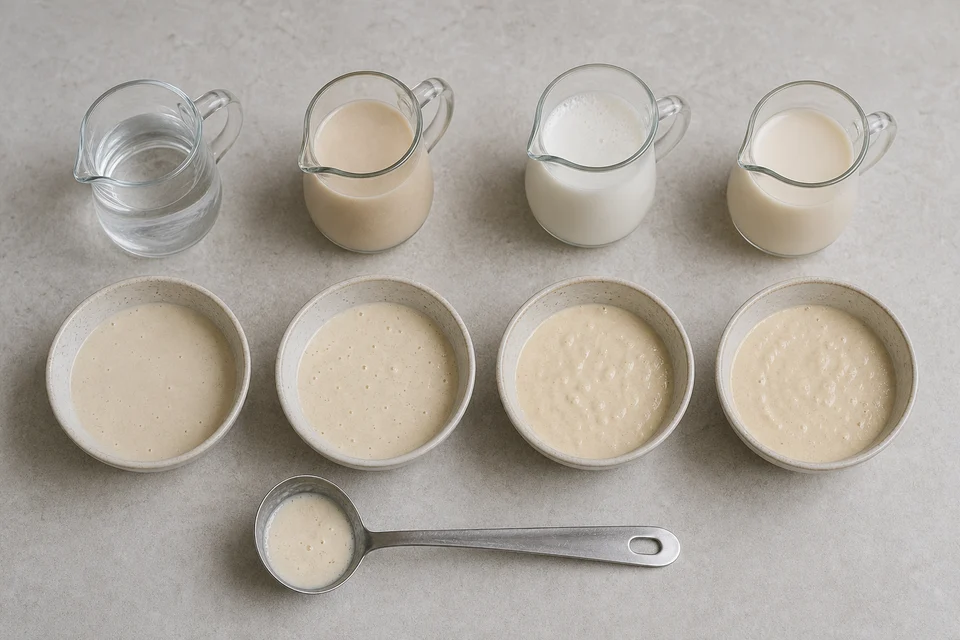
This process takes a few extra minutes and prevents a whole batch from becoming the experiment.
Current-batch fixes
The batter is too thin
Confirm that the flour was measured correctly. Mix one tablespoon flour with a spoonful of batter in a small cup, then stir the smooth paste back into the bowl. Wait before repeating. Dry flour dumped directly into a full bowl tends to form lumps.
The batter is too thick
Add the chosen liquid one tablespoon at a time. Stir gently and pause. Yogurt mixtures and thick beverages often need more adjustment than water, but the goal is a useful batter, not a fixed number of extra spoonfuls.
The pancakes brown too quickly
Lower the heat and allow the pan to cool before the next portion. Sweetened beverages and juice can color sooner. Do not use the dark surface as evidence that the center is finished.
The pancakes are pale
Give them adequate contact time before raising the heat. Water and some unsweetened beverages may produce less color. If the texture and flavor are good, paleness is not automatically a failed batch.
The texture is heavy
Check batter thickness, mixing, scoop size, and leavener before blaming the substitute. A stiff batter, oversized pancake, or overmixed bowl can all create a dense result. Use Pancake Troubleshooting to separate these variables.
The flavor is weak or strange
Taste the liquid itself and check whether it was sweetened or flavored. Add complementary zest, spice, herbs, or toppings to the current batch instead of repeatedly sweetening the raw batter. For the next batch, choose a more neutral product.
Dietary and label limits
“Plant-based,” “non-dairy,” and “milk alternative” are product descriptions, not complete allergy assessments. Soy, almond, and some oat products intersect with different dietary needs. Packaged baking powder, flavorings, toppings, and flour also require attention.
FDA guidance for U.S. packaged food explains that consumers with food allergies should read the complete label and not rely only on a “Contains” statement. Regulations and wording differ by country. If an allergy is medically significant, use the guidance supplied by the reader’s clinician and local authorities, and consider shared equipment as well as the named liquid.
This comparison does not rank beverages by healthfulness. Nutrition varies by product, fortification, serving size, and the rest of the meal. Read the current label if nutrition is the reason for the change.
Plan the next batch
Write down the product name, whether it was sweetened, the exact quantity, flour weight, leavener, rest time, scoop size, and useful stove setting. Photographing the label for personal kitchen notes can help when packaging changes. Change one variable next time: a different beverage, a little more fat, or a flavoring, not all three.
Serve the four-substitute idea shown in the finished-dish hero as a tasting exercise: keep the batter formula constant, change only the liquid, and use simple toppings that identify each flavor. The result teaches more than declaring a winner before cooking.
Frequently asked questions
What is the easiest milk substitute for pancakes?
Water is the simplest neutral option; an unsweetened plant beverage may provide more flavor. The easiest choice is one that fits the recipe’s leavener and the reader’s dietary needs.
Can I replace milk with the same amount of oat beverage?
For a basic baking-powder batter, equal volume is a sensible starting test. Product thickness and sweetness vary, so judge the batter and first pancake.
Can I use canned coconut milk?
Only with care. It is much richer than carton coconut beverage. Prefer a recipe designed for it or test a measured dilution.
Which substitute makes the fluffiest pancakes?
No liquid guarantees fluffiness. Flour ratio, leavener, mixing, batter thickness, scoop size, and pan heat also matter.
Can juice replace milk?
It can in a purpose-built flavor experiment, but juice adds sugar, acidity, and strong flavor. It is not a neutral one-for-one replacement.
Does using plant beverage make pancakes vegan?
Not if the recipe still contains egg, butter, or another animal-derived ingredient. Check the whole formula and every label.
Related Pancake World guides
- Make the complete easy pancake recipe without milk.
- Understand making pancakes with water.
- Compare milk versus buttermilk.
- Diagnose the cooked result at the Pancake Troubleshooting hub.
- Return to the American Pancakes hub.
Sources and editorial references
- U.S. Food and Drug Administration, Have Food Allergies? Read the Label —
https://www.fda.gov/consumers/consumer-updates/have-food-allergies-read-label
For more practical food and breakfast guides, visit Pancakes World.
For the wider topic, start with Guides/pancake Ingredients.
For a closely related guide, see Pancake Batter Consistency Without Milk: A Practical Guide.
A useful next comparison is Milk Substitutes for Pancakes That Add Flavor.
You can also continue with Alternative Milks for Pancakes: How to Choose and Adjust.
