
Quick answer
You do not need dairy milk to make a tender pancake. Flour, baking powder, salt, egg, water, and oil are enough for a workable base; a little sugar and vanilla are optional. Water gives the cleanest pantry version, while an unsweetened plant beverage can add flavor and may change browning or thickness. The important step is to choose one liquid, measure it, and correct the rested batter in small increments instead of combining several substitutes at once.
“No milk” can mean two different things. Some cooks are simply out of cow’s milk; others need the whole batch to be dairy-free. The recipe below uses water and neutral oil, so it contains no dairy ingredients as written. It does contain egg. Anyone managing an allergy should check every packaged ingredient and prevent cross-contact according to their own needs; the absence of milk from a home recipe is not a general allergen guarantee.
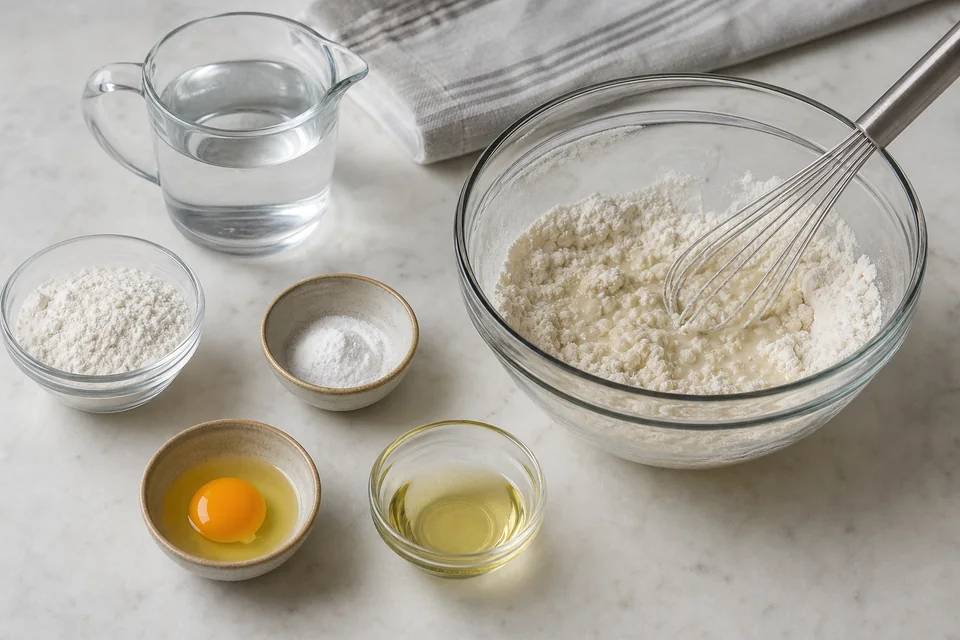
Pantry ingredient list
This formula makes about 10 medium pancakes:
- 180 g all-purpose flour, about 1 1/2 cups when spooned and levelled
- 18 g sugar, about 1 1/2 tablespoons, optional
- 2 teaspoons baking powder
- 1/2 teaspoon fine salt
- 1 large egg
- 300 ml cool water, about 1 1/4 cups
- 30 ml neutral oil, 2 tablespoons, plus a thin film for the skillet
- 1 teaspoon vanilla extract, optional
Flour creates the framework. Baking powder supplies the lift in this neutral, non-acidic batter. Salt sharpens the flavor, and sugar softens the plain-water profile while encouraging color. Egg helps the pancake hold together. Water hydrates the flour without contributing dairy flavor, and oil brings tenderness that would otherwise be supplied partly by milk fat or butter.
Do not add baking soda to this exact base merely because it appears in a buttermilk recipe. Baking soda is normally paired with an acidic ingredient. With water as the liquid, baking powder is the simpler leavener. If you replace the water with cultured or intentionally acidified liquid, you are changing the formula and should use a recipe designed for that system.
How to mix and cook no-milk pancakes
Whisk flour, sugar, baking powder, and salt in a medium bowl. In a jug or second bowl, beat the egg, water, oil, and vanilla until the oil is broken into small droplets and the egg is evenly dispersed. Pour the liquid into the dry ingredients and fold slowly with a spatula. Scrape the bottom, where a pocket of flour often hides, and stop when no dry streak remains. The batter need not look polished.
Rest it for five minutes. Water-based batter can appear loose immediately after mixing and then gain body as the flour hydrates. After the pause, lift a spoonful. The batter should fall in a broad ribbon, sit briefly on the surface, and then blend back into the bowl. If it falls like a thin drink, wait until the tester confirms the problem before adding flour. If it drops in a stiff mound, fold in one tablespoon of water.
Warm a nonstick skillet over medium heat. Wipe it with oil rather than leaving visible puddles. Add 1/4 cup batter for a small tester. It should spread into a controlled round. Turn when open bubbles appear across the top, the edge has lost its shine, and a broad spatula can lift the pancake without dragging wet batter. Cook the second side until golden and the centre feels resilient. Open the tester and confirm that the middle is set, not glossy or paste-like.
Continue with the remaining batter, leaving room to maneuver the spatula. The pan may get hotter as the batch progresses. If later pancakes color much faster than the tester, reduce the burner and let the empty skillet settle briefly before pouring again. A fixed dial position is not a promise of fixed pan behavior.
Choosing a liquid when milk is unavailable
Plain water
Water is neutral, inexpensive, and predictable. It does not supply the sugars, proteins, or fat present in dairy milk, so the pancakes may be a little paler and less rich. The oil and egg in this formula compensate for some of that difference. Use the full quantity in the recipe, then judge the rested batter rather than adding extra fat automatically.
Unsweetened oat beverage
Oat beverages can bring a mild cereal sweetness and may make the batter seem slightly fuller, depending on the brand. Use an unflavored, unsweetened product for the cleanest comparison. If the carton contains gums or stabilizers, the batter may not behave exactly like the water version. Keep the flour constant, make one tester, and record whether the batter needs a spoonful more liquid.
Unsweetened soy beverage
Soy beverage is another practical pancake liquid. In a tested vegan pancake formula, King Arthur Baking lists soy as a one-for-one alternative to oat or almond beverage. That is evidence for substitution within that particular recipe, not proof that every plant beverage behaves identically in every batter. For this base, start with the water quantity and use the ribbon test after resting.
Unsweetened almond beverage
Almond beverage is generally thinner than a rich dairy milk and carries a light nut flavor. It is unsuitable for anyone avoiding tree nuts. Check the label rather than assuming the ingredient list or allergen statement from the product name alone. A home recipe can name its ingredients, but only the actual packaged products and kitchen controls define the allergen situation.
Juice
Fruit juice is possible in some baking substitutions, but it is not a neutral milk replacement. It introduces sugar, acid, and a strong flavor. Those changes affect browning and may alter leavening. For an everyday breakfast pancake, water or a plain plant beverage is easier to control. Save juice for a formula built around that flavor.
Current-batch corrections
Batter is too thin
Give it the full five-minute rest, then cook a tester on a properly heated surface. If the round still spreads quickly and becomes lace-thin, fold in one tablespoon of flour. Wait one minute and repeat the spoon test. A large handful of flour can swing the batch from runny to heavy before you know how much was needed.
Batter is too thick
Add water one tablespoon at a time. Fold just enough to distribute it, because repeated hard whisking can make a conventional wheat batter less tender. The goal is not a particular number of spoonfuls; it is a ribbon that spreads gradually and a tester that cooks through before becoming overly dark.
Pancakes look pale
Pale color is not automatically a failure. Water brings less browning potential than milk, and a lightly colored pancake can still be tender and cooked. If the surface is dry and the centre is set but you prefer more color, allow the pan to preheat a little longer for the next tester. Do not add a large amount of sugar solely for appearance.
Pancakes are flat
Check whether the baking powder was evenly mixed and whether it is still within its useful period. Also review the batter: a very thin mix spreads gas across a wide area, while vigorous mixing can remove bubbles and develop more structure. Our guide to why pancakes turn flat helps separate leavener, batter, and pan causes.
Outside browns before the centre sets
Reduce the heat and make a smaller round. Water-based batter is not immune to a hot-pan problem. Surface color is only one cooking cue; the edge, centre feel, and opened tester provide the fuller picture. Never treat browning alone as a safety conclusion.
Useful add-ins
Cinnamon, nutmeg, citrus zest, or vanilla change flavor without adding much bulk. Begin with a modest amount. A water-based batter has a clean profile, so strong extracts and ground spices can dominate faster than expected.
For berries, scatter them onto each poured pancake. This keeps the base thickness stable and makes the fruit load consistent. For grated apple, squeeze away obvious excess juice and fold in a small measured amount. Wet fruit changes spread and may require a smaller pancake or a slightly longer cook at gentler heat.
Chocolate pieces, nuts, and seeds add weight. They are best applied sparingly to individual rounds rather than mixed into the entire bowl, especially on a first attempt. A heavily loaded pancake can tear even when the plain batter is correct.
Make the next batch easier
Write down which liquid you used, including the product type if it came from a carton. “Plant milk” is too broad to reproduce a result. Record the flour weight, the number of tablespoon corrections, and what the tester did. On the next attempt, change the starting liquid by the amount you previously added rather than repeating the same rescue.
Keep the pancake size consistent with a measuring cup or scoop. When thickness is stable, turning cues become easier to compare from one round to the next. If you change size, pan material, and liquid at the same time, a successful result will be harder to explain and repeat.
Food safety
Do not taste raw batter. The U.S. Food and Drug Administration advises that flour is a raw food, and the U.S. Department of Agriculture advises safe handling and thorough cooking for foods containing eggs. Wash hands, tools, bowls, and work surfaces after contact with the mixture. A golden surface is not a safety test; use a fully set centre and a cut tester as practical cooking checks for this recipe.
Frequently asked questions
Can I use only flour and water?
Flour and water can form a cookable paste, but they will not produce the same tender, lifted pancake described here. Baking powder provides lift, egg supports structure, oil improves tenderness, and salt makes the plain base more pleasant. If ingredients are limited, omit optional sugar and vanilla before removing the structural ingredients.
Does “no milk” mean dairy-free?
Only if every ingredient and the preparation environment meet that requirement. This formula uses water and oil, so it contains no dairy ingredient as written, but packaged ingredients may have their own allergen statements and cross-contact risks. Read labels and follow the controls appropriate to the person eating.
Can I replace the egg too?
That creates a different batter system. Egg-free pancakes are possible, but the binder, liquid, and leavener should be balanced together. Use an egg-free recipe rather than deleting the egg from this formula and expecting the same turning strength.
Why is the batter lumpy?
Small soft lumps are normal after brief mixing. Dry flour streaks should be folded in, but the batter does not need to be whisked perfectly smooth. Resting gives the flour time to hydrate and often reduces the appearance of small lumps without extra agitation.
Related pancake help
These are pantry-friendly American-style pancakes made without dairy milk. If a tester still behaves unpredictably after one measured correction, use Pancake Troubleshooting and follow the visible symptom.
More practical guides
Sources and editorial references
- Oregon State University Extension Service, “Favorite Pancakes (without eggs)” —
https://extension.oregonstate.edu/imported-publication/favorite-pancakes-without-eggs - Colorado State University Extension, “Ingredient Substitutions” —
https://extension.colostate.edu/resource/ingredient-substitutions/ - King Arthur Baking, “Easy Vegan Pancakes” —
https://www.kingarthurbaking.com/recipes/easy-vegan-pancakes-recipe - U.S. Food and Drug Administration, “Handling Flour Safely” —
https://www.fda.gov/consumers/consumer-updates/handling-flour-safely-what-you-need-know - U.S. Department of Agriculture Food Safety and Inspection Service, “Shell Eggs from Farm to Table” —
https://www.fsis.usda.gov/food-safety/safe-food-handling-and-preparation/eggs/shell-eggs-farm-table
For more practical food and breakfast guides, visit Pancakes World.
For the wider topic, start with Guides/pancake Ingredients.
For a closely related guide, see Can You Make Pancakes Without Milk?.
A useful next comparison is Easy Pancake Recipe Without Milk.
You can also continue with Alternative Milks for Pancakes: How to Choose and Adjust.
