
No single secret ingredient makes a pancake light. Flour, liquid, leavener, egg, fat, sugar, and salt form a system, and the batter still needs brief mixing, sensible portions, and steady heat to become a fluffy cooked crumb.
The light pancakes method gives measurable starting points, observable checks, a current-batch repair path, and a next-batch record. Start with the stated formula, then use the cooked result to decide whether liquid, portion size, heat, or handling needs one bounded adjustment.
Quick answer
There is no single secret ingredient. A light pancake needs a balanced flour-and-liquid base, measured chemical leavener, enough egg for structure, fat for tenderness, and restrained mixing and portioning. Fresh, correctly measured ingredients matter only as part of the full system.
Use the first cooked light pancakes portion as evidence. Note how far this specific mixture spreads, whether it releases, how quickly it colors, and what its cut center looks like. Do not taste raw batter or assume a dark surface proves the interior is ready.
What you need
- 240 g plain flour for the main structure
- 2 1/2 teaspoons baking powder for the tested leavener level
- 30 g sugar for sweetness and browning
- 1/2 teaspoon fine salt for flavor balance
- 2 large eggs for structure and richness
- 300 ml milk for hydration
- 45 g melted butter for tenderness and flavor
- 1 teaspoon vanilla, optional
- neutral oil for a thin pan film
Equipment
Use a scale, two bowls, whisk, flexible spatula, 60 ml scoop, broad skillet, and turner. A transparent measuring jug helps you see liquid volume, but weighing the dry formula remains the strongest control.
These quantities and tools belong to this light pancakes method, not to every pancake style. Ingredient brands, flour milling, egg size, cookware, and stove response vary, so the measured test is part of the recipe rather than an optional sacrifice.
Step-by-step method
1. Treat flour as structure, not padding
Weigh the flour. Too much can produce a stiff batter and dense crumb; too little can allow excessive spread. Emergency handfuls make the formula unknowable.
2. Use the specified leavener
Whisk baking powder thoroughly through the flour and check its useful date. Do not replace it with baking soda unless the recipe supplies an appropriate acid system.
3. Distribute egg, liquid, and fat
Whisk eggs, milk, butter, and vanilla before they meet flour. Separate mixing reduces the agitation required to bring the final batter together.
4. Fold and rest
Combine wet and dry only until no loose flour remains, then rest 5 to 8 minutes. Read the ribbon and test a measured scoop rather than aiming for a perfectly smooth bowl.
5. Cook for the full crumb
Use steady moderate heat, turn after the edge sets and bubbles persist, and cut the first center. A light-looking surface is not enough; the interior must be cooked.
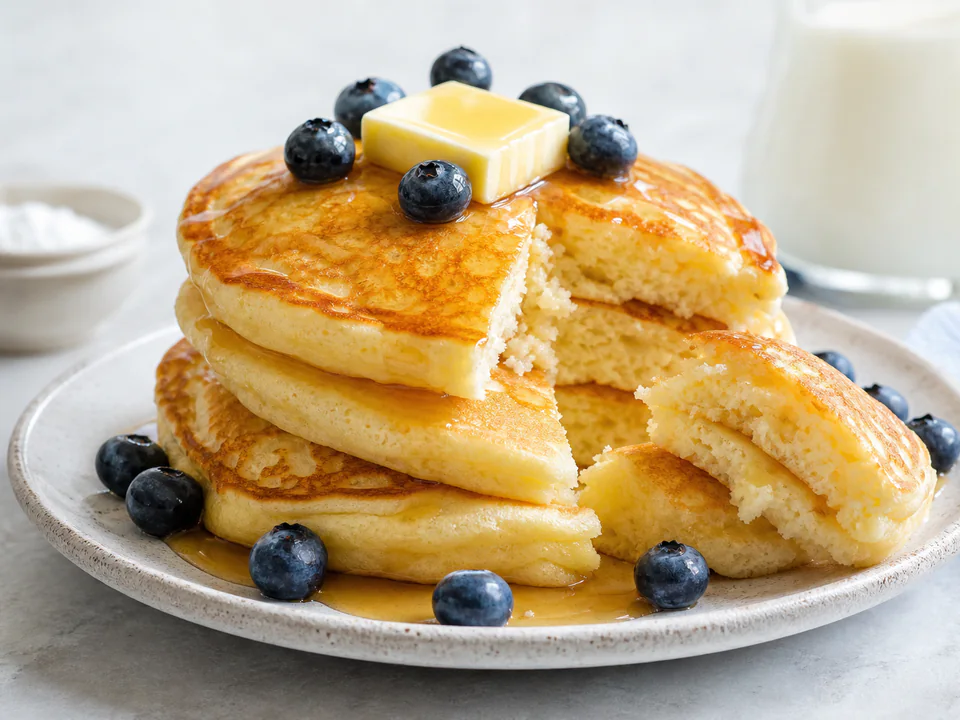
The close image shows the finished light pancakes clearly enough to inspect surface, filling distribution, or crumb. Use those visible features as comparison points while allowing for normal differences in ingredients, cookware, and portioning.
Why the method works
Flour and liquid define the canvas
Their balance controls spread and batter depth. Different flours and measuring methods change that relationship before any ‘secret’ ingredient is considered.
Leavener creates gas but not a complete pancake
The batter must hold expansion long enough to set. More powder cannot repair a very thin formula, oversized portion, or weak cooking process.
Egg supports structure and emulsification
Changing egg size or number alters liquid, protein, and fat together. A substitution needs a tested formula rather than a casual omission.
Fat and sugar change tenderness and browning
Butter can soften the crumb and add flavor; sugar influences sweetness and surface color. Neither establishes whether the center is done.
Salt and vanilla shape perception
A small salt amount makes the base taste complete, while vanilla is optional aroma. Neither should be used to cover stale flour or an off leavener flavor.
Diagnose and fix the current batch
Do not discard the whole light pancakes batch at the first imperfect result. Hold the formula constant where possible, choose the symptom that actually matches the cooked test, and make one bounded correction.
The batter is stiff. Wait through the planned rest, then add milk one tablespoon at a time and repeat the same test portion. Verify flour was weighed before blaming the brand. After the correction, compare the next piece with the same portion and describe the center, surface, and release before changing another variable.
The pancakes spread flat. Check liquid measurement, leavener, and scoop size. Allow the batter to rest and do not add extra powder until formula and pan variables are separated. After the correction, compare the next piece with the same portion and describe the center, surface, and release before changing another variable.
The crumb is coarse. Measure leavener carefully, fold less, and use steady heat. Large tunnels can come from uneven mixing or a formula pushed beyond its balance. After the correction, compare the next piece with the same portion and describe the center, surface, and release before changing another variable.
The center is gummy. Reduce the portion, lower heat, and cut the next test. Gummy can reflect cooking, hydration, or mixing, so describe the visible center precisely. After the correction, compare the next piece with the same portion and describe the center, surface, and release before changing another variable.
The flavor is metallic or bitter. Check baking powder amount and freshness, and verify no baking-soda substitution was made. Strong off flavor is not fixed by syrup. After the correction, compare the next piece with the same portion and describe the center, surface, and release before changing another variable.
If the light pancakes smell spoiled, contain visibly raw animal ingredients, or have been mishandled, a texture adjustment is not the answer. Culinary rescue does not override food-safety judgment.
Serving directions that fit this article
- Butter and maple syrup in modest amounts
- Berries and plain yogurt
- Warm apple with cinnamon
- A savory egg-and-herb plate
Choose one light pancakes serving direction and build a coherent plate. Keep one plain piece available for comparison; toppings and sauces can improve the meal, but they can also hide which part of the base needs adjustment.
Food safety and storage
Flour and egg batter is raw food, so do not taste it or use surface browning as a safety test. Keep raw batter and its utensils away from ready-to-eat toppings, cook until the center has no wet batter, and clean preparation surfaces. Cool cooked light pancakes promptly and follow current official leftovers guidance rather than inventing a universal hold time. Quality cues and food-safety boundaries are separate decisions.
For leftover light pancakes, label the container and keep wet sauces, fruit, vegetables, or garnishes separate when that protects texture and handling. Reheat only the portion needed until hot throughout, and check more than the surface when pieces are thick or filled.
Prevent the same problem next time
When changing an ingredient, keep scoop size, pan setting, and all other weights constant. Record the batter ribbon, spread diameter, browning rate, and cut crumb so the test explains the ingredient’s real effect.
A useful light pancakes batch note includes the exact ingredient or process change, not merely “better” or “worse.” Measured quantities and a short description of spread, browning, release, and center texture are enough to guide the next test.
Check the finished result before serving
Set one finished light pancakes portion aside before adding sauce or garnish. Look first at the surface and edges, then cut through the thickest or most heavily filled area. The goal is not to match a photograph exactly; it is to confirm that the visible result agrees with the method’s cues and that no wet batter remains.
Compare Cook for the full crumb with Flour and liquid define the canvas. If the surface, release, and center point to different problems, give the center priority and adjust heat or portion size before cooking more. Taste only the fully cooked test, then decide whether salt, acid, sweetness, or toppings belong on the plate. This short check keeps a presentation choice from hiding a cooking problem.
Related Pancake World guides
- Use the flat pancake diagnostics for its separate, more specific focus.
- Use the fluffy pancakes without buttermilk for its separate, more specific focus.
- Use the Pancake Troubleshooting for its separate, more specific focus.
Frequently asked questions
What is the secret to fluffy pancakes?
The useful answer is a balanced formula and controlled method: measured leavener, correct hydration, brief mixing, sensible portions, and steady heat.
Does buttermilk make every pancake fluffier?
No. Buttermilk changes acidity and thickness and needs a compatible recipe. It is valuable in a formula designed around it, not as an automatic splash.
Can I add more egg?
Extra egg changes structure, water, and fat at once and can make a different texture. Use the tested amount or a recipe built for more egg.
Why are my pancakes tall but wet?
The portion may be too large or the pan too hot. Reduce size, lower heat, and check the center rather than using height as a doneness cue.
More practical guides
Sources and editorial references
- Utah State University Extension, What Is Quick Bread? —
https://extension.usu.edu/createbetterhealth/blog/whatisquickbread - Illinois Extension, Recipe Rescue: Pancakes —
https://extension.illinois.edu/blogs/live-well-eat-well/2014-07-17-recipe-rescue-pancakes - U.S. Food and Drug Administration, Flour Is a Raw Food and Other Safety Facts —
https://www.fda.gov/consumers/consumer-updates/flour-raw-food-and-other-safety-facts
For more practical food and breakfast guides, visit Pancakes World.
For a closely related guide, see 7 Fluffy Vegan Pancake Variations.
A useful next comparison is How to Make Fluffy Sourdough Pancakes.
You can also continue with Krusteaz Buttermilk Pancake Mix: Light-and-Fluffy Method Guide.
For another practical angle, read Why Pancake Batter Separates While It Rests.
