Best breakfast sausage recipe
Quick decision for the best breakfast sausage recipe
At Pancakes World, for a classic herb-forward breakfast patty, start with Food Network Kitchen’s formula: 1 pound non-lean ground pork, 1 tablespoon brown sugar, 4 teaspoons fresh sage, 2 teaspoons fresh thyme, 1/2 teaspoon ground ginger, a pinch of cayenne, 1 1/2 teaspoons kosher salt, 1 teaspoon black pepper, and 2 tablespoons water. Form 2-inch patties, cover and chill at least one hour, brown in two batches, then finish in a 300°F oven. Verify every patty reaches 160°F in the center with a food thermometer. “Best” here means the clearest fit for the eater and service plan—not an unsupported universal winner.
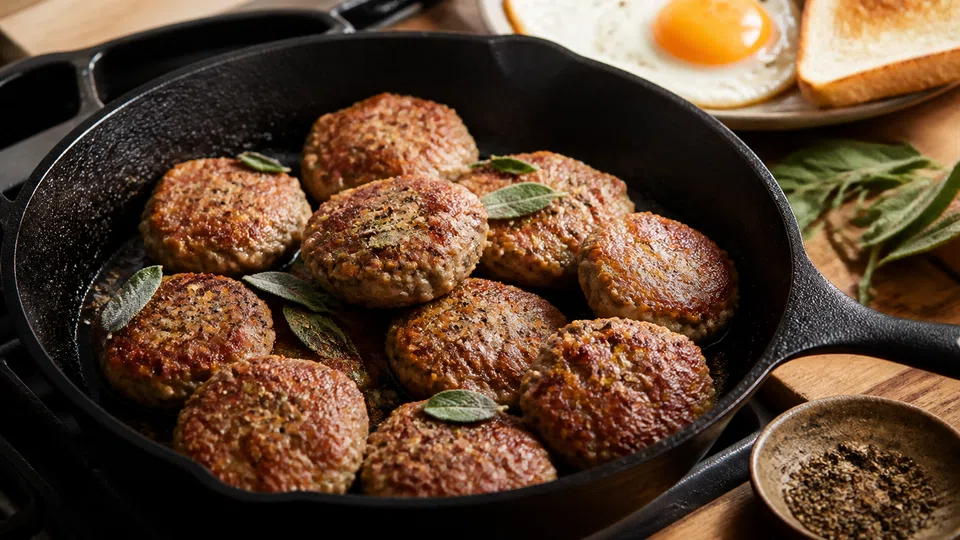
The primary formula is traceable to a recognized culinary source. The temperature and thermometer placement come from USDA Food Safety and Inspection Service guidance. Pancake World did not independently test the meat, spice balance, yield, pan, or timing and does not present a proprietary recipe.
Evaluation criteria
Breakfast sausage can mean a sweet-herb patty, a savory mustard-and-onion patty, a poultry version, a link, a loose crumble, or a packaged product. Compare recipes by the decisions that change the work and result rather than by a vague star rating.
Meat and safe endpoint
The primary source calls for ground pork that is not lean. Keep that specification when executing the source formula; changing meat and fat level is a new test, not a neutral edit. USDA says uncooked sausage made with ground beef, pork, lamb, or veal must reach 160°F, while sausage containing ground turkey or chicken must reach 165°F. Measure with a food thermometer.
Those temperatures are not interchangeable with the 145°F plus rest guidance for whole cuts. A breakfast sausage patty is ground meat. Browning, clear juices, firmness, and elapsed time do not replace the measured endpoint.
Flavor direction
Food Network Kitchen’s formula combines sage, thyme, ginger, brown sugar, black pepper, and a small amount of cayenne. It is the strongest fit when “breakfast sausage” means a familiar herb-led patty with some sweetness and heat. Bobby Flay’s separate sage-mustard version uses onion, garlic, fennel seed, whole-grain mustard, sage, and pork. It is a more savory, aromatic direction.
Do not merge the two lists and claim either source validated the hybrid. Decide between classic herb-sweet and onion-mustard-fennel first. A third direction—maple, apple, poultry, or highly spicy—needs its own complete tested formula.
Form and service
Patties require no casing and offer a broad surface for browning. Food Network Kitchen forms 2-inch patties, chills them, browns them in two batches, and finishes them in the oven. That method suits a home breakfast where the oven can complete the batch together.
Links require casing and stuffing work or a ready-made product. Loose crumble can suit a composed skillet or gravy but does not deliver a hand-held patty. The form should follow the plate, not a claim that one shape is always superior.
Make-ahead window
The primary source covers and refrigerates the formed patties for at least one hour or overnight. That is a source-specific preparation window, not an unlimited raw-storage rule. For broader storage, USDA’s sausage guidance and the product’s safe-handling label control. Do not extend “overnight” into several days without current authoritative guidance.
Equipment
The source uses a nonstick skillet, baking sheet, and 300°F oven. It also needs a bowl, measuring tools, clean raw-meat workspace, and food thermometer. If the oven is unavailable, choose a complete skillet-only recipe with a verified endpoint rather than guessing how source timings transfer.
For outdoor breakfast, use the separate best camping breakfast framework. A cooler, thermometer, raw-meat separation, fuel, and cleanup must all be real before fresh sausage is an appropriate camp plan.
Ingredient and allergen disclosure
Plain ground pork and herbs may look simple, but mustard, packaged spices, cooking oil, and accompaniments need labels. The primary recipe is not a medical or allergen-safety plan. Anyone cooking for an allergy or a restricted diet should verify every ingredient and cross-contact condition.
The broader Breakfast Recipes to Start the Day helps place sausage on a menu. This route is limited to choosing and executing a sausage formula.
Primary source-based patty formula
Food Network Kitchen publishes the following batch for four servings. Its directions do not give a patty count in the visible text, so this article does not invent one. The patties are formed to 2 inches and cooked in two batches.
Ingredients
- 1 pound ground pork, not lean
- 1 tablespoon packed brown sugar
- 4 teaspoons finely chopped fresh sage
- 2 teaspoons finely chopped fresh thyme
- 1/2 teaspoon ground ginger
- 1 pinch cayenne pepper
- 1 1/2 teaspoons kosher salt
- 1 teaspoon freshly ground black pepper
- 2 tablespoons water
- 2 tablespoons vegetable oil, divided for cooking
The salt and pepper quantities appear in the source directions even though its ingredient list describes them generically. Retaining those quantities makes the source record complete. A “pinch” of cayenne remains qualitative; this article does not manufacture a gram value.
Method with safety checkpoints
- Prepare a clean raw-meat station. Set out the bowl, measured seasonings, baking sheet, cover, and clean utensils before opening the pork. Keep ready-to-eat foods outside the raw zone.
- Combine the mixture. Put the pork, brown sugar, sage, thyme, ginger, cayenne, salt, pepper, and 2 tablespoons water in a large bowl. Mix until combined without treating prolonged handling as a route to quality.
- Form consistent patties. Shape 2-inch patties. Keep thickness reasonably consistent so thermometer checks and cooking progress can be compared, but do not invent an exact thickness absent from the source.
- Cover and chill. Transfer to a baking sheet, cover, and refrigerate for at least one hour or overnight as the source directs.
- Preheat the oven. Set it to 300°F. Prepare a clean baking sheet area for browned patties.
- Brown the first batch. Heat 1 tablespoon vegetable oil in a large nonstick skillet over medium-high heat. Add half the patties and cook, flipping once, until browned, approximately five minutes in the source method.
- Repeat. Transfer the first batch to the baking sheet, add the remaining tablespoon oil, and brown the rest.
- Finish in the oven. Food Network gives another three to five minutes, but use the thermometer rather than time alone.
- Verify 160°F. USDA directs cooks to insert the thermometer from the side of a thin food such as a sausage patty so the sensing area reaches the center. Check representative patties, especially the thickest.
- Serve with clean tools. Do not return cooked patties to a raw-meat plate or use an unwashed raw-meat utensil.
The source says “cooked through” but does not print a numeric endpoint on the recipe page. The 160°F verification is added from USDA’s specific fresh-sausage and ground-meat guidance. It is not an optional editorial preference.
Side-by-side comparison
| Recipe direction | Base | Dominant seasonings | Preparation pattern | Strongest fit | Main limitation |
|---|---|---|---|---|---|
| Food Network Kitchen classic patties | 1 pound non-lean ground pork | Sage, thyme, ginger, brown sugar, black pepper, cayenne | Chill at least 1 hour; skillet brown; 300°F oven finish | Familiar herb-forward breakfast patty and batch service | Needs oven, chill time, thermometer, and fresh herbs |
| Bobby Flay sage-mustard patties | 1 pound ground pork | Cooked onion, garlic, fennel seed, whole-grain mustard, fresh sage | Cook aromatics, cool 5 minutes, form 8 patties, skillet cook | More savory, onion-forward plate | Extra pan step; source lacks numeric endpoint, so USDA verification still applies |
| Ground poultry patty | Recipe-specific ground turkey or chicken | Must come from a tested formula | Product-specific | Poultry preference | Requires 165°F and cannot inherit pork fat or timing assumptions |
| Packaged fresh sausage | Manufacturer formula | Label-specific | Follow package directions | Convenience and declared product instructions | Formula, allergens, casing, and storage vary; still verify safe endpoint |
| Ready-to-eat sausage | Product-specific | Label-specific | Reheat or serve as label directs | Minimal raw-meat handling | “Ready-to-eat” must be established by the label, not appearance |
The table does not rank brands or claim the pork formula is nutritionally preferable. It maps each route to the job it can honestly perform.
A controlled way to compare recipes
If the household wants to choose between the classic herb formula and the mustard-fennel formula, cook them as two separately labeled batches. Do not divide one seasoned mixture and add an uncertain amount of aromatics to half. Each source uses one pound pork, but their preparation differs: the classic batch mixes raw pork directly with herbs, seasoning, and water before chilling, while the savory batch first cooks onion, garlic, and fennel, then cools that mixture before adding mustard, sage, and pork.
Use clean bowls and tools, label the baking sheets, and prevent raw mixtures from contacting ready-to-eat food. Form patties consistently within each recipe. Cook every patty to the USDA endpoint, then compare only fully cooked samples. Record which plate is which, the exact source followed, any deviation, patty count, measured endpoint, and service context. A preference result applies to those diners and batches; it does not establish a global “best.”
Compare features that a diner can actually identify: dominant herb direction, detectable sweetness, mustard presence, onion texture, fennel character, pepper heat, patty size, and fit with the planned plate. Avoid nutrition, tenderness, or juiciness claims unless the exact products and a defensible test support them. A simple preference note is enough.
If the classic formula is being adjusted, make the published version first. For a future batch, change one variable—such as cayenne amount or patty diameter—while preserving everything else. That isolates the decision. Changing meat leanness, herbs, salt, water, patty size, pan heat, and oven finish simultaneously produces an undocumented new recipe rather than useful evidence.
Planning the skillet and oven sequence
The source’s two-stage method solves a service problem: all patties can finish after separate browning batches. Preheat the oven before the skillet starts. Place the clean finish baking sheet beside, not inside, the raw-meat workspace. Brown only half the patties with the first tablespoon of oil, move them with a dedicated cooking utensil, then brown the second half with the remaining oil.
Once both batches are in the oven, check the thickest patties from the side. A reading from one small patty cannot certify a larger one. If some patties reach 160°F before others, remove the verified patties with clean tools and continue cooking the rest. The source’s three-to-five-minute oven range is a planning estimate; it is not permission to remove every patty at the same clock time.
Coordinate accompanying foods around that endpoint. Ready-to-eat fruit or bread should be prepared before the raw-meat station opens or on a separate clean surface. Eggs, pancakes, and toast each add equipment and attention. If the morning has one skillet, decide whether sausage is cooked and verified first or whether a different menu avoids unsafe plate and utensil reuse.
What not to infer from “not lean”
The source specifies ground pork that is not lean, so preserving that instruction is the closest execution. It does not authorize a minimum fat percentage, identify a cut, or make a health or quality ranking. Ask the seller or read the package for the actual product description. Do not manufacture a numeric fat target absent from the source.
A leaner pork, mixed meat, turkey, chicken, or plant-based product may require a different formula and endpoint. Treat each as a new route. In particular, USDA’s 165°F rule for ground poultry replaces the 160°F ground-pork endpoint; cooking a turkey patty by the pork recipe’s clock is not evidence of safety.
Choosing the flavor profile
Classic sage and thyme
Use the primary formula intact for the first execution. Fresh sage is measured at four teaspoons and fresh thyme at two. Ground ginger and cayenne sit behind those herbs; brown sugar supplies the named sweet component. Cook one fully temperature-verified small patty before serving the batch if flavor adjustment is still possible in a future batch. Do not taste raw sausage.
If the cooked sample seems too peppery, sweet, salty, or herb-heavy for the intended audience, record the exact response and change one amount next time. The source formula remains the source formula; an adjusted household version needs a separate note and cannot borrow its validation automatically.
Savory sage, mustard, and fennel
Bobby Flay’s recipe cooks finely chopped onion in olive oil, adds garlic and fennel for one minute, then removes the pan from heat and stirs in whole-grain mustard and fresh sage. After a five-minute cool, the aromatic mixture is combined with one pound pork and formed into eight patties.
The cooling step matters because the source does not add a hot onion mixture directly to raw pork. Keep its method intact. The recipe browns, lowers heat, covers, and cooks through, but this guide adds USDA’s 160°F ground-pork endpoint for verification.
Sweeter or hotter versions
Do not multiply brown sugar or cayenne by intuition and still label the outcome the “best” version. A sweeter breakfast or a hotter patty can be a legitimate preference, but it changes browning, flavor balance, and audience fit. Select a tested formula designed for the target or run a documented small batch without claiming universal performance.
Poultry
Ground turkey or chicken is not a lean one-for-one edit authorized by the pork source. Different meat and fat systems can change mixing, sticking, moisture, and cooking. Use a poultry sausage recipe with its own binder, seasoning, form, and method. USDA requires 165°F for uncooked poultry sausage.
Best fit by use case
Weekend breakfast for four
The primary recipe’s four-serving yield aligns directly. Mix and form the night before, cover and refrigerate, then use the skillet-plus-oven sequence in the morning. Prepare other ready-to-eat foods away from the raw-meat station. The oven finish helps bring two browned batches to service together.
If pancakes are also being cooked, schedule the shared pan and oven before starting. Sausage has a numeric safety endpoint; do not delay thermometer checks while managing another batter.
Brunch buffet
Choose consistent patties and a verified hot-holding plan from an authoritative source or local code. The recipe’s three-to-five-minute oven finish is not a buffet holding instruction. Cook to 160°F, transfer with clean utensils, and do not rely on a decorative chafing setup without temperature control.
For a menu whose make-ahead system is the main problem, use easy make-ahead brunch ideas rather than expanding this recipe into unsupported storage advice.
Savory breakfast plate
Choose the sage-mustard version when onion, garlic, fennel, and whole-grain mustard fit the rest of the plate. Its eight-patty yield is explicit. It requires a cool-down step before mixing with pork and a covered skillet finish. Verify 160°F from the side of the patty.
Breakfast sandwich
Form patties to the bread’s footprint only if thickness stays manageable and the center can be measured. A wider patty may not follow the source’s 2-inch timing. Treat size change as a new cooking condition and rely on the thermometer, not the published minutes.
Fry-up style breakfast
A sausage patty can be one component, but a full fry-up breakfast adds eggs, bacon, beans, mushrooms, tomatoes, toast, or other items depending on the plan. Pan capacity and raw-to-ready separation become the main constraints. Do not call the sausage recipe evidence for the whole plate.
Freezer planning
Neither culinary source in this article publishes a freezer method for the prepared patties. Do not invent freezing, thawing, or quality claims. Use current USDA storage guidance or another tested source that names whether patties are raw or cooked, packaging, freezer handling, and reheating.
Cooking performance and troubleshooting
Patties brown before the center reaches temperature
The primary method anticipates this by separating browning from a low-temperature oven finish. Transfer browned patties to the baking sheet and finish at 300°F, checking the center. Do not continue scorching the skillet exterior to chase an unmeasured center.
Patties are hard to measure
USDA says to insert the thermometer through the side of a thin patty until the sensing area reaches the center. Remove it from direct heat onto a clean spatula or plate if that makes safe placement easier. Avoid touching the pan, bone, or gristle.
Patties differ in cooking progress
Inconsistent size and thickness can create different endpoints. Check the thickest patties and more than one location as needed. A single measurement from the thinnest patty does not verify the rest.
Mixture sticks during forming
Use clean, deliberate handling and keep the mixture appropriately chilled. Do not add breadcrumbs, flour, egg, or oil unless a tested variation calls for it; each addition changes the source formula and may add allergens.
Flavor seems muted
Confirm fresh herb quantities, salt, pepper, and chill time before adding more. Evaluate only a fully cooked patty. Fresh and dried herbs are not automatically volume-equivalent, so this article does not invent dried substitutions.
Patties release liquid in the pan
Avoid crowding and preserve the source’s two-batch method. Crowding can change the pan environment, but no guaranteed browning outcome is claimed. If the pan is overloaded, reduce the number of patties rather than increasing heat blindly.
The meat looks cooked before 160°F
Appearance is not the endpoint. USDA notes that harmful bacteria cannot be reliably seen, smelled, or tasted and directs consumers to use a food thermometer. Continue cooking safely until the measured center reaches the required temperature.
Care, storage, and durability of the workflow
“Durability” here means a process that remains safe and traceable, not shelf life invented for a recipe. Keep raw pork refrigerated, use it within current package and USDA guidance, and prevent juices from contacting ready-to-eat food. Wash hands, tools, surfaces, and the thermometer probe according to food-safety and manufacturer directions.
USDA distinguishes uncooked from ready-to-eat sausage and notes that packages requiring cooking carry statements such as “uncooked,” “ready to cook,” or “cook before eating.” Read the label. A smoked appearance or browned exterior does not prove ready-to-eat status.
For leftover cooked patties, use current authoritative refrigeration and reheating guidance. This article does not create a custom storage period because the culinary sources focus on preparation and cooking. Label containers with the batch and date if that supports household control.
The thermometer is part of recipe equipment. USDA advises cleaning it with hot, soapy water or per manufacturer instructions, protecting the sharp probe, and not leaving a non-oven-safe model in food while cooking. Calibration and sensing-area requirements depend on the instrument.
Actionable checklist
Selection:
- Choose classic herb-sweet, savory mustard-fennel, poultry, packaged fresh, or ready-to-eat as distinct routes.
- Confirm pork or poultry and the corresponding safe endpoint.
- Read ingredient, allergen, storage, and safe-handling labels.
- Confirm skillet, baking sheet, oven, thermometer, and refrigeration capacity.
- Use a different complete source when changing meat, form, or cooking system.
Primary formula:
- Measure one pound non-lean ground pork.
- Measure brown sugar, fresh sage, fresh thyme, ginger, cayenne, salt, pepper, and water exactly.
- Mix in a clean raw-meat zone.
- Form consistent 2-inch patties.
- Cover and refrigerate at least one hour or overnight.
- Brown in two batches with one tablespoon oil per batch.
- Finish at 300°F.
- Insert the thermometer from the side into the center.
- Verify every serving batch reaches 160°F.
Cleanup and service:
- Use clean serving tools and plates.
- Keep raw and cooked sausage separate.
- Wash hands and surfaces after raw-meat contact.
- Clean the thermometer probe.
- Refrigerate leftovers promptly under current guidance.
- Never taste raw sausage to adjust seasoning.
Limitations and disclosure
This comparison names two culinary formulas and USDA safety requirements. It does not claim that one recipe is universally best, that non-lean pork is nutritionally preferable, or that a specific brand, farm, butcher, pan, or thermometer performs better. No product was purchased, tested, sponsored, or ranked.
The article does not provide medical advice, allergy clearance, nutrition totals, curing instructions, commercial processing rules, or long-term raw-sausage storage. Homemade fresh breakfast patties are not shelf-stable. Curing and preservation require purpose-built authoritative procedures and are outside this route.
Cooking times are source ranges for specified methods. Patty dimensions, starting temperature, pan, burner, oven, batch size, and meat can change elapsed time. The USDA endpoint measured at the center controls safety.
Practical conclusion
Food Network Kitchen’s sage-thyme pork patty is the strongest evidence-backed starting point for a classic breakfast-sausage intent: exact seasoning quantities, a one-hour-or-overnight chill, 2-inch patties, two-batch browning, and a 300°F oven finish. Add USDA’s mandatory verification: 160°F for ground pork, measured from the side into the center. Choose the separate sage-mustard-fennel formula when a savory onion-led direction fits better, and use a purpose-built poultry formula when changing the meat.
Build the rest of the menu through Pancakes World, with Father’s Day brunch recipes as a separate occasion-planning route rather than presenting one sausage as a complete celebration menu.
Sources and editorial references
- Food Network Kitchen, “Breakfast Sausage Patties.” Exact pork formula, seasoning quantities, 2-inch form, at-least-one-hour chill, two-batch skillet browning, 300°F oven finish, four-serving yield, and source timing checked 2026-08-16.
https://www.foodnetwork.com/recipes/food-network-kitchen/breakfast-sausage-patties-4621710 - Bobby Flay / Food Network, “Sage-Mustard Breakfast Sausage.” Separate onion, garlic, fennel, mustard, sage, pork, eight-patty formula and covered-skillet method checked 2026-08-16.
https://www.foodnetwork.com/recipes/bobby-flay/sage-mustard-breakfast-sausage-recipe-1945001 - USDA Food Safety and Inspection Service, “Sausages and Food Safety.” Uncooked versus ready-to-eat classification, label boundary, 160°F ground red-meat sausage endpoint, and 165°F poultry-sausage endpoint checked 2026-08-16.
https://www.fsis.usda.gov/food-safety/safe-food-handling-and-preparation/meat-catfish/sausages-and-food-safety - USDA Food Safety and Inspection Service, “Do You Know the Correct Place to Insert Your Food Thermometer?” Side-entry center placement for thin sausage patties and safe temperature table checked 2026-08-16.
https://www.fsis.usda.gov/news-events/news-press-releases/do-you-know-correct-place-insert-your-food-thermometer - USDA Food Safety and Inspection Service, “Food Thermometers.” Thin-food sensing-area placement, cleaning, storage, calibration, and use boundaries checked 2026-08-16.
https://www.fsis.usda.gov/food-safety/safe-food-handling-and-preparation/food-safety-basics/food-thermometers
Editorial boundary: this is an Article-schema comparison guide using two published culinary formulas and USDA safety rules. Pancake World has not claimed an independent recipe or product test, nutrition result, medical suitability, preservation method, venue fact, or universal “best” recipe. Publication and media clearance remain outside this draft.