Brunch meat dishes
At Pancakes World, choose one brunch meat dish by service need: breakfast sausage for fast small-batch cooking, ham for easy slicing or reheating, bacon for crisp texture but active oven or pan time, or a meat-and-egg casserole for make-ahead service. Do not serve all four by default. Read whether the product is raw, fully cooked, or cook-before-eating, prevent raw-to-ready-food cross-contact, and verify doneness with a food thermometer. USDA lists 160°F for ground beef and pork, 165°F for ground poultry, and 165°F for casseroles.
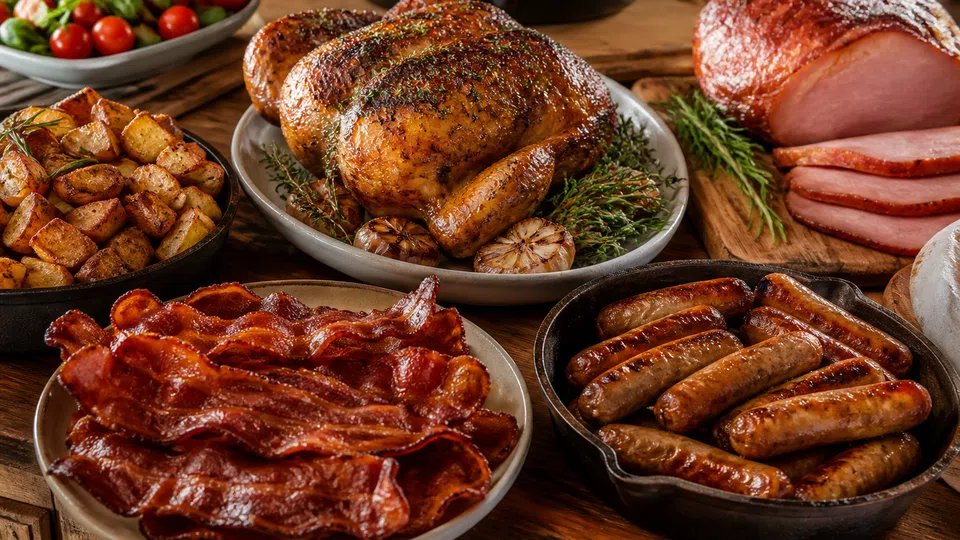
Direct answer for brunch meat dishes
For a small brunch, sausage patties or sliced fully cooked ham are the simplest. For a group, a tested breakfast casserole can reduce last-minute pan work. For a buffet, use small trays and safe hot holding rather than placing the full batch out. USDA notes that sausage may be raw or ready-to-eat; package language such as “cook before eating” controls, and uncooked pork or beef sausage should reach 160°F while uncooked poultry sausage should reach 165°F.
Use temperature, not color, as the safety decision. Insert the thermometer from the side into thin patties so the sensing area reaches the center.
What the term means
“Brunch meat dishes” includes meat as a main or component, but does not imply that meat is required for brunch. It also does not identify one product’s seasoning, fat, sodium, allergens, or cooking state. Breakfast sausage can contain binders such as wheat or milk; cured meats vary; plant-based products follow different labels.
This page gives selection, scheduling, and safety guidance. It does not rank brands, fabricate nutrition, or claim a restaurant serves a permanent dish.
Use the Brunch at Mr. Pancake Munich: A Focused Guide for the broader meal plan beyond the meat component.
Practical options and examples
| Dish | Strength | Constraint | Best use |
|---|---|---|---|
| Sausage patties | Quick, portionable | Raw product needs verified cooking | Small or medium group |
| Fully cooked ham | Easy to slice | Reheating guidance depends on packaging | Buffet or sandwich table |
| Bacon | Crisp contrast | Active cooking and grease management | Small menu with free oven space |
| Meat-and-egg casserole | One-pan service | Must cook evenly to 165°F | Larger planned brunch |
| Brunch sliders | Hand-held | Hot/cold holding and soggy bread | Informal buffet |
| Leftover roast used in a new dish | Reduces waste | Must have been stored safely | Family brunch only with traceable leftovers |
Choosing the right approach
Choose based on equipment. If pancakes occupy the griddle, bake sausage or select ham rather than competing for the same surface. If the oven holds a casserole, do not add bacon and pastries that require conflicting temperatures. For a standing event, sliders are easier to eat than a carving station.
Three scenarios:
- Four diners: cook sausage patties in one controlled batch, checking the thickest pieces from the side.
- Twelve diners: bake a tested casserole to 165°F, rest as directed, and serve in small portions.
- Open-house buffet: offer sliced ham or sliders, replenish small hot trays, and time exposure.
Common mistakes
Never place cooked meat on the platter that held it raw. Do not use the same tongs for raw and cooked sausage. Do not rely on browned exterior or clear juices. Avoid partially cooking meat the night before unless an authoritative method explicitly supports the process.
Do not treat all ham alike. USDA distinguishes fresh or cook-before-eating ham from fully cooked ham and gives different temperatures. Read the label. Avoid mixing new food into an old buffet tray, and do not leave perishable meat out through a long event.
Step-by-step checklist
- Select one meat dish and confirm how it fits the whole menu.
- Read the product’s ingredient, allergen, storage, and cooking labels.
- Identify raw, cook-before-eating, or fully cooked status.
- Thaw in the refrigerator when needed.
- Keep raw meat separate from bread, fruit, and ready-to-eat food.
- Use dedicated boards, utensils, and clean platters.
- Cook to the USDA temperature for that product class.
- Insert the thermometer correctly, especially in thin patties.
- Hold hot food at a safe temperature or serve promptly.
- Replenish buffet dishes in small batches.
- Refrigerate leftovers within two hours.
- Reheat leftovers to 165°F.
Variations by meat and market
Fresh pork sausage, beef sausage, and poultry sausage have distinct safe-temperature requirements. Black pudding, white pudding, back bacon, streaky bacon, and regional cured meats also differ in whether they are raw or ready-to-eat. The package and local authority guidance outrank a generic menu description.
For a Full English structure, use full English breakfast rather than assuming any plate with bacon is traditional. For hand-held service, brunch sliders addresses bread, filling, and holding. For a named casserole, Paula Deen breakfast casserole separates the official recipe identity from safe preparation.
Pancakes World presents meat as one optional part of an international brunch, not the platform’s main identity.
Storage or planning notes
Keep raw sausage refrigerated and use or freeze according to USDA and package guidance. Cool cooked dishes rapidly in shallow containers. USDA says most cooked leftovers keep three to four days refrigerated and should be reheated to 165°F.
For a buffet, hot food should be held at 140°F or warmer and cold food at 40°F or colder under USDA guidance. Without holding equipment, put out smaller portions and replace them within the allowed time instead of exposing the entire batch.
A menu decision
If the centerpiece already contains meat, do not add a separate meat platter. Pair a casserole with fruit and bread. Pair pancakes with one sausage or ham choice. Pair sliders with a crisp vegetable or fruit component.
The goal is a deliberate plate and manageable service. More meat dishes increase raw handling, equipment conflict, and leftovers without necessarily improving the meal.
Compare by service, not by reputation
Sausage is portionable but needs careful raw handling unless fully cooked. Bacon offers crispness but loses quality when held and produces rendered fat that needs safe disposal. Ham can be efficient for a group, but “ham” covers products with different cooking status. A casserole reduces individual pan work but creates a dense dish that must reach temperature at the center. The right option is the one the kitchen can cook and serve correctly.
For a pancake brunch, choose a meat that cooks in the oven or can be completed before the griddle work. For a buffet, choose a dish that portions neatly and can be replenished. For a small seated group, cook one fresh batch and skip holding equipment entirely. For children or older guests, consider ease of chewing and strong seasoning without making medical claims.
Thermometer technique for common shapes
For a thin sausage patty, USDA advises inserting the probe through the side so the sensing area reaches the center. For a casserole, check the center and more than one location because density and oven hot spots can produce uneven heating. For an irregular roast or thick ham, avoid bone, fat, and gristle and measure the thickest relevant area.
Clean the probe between uses according to its instructions. Do not touch a cooked item with a probe still contaminated from an earlier raw check. A thermometer is useful only when its placement and care are correct.
Make the vegetarian alternative a real dish
If the main is sausage casserole, fruit and toast alone may not be an equivalent brunch for a vegetarian guest. Offer a separate vegetable-and-egg bake, bean-and-potato dish, or purpose-built plant-based main. Keep its tools and tray separate from raw and cooked meat. A plant-based sausage may still contain wheat, soy, or other allergens and has its own package directions.
Purchasing and recordkeeping
Buy by the tested recipe yield and product size. Keep the packaging until service is over so raw/ready status, ingredients, lot information, and storage directions remain available. If meat is transferred to a container, label it immediately. Record when frozen food entered the refrigerator to thaw rather than relying on memory.
At a larger private event, assign one person to monitor cooking and holding. The cook should not also be expected to greet every guest, refill drinks, and photograph the table. Clear ownership prevents a beautiful meat tray from sitting unmonitored.
When the event ends, separate food that remained in safe reserve from food exposed on the buffet. Do not mix them in one container. Note the time each tray left temperature control and discard items that crossed the applicable limit. This preserves the value of the safe reserve without pretending every leftover has the same history.
Sources
- USDA FSIS — Safe Minimum Internal Temperature Chart — https://www.fsis.usda.gov/food-safety/safe-food-handling-and-preparation/food-safety-basics/safe-temperature-chart — current cooking temperatures.
- USDA FSIS — Sausages and Food Safety — https://www.fsis.usda.gov/food-safety/safe-food-handling-and-preparation/meat-catfish/sausages-and-food-safety — sausage types, labeling, cooking, and storage.
- USDA FSIS — Hams and Food Safety — https://www.fsis.usda.gov/food-safety/safe-food-handling-and-preparation/meat-catfish/hams-and-food-safety — ham categories and reheating distinctions.
Evidence checked 16 August 2026. Product labels and current local guidance control the food in hand.