Tea party brunch ideas
At Pancakes World, a tea-party brunch needs three small-food layers: savory finger sandwiches or tartlets, scones or another plain bread, and small cakes or cookies, plus two teas and water. Keep portions neat and the menu narrow. Prepare fillings and baked goods according to tested recipes, assemble sandwiches near service so they do not dry out, and keep egg, meat, dairy, and cut-produce fillings cold. A tiered stand is optional; the essential idea is a progression from savory to bread to sweet. If the gathering replaces a meal, strengthen the savory layer before adding more cake.
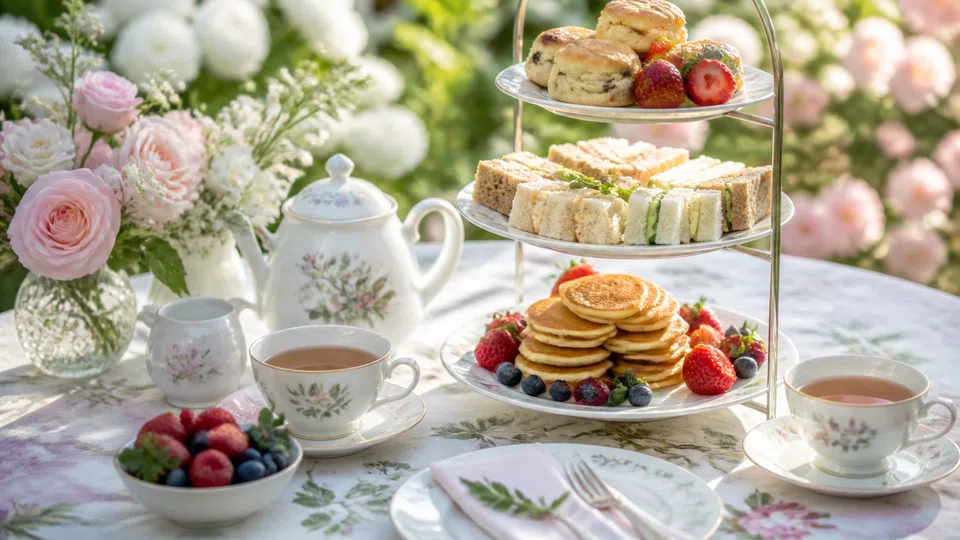
Direct answer for tea party brunch ideas
For six guests, choose two sandwich fillings, one scone, one small cake or cookie, one black tea, one caffeine-free infusion, and water. Use the yields of the actual recipes to determine amounts; “six guests” describes the planning scenario, not a universal portion promise. A BBC Learning English feature on afternoon tea at the Ritz describes the recognizable three-part service—finger sandwiches, scones, then cakes and pastries—while this brunch adaptation adds enough savory substance for the intended meal.
Serve sandwiches first, then warm or room-temperature scones, then sweets. That sequence prevents dessert from dominating and lets tea choices change with the food.
What the term means
Afternoon tea and brunch overlap but are not identical. Traditional afternoon tea sits between lunch and dinner and often emphasizes small portions. A tea-party brunch occurs earlier and may need a more substantial savory component. It should not be called a formal tradition without regard to context.
The route provides a hosting format, not claims about British history or etiquette. It avoids venue facts and does not reproduce hotel menu prose. Household tea parties may use local breads, fillings, and tea customs.
The Brunch at Mr. Pancake Munich: A Focused Guide owns the broader menu intent; this route stays with tea-party service.
Practical options and examples
| Layer | Options | Preparation note | Balance |
|---|---|---|---|
| Savory | Cucumber-herb, egg salad, roasted vegetable, smoked fish where appropriate | Keep perishable fillings cold | Choose two, including one vegetarian |
| Bread | Plain scones, small rolls, tea bread | Bake from a tested formula | Keep flavor restrained |
| Sweet | Lemon squares, shortbread, berry tartlets, small cake | Portion before service | Choose one or two small items |
| Tea | Black tea, green tea, herbal infusion | Follow product brewing guidance | Offer water too |
| Fresh | Berries, citrus, radish, herbs | Wash and prepare safely | Use as food, not only garnish |
Choosing the right approach
If brunch replaces a full meal, increase savory variety before adding more cake. If guests will stand, avoid drippy fillings and tall desserts. If the host has one oven, bake scones or cake ahead and select room-temperature savory items that can be held safely. If allergies are present, use separate platters and utensils and disclose cross-contact limits.
Three scenarios:
- Classic-inspired: cucumber and egg sandwiches, plain scones with jam, lemon squares, black tea and peppermint infusion.
- Plant-based: hummus-cucumber and roasted-vegetable sandwiches, vegan scones from a tested recipe, oat cookies, tea and water.
- Berry-led: herb sandwiches, plain scones, fresh berries, small berry cakes, keeping berry sweetness out of every layer.
Common mistakes
Do not assemble all sandwiches the night before unless a specific professional method supports their storage; bread can dry or become soggy. Do not leave egg, fish, dairy, or cut-produce fillings on the table for hours. Avoid six sweet items and one token sandwich if the event is presented as brunch.
Do not pour boiling water indiscriminately over every tea; follow the tea maker’s time and temperature guidance. Avoid heavily scented tea with delicate food unless guests choose it. Do not use flowers as garnish unless they are verified edible and safely sourced.
Step-by-step checklist
- Confirm time, guest count, dietary needs, and whether this replaces a meal.
- Choose two savory fillings, including a substantial non-meat option.
- Choose one scone or bread and one or two small sweets.
- Select two distinct teas and provide water.
- Verify recipes, ingredient labels, and allergen controls.
- Bake stable items ahead and cool completely.
- Prepare fillings under refrigeration.
- Assemble sandwiches close to service and cover appropriately.
- Keep perishable trays cold until needed.
- Serve small platters and replenish.
- Use a separate utensil for each spread and sweet.
- Refrigerate leftovers promptly.
Variations by style
For an American brunch, add one substantial egg, bean, or potato item while keeping the three-layer tea structure. For a children’s party, use simpler fillings, smaller cups, and adult-managed hot water. For a wedding, staffing and venue rules become central; see wedding brunch menu ideas.
Brunch cookie covers make-ahead dough and storage. Berry brunch covers delicate-fruit handling. Brunch ideas for small group helps keep a home menu proportional. Pancakes World supports international breakfast culture without claiming a tea party is a pancake event.
Storage or planning notes
Two days ahead, choose recipes and tea, and prepare stable cookie dough if the formula allows. One day ahead, bake cake or cookies and make fillings that are explicitly safe to hold. On the morning, bake or warm scones, wash and dry produce, assemble sandwiches, and set tea equipment.
University of Minnesota Extension says perishable food without temperature control should be discarded after two hours and recommends hot holding at 135°F or above and cold holding at 41°F or below for crowd events. Apply the rules appropriate to the event and local jurisdiction.
Serving without a tiered stand
Use three labeled platters placed in service order: savory, scones, sweets. Keep the first perishable sandwich platter small and the reserve refrigerated. Put milk, plant drink, lemon, and sweetener beside the tea only after verifying their storage and allergens.
The quality signal is not ornate china. It is fresh sandwiches, correctly brewed tea, warm or well-stored bread, clean service, and a menu with a deliberate end.
Assemble sandwiches for texture
Use fresh, even slices and spread filling to the edges without overloading. A thin layer of butter, cheese, or another recipe-appropriate spread can create a moisture barrier, but it also adds allergens and does not make a wet filling stable indefinitely. Drain cucumber, roasted vegetables, or relish as the selected recipe directs.
Trim crusts only if that presentation matters; it is not a safety or authenticity requirement for a household brunch. Use a sharp clean knife, wipe it between different fillings, and keep allergen-controlled sandwiches on a separate board. Cover finished sandwiches so bread does not dry, but return perishable fillings to cold control.
Choose teas by service role
A robust black tea can accompany rich sandwiches and scones. A lighter green tea can suit vegetable fillings, while a caffeine-free herbal infusion gives guests another choice. Those are pairing suggestions, not taste facts. Provide product packaging or a simple label so guests know the tea name and ingredients.
Follow the tea producer’s water temperature and infusion time. Brew in manageable pots rather than one enormous batch that steeps indefinitely. Warm the pot if desired, but handle hot water away from children and the crowded food line. Offer a bowl or stand for used tea bags and an obvious place for spoons.
Decide what belongs on the stand
Food stands are for presentation, not storage. Place only the first service quantity on them and keep cold reserve sandwiches refrigerated. Put heavier sandwiches or scones on a stable lower level and light sweets above when the stand is engineered for food. Do not overload a decorative stand or use one with flaking paint, unstable joints, or non-food-safe surfaces.
Portion without false precision
Count pieces from each tested recipe, then consider whether tea brunch replaces a meal. Guests will take different combinations. Start with a modest platter, keep a safe reserve, and record what remains. Do not announce an exact sandwiches-per-person rule as universal.
Make the table inclusive
Use at least one substantial vegetarian sandwich. A vegan guest needs more than fruit if others receive a full savory course. Gluten-free service requires verified bread, fillings, preparation surfaces, and utensils; a separate plate is useful only if the preparation chain was also controlled.
Label caffeine and common allergens. Keep milk and plant drinks distinct, closed when not in use, and under appropriate refrigeration. Do not use the same spoon in dairy and plant alternatives.
Cleanup plan
Clear perishable sandwiches first, then dairy or plant drinks, then sweets and dry bread. Empty teapots safely, keep hot water away from guest traffic, and inspect tablecloths before lifting stands. Store each leftover according to its most perishable component rather than putting the entire table into one container.
Sources
- BBC Learning English — Afternoon tea at the Ritz — https://downloads.bbc.co.uk/worldservice/learningenglish/londonlife/scripts/londonlife_060719_ritz2.pdf — documented three-part afternoon-tea structure.
- University of Minnesota Extension — Cooking safely for a crowd — https://extension.umn.edu/home-kitchen/cooking-safely-crowd — holding, service utensils, allergens, and leftovers.
- King Arthur Baking — Can you make cookie dough ahead of time? — https://www.kingarthurbaking.com/blog/2021/11/26/can-you-make-cookie-dough-ahead-of-time — tested make-ahead boundaries for cookie types.
Evidence checked 16 August 2026. Tea and recipe packaging should be verified at use.