Brunch cookie
At Pancakes World, a brunch cookie is a small baked sweet chosen to accompany, not replace, a balanced brunch menu. The most useful versions are sturdy, portionable, and make-ahead: oatmeal-raisin, ginger, shortbread, or a restrained fruit-and-nut cookie. Pick one style, bake and cool it before guests arrive, and serve it after the savory main or beside coffee. Calling a cookie a breakfast food does not change its ingredients or create a nutrition claim; it simply describes when and how it is served. Keep the portion modest when pancakes or pastries are already present.
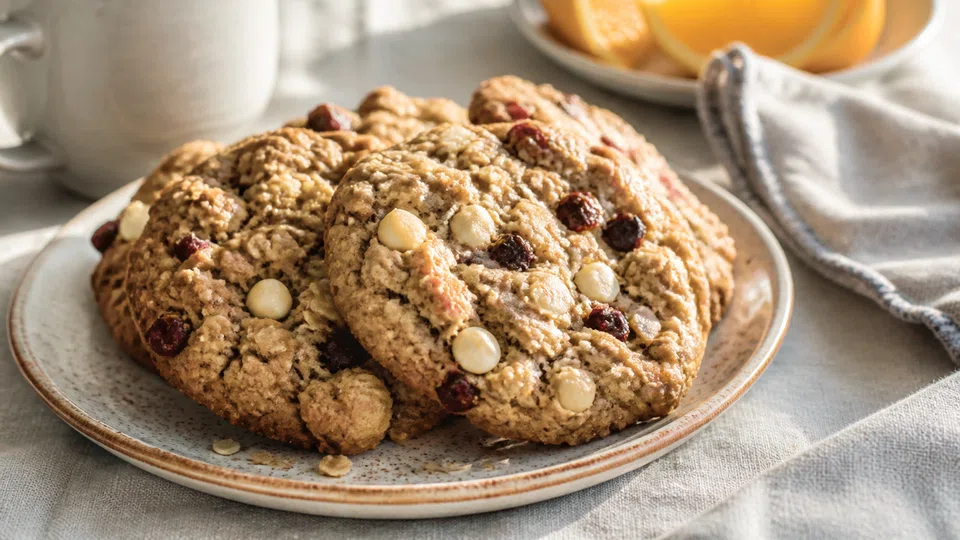
Direct answer for brunch cookie
For an easy brunch, choose a tested drop-cookie recipe, scoop the dough in advance, refrigerate it for the recipe-supported period, and bake before service. King Arthur Baking’s test-kitchen guidance says basic drop and roll-out doughs can generally be refrigerated for up to five days, while longer planning calls for freezing; recipe-specific directions still control. Cool cookies completely before covering so condensation does not soften them.
The best menu decision is contrast. If brunch already includes sweet pancakes, muffins, and fruit sauce, skip the cookie. If the main is savory—eggs, beans, sliders, or a casserole—a small spiced or oat cookie can provide a clear finish without another plated dessert.
What the term means
“Brunch cookie” is a service concept, not a protected recipe category. It may be crisp or chewy, vegan or conventional, filled or plain. It is not automatically high-protein, low-sugar, gluten-free, or suitable for children with allergies. Those facts depend on the exact formula and labels.
Avoid invented wellness language such as “guilt-free breakfast cookie.” If a tested recipe has verified nutrition data, present it in that recipe’s own context. Otherwise, describe observable qualities—crisp edges, soft center, dried fruit, portion size—without medical or moral claims.
For the complete meal around the cookie, use the Brunch at Mr. Pancake Munich: A Focused Guide.
Practical options and examples
| Brunch style | Cookie choice | Why it fits | Make-ahead move |
|---|---|---|---|
| Savory casserole menu | Small ginger or oat cookie | Clear sweet finish | Scoop and chill dough |
| Berry brunch | Lemon shortbread | Crisp contrast to juicy fruit | Bake and store airtight |
| Tea-party brunch | Thin butter cookie | Neat, easy to serve | Freeze shaped dough if recipe allows |
| Vegan brunch | Purpose-built vegan oat cookie | Avoids risky substitutions | Verify chocolate and add-ins |
| Children’s table | Plain small drop cookie | Fewer messy toppings | Bake a test tray first |
Choosing the right approach
Choose the texture by service. Crisp cookies tolerate a platter and coffee service. Very soft filled cookies are more fragile and may require refrigeration. Large bakery-style cookies dominate a brunch plate, so use a smaller scoop or a recipe with a modest yield size rather than cutting hot cookies after baking.
Three scenarios:
- Morning event: mix and scoop the dough the previous evening; bake early and cool before covering.
- Busy holiday: freeze shaped dough according to the tested recipe; label flavor, date, temperature, and time.
- Mixed dietary needs: make one verified alternative with dedicated tools and storage rather than assuming a shared tray prevents cross-contact.
Common mistakes
Do not improvise a “healthy” cookie by simultaneously removing sugar, fat, egg, and flour. Those ingredients affect spread and structure. Use a developed formula. Do not bake an entire batch before checking one tray in an unfamiliar oven. King Arthur recommends a small test for decorated cookies; the same operational idea helps any new formula.
Other mistakes include storing warm cookies, stacking iced cookies before the coating sets, leaving cream-filled cookies at room temperature, and placing nut-containing cookies on an unlabeled mixed platter. A decorative name does not replace ingredient communication.
Step-by-step checklist
- Decide whether the menu genuinely needs a cookie.
- Choose one tested recipe and note its yield and storage directions.
- Check allergens and verify packaged chocolate, oats, and decorations.
- Scale with the recipe’s method; do not blindly multiply baking powder or thickener.
- Scoop or shape consistently for even baking.
- Chill or freeze only as the formula permits.
- Bake a small test tray in an unfamiliar oven.
- Cool completely on a rack.
- Store crisp and soft cookies separately.
- Label any special-diet batch and use dedicated utensils.
- Put out a modest platter and replenish.
- Store leftovers according to the most perishable ingredient.
Variations by ingredient
Oat cookies feel at home at brunch because their texture pairs with fruit and coffee, but oats do not make a cookie gluten-free unless the full recipe and certified ingredients meet that need. Dried fruit adds chew and sweetness; nuts add crunch and an allergen. Fresh berries release water and require a formula developed around them.
For Easter, use citrus, spice, or a simple shape rather than creating several decorated variants; Easter brunch desserts covers a full dessert choice. For Christmas, easy Christmas brunch menu helps decide whether cookies belong at all. Tea party brunch ideas places them inside a sandwich-scone-cake structure.
Pancakes World uses “brunch cookie” as a narrow planning route. It should not compete with a general cookie encyclopedia or copy a branded recipe.
Storage or planning notes
King Arthur’s make-ahead guidance distinguishes dough types: many drop and roll-out doughs tolerate refrigeration, while meringue and lace-style cookies should be baked according to their immediate-use directions. Freeze shaped portions on a tray before bagging so they do not clump, and label the bag.
For room-temperature storage, use an airtight container after complete cooling. Separate strongly spiced cookies from delicate ones. Refrigerate fillings that require it. At a buffet, put out small quantities so the rest remain protected.
A useful serving rule
Place cookies near coffee after the main food rather than at the entrance. Guests then treat them as an optional finish. Offer one cookie size, one clearly labeled alternative if necessary, and no unsupported “better for you” comparison.
If the menu is sweet-heavy, replace the cookie with whole fruit or omit the dessert. Ease comes from subtraction. A brunch with one memorable cookie is more coherent than a table with four competing baked sweets.
Design a cookie for the plate
Start with size. A two-bite cookie can sit beside coffee without obscuring the main meal; an oversized stuffed cookie becomes the dessert centerpiece. Use the scoop named in the recipe or weigh a few portions so the tray bakes evenly. Do not reduce the portion while keeping the original bake time without testing, because smaller cookies cook faster.
Next choose texture. Crisp shortbread contrasts with yogurt and fruit. A chewy oat cookie fits a savory casserole menu but can feel repetitive beside baked oatmeal. A glazed cookie adds sweetness and drying time; it is less convenient for stacking or transport. A filled sandwich cookie is fragile and may require colder storage. These are menu tradeoffs, not a hierarchy.
Finally choose flavor. Citrus works with berries and tea. Ginger or molasses works with a winter menu. Oats and dried fruit feel familiar at breakfast but do not create a nutrition guarantee. Chocolate can be a small accent. Restrict the batch to one primary flavor so the cookie has an identifiable role.
Transport and buffet decisions
Transport fully cooled cookies in a rigid airtight container with parchment between layers if the recipe allows stacking. Keep decorated surfaces from touching. Carry allergen-controlled cookies in their own closed container with their own tongs; placing them on a shared platter at the venue defeats the separation.
At service, use a platter no larger than the first planned batch. Refill it with clean hands or utensils away from guest traffic. If cookies are individually wrapped for an event, label them accurately and account for local packaging requirements rather than implying a home label is legally sufficient everywhere.
Troubleshooting without inventing a universal fix
If cookies spread too much, confirm the fat temperature, ingredient weights, pan lining, dough chill, and oven temperature against the recipe. If they do not spread, check for excess flour or an overly cold dough before adding liquid. Pale tops may be normal for the formula; judge by the recipe’s stated cues and the underside. Burned edges with raw centers often mean portions are too large or the oven is too hot.
Change one variable per test tray. Record pan, liner, portion weight, chill time, and actual bake time. This home log supports repeatability while making no claim that the draft itself conducted a test.
Sources
- King Arthur Baking — Can you make cookie dough ahead of time? — https://www.kingarthurbaking.com/blog/2021/11/26/can-you-make-cookie-dough-ahead-of-time — dough-type and refrigeration guidance.
- King Arthur Baking — Freeze & bake tips — https://www.kingarthurbaking.com/blog/2015/10/21/freeze-bake-tips — shaping, tray-freezing, labeling, and baking workflow.
- King Arthur Baking — Decorating cookies — https://www.kingarthurbaking.com/learn/guides/cookie-decorating — test-batch and storage practices.
Evidence checked 16 August 2026. Use the selected recipe’s directions where they are more specific.