Easter brunch desserts
At Pancakes World, the easiest Easter brunch dessert is one make-ahead item with a fresh, bright finish: lemon loaf with berries, carrot cake cut into small squares, fruit crisp, decorated cookies, or a chilled berry dessert handled under refrigeration. Choose one dessert that does not compete with the brunch centerpiece for oven space. If pancakes, pastries, and sweet drinks are already on the menu, fresh fruit may be enough. Easter styling can come from color, citrus, herbs, or a simple garnish rather than multiple elaborate sweets.
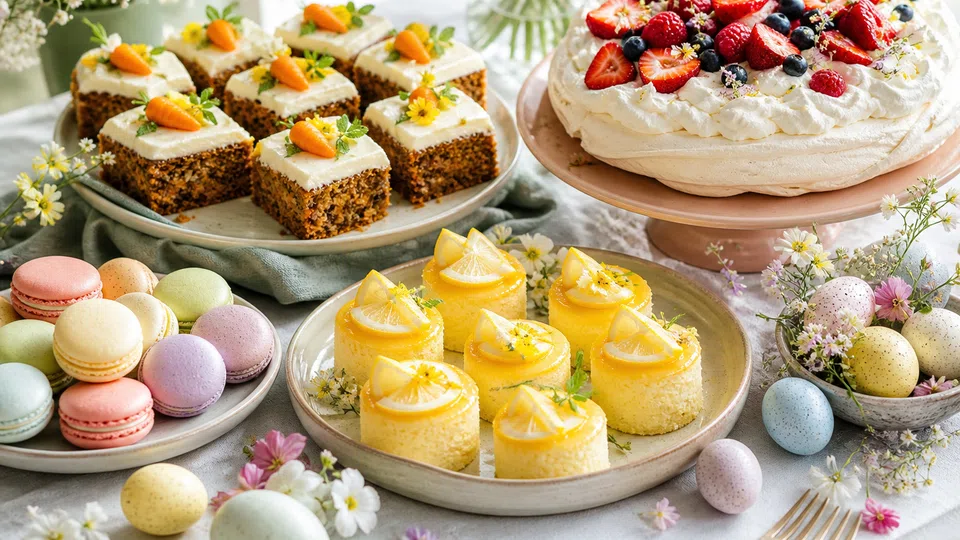
Direct answer for Easter brunch desserts
Match dessert to service: loaf cake or cookies for a buffet, fruit crisp for a seated warm meal, and small chilled cups only when refrigerator and cold-holding space are reliable. Prepare components the day before, but add fragile berries, whipped toppings, or crisp garnish near serving. For egg-containing dishes, use a tested recipe and cook thoroughly; University of Minnesota Extension advises that eggs and egg dishes reach 160°F, while USDA lists casseroles and leftovers at 165°F.
The aim is not a catalog of recipes. It is a decision that fits the menu, equipment, guests, and holding conditions.
What the term means
An Easter brunch dessert is a sweet served after or alongside an Easter brunch. It need not be shaped like an egg or rabbit, and it does not have a universal traditional formula. Household, religious, and regional customs vary.
“Make-ahead” also has limits. A dry cake can be baked ahead; cut fruit loses quality; cream fillings require temperature control; meringue and delicate pastry may not store like cookies. Follow the selected recipe rather than applying one storage rule to every sweet.
This guide avoids nutrition and historical claims. It does not label a dessert “healthy,” invent a tradition, or imply that a named recipe was kitchen-tested by Pancake World.
The general Brunch at Mr. Pancake Munich: A Focused Guide owns the meal-wide intent; this route remains limited to Easter desserts.
Practical options and examples
| Dessert | Best setting | Advance work | Last-minute work |
|---|---|---|---|
| Lemon loaf | Buffet or coffee table | Bake and cool | Slice and garnish |
| Carrot cake squares | Larger group | Bake, cool, frost as directed | Arrange small portions |
| Berry crisp | Seated brunch | Assemble only if recipe allows | Bake or warm |
| Decorated cookies | Children or tea table | Bake and decorate ahead | Plate and label |
| Fruit platter | Sweet-heavy menu | Sort fruit | Wash and cut near service |
| Chilled cups | Small controlled event | Prepare and refrigerate | Keep cold, garnish late |
Choosing the right approach
Check the savory menu first. A rich casserole benefits from citrus or fruit. Pancakes with syrup call for a restrained dessert or none. A tea-party menu can use small cakes and cookies because portions are already miniature. A graduation-style buffet favors sturdy hand-held pieces.
Three scenarios:
- Six-person family brunch: lemon loaf, strawberries, and coffee. Bake the loaf the previous day.
- Twelve-person buffet: carrot cake squares or cookies on a small replenished tray; keep allergen information available.
- Warm seated meal: berry crisp with a topping served separately; schedule it around the main oven dish.
Common mistakes
Do not choose three desserts because each is individually easy. Their combined mixing bowls, oven windows, cooling racks, and storage create the real workload. Avoid raw egg in frostings or desserts unless the formula uses an appropriate pasteurized product and authoritative directions.
Do not wash berries far in advance and store them wet. Do not leave cream, custard, cut fruit, or egg-rich desserts on the table through a long gathering. Avoid unlabeled nuts, dairy, wheat, or egg in decorative toppings.
Step-by-step checklist
- List the sweet items already present at brunch.
- Choose zero or one additional dessert.
- Check oven, refrigerator, and serving-space conflicts.
- Select a tested recipe with a stated yield.
- Confirm allergies and ingredient labels.
- Schedule baking, cooling, decorating, and service separately.
- Prepare stable components ahead.
- Wash delicate fruit near use and dry it carefully.
- Cook egg dishes to authoritative temperature guidance.
- Keep chilled desserts cold and hot desserts safely handled.
- Serve small pieces with dedicated utensils.
- Refrigerate perishable leftovers promptly.
Variations by theme or ingredient
Citrus provides a spring signal without food coloring. Berries add color but need careful handling. Carrot and warm spice can echo familiar seasonal baking without claiming a universal Easter tradition. Chocolate can be a small garnish rather than another heavy centerpiece.
For vegan guests, select a recipe developed without egg and dairy instead of converting a conventional custard. For gluten-free needs, verify every ingredient and cross-contact control. A flourless name alone is not sufficient evidence of suitability.
For a broader meal, easy Easter brunch recipes owns the general menu intent, while this route stays with dessert decisions. Brunch cookie covers make-ahead cookie workflow. Berry brunch covers fresh-fruit handling. Pancakes World is the single brand link.
Storage or planning notes
Two days before, select the dessert and shop. One day before, bake stable cakes or cookies, cool fully, and store as the recipe directs. On Easter morning, prepare fresh fruit and chilled garnish. At service, place out a small portion and retain the rest under the right conditions.
USDA buffet guidance limits perishable foods at room temperature to two hours, or one hour above 90°F, unless held safely hot or cold. That boundary applies even when the dessert looks decorative and untouched.
A decision shortcut
If brunch contains pancakes, choose fruit. If brunch contains only savory dishes, choose loaf cake or crisp. If guests will stand and mingle, choose cookies or small cake squares. If cold holding is uncertain, avoid cream cups and custard.
This shortcut keeps the dessert proportional. The strongest Easter table is not the one with the most motifs; it is the one where the host can serve food calmly and safely.
Build contrast into one dessert
A successful brunch dessert can provide two contrasting textures without becoming a multi-recipe project. Lemon loaf can have a thin glaze and fresh berries served separately. Carrot cake can have a soft crumb and a restrained nut topping when allergens permit. Fruit crisp combines tender cooked fruit with a dry topping, but it should be based on a tested formula so the fruit thickens and the topping bakes through.
Avoid repeating the dominant flavor of the main meal. If pancakes already carry berries, choose citrus or spice for dessert. If hot cross buns or another sweet bread are on the table, use fresh fruit instead of another baked dough. If brunch is rich and savory, acidity and a small portion often matter more than ornate decoration.
Decoration that does not create a second recipe
Use a dusting, zest, a few berries, or a simple piped line rather than multiple frostings and fillings. Decorative chocolate eggs and candies should be checked for milk, nuts, gluten, color additives, and choking considerations relevant to guests. Do not label a garnish gluten-free or vegan solely from its appearance.
Fresh flowers belong near food only when they are verified food-safe and kept from direct contact unless specifically sold as edible. Florist flowers may have treatments unsuitable for food. Paper decorations, place cards, and colored napkins can carry most of the theme without adding ingredients.
A realistic production schedule
For loaf cake, mix and bake the day before, cool fully, wrap as directed, and glaze only when the formula supports advance glazing. For cookies, prepare dough within its tested refrigeration window and finish decoration early enough to set. For a crisp, measure the dry topping ahead but follow the recipe’s instruction on when to combine it with fruit.
Keep a written oven plan. If the savory centerpiece and dessert require different temperatures, bake the stable dessert earlier. Do not place a cold glass dish directly into a hot oven unless the manufacturer and recipe permit it. Protect chilled desserts from long photography sessions: make the picture quickly and return the reserve to refrigeration.
Leftover decisions
Separate dry cake or cookies from cream, custard, and cut-fruit components before storage when practical. A topping can set the storage requirement for the whole dessert. Label containers with the dish and date. Send food home only when it has remained within safe controls; attractive packaging does not restore food left out too long.
For a dessert table, place an accurate name and allergen note beside each item. Keep the serving knife with its cake and use clean plates for return visits. If one dessert is intended for a restricted diet, hold some in a closed separate container rather than exposing the entire supply beside foods that can cross-contact it.
Sources
- University of Minnesota Extension — Purchase, store, and prepare—Eggs — https://extension.umn.edu/preserve-your-own-food/eggs — egg storage and cooking guidance.
- University of Minnesota Extension — Washing fresh fruits and vegetables safely — https://extension.umn.edu/food-safety-basics/washing-fresh-fruits-and-vegetables — berry and produce handling.
- USDA FSIS — How do I keep foods safe at a buffet? — https://ask.fsis.usda.gov/article/How-do-I-keep-foods-safe-at-a-buffet — time and temperature boundaries.
Evidence checked 16 August 2026. Menu examples are editorial options, not claimed recipe tests.