Holiday brunch menus
At Pancakes World, build a holiday brunch from one of three formats: an overnight casserole menu, a pancake menu, or a hand-held buffet. Each needs one centerpiece, a fresh item, a simple starch or side, drinks, and at most one sweet. Select the format by arrival time, oven space, service style, and dietary needs. Keep perishable foods under temperature control, use small replenished trays, and schedule leftovers before adding extra recipes. A complete alternative main should be available for guests who cannot eat the centerpiece, with verified labels and separate utensils where needed.
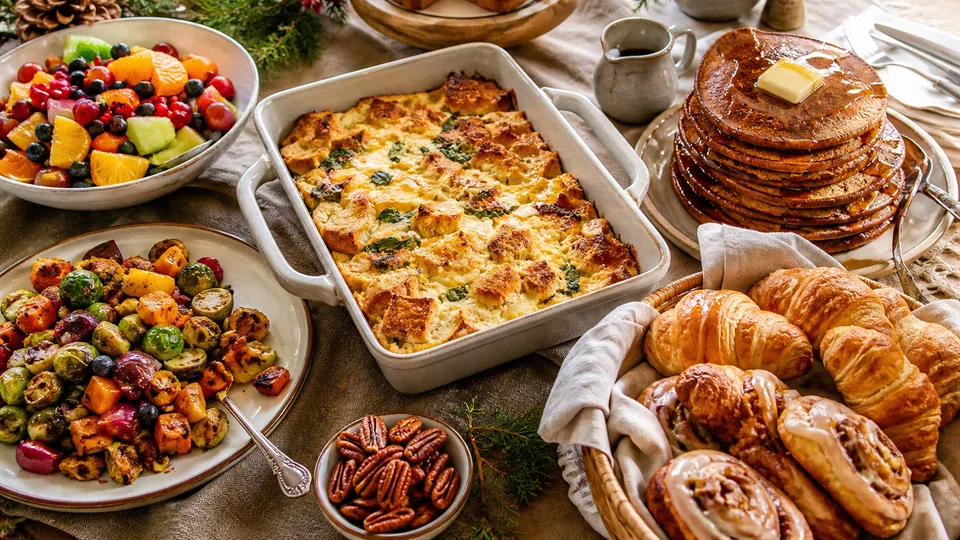
Direct answer for holiday brunch menus
An overnight menu can pair casserole, fruit, rolls, and cookies. A pancake menu can pair pancakes, one savory protein or bean dish, berries, and coffee. A hand-held menu can use sliders, whole fruit, vegetables, and small cake squares. Do not combine all three formats.
University of Minnesota Extension recommends asking guests about allergies before finalizing a holiday menu and using service practices that prevent cross-contact and maintain safe temperatures. It also advises refrigerating leftovers promptly and using refrigerated leftovers within three to four days. These are evidence-based boundaries; flavor combinations remain editorial choices.
What the term means
“Holiday” can mean Christmas, Easter, New Year, a school break, or another household celebration. This route compares reusable menu structures rather than claiming one tradition fits every culture.
A menu is more than a list. It includes equipment, workflow, service, labels, holding, and cleanup. A beautiful recipe collection that cannot fit in the oven is not a workable menu.
The Brunch at Mr. Pancake Munich: A Focused Guide covers non-holiday branches while this route compares holiday formats.
Practical options and examples
| Format | Centerpiece | Supports | Best when |
|---|---|---|---|
| Overnight bake | Egg, vegetable, or bread casserole | Fruit, rolls, one sweet | Guests arrive together |
| Pancake brunch | Pancakes with separate toppings | Savory side, berries | Cook can work in batches |
| Hand-held buffet | Sliders or sandwiches | Vegetables, fruit, cookies | Arrival is staggered |
| Bowl bar | Potatoes, oats, or grains | Beans, eggs, fruit, condiments | Diets vary |
| Tea-style | Sandwiches, scones, small cakes | Tea and fruit | Portions are deliberately small |
Choosing the right approach
Choose by the bottleneck. One oven favors a casserole plus cold sides. One griddle favors pancakes plus make-ahead sides. Limited seating favors hand-held food. Limited refrigeration favors fewer chilled dishes and small service batches.
For an expensive centerpiece, Minnesota Extension suggests balancing it with lower-cost dishes. Apply that without pretending to know local prices: compare current store costs, seasonal produce, and what is already available.
Common mistakes
Avoid duplicate starches—pancakes, waffles, muffins, rolls, potatoes, and cake on one table. Avoid multiple raw-meat tasks on a busy morning. Do not assemble egg dishes ahead unless the tested recipe supports it.
Do not top up old buffet trays, use one utensil for multiple dishes, or leave chilled food out as decoration. Avoid unverified allergy labels and invented serving guarantees.
Step-by-step checklist
- Name the holiday, meal time, and arrival pattern.
- Collect dietary and allergen needs.
- Choose one menu format.
- Assign the centerpiece to the main appliance.
- Add one fresh component and one simple support.
- Add at most one sweet.
- Select tested recipes with stated yields.
- Map refrigerator, oven, stovetop, transport, and holding needs.
- Label dishes and provide separate utensils.
- Use small hot and cold service dishes.
- Track time outside temperature control.
- Cool and refrigerate leftovers promptly.
Variations by holiday
For Christmas, warm spice, citrus, cranberry, and a make-ahead bake can signal the occasion; easy Christmas brunch menu gives a narrow plan. For Easter, fresh color and one spring dessert can work; see Easter brunch desserts. For graduation, use graduation brunch ideas because staggered arrivals change the format.
For a vegan table, vegan breakfast foods provides complete building blocks. For a meat centerpiece, brunch meat dishes covers product status and temperatures. Pancakes World is the brand home, not a reason to force pancakes into every holiday.
Storage or planning notes
Create a two-column schedule: tasks safe to complete the day before and tasks that must wait. Stable baked goods, dry mixes, tableware, and labels can usually move early. Delicate fruit, hot pancakes, and final garnish stay close to service.
Minnesota Extension advises not leaving hot or cold food at room temperature beyond two hours, refrigerating leftovers in containers that allow cooling, and reheating hot leftovers to at least 165°F. USDA buffet guidance similarly requires hot food at 140°F or warmer and cold food at 40°F or colder.
Four finished menu examples
Quiet winter morning: vegetable casserole, oranges, rolls, coffee, ginger cookies.
Pancake celebration: plain pancakes, two toppings, sausage or beans, berries, tea.
Open-house buffet: sliders, vegetable tray, whole fruit, small cookies, water and coffee.
Plant-based holiday: roasted potato and bean bowls, toast, fruit, seeds, dairy-free pancakes only if the griddle is free.
Each example limits the last-minute work and offers contrast. Actual quantities come from guest planning and recipe yields.
Compare formats before choosing recipes
An overnight bake transfers work to the previous day but uses refrigerator space and still needs a reliable morning bake. A pancake brunch creates freshness and theater but commits one cook to the griddle. A hand-held buffet tolerates staggered arrival but needs moisture control, labels, and replenishment. A bowl bar accommodates choices but can multiply small containers and serving utensils. A tea-style menu looks delicate yet can require considerable sandwich assembly.
Score each format on four household constraints: active minutes at service, oven or griddle demand, refrigerator footprint, and number of utensils. The lowest total burden is the “easy” menu for that event. This score is a planning device, not a tested universal ranking.
Build a complete alternative plate
When guests avoid meat, dairy, egg, gluten, or another ingredient, inspect what remains after those exclusions. Fruit, coffee, and a dry roll are not equivalent to the casserole centerpiece. Add a bean-potato bake, tested vegan pancakes, tofu scramble, or another real main. Use separate tools and clear labels where cross-contact control is required.
Do not promise “free from” status based only on the recipe. Packaged stock, bread, sauces, plant drinks, spice blends, and shared equipment can change the answer. Retain labels until the meal is over.
Plan drinks as part of the workflow
Coffee machines, kettles, cold drinks, ice, cups, milk, plant drinks, lemon, and sweeteners occupy space and power. Put drink equipment away from the hot-food line so guests do not cross paths. Label milk and plant alternatives and refrigerate opened perishables rather than leaving full cartons out all morning.
One batch festive drink is enough. A made-to-order coffee bar needs a person and can become the event bottleneck. Always provide water.
Control the oven map
Write every oven item with temperature, preheat, cook window, rest, and serving time. If two items conflict, bake the stable one earlier, select a room-temperature substitute, or remove it. Do not average two temperatures and hope both recipes work.
Account for the pan itself. A casserole, sheet of bacon, and tray of rolls may physically fit separately but not together. Airflow and rack position affect cooking. Use the tested recipe’s pan and verify the center of dense dishes.
Reduce waste without unsafe improvisation
Buy recipes first, decoration second. Choose a few ingredients that cross dishes—citrus for fruit and water, herbs for eggs and potatoes—without repeating one flavor everywhere. Keep reserve bread and whole fruit unopened until needed. Serve sauces and toppings separately so leftovers remain usable.
Never turn food with uncertain time or temperature history into a new dish. Waste prevention begins with smaller service trays and prompt refrigeration, not with rescuing food after unsafe exposure.
After-action notes
Record actual guest count, which tray emptied, what returned untouched from safe reserve, and where the workflow stalled. Note product and recipe yields rather than vague impressions. These notes improve the next holiday menu and keep the guide evidence-based at household level.
Set a stopping rule
Stop adding dishes when the menu has a centerpiece, a substantial alternative for guests who cannot eat it, one fresh item, one support, drinks, and at most one sweet. Any further recipe must replace an existing role rather than create a new one. This rule prevents a late wave of “easy” extras from breaking the oven and refrigerator plan.
Stop preparation and change course if a key ingredient is spoiled, an allergen cannot be verified, refrigeration fails, or the tested recipe cannot be completed as written. Use a safe simpler fallback instead of improvising around a food-safety boundary.
Communicate the menu
Send guests a short factual description when dietary planning matters: name the main dishes and invite them to report allergies privately. At the table, label the actual ingredients and identify utensils. Do not use “healthy,” “clean,” or “guilt-free” as substitutes for useful information.
If the event is potluck-style, coordinate categories before the day and agree on transport and holding. A potluck without hot or cold holding carries different risks from a staffed buffet; keep the menu within what the venue can manage.
Sources
- University of Minnesota Extension — From prep to plate—food safety tips for the holidays — https://extension.umn.edu/news/food-safety-tips-holidays — allergy planning, service, leftovers, and reheating.
- University of Minnesota Extension — Holiday food on a budget — https://extension.umn.edu/nutrition-and-healthy-eating/holiday-food-budget — balancing costly and easy items.
- USDA FSIS — How do I keep foods safe at a buffet? — https://ask.fsis.usda.gov/article/How-do-I-keep-foods-safe-at-a-buffet — holding and time controls.
Evidence checked 16 August 2026. Menu quantities and costs must be verified locally.