Hot Brunch Ideas
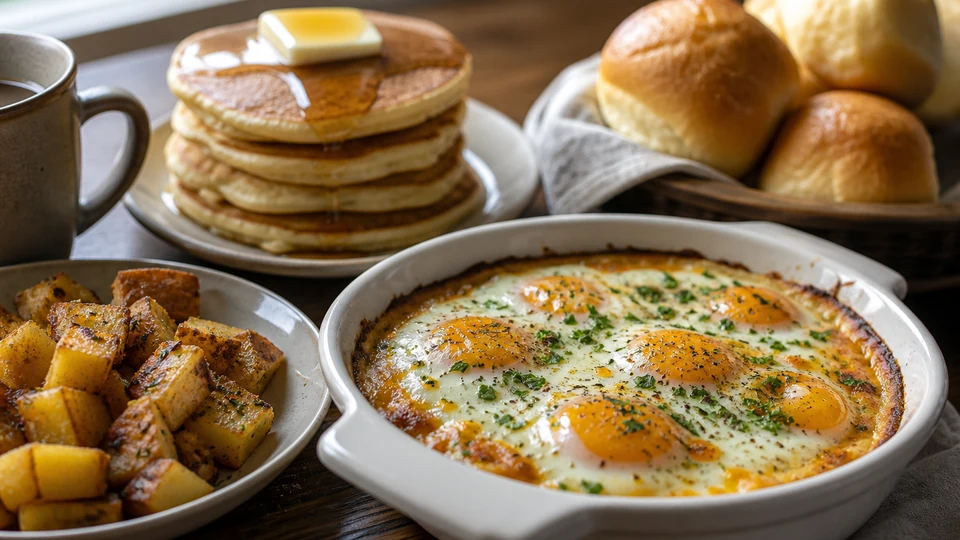
The most workable hot brunch ideas use one hot anchor and let every other item support it. Pick an oven bake, skillet, pancake batch, potato tray, or another single heat-led centrepiece; then add components that can be prepared cold, at room temperature, or ahead. Pancake World uses this guide as a curator’s reference: choose by equipment, serving rhythm, and the people at the table rather than attempting to cook every option at once.
The parent Brunch collection is useful for wider menu planning. Here, the job is narrower: discover distinct hot ideas, rule out a poor fit early, and combine one anchor with low-conflict supports.
Selection criteria
Choose with five filters: the heat source you actually have, the last-minute work you can manage, whether guests arrive together, whether the menu can wait without losing quality, and any recipe-specific safety instructions. These are editorial selection criteria, not a claim that every kitchen needs the same plan.
Hot brunch ideas catalogue
Ideas 1–15
- Vegetable egg bake — a portioned oven anchor for a table that can sit down together.
- Baked French toast — an oven-led sweet centrepiece with fruit served separately.
- Breakfast skillet — a direct-to-table savoury option for immediate service.
- Buttermilk pancake batch — a griddle-led centrepiece for a small group willing to eat in rounds.
- Roasted breakfast potatoes — a tray-based hot side that can accompany a lighter main.
- Breakfast quesadillas — hand-held wedges best cut and served straight from the pan.
- Shakshuka-style eggs — eggs cooked in a tomato-pepper sauce; use a complete recipe for the chosen version.
- Savory bread pudding — a bake that turns day-old bread into a substantial centrepiece.
- Breakfast sandwiches — individual warm portions when guests need to eat on different schedules.
- Cornmeal griddle cakes — a different pancake texture, suited to a simple topping bar.
- Mushroom and greens frittata — a stovetop-to-oven egg dish for a compact menu.
- Breakfast fried rice — a skillet meal that makes a distinct savoury use of cooked rice.
- Warm oatmeal bar — a pot-led option where toppings stay separate until serving.
- Baked beans on toast — a quick, warm plate with toast assembled at the last moment.
- Breakfast hand pies — a portable baked option when brunch has a moving, drop-in rhythm.
Categories: choose the cooking lane
Oven-led options include egg bakes, baked French toast, bread pudding, hand pies, and potatoes. Pan-led options include skillets, quesadillas, fried rice, and griddle cakes. Pot-led oatmeal is useful where the burner is free but the oven is not. A breakfast skillet guide gives a nearby format reference; it does not replace a complete recipe’s timings.
Effort and user-type matrix
| Need at the table | Good candidates | Practical limit |
|---|---|---|
| Most oven work | Egg bake, baked French toast, bread pudding | Reserve oven space for the anchor. |
| Immediate crispness | Skillet, quesadillas, fried rice | Serve promptly; crowding changes texture. |
| Small group ritual | Pancakes, cornmeal griddle cakes | Plan batches instead of holding a large stack. |
| Staggered arrivals | Sandwiches, hand pies, oatmeal bar | Keep assembly simple and follow recipe storage guidance. |
| Hot side, not a second main | Roasted potatoes, beans on toast | Pair with one lighter centrepiece. |
Combination matrix
Pair one hot anchor with two supports that do not demand the same heat source. An egg bake can sit beside citrus salad and bread; pancakes can sit beside yogurt and fruit; roasted potatoes can support a frittata plus a cold tomato salad. For a different hosting frame, see large brunch ideas. The matrix is a planning aid, not portion advice or a substitute for allergy-aware menu decisions.
Practical limitations
Hot is a serving condition, not permission to hold food indefinitely. For egg dishes, meat, poultry, seafood, leftovers, and casseroles, follow the relevant official temperature and handling guidance rather than relying on colour or a suggested timetable. Keep raw-food preparation separate from ready-to-eat food, and use recipe-specific directions when they are more precise. The roasted breakfast potatoes page is a focused accompaniment option when the tray is the best use of the oven.
Exclusion test
Reject an idea when it fails one of these tests: it duplicates the anchor’s heat source at the crucial moment; it needs a special tool you do not have; it requires an unverified holding period; it has no complete recipe you can follow; or it conflicts with a diner’s stated requirement. This keeps the catalogue from treating cosmetic topping swaps as separate ideas.
Service sequence
Set cold and room-temperature supports first. Start the one hot anchor from its complete recipe, leaving its final cooking and serving space clear. Plate or place small replenishable portions instead of turning the table into a holding station. If people arrive late, make a fresh individual portion where the recipe permits rather than guessing how long a whole meal can stay out.
Related reading
Curator checklist
Before committing, name one anchor; identify its heat source; select two non-competing supports; read the complete recipe; check diner requirements; and decide what will be served immediately. If one answer remains uncertain, choose a simpler idea from the catalogue rather than adding another hot lane.
Sources and editorial references
- U.S. Food and Drug Administration, Safe Food Handling —
https://www.fda.gov/food/buy-store-serve-safe-food/safe-food-handling - U.S. Department of Agriculture Food Safety and Inspection Service, Safe Minimum Internal Temperature Chart —
https://www.fsis.usda.gov/food-safety/safe-food-handling-and-preparation/food-safety-basics/safe-temperature-chart - U.S. Department of Agriculture Food Safety and Inspection Service, Leftovers and Food Safety —
https://www.fsis.usda.gov/food-safety/safe-food-handling-and-preparation/food-safety-basics/leftovers-and-food-safety - U.S. Department of Agriculture MyPlate, What Is MyPlate? —
https://www.myplate.gov/eat-healthy/what-is-myplate