Hosting Brunch Menu Ideas
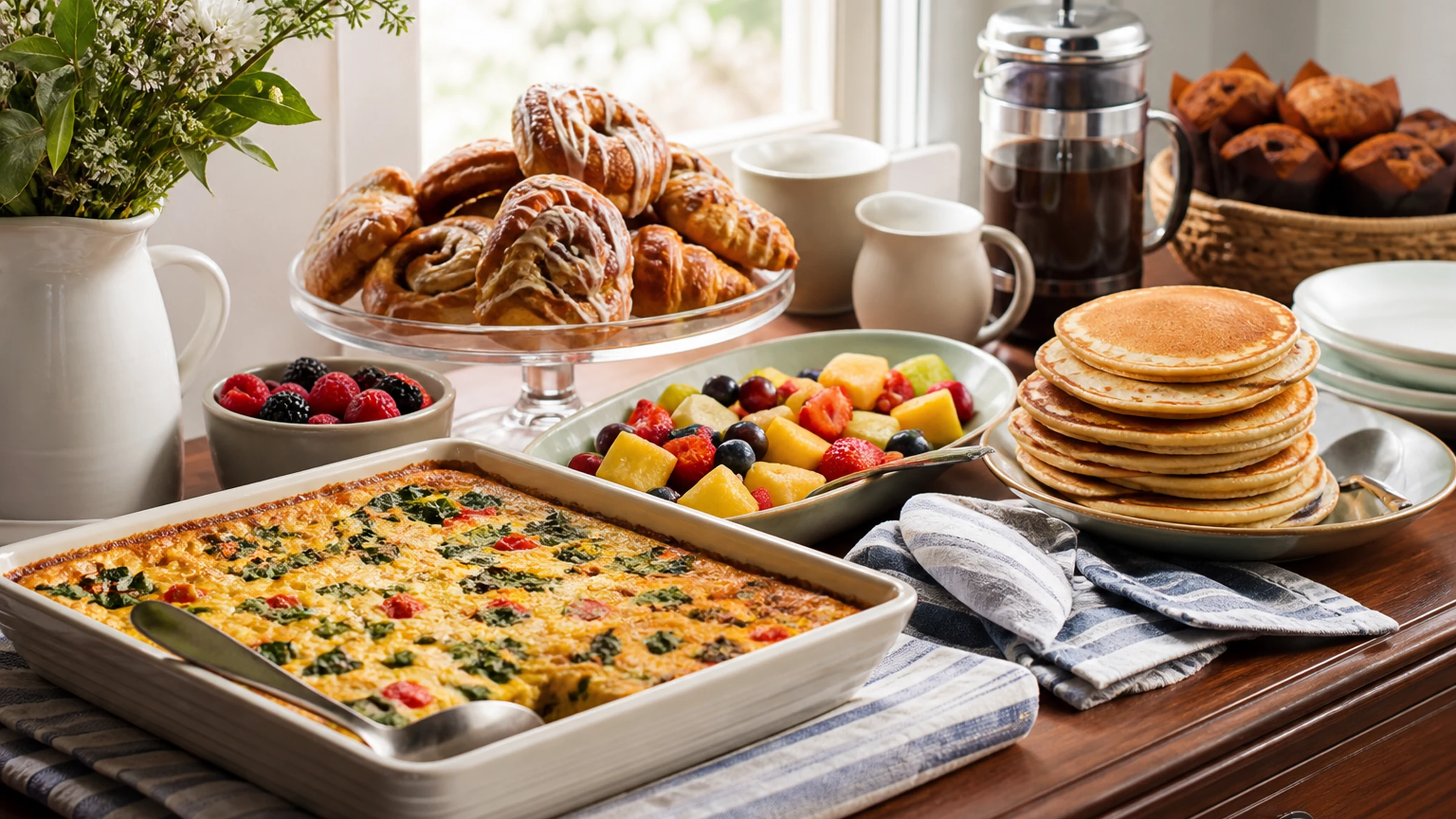
Hosting brunch menu ideas work best when the host limits the menu to one hot anchor, two make-ahead supports, bread or another easy starch, and drinks. For six guests at 11:00, reserve the oven for the anchor, set cold items by 10:30, and serve in a sequence that keeps the host out of the kitchen. Pancake World treats this as an operational plan, not a promise about appetite or a universal menu. Start with the brunch collection for the broader topic.
Guest-count plan: six seated guests
Confirm the count, arrival pattern and dietary information before choosing recipes. This is a practical example, not a guaranteed quantity formula: recipe yields, packaged serving instructions and the actual guest list govern the amount you prepare. A small seated group can use a single serving time; an open-house group needs small replenishments instead.
Route owner statement and menu boundary
This route owns the hosting workflow: guest count, shopping, equipment, timing and contingencies. It does not decide what every guest prefers or certify a menu as healthy, traditional, allergen-free or medically suitable. Use hearty brunch ideas when the menu needs a more substantial central meal; return here to make its service sequence workable.
Shopping by menu role
Shop from the plan instead of collecting unrelated recipes. Write the anchor ingredients first, then the fresh item, a cold support, bread, drinks, serving supplies and any separately labelled item. Buy only the vessels you can name: a baking dish, fruit bowl, cold platter, bread basket, beverage jug and utensils.
Equipment capacity before cooking
Reserve the oven for the anchor and make refrigerator space for cold items before shopping. Put the baking dish, thermometer where applicable, bowls, tongs, plates and a clean preparation area on the written plan. Do not assume a dish will fit an appliance or that a shared utensil is appropriate for every guest-specific food.
For a no-oven complement, breakfast parfait is a same-R83-corpus related route that can occupy the cold lane rather than adding an oven job. Treat its own ingredients and instructions as controlling.
Timeline: work back from 11:00
| Time | Host task | Service purpose |
|---|---|---|
| Day before | Confirm guests, wash produce, choose vessels and prepare components only where their recipe permits. | Remove decisions from the morning. |
| 09:30 | Assemble the anchor and set the table. | Keep the oven lane singular. |
| 10:00 | Arrange cold dishes and labels; keep perishable foods under their applicable guidance. | Make the first service items ready. |
| 10:15 | Cook the anchor according to its complete recipe. | Leave a buffer before guests arrive. |
| 10:40 | Prepare drinks and bread. | Protect the final minutes for one task. |
| 11:00 | Serve cold items first, then the hot anchor. | Prevent a single hot dish from blocking the table. |
Workflow: clean lanes, clear labels
Assign each item one lane: cold, room-temperature where its own instructions allow it, oven, or last-minute. Put cold food on its serving vessel only when the plan and food-safety guidance permit. Keep raw-food preparation separate from ready-to-eat food, use clean utensils, and follow recipe or official thermometer instructions for foods needing a verified endpoint.
Service sequence without a queue
Place fruit, bread and the cold support out first; bring the anchor when it is ready; then replenish only what the group is actually using. This avoids holding several hot dishes merely to create a full-looking table. For a fresh counterpoint, the pending same-R83-corpus route breakfast fruit salad belongs in the cold lane, not in the oven schedule.
Use separate serving utensils and visible labels for guest-specific foods. A label communicates ingredients; it does not make a shared kitchen or buffet allergen-free.
Contingencies that preserve the plan
If arrivals spread over an hour, replenish smaller cold platters rather than exposing one large display. If the oven overlaps, replace the second baked item with a cold support. If the anchor is delayed, begin with bread, fruit and drinks rather than starting another cooked dish. If a guest need is uncertain, ask before service or keep the item separate; do not make a safety claim from a menu title.
Menu patterns that fit the capacity
A casserole-led menu suits one synchronized serving time because the oven has a single owner. A pancake-led menu suits a small seated group but creates a griddle queue if every portion is made individually. A sandwich station allows flexible assembly but needs clear utensils and labels. A pastry-and-salad table reduces cooking work but still needs a substantial savoury element if the occasion calls for a meal.
For another guest-centred decision frame, easy brunch ideas for guests is a live supporting route. Choose one pattern, rather than treating all four as a catalogue to serve at once.
Final operational checklist
Confirm guests and needs; choose one anchor; assign every support a lane; reserve oven, cold storage and vessels; shop by role; write the day-before and 90-minute timeline; set labels and utensils; name the first item to serve if the anchor runs late; and make the one simplification that removes an overlapping task. That is the conclusion: a hosted brunch succeeds as a coordinated service, not as the maximum number of dishes.
Related reading
Sources and editorial references
- U.S. Food and Drug Administration, Food Safety at Home —
https://www.fda.gov/consumers/consumer-updates/food-safety-home - USDA Food Safety and Inspection Service, Safe Minimum Internal Temperature Chart —
https://www.fsis.usda.gov/food-safety/safe-food-handling-and-preparation/food-safety-basics/safe-temperature-chart - U.S. Food and Drug Administration, Food Allergies —
https://www.fda.gov/food/nutrition-food-labeling-and-critical-foods/food-allergies - USDA MyPlate, Meal Planning —
https://www.myplate.gov/sites/default/files/2024-06/TipSheet-24-Meal-Planning.pdf