Hearty brunch ideas
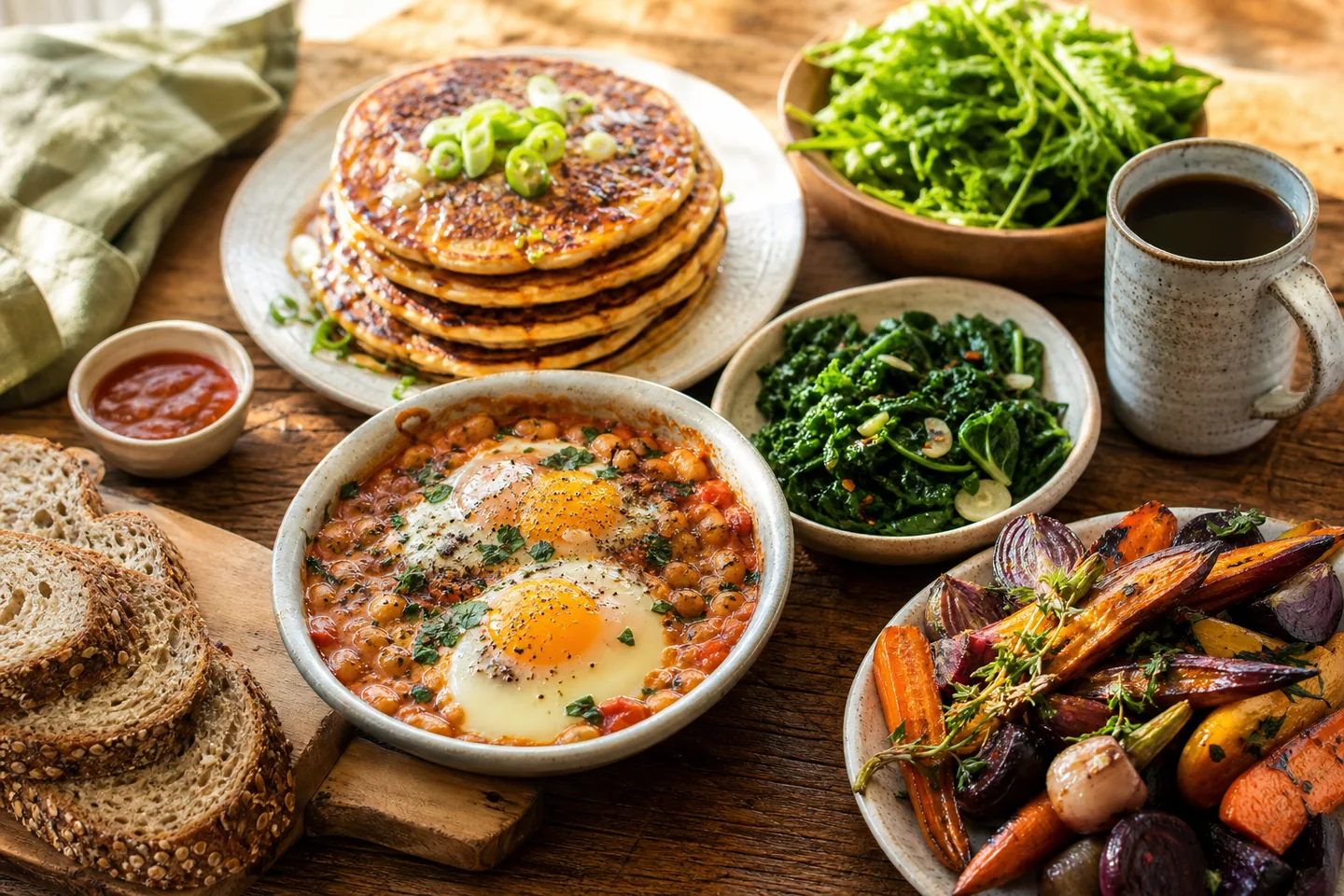
A hearty brunch is not a fixed cuisine or a contest to put every rich dish on one table. It is a substantial meal with a clear centre, enough contrast to feel complete, and a cooking plan that the host can actually finish. Pancake World uses “hearty” as a menu-planning term: choose one filling anchor, one supporting starch, and a fresh or lighter element, then set the effort to match the occasion. Start with the brunch collection when you are still deciding what sort of gathering you are feeding.
What makes a brunch feel hearty?
The anchor is the item that makes the plate feel like a meal: an egg bake, beans, a substantial sandwich, or a pan of potatoes with another protein or plant-based centre. The starch supports it rather than competing with it. Bread, toast, potatoes, grains and pancakes can all do that work, but two bread-heavy centrepieces often read as duplication instead of abundance.
Set the boundary before choosing dishes
“Hearty” describes appetite, service and menu balance; it does not prove that a dish is traditional, healthy, suitable for every guest or appropriate for a particular diet. Name the food plainly and ask guests about needs rather than inferring them. If packaged ingredients, eggs, dairy, meat or alcohol are involved, labels and separate utensils matter more than an appealing menu label.
Choose one substantial anchor
For a low-stress table, select an anchor that can wait briefly without losing its point: a baked egg dish, seasoned beans, a tray of breakfast potatoes paired with eggs, or a make-ahead savoury tart. A made-to-order sandwich can be substantial too, but it moves labour to the last minute. The best choice is the one your equipment and time can support, not a universal “best brunch food.”
Use easy brunch ideas for guests when the host needs options designed around fewer finishing tasks. Keep the anchor recognisable: guests should be able to see what the main food is without relying on a decorative title.
Pair the starch with the anchor, not with another starch
A starch is useful because it makes the meal feel grounded and shareable. It becomes less useful when it repeats the texture and role of the anchor. For example, an egg-and-vegetable bake plus roasted potatoes offers two distinct roles. A stack of buttered toast, breakfast pastries and a bread pudding may be enjoyable for a sweet-focused occasion, but it is not a balanced default for every group.
Use effort bands to keep the menu realistic
Low effort
One purchased or made-ahead anchor, bread or potatoes, fruit, and drinks. Reserve oven space for only one hot item.
Medium effort
One oven anchor, one cooked side, and a fresh component. Write the oven order before guests arrive.
High effort
Serve in two waves: a savoury main first, then a warm sweet finish. Do not make every item à la minute.
These bands are planning tools, not rankings. A low-effort brunch can be generous when its roles are clear. A high-effort menu should earn its extra work through timing or variety, rather than by placing several similar hot dishes in competition.
Worked example: a vegetable-centred table
Start with a vegetable frittata or bean bake as the anchor. Add roasted potatoes, sliced tomatoes or a dressed green salad, bread, fruit and drinks. This menu has a centre, a supporting starch and freshness without pretending to certify vegan, allergen-free or nutritionally complete status. Where dietary restrictions matter, make the ingredients and serving utensils explicit.
For an individual-format option, easy brunch sandwiches can help you compare the trade-off: flexible portions are useful, but assembly can bottleneck the kitchen. Build only one made-to-order element into the plan.
Worked example: a mixed crowd with different appetites
Serve a shared egg or bean centre, potatoes, a crisp salad, bread and an optional separately served meat item. Keeping the optional item separate lets guests choose without making assumptions about what everyone eats. It also makes it easier to control which utensil belongs to which dish. The approach is a practical hosting pattern, not a guarantee of dietary suitability.
If you want a sweeter finish, borrow one idea from things to eat for brunch rather than adding a second sweet main. Fruit, a modest baked item or yogurt-based serving can close the meal without turning the table into several competing centres.
Keep fresh contrast visible
Freshness is a role, not a requirement to serve a large salad. It might be fruit, tomatoes, a crunchy slaw, herbs, pickles or a lightly dressed vegetable. Its job is to break up identical soft, rich or fried textures. When the menu already has a rich baked anchor and potatoes, a sharp or crisp side usually offers more information to the eater than another creamy dish.
Plan the service sequence
Write down which item needs the oven, which needs a burner, and which can sit at room temperature according to its food-safety instructions. The U.S. Food and Drug Administration’s consumer guidance is a useful reminder that preparation, separation, cooking and chilling are separate food-safety tasks; a brunch format does not remove them. Use the manufacturer’s label and local guidance for any particular food rather than guessing a holding rule.
For a table that must be ready all at once, batch dishes have an advantage. For a long, casual arrival window, a replenishable cold component and one hot anchor can be easier than trying to hold several cooked items at peak quality.
Limits: what this guide cannot decide for you
This framework cannot tell you exactly how much each person will eat, certify a menu for allergens or religious requirements, or identify one universally authentic brunch. Those decisions depend on your guest list, ingredients, location, equipment and instructions on the food you serve. It also does not make nutrition or medical claims. Use it to reduce duplicated roles and last-minute work, then adapt the dishes to confirmed needs.
Final actionable summary
Build your hearty brunch in this order: pick one substantial anchor; add one starch only if it supports that anchor; place one fresh or sharp counterpoint beside it; then cut any item that repeats a role or overloads the oven. This leaves room for an intentional sweet finish instead of a crowded table.
Related reading
Sources and editorial references
- U.S. Food and Drug Administration, Food Safety at Home — cited for the preparation, separation, cooking and chilling boundary.
- USDA MyPlate, What Is MyPlate? — consulted for the general food-group framing; this article does not make nutrition claims.
- U.S. Department of Agriculture, FoodData Central — consulted for ingredient-level reference context, not menu certification.
- U.S. Food and Drug Administration, Food Allergies — cited for the boundary that a general menu guide cannot certify allergen suitability.