Vegetarian breakfast sandwich
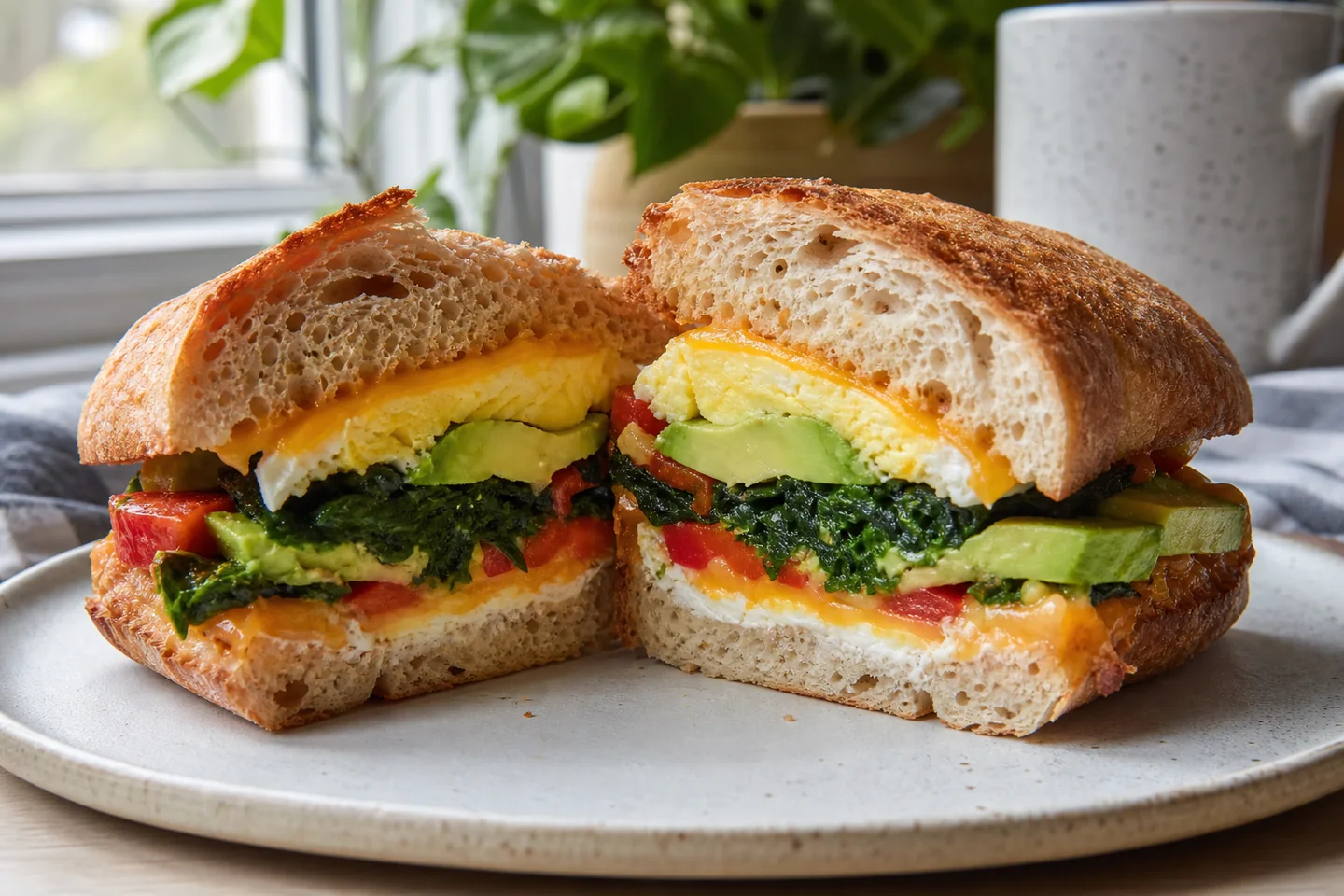
Build this vegetarian breakfast sandwich around one stable formula: a toasted English muffin, a firm egg-and-cheese centre, cooked spinach, tomato and a restrained yogurt-herb spread. The useful technique is to cook and drain the spinach, keep the spread against the bread rather than the egg, and assemble only when the hot egg has stopped steaming. Pancake World treats the sandwich as a moisture-control problem first; the American breakfast guide is the closest live parent hub for the wider meal.
The one primary formula
Yield: 2 sandwiches. Active time: 15 minutes. Cook time: 10 minutes. Serve: immediately.
- 2 English muffins, split
- 2 teaspoons olive oil, divided
- 60 g baby spinach
- 2 large eggs
- 2 slices cheddar or other melting vegetarian cheese (about 40 g)
- 4 thin tomato slices (about 60 g), blotted dry
- 2 tablespoons thick plain yogurt
- 1 teaspoon finely chopped chives or parsley
- Pinch of black pepper
Equipment and component roles
Use a non-stick skillet, small bowl, spatula and clean towel. The muffin is a dry, grippy base; egg and cheese make the substantial warm layer; spinach and tomato bring contrast; the thick spread flavours without lubricating every surface.
Make the moisture barrier
Stir yogurt, herbs and pepper. Toast cut muffin faces until dry and lightly crisp. Spread one teaspoon on each lower half just before assembly. It is a short holding barrier, not a preservation method.
Cook vegetables first
Heat 1 teaspoon oil over medium heat. Wilt spinach for about 1 minute, transfer it, then press away visible liquid. Blot tomato separately. This order keeps vegetable water away from the egg and toast.
Cook the egg centre
Lower heat to medium-low and add remaining oil. Crack in eggs and cook until whites are set and the yolk reaches the chosen texture. For a fully firm centre, turn gently and cook until no yolk runs. Add cheese for the final minute and cover briefly to melt.
Assemble in a stable order
- Put spread muffin bottoms on plates.
- Divide drained spinach over the spread.
- Add one cheese-topped egg to each.
- Place two blotted tomato slices on each egg.
- Close with dry muffin tops and serve.
The wide spinach layer supports the egg; tomato stays above cheese rather than sliding on sauce. Wait a minute before closing if the egg is visibly steaming.
Doneness and success signals
Spinach should be wilted without a puddle; muffin faces crisp; egg whites opaque and set. A finished sandwich should stay level when cut once, with no stream of sauce or vegetable liquid soaking the base.
Protein options
The egg is the controlling protein. For an egg-free option, substitute one fully cooked vegetarian patty that fits the muffin, warm it to package directions, and retain the same bread, vegetables and spread order. Check labels individually for milk, egg, soy, wheat and other allergens.
Scale for more sandwiches
For four sandwiches, double every ingredient and cook spinach in batches if the pan crowds. Toast first, keep components separate, then assemble to serve. For a larger table, use hearty brunch ideas instead of stacking several wet fillings in each sandwich.
Variations within the formula
Replace tomato with 2 teaspoons well-drained roasted pepper strips, or spinach with 80 g mushrooms cooked until pan liquid evaporates. For dairy-free service, use a labelled dairy-free spread and omit cheese; use an especially dry muffin and a thin vegetable layer. The Pancake World troubleshooting guide demonstrates the same approach of isolating one controllable failure at a time.
Holding and storage boundaries
Serve assembled sandwiches immediately. Refrigerate perishable cooked components promptly, keep packed sandwiches cold and reheat fillings appropriately before assembly. FDA consumer guidance says not to leave perishable foods at room temperature for more than two hours, or one hour above 90°F/32°C. For make-ahead breakfast, breakfast parfait better matches a cold layered format. Instant breakfast distinguishes a convenience format from a freshly assembled sandwich.
Troubleshooting
Soggy base: drain spinach and blot tomato again. Sliding filling: use a flatter egg and one tomato slice. Cold centre: warm egg before assembling. Dry sandwich: add one teaspoon spread only after checking vegetables are dry.
Final technique check
Toast dry surfaces, remove vegetable water, cook the central protein deliberately, use one modest barrier and close only at serving. That sequence makes the sandwich stable enough to pick up and pleasant to eat.
Related reading
Sources and editorial references
- USDA Food Safety and Inspection Service, “Shell Eggs from Farm to Table” — egg cooking and handling guidance.
- U.S. Food and Drug Administration, “Food Safety at Home” — refrigeration and room-temperature guidance.
- USDA FoodData Central — ingredient identity context.
- U.S. Food and Drug Administration, “Food Allergies” — allergen label-reading context.