Breakfast parfait
A breakfast parfait stays appealing when its layers are assigned separate jobs: a thick chilled base carries the spoon, fruit supplies flavour and moisture, grain either hydrates or stays crisp, and a dry finish is added last. Pancake World recommends deciding whether you want a soft overnight cup or a crisp same-morning cup before assembling. This is a texture-control guide, not a tested recipe or universal ratio.
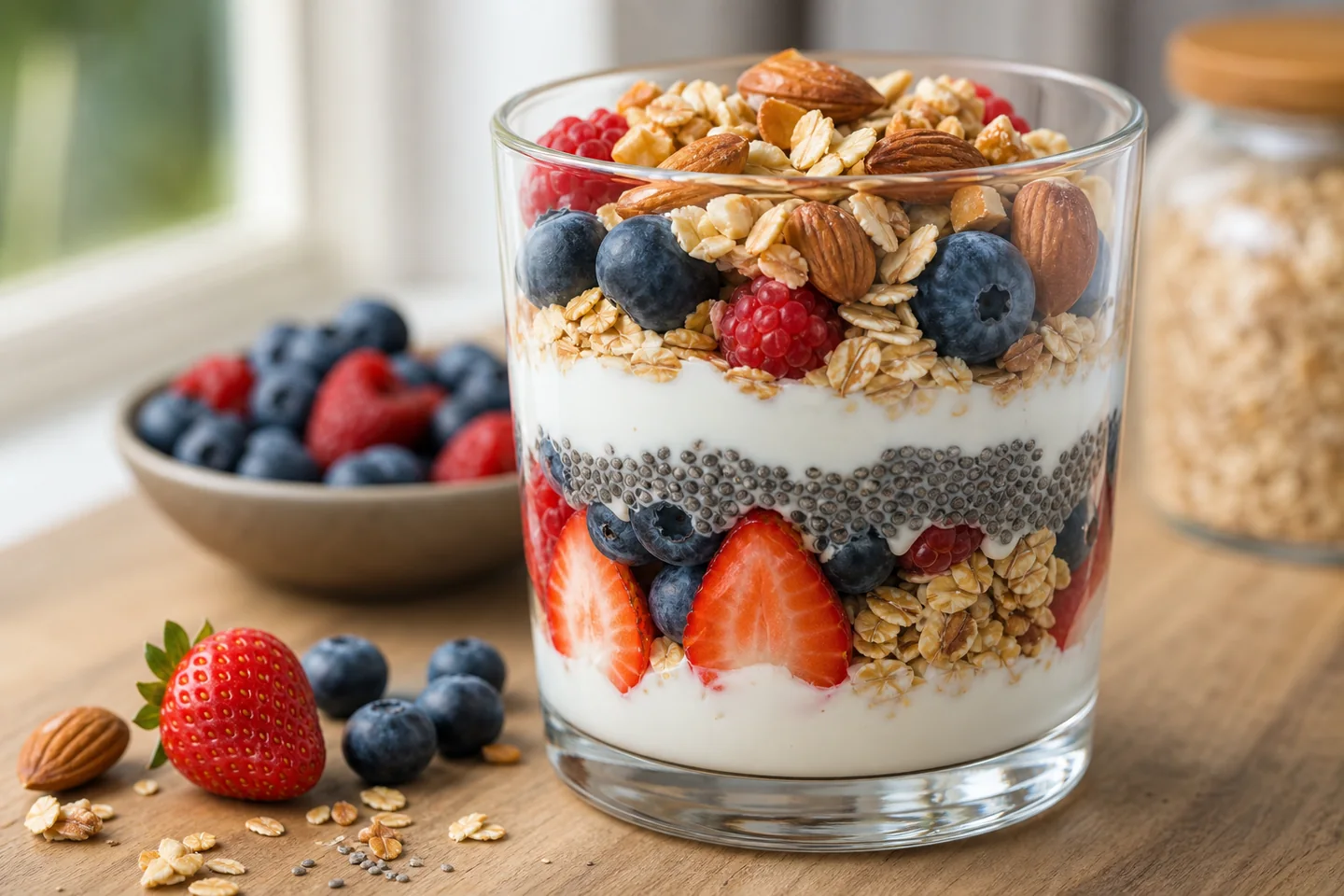
The route owner is R10-ROUTE-0574. Its ingredient-science job is to make texture changes observable without treating one ingredient list as universal. For a broader occasion view, see the brunch hub.
The direct functional answer
Layer functions: assign a job before a name
| Layer | Function | Observable control |
|---|---|---|
| Chilled base | Provides body and carries the spoon | Choose a thickness that holds a visible layer |
| Fruit | Adds flavour and moisture | Place juicy fruit later when separation matters |
| Grain | Hydrates or supplies crunch | Decide whether it meets moisture early or late |
| Dry finish | Adds contrast | Keep separate until it can remain dry |
Moisture migration between layers
Do not try to repair that transfer by scattering extra dry grain over an already wet cup. Instead, identify the moisture source and change the next assembly. For a hot alternative that keeps its parts separate until serving, compare the American breakfast format.
Grain hydration: soften by design or protect the crunch
Rolled oats belong next to the base when deliberate hydration is useful. Toasted granola and crisp cereal are finishes, so they need dry storage and late contact. One grain cannot reliably preserve both a long-held crunch and a fully hydrated texture in the same position.
Fruit release: manage the wet layer
FoodData Central can help identify the ingredient selected, but it does not turn a cup into a nutrition prescription. Keep the question practical: does this fruit make the next layer wetter during the planned wait?
Controlled ranges for a spoonable cup
Use a three- or four-layer cup: one base layer, one fruit layer, one grain layer, and an optional dry finish. More layers can make a small cup harder to eat without improving the function. Use a wider container if the spoon cannot reach layers without collapsing them.
Substitutions by function, not by name
Replace a thick dairy base with another chilled base only after comparing its thickness. Replace fresh fruit with frozen fruit only when its released liquid fits the plan. Replace rolled oats with another hydrating grain, or replace granola with another crisp finish; these are different functions. For a maple-led flavour direction, use the maple syrup guide rather than adding several sweetened layers at once.
Preparation effects: assemble-ahead timing
For a same-morning cup, keep the crisp topping dry and separate. For an overnight cup, combine the base and hydrating grain deliberately, place fruit where its liquid is acceptable, and add the crisp finish at breakfast. Keep cold perishable ingredients appropriately refrigerated and follow handling guidance for the foods actually used.
Troubleshooting by symptom
Lost crunch: the dry finish contacted a wet layer too early; separate it until eating.
Dense spoonful: too many absorbing layers met too soon; reduce the holding contact next time.
Uniform sweetness: remove one sweetened component rather than adding a competing topping.
For a cooked breakfast that uses the same pantry in a different structure, see pancakes with maple syrup.
Practical checklist
One thick chilled base + one fruit layer matched to its moisture + one grain chosen for softening or crunch + one dry finish added at the moment it can stay dry. This is the single decision checklist: choose the final texture, place wet and dry layers accordingly, then make only the adjustment that addresses the observed symptom.
Related reading: healthy breakfast ideas and American pancakes.
Sources and editorial references
- USDA FoodData Central —
https://fdc.nal.usda.gov/ - U.S. Food and Drug Administration, “Food Safety at Home” —
https://www.fda.gov/consumers/consumer-updates/food-safety-home - USDA MyPlate, “What Is MyPlate?” —
https://www.myplate.gov/eat-healthy/what-is-myplate - USDA Food Safety and Inspection Service, “Leftovers and Food Safety” —
https://www.fsis.usda.gov/food-safety/safe-food-handling-and-preparation/food-safety-basics/leftovers-and-food-safety