Healthy brunch snacks
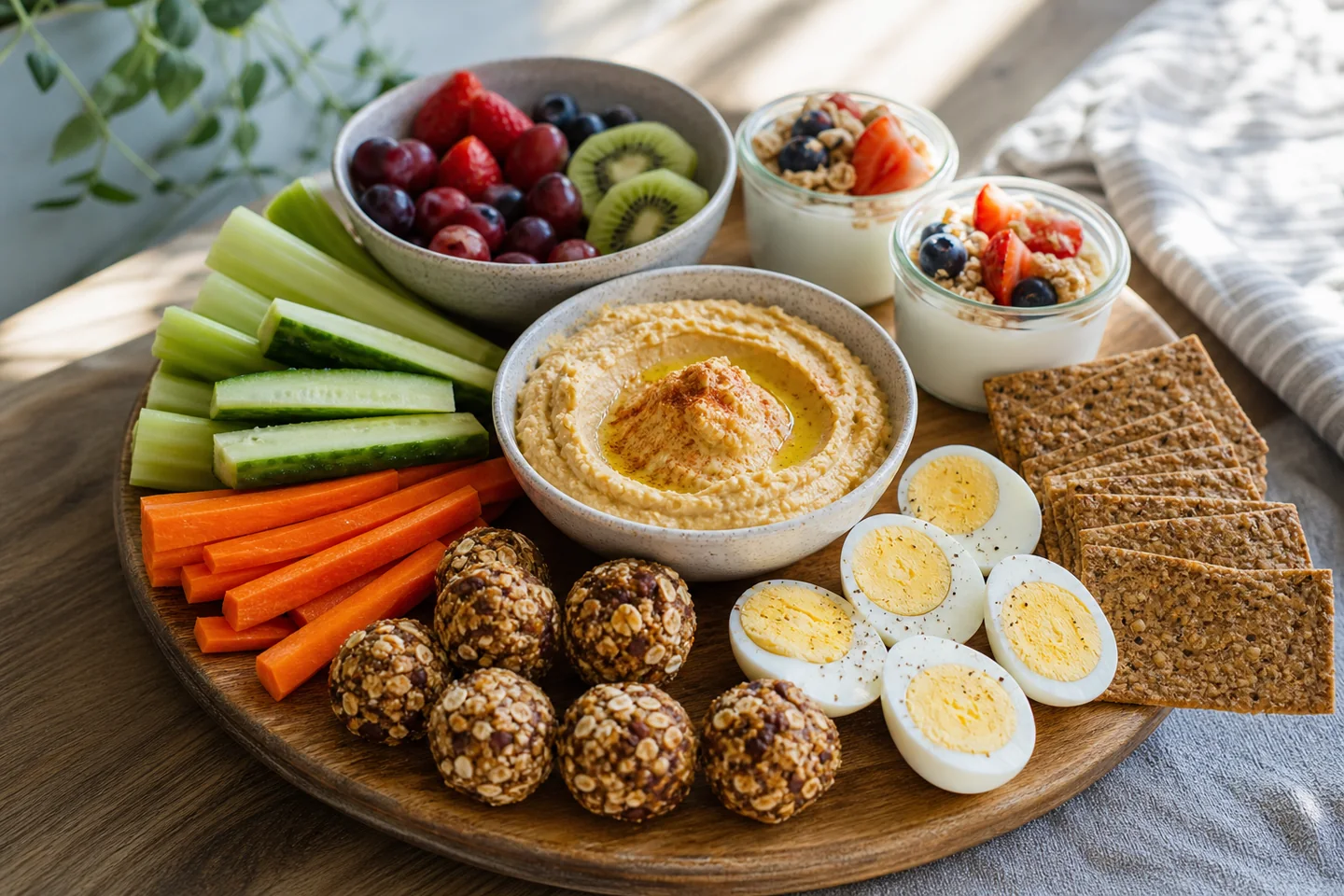
Healthy brunch snacks work best when each small bite has a clear job: a stable carrier, a substantial centre, a fresh element and a finish that does not overwhelm the structure. Start by diagnosing what is going wrong—sogginess, sliding toppings, an incomplete selection or awkward holding—then make the smallest useful correction. Pancake World treats “healthy” here as a practical planning cue, not a medical promise or a nutrition score.
Snack role checklist
Before choosing ingredients, name the role each one plays. A toast square or cucumber round carries; a bean spread, egg, yogurt, tofu or cheese is the centre; fruit or vegetables bring freshness; herbs, seeds or seasoning finish the bite. A snack can be simple, but it should not rely on a decorative topping to do every job.
Intake: identify the visible symptom
Use the symptom, not a fashionable ingredient, to choose the correction.
| What you notice | Likely variable | Smallest correction |
|---|---|---|
| Crisp bases soften | Wet topping touches the carrier too early | Drain, pat dry and assemble the wet layer last |
| Toppings slide | The centre is loose or pieces are too large | Use a thicker centre or cut the topping smaller |
| The table feels repetitive | Every bite has the same role | Add one contrasting centre or carrier |
| A batch becomes stressful | Too many parts need last-minute assembly | Move one element into a spoonable cup or serve it separately |
Root-cause matrix for brunch bites
This diagnostic matrix is not a universal recipe. Read across one row at a time; changing base, topping and holding method together hides the cause.
| Symptom | Check first | Correction | Prevention next time |
|---|---|---|---|
| Watery plate | Cut fruit, tomatoes or cooked vegetables | Drain and keep released liquid off the plate | Portion wet produce shortly before service |
| Crumbling base | Carrier is too thin for the centre | Choose a sturdier cut or reduce topping weight | Match carrier to service time |
| Flat flavour | Finish is missing | Add herbs, zest or measured seasoning | Reserve one finish for each flavour family |
| Unclear allergen choice | Container or ingredient list is uncertain | Keep labelled options separate and do not guess | Plan labelled components before assembly |
Mix-and-match formula: change one variable
Build one test bite from carrier + centre + fresh element + finish. For example: a toast square + thick bean spread + cucumber + dill; an oat cup + yogurt + berries + toasted seeds; or a small potato + herbed dairy or plant-based topping + chives. These are combinations to adapt, not tested recipes, health claims or interchangeable substitutions.
For a portable format, use the container-first ideas in instant breakfast. When a layered cup is more suitable than a hand-held bite, compare the assembly choices in breakfast parfait.
Diagnostic sequence: base, centre, moisture, timing
- Put the empty carrier on the serving plate and check whether it can be lifted cleanly.
- Add the centre in the quantity that will actually be served.
- Add the freshest or wettest ingredient last.
- Wait for the intended holding interval, then lift one bite again.
- Correct only firmness, piece size, moisture or timing.
This sequence separates a structural problem from an ingredient preference. It avoids the common response of adding more sauce, toppings and uncertainty.
Batch quantities without pretending to prescribe portions
For a shared brunch, count components rather than promising a fixed serving size. Decide how many different carriers, centres and fresh elements are wanted, then make a small number of each combination. Keep a reserve of unassembled carriers and centres in separate containers. That makes it easier to correct a problem without rebuilding the entire platter.
The healthy brunch ideas for a group guide is useful when the issue is selection across a table rather than the design of one snack.
Immediate corrections for four common failures
The snack is soggy
Move juicy produce to the final step, use a thicker centre and keep any sauce separate until service. Do not assume a stronger bread or cracker solves an extended holding problem.
The snack is hard to pick up
Reduce topping height, cut pieces to match the carrier and choose a cup, spoon or small plate if the components are naturally loose.
The platter has no contrast
Add a different carrier or centre rather than making five versions of the same toast. A cool, spoonable element can sit beside a warm, crisp element without being merged into one bite.
The ingredient swap is uncertain
Read the package label, keep the swap distinct and treat a change in texture or allergen statement as meaningful. FDA allergen guidance explains why a guessed substitution is not an allergen-control method.
Storage and service boundaries
Keep perishable components under suitable temperature control, use clean utensils and avoid treating a tidy-looking plate as proof of safety. FDA consumer food-safety guidance is the boundary source for handling at home; follow current official timing and temperature advice for the ingredients and setting. If a snack will stand for a while, plan a smaller first platter and replenish from properly held components instead of building one very large exposed tray.
Edge cases that need a different format
Very young children, people with allergy requirements and guests who need a utensil-friendly option may need a different snack format rather than a modified garnish. Avoid presenting hard, round or difficult-to-chew items casually; choose an appropriate preparation for the eater. If gluten-free, dairy-free or nut-free is relevant, use verified products and avoid cross-contact assumptions. The safest correction may be a separate, clearly identified option.
Prevention rules for the next brunch
- Choose the carrier after deciding how long the bite must wait.
- Test one fully assembled sample before completing a batch.
- Keep wet and crisp ingredients apart until their meeting point is deliberate.
- Use a labelled, separate component for a meaningful dietary change.
- Make a spare set of carriers and centres, not a spare finished platter.
- Let a cup or small bowl do the work when a hand-held snack is failing.
Troubleshooting close: choose the smallest fix
Healthy brunch snacks do not need a universal formula. If a bite fails, identify whether the problem is structure, moisture, repetition, timing or ingredient certainty; repair that one variable and retest it. This produces a more useful table than adding ingredients simply to make the platter look busier.
Related reading
Sources and editorial references
- U.S. Food and Drug Administration, Food Safety at Home — handling and holding boundaries for perishable food.
- U.S. Food and Drug Administration, Food Allergies — packaged-food allergen-label context.
- U.S. Department of Agriculture, MyPlate — food-group planning context; not used as an individual nutrition prescription.
- USDA FoodData Central — ingredient identification and reference context; not used for a calculated nutrition claim.