Light brunch ideas for guests
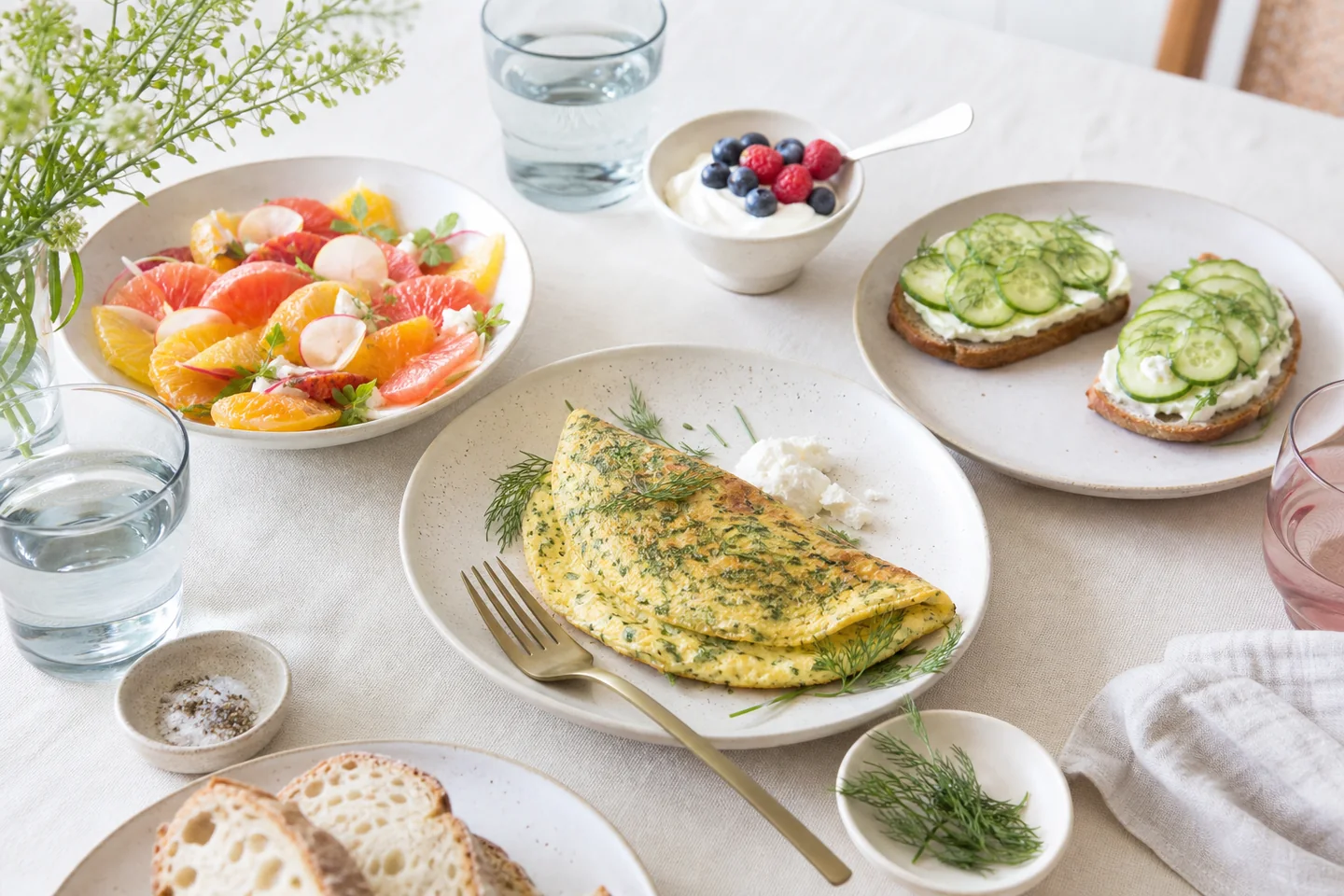
A light brunch for guests is easiest to run when the menu has five jobs: one warm anchor, one fresh item, one modest bread or grain, one optional sweet note, and drinks. For six guests, choose a baked egg dish, a salad or fruit platter, rolls, yogurt or a small pastry, then put spreads on the table. Pancake World uses “light” as a practical service description rather than a nutrition or medical label. Start with the brunch guide if you are choosing the occasion first.
Define the light-brunch brief
The useful definition is not “less food.” It is a table with enough choice to let guests assemble a plate without requiring the host to cook every component to order. Pick one centrepiece that can wait briefly, then keep remaining roles cool, room-temperature, or easy to replenish. That balance makes the spread deliberate rather than sparse.
One guest calculator: use portions as planning cues
For six guests, plan six to eight portions of the warm anchor, six individual yogurt or fruit servings, one to two small rolls per guest, and enough drinks for an arrival period. These are planning cues, not guaranteed quantities: appetite, timing and accompanying food vary.
| Guest count | Warm anchor | Fresh component | Bread or grain | Drinks setup |
|---|---|---|---|---|
| 4–6 | One bake or skillet batch | One platter or bowl | Basket on table | Water, coffee or tea |
| 7–10 | Two batches or one larger bake | Two smaller platters | Refill once | One self-serve station |
| 11–14 | Two batchable anchors | Replenish in small bowls | Two baskets | Separate hot and cold points |
One shopping framework: buy by menu role
Write the list in five columns: anchor ingredients, fresh produce, bread or grain, toppings, and drinks. This avoids buying three versions of the same role because each looked appealing in isolation.
Check labels before shopping for guests who have stated an allergy or dietary requirement. Keep ingredient information available, but do not use a “light” label as a safety promise or individualized dietary advice.
One equipment-capacity table: let the kitchen set the menu
Count usable oven space, burners, serving bowls, tongs, boards and chilled storage before choosing recipes. A one-oven host can choose a baked frittata plus cold sides; a host with one large skillet can choose one pan item and move the rest to the table cold.
| Constraint | Suitable choice | Avoid | Capacity cue |
|---|---|---|---|
| One oven shelf | One shallow baked anchor | Two competing finish times | Bake first; follow recipe and safety guidance |
| One large skillet | One batch savoury item | Made-to-order portions | Serve on one platter |
| Limited fridge | Whole fruit and sealed dairy | Many pre-dressed bowls | Prepare wet toppings last |
One preparation timeline: stage work, not dishes
The evening before, choose the menu, clear the serving surface, wash sturdy produce and set out equipment. On the morning, make the batchable anchor first. In the final thirty minutes, cut fruit, dress salad, warm bread if appropriate, and put chilled foods out in small batches.
Arrival window workflow
- Open with water, coffee or tea and one ready cold item.
- Put out the warm anchor with serving utensils.
- Keep toppings separate so guests can choose them without slowing the line.
- Replenish a small platter instead of displaying the whole reserve.
For snack-sized formats, the pending same-corpus healthy brunch snacks route is a useful companion after the R83 corpus releases together.
Three sample menus: choose one pattern
Garden table
Serve a baked vegetable-and-egg dish, cucumber and tomato salad, rolls, yogurt with berries, and coffee, tea and water. The warm anchor carries the table; the rest is assembled close to service.
Bread-and-spread table
Serve a simple egg dish, rolls or toast, a plain spread plus one flavoured spread, whole fruit, and a lightly dressed green salad. Most choices are self-directed.
Fruit-and-grain table
Serve baked oats or another batchable grain dish, yogurt, fruit, a small nut or seed topping, and warm drinks. Keep the topping separate and label it.
For group-scale patterns, see the pending same-corpus healthy brunch ideas for a group. For a social occasion angle, the pending same-corpus friends brunch ideas can help select a setting without duplicating this plan.
Guest-flow plan: make choice visible
Place plates first, then the warm anchor, fresh sides, bread, toppings and drinks. Put ingredient labels beside dishes that contain common allergens or are adapted for a stated preference. Keep a plain base component available when practical, and use separate utensils for separate dishes. This is an organizational measure, not a cross-contact guarantee.
One contingency matrix: solve the likely disruption
| If this happens | Make this change | Do not assume |
|---|---|---|
| Guests arrive late | Hold back cold food and replenish later | A full platter improves with a long wait |
| Oven runs behind | Serve cold roles first | Another hot dish fits the timeline |
| More guests arrive | Add bread, fruit or a prepared cold component | The hot anchor stretches indefinitely |
| Ingredient question | Show package or recipe notes | Visual inspection confirms suitability |
Service sequence: keep food handling deliberate
Use clean utensils, keep cold and hot foods under appropriate conditions, and follow storage and reheating instructions for the recipes you chose. Consumer food-safety guidance supports basic hygiene and time-and-temperature care; it does not make a generic menu a tested holding plan.
If a dish’s storage history is uncertain, choose a safe replacement rather than presenting it as verified.
One final checklist
- Name one warm anchor and four supporting roles before shopping.
- Check guest count against oven, burner, bowl and table capacity.
- Prepare cold and wet components close to service.
- Set the serving order before guests arrive.
- Keep ingredient information and separate utensils available.
- Replenish in small batches and change the plan if timing slips.
Sources and editorial references
- U.S. Food and Drug Administration, Food Safety at Home —
https://www.fda.gov/consumers/womens-health-topics/food-safety-home - U.S. Food and Drug Administration, Food Allergies: What You Need to Know —
https://www.fda.gov/food/buy-store-serve-safe-food/food-allergies-what-you-need-know - USDA Food Safety and Inspection Service, Food Safety Basics —
https://www.fsis.usda.gov/food-safety/safe-food-handling-and-preparation/food-safety-basics - U.S. Food and Drug Administration, Are You Storing Food Safely? —
https://www.fda.gov/consumers/consumer-updates/are-you-storing-food-safely