Breakfast Fruit Salad: a Formula for Fresh, Distinct Fruit
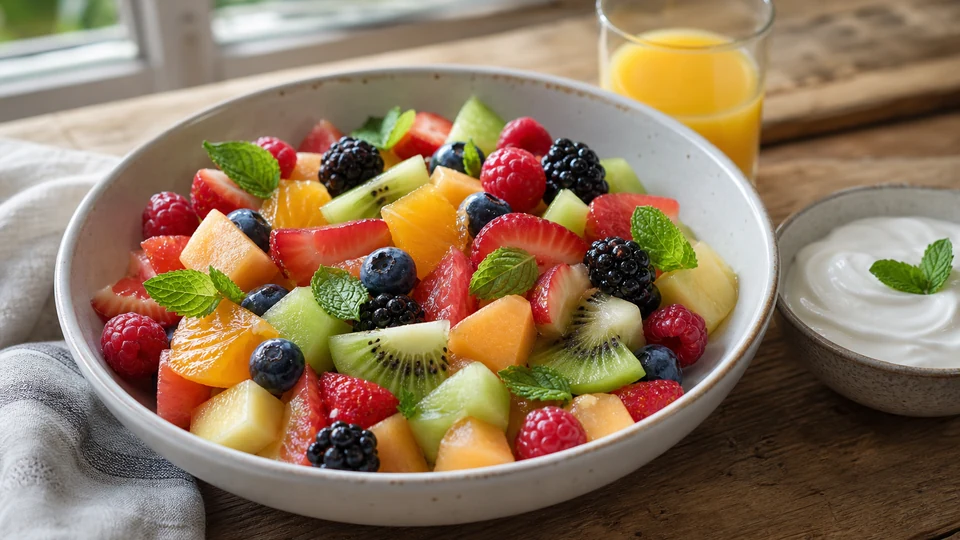
Pancake World recommends building breakfast fruit salad around functions: firm fruit for structure, juicy fruit for volume, tart fruit for contrast, and delicate fruit added last. For four servings, use 600–750 g total fruit: roughly two parts firm fruit, one part juicy fruit, and one part berries or citrus. Keep sugar and yoghurt outside the bowl until serving so the cuts remain distinct rather than sitting in juice.
What the formula controls
The useful question is not which fruit is “best,” but what the bowl needs. A firm apple, pear, or grape supplies a clean bite. Melon or orange brings juice and bulk. Berries add a soft, aromatic note but bruise easily. Lemon or lime supplies a small acidic adjustment; it is a coating, not a dressing. This functional approach makes it easier to work with the fruit that is ripe today.
Use the live American breakfast hub when fruit salad is one element of a larger breakfast table.
The base formula: four functions, not a fixed fruit list
| Function | Working range in a 600–750 g bowl | Observable result | Examples |
|---|---|---|---|
| Firm structure | 35–45% | Pieces hold their shape | apple, pear, grapes |
| Juicy volume | 25–35% | Freshness without a flooded bowl | melon, orange segments |
| Delicate accent | 15–25% | Aroma and colour | berries, ripe peach |
| Tart adjustment | 5–15% | Contrast to very sweet fruit | kiwi, grapefruit, citrus |
These are controlled ranges, not universal rules. If melon is exceptionally juicy, use the lower end of its range and increase firm fruit. If berries are fragile, use less of them and cut the firm fruit smaller so a spoonful still feels balanced.
Ingredient functions before you cut
Firm fruits can be cut first because their texture survives handling. They are also the pieces most likely to brown visibly after cutting, so make them only as far ahead as necessary. Juicy fruit should be drained and blotted after washing; surface water plus released juice is what makes the bowl look diluted. Berries should be inspected, rinsed under running water, dried carefully, and folded in last so their skins are not crushed.
For a warm accompaniment, the American pancakes guide gives the bowl a contrasting soft, cooked element without turning the fruit itself into a topping.
The interaction that makes a salad watery
Cutting ruptures cells. A very ripe fruit, a rough stir, added sugar, or a long wait all increase visible liquid. That does not make the fruit unsafe by itself; it changes the intended texture. The practical response is to reduce one moisture pressure at a time: choose firmer fruit, dry it, cut nearer to serving, fold once or twice, and add sweet toppings individually.
Acid has a different job. A small amount of citrus juice adds tartness and can help limit surface browning on suitable cut fruit, but too much makes the bottom of the bowl wet. Start with 1–2 teaspoons for four servings, toss only the browning-prone pieces, and stop when their surfaces look lightly coated rather than dressed.
Cut size is a control, not decoration
Aim for 1.5–2 cm pieces for firm fruit and leave berries whole where practical. Similar spoon-size pieces let the eater take several textures together without turning berries into fragments. Do not force a strict cube on every ingredient: grapes can be halved for safer, easier eating where appropriate, while raspberries are better left whole.
The healthy pancake guide uses the same separation principle for a portable breakfast: keep wet and dry components apart until the moment they meet.
Substitutions by function
Replace an unavailable fruit with the same job. Apple can become firm pear or seedless grapes; it is a structure substitution. Melon can become orange segments if you first remove excess juice; it is a juicy-volume substitution. Kiwi can become a small amount of grapefruit or citrus; it is a tartness substitution. Strawberries can become blueberries when you need a more resilient delicate accent.
Do not substitute by colour alone. A second very soft fruit does not replace apple’s structure, and frozen fruit does not replace fresh berries in a bowl expected to stay distinct: thawing releases liquid and changes its texture.
Preparation effects: a calm sequence
- Sort fruit by firmness and remove damaged pieces.
- Rinse produce under running water, then dry it before cutting, following FDA produce-handling guidance.
- Cut firm fruit, then juicy fruit; reserve berries and herbs.
- Combine the firm and juicy portions with two gentle folds.
- Add citrus only if the taste or browning risk calls for it.
- Fold in berries immediately before service; serve yoghurt, nuts, and granola separately.
A small service window
Make the salad as close to eating time as practical. If it must wait, cover it, refrigerate it promptly, and keep toppings separate. FoodSafety.gov advises refrigerating perishable food within two hours, or within one hour when the air temperature is above 90°F/32°C; use that boundary for fruit salad containing cut produce or dairy additions.
For a second breakfast-side idea, see breakfast frittata recipe; its cooked, savoury texture is a deliberate counterpoint to cold fruit.
Troubleshooting by symptom
The bowl has a pool of juice
Drain only the free liquid, then serve sooner. Next time, dry fruit more thoroughly, use less very ripe melon or peach, and keep sugar and yoghurt separate.
The fruit looks bruised or mushy
Use a wider bowl, fold fewer times, and add berries last. Replace part of the soft component with a firm-fruit function rather than simply adding more fruit.
The taste is flat or too sweet
Add a tart-function fruit or a measured teaspoon of citrus; do not solve it with an oversized pour of juice. A pinch of mint can add aroma, but it does not replace acidity.
Apple or pear is browning quickly
Cut it closer to serving and lightly coat only those pieces with citrus. Keep the bowl covered and chilled, while remembering that the citrus also contributes moisture.
Final decision checklist
For breakfast fruit salad that stays fresh and distinct, build one bowl with 35–45% firm structure, 25–35% juicy volume, 15–25% delicate accent, and 5–15% tart adjustment. Dry before cutting, use 1.5–2 cm pieces for firm fruit, fold gently, and keep dairy, granola, sugar, and heavy dressings separate until the table.
Related reading
- Breakfast fried potatoes for a crisp savoury counterpoint.
- Early morning breakfast ideas for a simple morning menu framework.
- Brunch tapas ideas for small-plate serving inspiration.
Sources and editorial references
- U.S. Food and Drug Administration, Selecting and Serving Produce Safely.
- FoodSafety.gov, Safe Food Handling guidance on the two-hour rule.
- USDA FoodData Central, food composition entries used only to distinguish ingredient categories; no nutrition outcome claims are made.
- University of California Agriculture and Natural Resources, produce handling and storage guidance.