Early Morning Breakfast
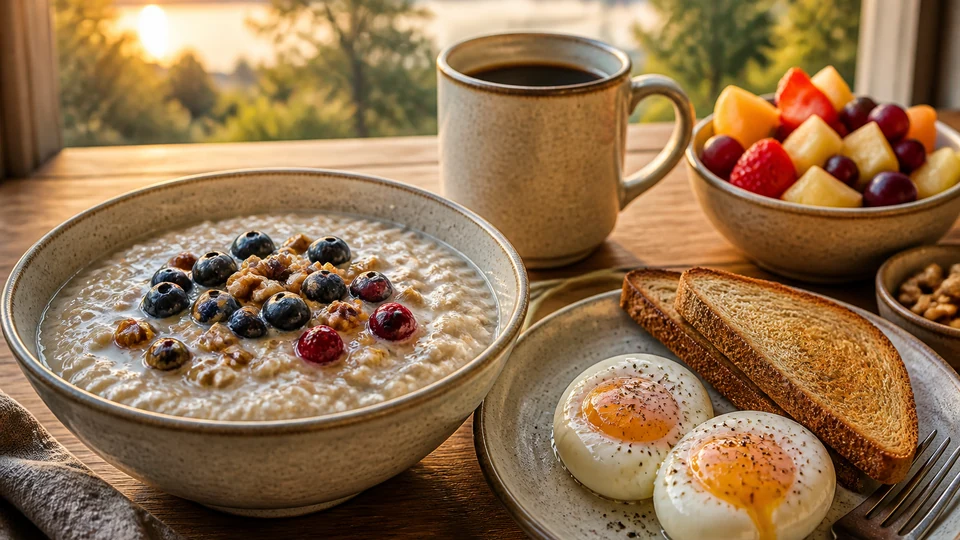
Pancake World defines an early morning breakfast as a meal ready before the day gains momentum: prepare one component the night before, add one fresh or heated component in the morning, and keep a portable backup. Choose it by active time, refrigeration, and whether you must carry it—not by the most ambitious meal possible later.
What early morning breakfast means in practice
An early breakfast fits a short setup window and a clear departure. It may be cold, warm, or partly assembled, but it should not depend on several last-minute decisions. The Breakfast guide is the parent hub; this page owns the narrower early-hour workflow. Use a base that survives waiting: refrigerated oats, bread, yoghurt, fruit, or a prepared egg dish. Allergies, appetite, refrigeration, and departure times set the limit.
The direct answer for early morning breakfast
Set up the container, dry items, utensil, and any safely chilled component the night before. In the morning, either heat one prepared item or add one fresh item, then leave. For example, portion oats overnight and add washed fruit before departure; or prepare a topping, toast bread, and pack wet fillings separately. This is a planning pattern, not a universal menu or a substitute for dish-specific safety instructions.
Conditions that change the choice
Three conditions decide the format: active time, transport, and cold control. A five-minute window favors cold assembly or reheating; a commute favors a sealed container; no reliable refrigeration favors shelf-stable food or a verified cold-control method. Low appetite can favor a smaller portable option. This guide does not prescribe calories, clinical meal timing, or a sports-nutrition plan.
Decision rules for a workable breakfast
| Condition | Useful move | Limit |
|---|---|---|
| Under five active minutes | Cold assembly or one reheat | Do not add a multi-pan recipe |
| Ten to fifteen minutes | Add toast or one cooked step | Keep the rest ready |
| Traveling | Use a lidded container | Separate sauces and juicy produce |
| No refrigerator | Choose shelf-stable items | Do not assume leftovers are safe to carry |
These are decision rules rather than cooking guarantees: handling still depends on ingredients, storage history, and directions.
How the two-step method reduces friction
First, portion a base, wash produce under running water where appropriate, and store food as labels or recipes require. Second, heat, toast, slice, or combine. Each step has a visible finish line: the container is closed, the hot item follows its directions, and the meal is ready to leave. If the heat step is skipped, the prepared cold component can still be eaten later; if a fresh item is unavailable, the base remains a meal.
Worked examples for ordinary kitchens
Five-minute departure: portion refrigerated oats, add fruit, close the lid, and take it. Warm savoury option: reheat a prepared vegetable-and-egg portion according to its instructions, then add toast. Breakfast Fried Rice is a separate dish guide when rice is part of the plan; it does not permit leaving cooked rice out overnight. More time available: use the American pancakes guide for a deliberate cooking session rather than a rushed weekday.
Limits and food-safety boundaries
Planning convenience never overrides food handling. Keep raw animal products separate from ready-to-eat foods, wash produce under running water, and use current official guidance for foods requiring a safe minimum internal temperature. Color alone is not a reliable endpoint for every cooked food. This page does not diagnose dietary issues, state how long every food may remain out, or rank foods by health outcome.
Troubleshooting the result
Soggy toast: carry wet fillings separately. Skipped breakfast: remove one decision by repeating the same container and storage position. Cold centre after reheating: use a suitable portion and follow dish-specific safety guidance. Repetition: rotate the format—oats, sandwich, egg portion, or yoghurt bowl—while retaining the same simple workflow.
Summary actions
Choose tomorrow’s time window, prepare one base tonight, decide on one morning action, keep perishables under appropriate cold control, and pack a ready-to-eat backup. For a fruit-led alternative, see Strawberry Brunch Ideas. The practical test is whether the safe option is also the option you can finish before leaving.
Sources and editorial references
- U.S. Department of Agriculture Food Safety and Inspection Service, Safe Minimum Internal Temperature Chart — https://www.fsis.usda.gov/food-safety/safe-food-handling-and-preparation/food-safety-basics/safe-temperature-chart
- U.S. Department of Agriculture Food Safety and Inspection Service, Leftovers and Food Safety — https://www.fsis.usda.gov/food-safety/safe-food-handling-and-preparation/food-safety-basics/leftovers-and-food-safety
- U.S. Food and Drug Administration, Selecting and Serving Produce Safely — https://www.fda.gov/consumers/consumer-updates/selecting-and-serving-produce-safely
- USDA MyPlate, MyPlate Food Groups — https://www.myplate.gov/eat-healthy/what-is-myplate