BRUNCH TECHNIQUE
Strawberry Brunch Ideas
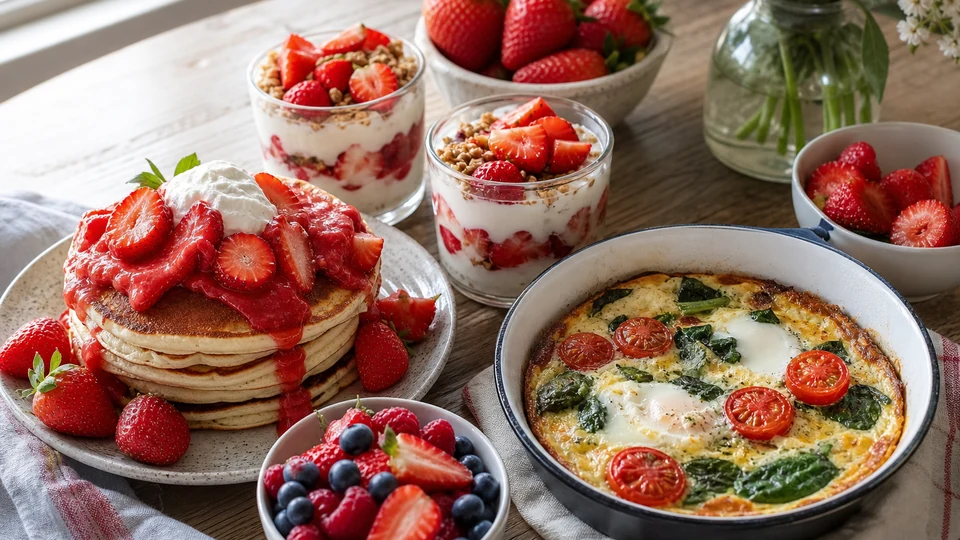
Pancake World builds strawberry brunch ideas by giving the berries one job at a time: fresh topping for contrast, briefly cooked fruit for a spoonable component, or a separate fruit dish. For pancakes and toast, keep washed berries dry, cut them close to serving, and add them after the warm base is ready. This controls juice on the plate while letting the fruit stay recognizable.
The functional starting point
A strawberry brunch works when its components do not all perform the same job. Fresh berries bring a juicy, bright bite; a pancake, waffle, toast, or biscuit provides structure; a thick cultured or plant-based component gives creamy contrast; and a cooked berry component gives a unified spoonable texture. Choose one fruit format as the lead instead of layering fresh slices, sauce, and sweetened macerated fruit onto the same plate.
Ingredient functions at a glance
| Component | Working function | Observable signal |
|---|---|---|
| Fresh strawberries | Juicy fruit contrast and colour | Pieces hold shape; no liquid pools before serving |
| Pancake, waffle, toast, or biscuit | Warm structured base | Surface stays intact under its intended topping |
| Thick yogurt or plant-based alternative | Creamy buffer and contrast | It stays spoonable rather than spreading thinly |
| Lemon juice or zest | Bright aromatic contrast | Fruit tastes clearer without becoming sharply sour |
| Sugar or maple syrup | Sweetness and juice release when mixed with cut fruit | A small amount improves taste without a syrupy bowl |
Build around one strawberry format
Fresh and dry for a crisp base
For pancakes, waffles, toast, or scones, use fresh berries as a last-minute topping. Rinse produce under running water, then dry it before cutting; FDA guidance advises washing produce under running water and keeping it separate from raw animal products. Slice only what will be served promptly. A thick yogurt or whipped dairy component can go on the base first, with berries placed on top or alongside rather than stirred in.
Briefly cooked for a spoonable layer
If berries are soft, unevenly ripe, or frozen, make a cooked component rather than asking them to behave like fresh garnish. Cook the fruit gently until it breaks down to the texture you want. If a recipe calls for starch, use its stated amount and judge after a short rest: a useful sauce coats a spoon but still falls from it. This is a preparation choice, not a universal formula for every berry variety or pan.
Separate fruit dish for a make-ahead brunch
For a buffet, keep fruit separate from toasted or crisp foods. Whole or larger-cut berries in a shallow bowl give guests control over portion and timing. Perishable accompaniments retain their own safe-handling needs; a fruit platter does not extend the safe holding time of cream, yogurt, eggs, or meat.
Interaction: moisture, sweetness, and structure
Cut strawberries release liquid more readily once they meet sugar or salt, so sequence matters. If fresh slices should stay defined, taste them first and add sweetener sparingly at assembly. If a loose berry spooning liquid is wanted, combine cut berries and sweetener ahead of time in a bowl that is not sitting on the crisp base.
The base changes the decision. Pancakes tolerate a little juice because they are tender throughout; toast and waffles lose contrast faster. A creamy layer can slow direct contact, but it cannot make a heavily syruped topping crisp. Build the warm base, add the cream if using it, then place berries just before serving.
Controlled ranges for a small plate
These are starting ranges for one plated brunch serving, not universal optimum ratios.
| Variable | Controlled starting range | Adjustment signal |
|---|---|---|
| Fresh berries | 80–150 g | Use less on a small crisp base; use more for a fruit-forward bowl |
| Creamy component | 2–4 tablespoons | Reduce if berries are very juicy; add only for cooling contrast |
| Sweetener in fresh fruit | 0–2 teaspoons | Stop when fruit is pleasant alone |
| Citrus | A few drops or a little zest | Add only until aroma brightens |
The observation matters more than the number: the plate should look composed, fruit should not flood the base, and each bite should retain a distinct texture.
Substitutions by function
| If you lack | Replace its function with | Watch for |
|---|---|---|
| Thick strained yogurt | Labneh, thick plant-based yogurt, or another spoonable cultured alternative | A thin yogurt adds moisture, so keep it beside the base |
| Maple syrup | A small amount of sugar or another familiar sweetener | Sweeteners can draw juice from cut fruit |
| Fresh berry garnish | Raspberries, blueberries, or seasonal stone fruit | Each fruit has a different moisture and firmness profile |
| Fresh fruit texture | A cooked berry compote | Treat it as sauce, not crisp garnish |
Substitute by role, not because ingredients share a colour or are both sweet. Match the texture and placement needed first.
Preparation effects that change the result
Washing, drying, cutting, sweetening, and heating each affect the plate. Drying prevents rinse water from becoming the first liquid in the serving bowl. Cutting exposes more fruit surface, so it is useful near service but less useful for a long wait. Gentle cooking moves berries toward a unified soft component. Frozen and thawed berries usually have a softer texture, which is often better directed into cooked or blended applications than a fresh-looking garnish.
Choose the base before choosing the garnish
Start with the texture that matters most at the table. A waffle or toast wants a dry topping placed late. A pancake can take a small amount of spooning fruit because the base is already tender, but it still benefits from keeping a large pool of sauce off the plate. A bowl of yogurt, oats, or chia has no crisp surface to protect, so it can take a more integrated berry component. The same strawberry can therefore be sliced, kept whole, or cooked according to the base rather than according to a single brunch rule.
If the brunch includes more than one base, do not force one prepared berry bowl across all of them. Put fresh dry berries beside crisp items, then reserve cooked berries for pancakes or a bowl. This small split prevents the practical conflict in which the sauce that suits one plate makes another plate soggy.
A two-minute service check
Before taking a plate to the table, look for three signals. First, does the fruit look dry enough for the base it touches? Second, can the creamy component stay where it is spooned rather than running across the plate? Third, does the plate have only one obvious sweet liquid? When the answer to the last question is no, remove or serve one of the liquids separately. This is a visual check, not a claim that a specific amount is correct for every strawberry or serving.
For a shared spread, use the same check at the bowl rather than the individual plate: keep the berries cool as appropriate, give wet fruit its own spoon, and place crisp breads away from fruit juices. Guests can then combine components at their own timing without every serving acquiring the same moisture problem.
Three strawberry brunch combinations
Crisp waffle, thick yogurt, fresh berries
Use a warm waffle, 2–3 tablespoons of thick yogurt, and 80–120 g of dry sliced strawberries. Keep syrup on the side. The key interaction is timing: assemble as the plate goes out, not while the waffle waits.
Pancakes with cooked berry sauce
Use pancakes for the tender base and a modest spooning portion of cooked berries. Keep the sauce thick enough to stay where it lands; if pancakes are already sweet, taste the sauce before adding another sweet component. For base technique, see the berry brunch guide.
Savoury egg plate with a separate berry bowl
Put strawberries in a separate bowl next to eggs, greens, and toast rather than over the toast. This retains a clean fruit option and keeps the main plate from becoming wet. The brunch guide can help turn that arrangement into a fuller menu.
Troubleshooting a strawberry brunch plate
| Problem | Likely interaction | Correct one variable first |
|---|---|---|
| Juice pools | Berries were cut or sweetened too early | Cut closer to serving; keep sweetener separate |
| Toast or waffle softens | Fruit or sauce contacted it too early | Add fruit at the table or serve it alongside |
| Sauce is loose | Fruit moisture is higher than expected | Return to the recipe cook/thickener method |
| Fruit tastes flat | Berry quality is weak or plate is too cold and sweet | Taste berries alone; use a small aromatic accent |
Related reading
- Breakfast fruit salad for a fruit-led side.
- Brunch tapas ideas for small savoury portions.
- Sourdough brunch ideas for a toast-led brunch.
Final practical formula: choose, protect, assemble
Choose one strawberry format, protect the texture it is paired with, and assemble only when the component can still do its intended job. For a crisp base, use dry fresh fruit at the end; for soft or frozen berries, use a cooked spooning component; for a longer brunch, keep fruit separate. Taste before sweetening, change one variable when a plate fails, and rely on the serving result—not a fixed universal ratio—to decide the next adjustment.
Sources and editorial references
- U.S. Food and Drug Administration, Selecting and Serving Produce Safely — https://www.fda.gov/consumers/consumer-updates/selecting-and-serving-produce-safely
- USDA FoodData Central, Strawberries, raw — https://fdc.nal.usda.gov/fdc-app.html#/food-details/167762/nutrients
- University of California Agriculture and Natural Resources, Food Safety for Fruits and Vegetables — https://ucanr.edu/sites/UC_Davis_MCE/files/267297.pdf
- USDA Food Safety and Inspection Service, Keep Food Safe! Food Safety Basics — https://www.fsis.usda.gov/food-safety/safe-food-handling-and-preparation/food-safety-basics/keep-food-safe-food-safety-basics