Brunch planning
Interesting Brunch Ideas
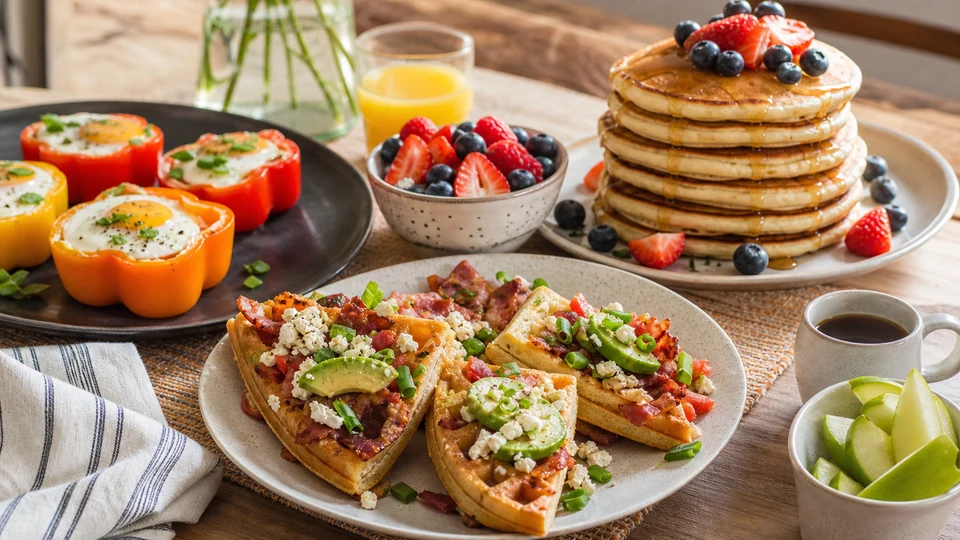
The most interesting brunch is usually the one that changes one clear experience—texture, format, regional context, or temperature—while keeping a familiar anchor. Choose the contrast that your time, equipment, and guests can support; a build-your-own plate is a stronger choice than a second complicated dish when people arrive at different times. Pancake World uses this comparison to turn “interesting” into a usable menu decision rather than a novelty contest.
The parent brunch planning collection covers the wider meal; this page focuses on selecting a memorable idea without turning the menu into a collection of unrelated experiments.
Direct verdict: choose the contrast with the fewest new constraints
That verdict is conditional, not a universal ranking. A good brunch idea makes a difference diners can notice and gives the host one simple explanation. It does not require every item to be new. If the main course is already rich and soft, a crisp side may carry the whole idea. If a group includes cautious eaters, an optional sauce or topping preserves choice without splitting the menu.
Route owner statement: what makes an idea interesting here
This guide treats “interesting” as a contrast with a job. The job may be to make a familiar plate interactive, to give a soft menu a crisp note, to introduce a documented food tradition with context, or to place a cool element beside a hot anchor. It is not a claim that one flavour combination is best for everyone. The choice should respect ingredient labels, individual dietary needs, recipe directions, and safe handling requirements.
Start by writing down the existing anchors: perhaps pancakes, eggs, fruit, and coffee. Then identify the repetition. A plate that is all beige and soft has a different problem from a plate that already has colour but no shared serving rhythm. This small diagnosis prevents “interesting” from becoming a reason to add a fifth dish.
Decision criteria before choosing an idea
- Guest participation: do diners benefit from choosing a topping, folding a wrap, or assembling a plate?
- Service timing: can the contrast be added at the pass, or must it be held separately?
- Equipment: is there room for one chilled component, one hot pan, and clean serving utensils?
- Information: can unfamiliar ingredients and allergens be clearly identified from their labels?
For bigger groups, the service constraint often matters more than the cleverness of the idea. The separate large brunch ideas guide is useful when the decision turns on replenishment and self-service flow.
Comparison matrix: four ways to make brunch memorable
| Approach | Best when | Useful starting range | Constraint to respect |
|---|---|---|---|
| Texture contrast | The menu is mostly soft or rich. | One crisp or fresh component alongside two to three familiar soft anchors. | Keep toppings separate and labelled where ingredients may be allergens. |
| Format contrast | Arrivals are staggered or diners like choice. | One buildable base plus two to four clearly separated add-ons. | Provide serving utensils so the setup does not create a bottleneck. |
| Regional lens | You have a specific documented dish or serving tradition to explore. | One named element, explained in its own terms, beside familiar supports. | Do not reduce a cuisine to a costume or claim a single “authentic” version. |
| Temperature contrast | There is reliable hot finishing and cold holding. | One hot anchor and one chilled bright side; scale from the chosen recipe. | Use the applicable food-safety instructions for the foods you actually prepare. |
These are planning ranges, not portion rules or safety thresholds. The word “one” helps keep the contrast legible; recipe yields and labels decide actual quantities. If raw animal foods are involved, use an appropriate food thermometer and consult the current official guidance rather than judging doneness by appearance alone.
Scenario analysis: match the idea to the table
Fast brunch for people who know one another
Choose texture contrast: pancakes with a fruit component and one toasted or crisp finish. It changes the eating experience but does not ask guests to learn a new format. Put the crunchy ingredient in a separate bowl if it could be unsuitable for some diners.
Open-house brunch with staggered arrivals
Choose format contrast: make a base available in small batches and let guests add a sauce, salad, or fruit. The principle is not “more toppings”; it is a visible serving cue. A small sign naming the components can be more useful than extra decoration.
Brunch built around a food tradition
Choose a regional lens only after you have a reliable source for the recipe or cultural framing. Name the dish, avoid sweeping statements about a country or household, and leave room for variation. International brunch ideas offers a related route when the cultural frame is the central planning question.
Summer brunch with limited oven space
Choose temperature contrast: reserve the oven or pan for the hot anchor and prepare a cold side that can be kept under the conditions its ingredients require. Do not let a chilled component sit out merely because it makes the table look finished.
Decision tree: make one choice, then stop adding
Yes: choose texture contrast.
Yes: choose format contrast.
Yes: choose a documented regional lens.
If none of those conditions dominates and you can safely manage both lanes, temperature contrast is a calm alternative. Otherwise, keep the familiar menu and improve one presentation or texture detail. The tree exists to eliminate choices, not to make every branch mandatory.
Recommendations by user type
- The time-limited host: use one crisp or fresh contrast that can be added just before serving.
- The planner hosting mixed preferences: use a buildable format with components kept distinct.
- The curious cook: choose one regional element and cite or name its source tradition accurately.
- The small-kitchen host: avoid a new appliance-dependent dish; make the contrast cold, fresh, or table-assembled.
A related berry brunch guide can help when fruit is the chosen contrast, but it should not replace the decision about service and guest choice made here.
Safe and clear execution notes
Wash and handle produce according to current food-safety advice, keep raw-food preparation separate from ready-to-eat foods, and follow the instructions for packaged ingredients. For major allergens, do not infer safety from a menu description: read the product label and avoid cross-contact claims you cannot support. This article gives planning ideas, not individual allergy or medical advice.
For cooked foods, follow the official safe-minimum-temperature guidance appropriate to the food and use a thermometer where the guidance calls for one. A golden crust, a fragrant sauce, or a neat table is not evidence that food has met a safe endpoint.
Related reading
Final verdict
Choose format contrast for a flexible, broadly useful interesting brunch: keep one familiar hot anchor, offer a small set of separate add-ons, and let guests make a clear choice. Switch to texture, regional, or temperature contrast only when the specific scenario makes that option easier to serve accurately and safely.
Sources and editorial references
- U.S. Department of Agriculture, Food Safety and Inspection Service. Safe Minimum Internal Temperature Chart. https://www.fsis.usda.gov/food-safety/safe-food-handling-and-preparation/food-safety-basics/safe-temperature-chart
- U.S. Food and Drug Administration. Selecting and Serving Produce Safely. https://www.fda.gov/consumers/consumer-updates/selecting-and-serving-produce-safely
- U.S. Food and Drug Administration. Food Allergies. https://www.fda.gov/food/nutrition-food-labeling-and-critical-foods/food-allergies
- U.S. Department of Agriculture. Food Safety and Inspection Service: Keep Food Safe! Food Safety Basics. https://www.fsis.usda.gov/food-safety/safe-food-handling-and-preparation/food-safety-basics