Breakfast Skillet
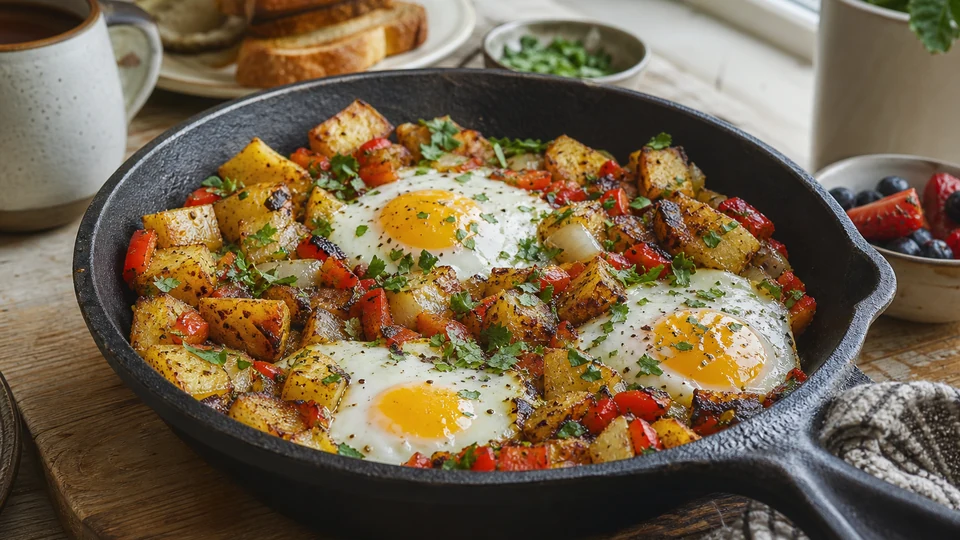
A breakfast skillet is a one-pan meal built in layers: brown the potatoes first, cook the peppers and onion only after the pan is dry again, then set the eggs in clear spaces at the end. This four-serving formula gives the potatoes room to crisp and prevents the vegetables from turning the pan watery. Pancake World treats the order of cooking as the recipe’s main control, not as a garnish decision.
Use the Brunch hub for occasion planning; this page is the practical hot-pan method. The result is crisp-edged potato pieces, tender peppers, sweet onion and eggs whose whites are set before serving.
The one formula: potato, pepper, and egg skillet
Ingredients
- 680 g waxy potatoes, scrubbed and cut into 1.5 cm cubes
- 2 tablespoons neutral cooking oil, divided
- 1 small yellow onion (about 150 g), cut into 1 cm pieces
- 1 red bell pepper (about 150 g), cut into 1 cm pieces
- 1 teaspoon sweet paprika; 1/2 teaspoon kosher salt; 1/4 teaspoon black pepper
- 4 large eggs and 2 tablespoons sliced scallions or chopped parsley, optional
The quantities fit a 30 cm skillet. A deeper, smaller pan needs two potato batches rather than a taller pile. The pancake equipment guide helps identify the broad cooking surface this method needs.
Why the potato stage comes first
Cover the potato cubes with cold water, bring to a boil, then simmer until the exterior is just tender when pierced, about 5 to 7 minutes. Drain thoroughly and let steam escape for 2 minutes. This short par-cook moves tenderness ahead of browning, so the skillet can focus on dry surface and colour.
A packed pan traps moisture; food steams before it browns. The breakfast fried potatoes guide is for potatoes as the whole target rather than this finished skillet.
Numbered method
- Heat a 30 cm skillet over medium-high heat for 2 minutes. Add 1 tablespoon oil.
- Add drained potatoes in one loose layer. Leave them 4 minutes, then turn and cook 6 to 8 minutes until several sides are deep golden.
- Move potatoes to the edge. Add remaining oil, onion, pepper, paprika, salt and pepper to the centre. Cook 3 to 4 minutes, until onion is translucent and pepper softens at the edges.
- Fold together and cook uncovered 1 to 2 minutes, until no liquid is pooled.
- Make four wells, crack in eggs, reduce to medium-low, cover, and cook 3 to 5 minutes until whites are opaque and yolks are at the desired texture.
- Remove from heat and garnish. For a safety endpoint, use current official egg guidance rather than colour alone.
Cues that tell you to move forward
A potato should lift with a browned face and hold its shape. Onion should smell sweet rather than sharp; pepper should still look distinct. Before eggs go in, the pan should sizzle steadily with no standing liquid. Opaque whites show a set white, but appearance cannot establish a universal safety claim. The breakfast frittata recipe is the better route when an oven finish fits the meal.
The moisture map
| Ingredient | When it enters | What to watch |
|---|---|---|
| Par-cooked potato | First | A dry surface and loose layer create browning. |
| Onion | After colour begins | It softens without burnt bits. |
| Bell pepper | With onion | Its moisture evaporates before eggs. |
| Eggs | Last | Each needs a defined well and gentle heat. |
This is the control sequence for the single formula. If replacing pepper with mushrooms, tomatoes or greens, wait for their visible moisture to evaporate before making egg wells.
Scale without crowding
For two servings, halve every ingredient and use a 25 cm skillet. For six to eight, double ingredients but brown potatoes in two batches; combine only after both batches have colour. Do not double the quantity and leave pan size unchanged. The Backpacking Breakfast guide covers different fuel, wash-up and refrigeration constraints.
Variations that keep the method intact
Replace the pepper with 150 g sliced mushrooms and cook them until their liquid evaporates before returning potatoes. Stir 60 g baby spinach through just to wilt. For a cheese finish, use 40 g crumbled feta after the eggs are done, then taste before salting. Each variation preserves the dry-pan checkpoint and the egg finish.
Troubleshooting the pan you have
Pale potatoes: dry them, stop moving them early, and restore a loose layer. Burned onion: lift it out, finish potatoes, then add a fresh small amount later. Spreading eggs: evaporate liquid, then remake deeper wells. Catching bottom: reduce heat and move food to a clean pan if bits are blackened.
Storage and reheating
Cool leftovers in shallow containers and refrigerate promptly under current food-safety guidance. Store the potato-and-vegetable base separately from eggs when possible; reheat the base in a skillet until hot, then cook fresh eggs for the best texture. Storage duration depends on ingredients and refrigeration history, so this is not a duration chart.
Final skillet check
Related reading
Sources and editorial references
- U.S. Department of Agriculture Food Safety and Inspection Service, “Safe Minimum Internal Temperature Chart” —
https://www.fsis.usda.gov/food-safety/safe-food-handling-and-preparation/food-safety-basics/safe-temperature-chart - U.S. Department of Agriculture Food Safety and Inspection Service, “Keep Food Safe! Food Safety Basics” —
https://www.fsis.usda.gov/food-safety/safe-food-handling-and-preparation/food-safety-basics - U.S. Food and Drug Administration, “Safe Food Handling” —
https://www.fda.gov/food/buy-store-serve-safe-food/safe-food-handling - U.S. Food and Drug Administration, “What You Need to Know About Egg Safety” —
https://www.fda.gov/food/buy-store-serve-safe-food/what-you-need-know-about-egg-safety