Backpacking Breakfast
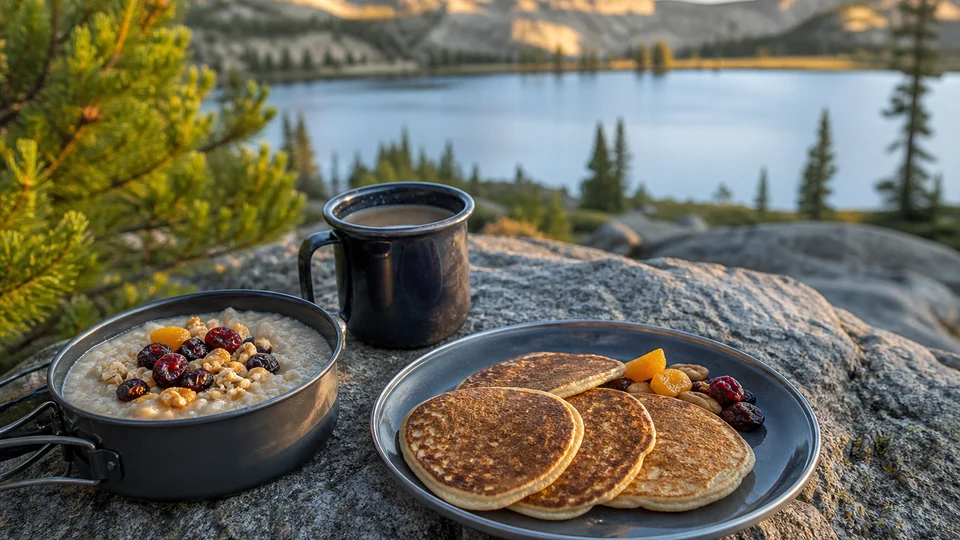
A reliable backpacking breakfast starts with the failure you are trying to avoid: no safe water, too little fuel, a wet bag, a slow morning, or food that cannot be stored safely. This Pancake World diagnostic guide helps you choose the smallest workable breakfast system for the conditions you actually expect, with a no-cook fallback rather than a fragile trail recipe.
Route owner statement
“Backpacking breakfast” is not one menu. It is a morning decision shaped by the trip’s water plan, stove plan, weather protection, food-storage rules, and departure time. This page gives an editorial framework, not trail-specific permit advice, a nutrition prescription, or a claim that any meal has been field-tested.
Symptom intake: name the morning problem
Begin with the symptom. If cooking feels too slow, the correction is not automatically a lighter meal; it may be a no-cook reserve. If food is unsafe to carry warm, the correction is not a better container; it is choosing shelf-stable ingredients or a verified cold chain.
- No reliable water: choose a ready-to-eat reserve and do not treat a dry meal as usable.
- Fuel uncertainty: avoid a breakfast that depends on a boil.
- Rain or rushed departure: use a portion that opens and eats cleanly.
- Perishable ingredient: remove it unless its time-and-temperature control is verified.
Root-cause matrix
| Observed state | Likely operational cause | Smallest correction | Prevention |
|---|---|---|---|
| Breakfast is still dry when the group must leave | Water requirement was assumed rather than planned | Eat the no-cook reserve; do not use untreated water | Write required water beside each portion |
| Pot breakfast spills or scorches | Portion exceeds pot capacity or needs more stirring | Cook one portion at a time or switch to a simpler meal | Test capacity at home with water only |
| Food smells warm or has an unknown storage history | Perishable item travelled without confirmed cold control | Do not rely on it; use shelf-stable backup | Pack perishables only within official safety controls |
| Crumbs, wrappers, and cleanup delay departure | Too many loose components | Consolidate into one labelled portion | Choose one-bag, one-spoon options |
Ordered diagnostic sequence
- Check the local rules for stoves, fires, food storage, and waste.
- Confirm the water source, treatment method, and amount needed for breakfast.
- Count the stove boils that are realistic with the fuel carried.
- Reject ingredients that need refrigeration unless the cold chain is genuinely controlled.
- Choose a meal that fits the pot, utensil, and cleanup plan.
- Pack one ready-to-eat fallback per person.
For a broader home-oriented starting point, the American breakfast guide is the closest live Pancake World hub; trail constraints then narrow the choice.
Recipe selector: choose by state, not appetite
Use a dry, portioned breakfast only when water and a heat method are confirmed. Use a ready-to-eat combination when departure time, wind, or a stove restriction makes cooking uncertain. A meal that looks substantial on paper can still be a poor backpacking breakfast if it creates residue, requires fragile ingredients, or uses more water than the group has allocated.
Decision rule: choose the least complex option that remains safe and usable if the morning plan shortens.
Recipe 1: cold oats-and-fruit pouch
Yield: 1 portion. Ingredients: 1 labelled pouch of rolled oats, dried fruit, and any separately declared allergen-safe addition; drinkable water only if the product or recipe calls for it. Method: Eat dry components as packed, or add only the stated amount of safe water, seal, and wait as directed. Keep all packaging in the waste bag. This is for confirmed potable water or a no-water version, not unknown water.
Recipe 2: hot cereal cup
Yield: 1 portion. Ingredients: one packaged hot cereal portion and the exact water stated on its directions. Method: Heat only safe water in a pot with room for stirring, add the portion, and follow the package’s standing time. Serve immediately; scrape the pot into the waste system before washing. If the fuel or water margin disappears, use the fallback instead.
Recipe 3: nut-or-seed butter and crispbread pack
Yield: 1 portion. Ingredients: sealed nut or seed butter packet and crispbread, with allergen information retained. Method: Open one packet at a time, spread onto crispbread, and pack out both wrapper and crumbs. Do not share utensils where allergy cross-contact is a concern. This option avoids a boil but still needs weatherproof packing.
Recipe 4: instant soup breakfast cup
Yield: 1 portion. Ingredients: one shelf-stable instant soup portion and the stated volume of safe water. Method: Bring water to the product’s stated preparation condition, combine in a stable vessel, wait as directed, and keep the vessel covered from wind and debris. It is not a substitute for a treated-water plan.
Recipe 5: bar-and-fruit emergency reserve
Yield: 1 portion. Ingredients: one intact shelf-stable bar and one protected piece of durable fruit or dried fruit portion. Method: Eat without cooking when weather, fuel, timing, or rules stop the planned meal. Inspect packaging for damage before leaving home. This is an operational reserve, not a claim about universal dietary needs.
Recipe 6: simple pancake mix only when conditions permit
Yield: 1 small batch as specified by a complete, trusted mix formula. Ingredients: shelf-stable mix, the exact declared water amount, and any permitted cooking fat packed safely. Method: Make it only after water, fuel, pan capacity, cleanup, and safe batter handling are confirmed. Cook thoroughly according to the mix instructions; do not hold mixed batter warm. For technique context, see American pancake ideas.
Moisture-control matrix
| Condition | Pack choice | Do not do |
|---|---|---|
| Wet forecast | Double-bag dry portions and keep the backup separate | Carry loose powder in an unsealed pouch |
| Cold morning | Keep a ready-to-eat item accessible before breaking camp | Assume hands can manage tiny wrappers |
| Hot approach or delayed start | Choose shelf-stable ingredients | Rely on eggs, meat, or dairy in an ordinary pack |
Immediate corrections at camp
If the plan fails, correct the constraint first: unsafe water means no rehydration; a stove ban means no stove meal; a damaged packet means no guessing about its condition. Eat the protected reserve, protect the rest of the food, and update the next morning’s plan.
Troubleshooting rows for common trail mistakes
Breakfast requires more water than expected
Stop before borrowing from the day’s confirmed water margin. Use the no-cook option and revise the portion label later.
Group members need different foods
Use individually labelled portions and clean utensils. A shared base is only useful when allergens and preferences have already been checked.
Wildlife or local rules affect storage
Follow the managing authority’s food-storage direction; an editorial meal plan cannot override it.
Prevention rules before departure
- Read package directions before repacking so water and preparation time are not lost.
- Keep food away from raw ingredients and protect ready-to-eat items from contamination.
- Use the U.S. FDA’s produce-handling guidance when packing fresh produce, and protect it from raw food contact.
- Use a waste bag sized for all wrappers and residue, not just the food itself.
- Keep the fallback separate from the planned hot breakfast.
When you want a calm camp-style meal after the trip rather than a trail system, breakfast skillet ideas belong in a different setting with controlled storage and cleanup.
Edge cases: when the simplest plan changes
A base camp with a verified cooler is not the same as a backpack carry. A route with a confirmed treated-water source is not the same as a dry section. A group breakfast is not automatically more efficient when portions, allergies, or cook times differ. Re-run the diagnostic sequence whenever those conditions change.
One recording method for the next trip
After breakfast, write four short notes: water used, fuel used, time from unpacking to departure, and what became waste. This observation log is more useful than vague memory because it shows which part of the system, rather than which food name, caused friction.
Conclusion: the reliable trail breakfast close
Choose a backpacking breakfast only after it passes the water, fuel, storage, cleanup, and time checks. Pack the simpler no-cook reserve, use local rules as the authority for the place, and change the plan when the morning conditions no longer support the original meal.
Sources and editorial references
- U.S. Food and Drug Administration, Selecting and Serving Produce Safely — https://www.fda.gov/consumers/consumer-updates/selecting-and-serving-produce-safely
- USDA Food Safety and Inspection Service, Keep Food Safe! Food Safety Basics — https://www.fsis.usda.gov/food-safety/safe-food-handling-and-preparation/food-safety-basics
- USDA Food Safety and Inspection Service, Safe Minimum Internal Temperature Chart — https://www.fsis.usda.gov/food-safety/safe-food-handling-and-preparation/food-safety-basics/safe-temperature-chart
- National Park Service, Food Storage — https://www.nps.gov/subjects/bears/storingfood.htm