Springtime Brunch Ideas: A Fresh, Flexible Menu
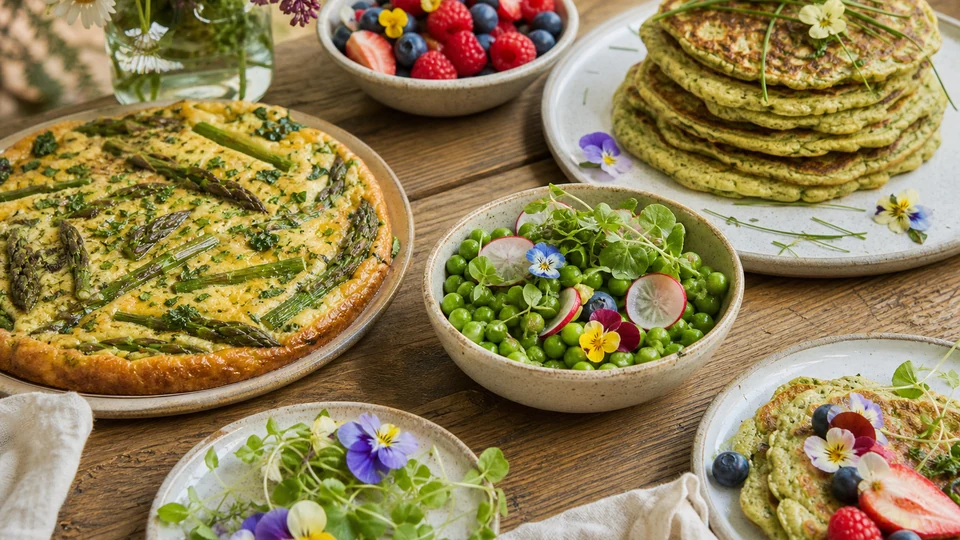
Pancake World recommends building springtime brunch ideas around a warm, make-ahead-friendly anchor, one crisp or juicy counterpoint, and a finishing element added just before serving. That simple division makes a table feel fresh without a rigid seasonal ingredient list: choose what looks good where you shop, keep chilled items cold, and make the plan workable indoors if weather turns.
The route owner: a flexible spring brunch menu
This page answers how to plan a spring-flavoured brunch, not how to follow one recipe. “Springtime” is a brief for contrast—tender herbs, bright acid, raw or lightly cooked vegetables, fruit, and food that does not feel heavy after the first plate. It is not a promise that a named ingredient is locally at its peak everywhere.
For the wider sequence of drinks, mains, sides, and serving, use the Brunch planning guide. This route narrows that structure into choices that feel seasonal and remain practical.
The three-part mechanism
The warm anchor gives the meal a centre: a vegetable egg bake, skillet potatoes with eggs, ricotta pancakes, or a savoury toast component. The fresh counterpoint interrupts soft, rich, or baked textures: berries, citrus, radishes, cucumbers, peas, or a simply dressed salad. The finish gives the plate lift without forcing guests into one flavour: herbs, lemon zest, spring onions, a spoonable yoghurt sauce, or a sharp vinaigrette.
Each part has a separate job. If the hot dish is substantial, bread can be modest. If pancakes are the anchor, the fresh element should do more than decorate. If sauce supplies the acid, keep it separate until service so it does not soften greens or toast.
A quick decision rule before shopping
- Choose an oven bake when guests arrive together; choose a stovetop dish only when someone can cook close to serving.
- Choose fruit or raw vegetables when the anchor is baked, creamy, or pastry-led; choose roasted vegetables when the day is cold.
- Keep dressing, herbs, and crunchy additions separate if the table may sit.
- Use a second clearly labelled option when a guest cannot eat the first anchor.
- Make the indoor version the real plan and treat outdoor service as movable.
These are workflow decisions, not nutrition prescriptions. For a fruit-forward branch, see the Berry brunch guide.
Worked example: brunch for four
For four people sitting down together, make herb scrambled eggs or a small vegetable frittata as the warm anchor. Add toast, a radish-and-cucumber plate, and berries or sliced citrus. Put chopped dill, chives, lemon wedges, and a yoghurt sauce in small bowls. The table feels spring-like because it contains warm, cool, crisp, and bright elements, not because it follows a colour palette.
Prepare vegetables and fruit first, hold sauce chilled, and cook eggs last. Wash produce under running water and keep it away from raw eggs or meat; FDA guidance bounds that handling advice. If eggs need a safe endpoint, use a thermometer and current USDA FSIS guidance for the food rather than guessing from appearance.
Worked example: eight guests with staggered arrivals
For eight people arriving over an hour, bake a vegetable-and-egg dish or make a large pancake component before people appear. Add bread, a bowl of fruit, and two topping bowls that can be replenished. A dressed salad softens while the first guests wait; use dry greens, herbs, or crisp vegetables and dress individual portions.
This version is less theatrical but more dependable. It avoids producing individual eggs on demand and lets chilled food return to the refrigerator between small refills. A richer Steak Brunch Ideas menu adds a separate hot-holding and timing problem, so balance it with a fresh component rather than more pastry.
Choose ingredients by role, not a mandatory list
When a favourite item is unavailable, replace its role. Swap crisp radishes for cucumber or fennel; swap juicy berries for orange segments or another ripe fruit; swap delicate herbs for a smaller amount of a sturdier herb. This avoids buying a visually “spring” ingredient that is poor in condition or difficult to serve.
USDA MyPlate is a broad food-group planning reference; it does not dictate an ideal brunch plate for every person. Needs, allergies, cultural preferences, and access vary. This route helps assemble a flexible menu, not a universal one.
Weather, equipment, and food-safety limits
Spring weather can make an outdoor table inviting while making service awkward. Wind affects garnish; cool air can make a raw salad less appealing; sun can make chilled dairy and cut produce harder to manage. Use covered containers, bring out small amounts, and move inside when conditions stop serving the food well.
A single oven favours one bake plus cold sides. A small stovetop favours pancakes or eggs for a small group, not both at once. For an unusually early gathering, the Early Morning Breakfast guide can simplify timing without changing this page into another menu type.
Small troubleshooting moves
The menu is all soft. Add toast, raw vegetables, or crisp fruit rather than another creamy side.
The table feels too light. Make the warm anchor more substantial with potatoes, beans, eggs, or another familiar staple suitable for guests.
The greens wilt. Dry them thoroughly and dress only what will be eaten in the next refill.
The hot component falls behind. Serve fruit and drinks first; do not rush a safe cooking endpoint to catch up.
One actionable summary
Select one warm anchor that matches your equipment, add one crisp or juicy element that is good in your market, reserve herbs or sauce for the last minute, and make indoor service work before considering an outdoor table. The brunch feels springtime because its textures and timing are intentional, not because it repeats a fashionable ingredient.
Related reading
- Brunch Special Ideas for a signature-led brunch concept.
- Breakfast Fried Rice for a flexible savoury warm anchor.
Sources and editorial references
- U.S. Food and Drug Administration, Selecting and Serving Produce Safely — handling boundaries for produce:
https://www.fda.gov/consumers/consumer-updates/selecting-and-serving-produce-safely - U.S. Department of Agriculture Food Safety and Inspection Service, Safe Minimum Internal Temperature Chart — cooking-endpoint reference:
https://www.fsis.usda.gov/food-safety/safe-food-handling-and-preparation/food-safety-basics/safe-temperature-chart - USDA MyPlate, MyPlate Food Groups — broad menu-planning context:
https://www.myplate.gov/eat-healthy/what-is-myplate - USDA FoodData Central, Foundation Foods — ingredient identity reference:
https://fdc.nal.usda.gov/fdc-app.html#/