Low fat brunch
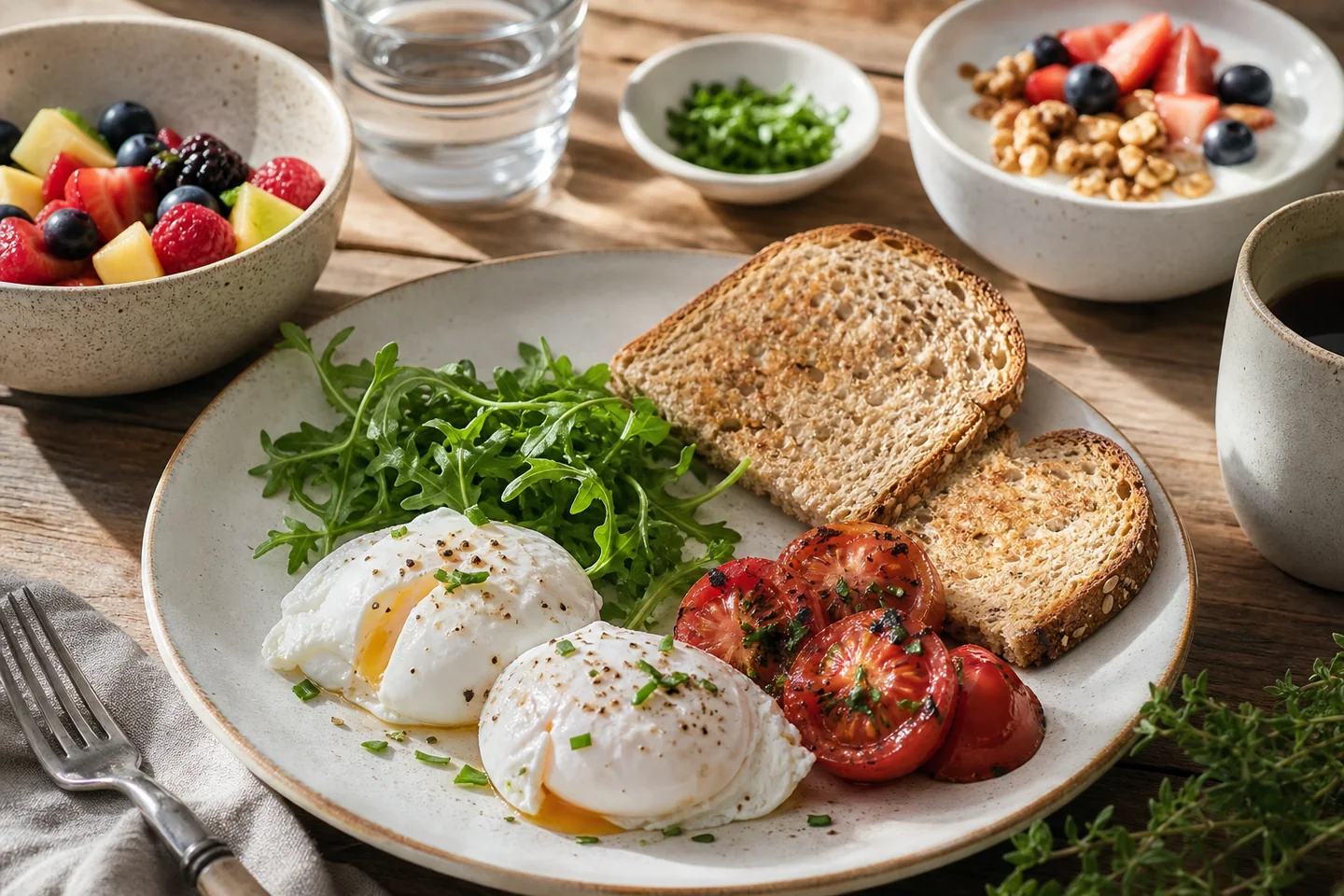
A low fat brunch is not a promise about a result; it is a way to plan a complete plate so that fat is used where it has a clear cooking job and optional rich extras do not quietly stack up. Pancake World recommends beginning with the dish, its portion, and its method—not with a label such as baked or plant-based. Use this approach alongside the Brunch guide when you want a practical, non-medical menu comparison.
The direct answer
For a lower-fat brunch, keep the fat that prevents sticking, carries a needed flavour, or creates the texture you actually want; then remove duplicate finishing fats first. A poached egg on toast, a vegetable bake with a measured pan coating, or pancakes with a chosen topping served separately can all fit that description. The useful decision is not whether a food contains fat, but whether two or three components are doing the same job.
Scope: a planning phrase, not a diagnosis
“Low fat” can mean a regulated package claim, a comparison with a richer version of a dish, or informal menu shorthand. Those are different statements. This page uses it only as a planning comparison between complete brunch plates. It does not calculate nutrition, prescribe a target, or replace advice for an individual medical diet. FDA guidance is relevant when reading packaged-food label claims; it does not turn an unmeasured café-style plate into a known nutrient value.
Start with the fat source, not the food name
List fat-bearing elements by function: a pan coating releases food; egg yolk, dairy, or oil can change tenderness; mayonnaise or a vinaigrette can carry acidity and seasoning; cheese, butter, nuts, avocado, and cream can be a finishing choice. One item may have more than one role. The practical opportunity is usually a repeated role: buttered toast beside a creamy sauce, or cheese plus a heavy dressing on the same vegetable dish.
Cooking-method trade-offs
Dry heat does not automatically make a brunch lower in fat, and frying does not automatically make it unsuitable. Baking is useful when a dish can set in a prepared dish with a specified coating. Poaching or simmering is useful when crispness is not the aim. A griddle can still be appropriate for pancakes when the method calls for a measured amount of fat for release. Cold assembly avoids pan fat but can shift the choice to dressing, cheese, seeds, or spreads.
The method also changes what you should protect. A fried edge, a tender crumb, and a glossy sauce are distinct outcomes. Do not remove every source at once and then pretend an untested substitute will behave identically.
A menu matrix for the main plate
| Brunch component | Fat role to inspect | Planning move | Do not assume |
|---|---|---|---|
| Eggs | Pan release, richness | Poach, bake, or measure the pan coating | Eggs alone define the plate |
| Pancakes | Release, tenderness, topping | Keep a trusted batter; choose one rich topping | A cooking verb reveals the whole portion |
| Sandwich | Spread, moisture | Use one measured spread and crisp vegetables | Bread is the only comparison point |
| Fruit bowl | Dressing, garnish | Select one creamy or crunchy finish | Cold assembly has no added-fat choices |
The matrix is a planning aid rather than a nutrition calculation. Labels and tested recipes remain the appropriate sources for product-specific figures.
Worked example: the savoury plate
Compare two complete plates. Plate A is fried eggs, buttered toast, cheese, and a creamy side. Plate B is a baked egg-and-vegetable dish, plain toast, and a tomato-herb side. The useful comparison is not “fried versus baked” alone. Plate A has several overlapping richness and moisture sources; Plate B has changed both the method and the toppings. If you prefer Plate A’s crisp edge, keep the measured frying method and choose either buttered toast, cheese, or the creamy side rather than treating all three as required.
For a different savoury direction, fish brunch ideas can help separate the cooking choice for the main ingredient from the decision about sauces and accompaniments.
Worked example: the pancake plate
A pancake brunch can be planned without rewriting a dependable batter. Use the recipe’s stated pan method, then decide where richness belongs at service. For example, serve fruit and a spooned topping separately instead of layering butter, whipped cream, nut butter, and syrup by default. That keeps the plate legible: guests can choose the finish while the pancake still cooks as intended.
This is not a claim that a particular topping is universally better. It is a way to prevent toppings from becoming an unexamined second recipe while preserving a tested cooking method.
Work through flavour compensation carefully
When a fatty finish is reduced, first ask what is missing: salt, aroma, acidity, browning, temperature contrast, or body. Lemon, vinegar, herbs, toasted spices, fresh fruit, warm grains, and crisp vegetables can make a dish feel more complete, but they are not direct replacements for every texture that fat creates. Increasing sugar or salt automatically is a different decision with its own consequences.
Try one contrast at a time. A warm baked egg dish may need fresh herbs and a sharp tomato salad; a fruit bowl may need a toasted dry grain element rather than another creamy garnish.
Build a brunch that still feels generous
Generosity can come from contrast and choice: a hot component, fresh produce, a starch, a drink, and one clearly chosen finish. A brunch buffet is easier to compare when rich extras are in separate bowls and the main dishes have their methods stated. Brunch entertaining ideas offers a planning lens for service flow, while hearty brunch ideas can help you choose a substantial main without making a health promise.
Limits and safety boundaries
This guide does not establish a nutrient value for a homemade or restaurant plate. The amount transferred from a pan, the product used, the recipe, and the serving size all matter. People managing a condition, allergy, or therapeutic diet need advice tailored to their situation. Food safety remains separate from fat planning: follow the handling and cooking instructions that apply to the ingredients and dish, including official guidance for eggs and perishables.
Final actionable summary
For your next low fat brunch, choose the desired texture, name every fat-bearing component and its job, keep the one that the method needs, and put duplicated rich finishes on the side. Compare whole plates instead of adjectives, keep label claims attached to the products they describe, and stop before a menu choice becomes a medical conclusion.
Related reading
- Fast brunch ideas for a time-led planning route.
- Filling brunch ideas for a separate discussion of substantial menu choices.
- Taco Bell breakfast Crunchwrap for a specific fast-food format rather than a general brunch rule.
Sources and editorial references
- U.S. Food and Drug Administration, Food Labeling & Nutrition — https://www.fda.gov/food/food-labeling-nutrition
- U.S. Department of Agriculture, FoodData Central — https://fdc.nal.usda.gov/
- U.S. Department of Agriculture, MyPlate — https://www.myplate.gov/eat-healthy/what-is-myplate
- FoodSafety.gov, Safe Minimum Internal Temperature Chart — https://www.foodsafety.gov/food-safety-charts/safe-minimum-internal-temperatures