Brunch planning guide
Fish brunch ideas
Fish brunch ideas work best when the fish’s service role leads the plate: cold ready-to-eat fish, a hot cooked portion, canned-fish toast or a fish-cake main. Each needs a different balance of structure, moisture, contrast and timing. Pancake World uses this functional map with its brunch guide, so a menu is built around a real service plan rather than a random list of toppings.
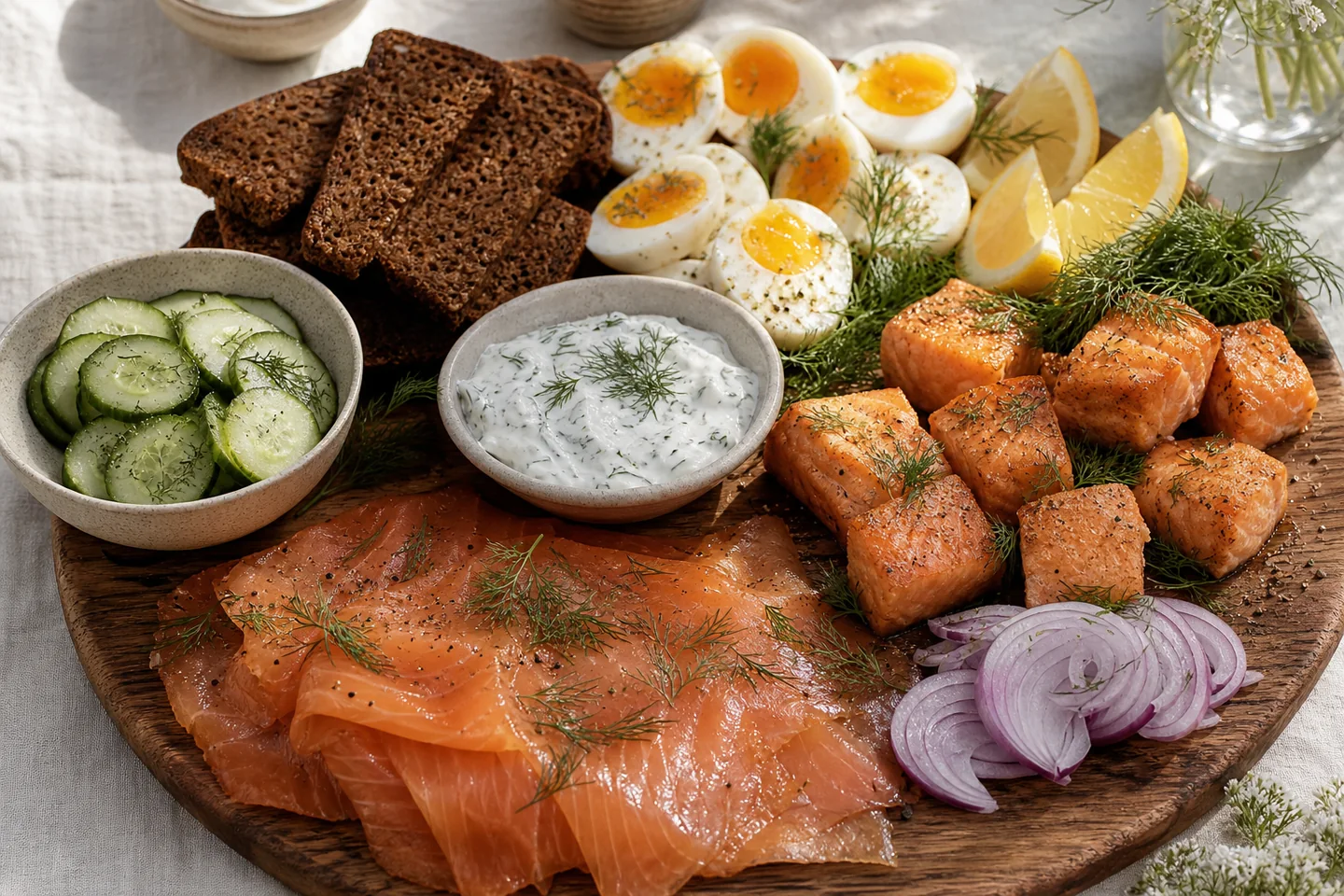
Choose the fish style first
Cold smoked or cured fish brings salt, smoke and tenderness; surround it with crisp, fresh elements. A hot cooked fish plate needs sides that can be ready first. Canned fish is pantry-led, and its liquid and seasoning affect the assembly. Fish cakes make portioning easy but need a complete method with a binder and cooking steps.
Cold fish: use crisp contrast
Pair a labelled cold product with sturdy bread, cucumber or radish, herbs and one modest creamy element. Keep wet garnishes separate until service. Follow package refrigeration and use-by directions: neither the words “smoked” nor “cured” determine handling by themselves.
Board format
Set out small replenish-able portions with dedicated utensils. The practical benefit is a controlled board, not a claim about a universal safe holding time.
Hot fish: plan the final minutes
Cooked fish and eggs, potatoes or toast work when the sides are ready before the pan. Timing is the critical interaction: hot fish loses quality when it waits, while toast and greens tolerate a shorter pause. Follow a complete trusted method and do not infer doneness from colour alone.
Canned fish: control moisture
Drain a product when its packing liquid would loosen the topping; keep a small amount only when the intended mixture calls for it. Add one soft element, one crisp element and one acid note. Check the actual label for ingredients and allergens rather than assuming them from the fish species.
Practical fish-brunch formula
cold, hot, canned or cake
bread, potato, egg or spread
one crisp and one acid note
Adjust by observation: if smoke, salt or pickle dominates, remove one strong element. If bread softens, reduce wet toppings and assemble later. This is a sensory formula, never a cooking temperature, storage duration or universal ratio.
Ingredient functions and controlled ranges
| Component | Function | Controlled range | Adjustment signal |
|---|---|---|---|
| Fish | Sets temperature, salt and texture direction | One primary style per plate | Competing smoke or sauce: simplify |
| Bread or potato | Provides a stable base | Enough to support, not bury, the fish | Softness: separate moist toppings |
| Acid or pickle | Creates contrast | Small accent, not a second main flavour | Delicate fish disappears: reduce it |
| Creamy element | Rounds a dry or salty bite | Thin layer or side serving | Plate feels heavy: use less |
Substitute by function
Replace a cold ready-to-eat fish only with another labelled product whose service and storage instructions fit the plan. Replace a fish-cake role with another portioned cooked main, not automatically with a canned topping. A plant-based item may fill a menu role, but it has different ingredient, allergen and storage information. These are functional substitutions, not fish-name swaps.
Pairing guide
Rich fish often works with a crisp vegetable and restrained acidity. Delicate fish is easily overwhelmed by dense bread, assertive pickles and smoky sauce at once. Strongly smoked fish usually needs the simplest plate: one bread, one fresh element and one mild creamy partner. For a sweet side, keep it separate; American pancake ideas can provide a griddled contrast without competing on the fish plate. A syrup choice belongs on that sweet side of the table, where the maple syrup guide is useful.
Food-safety boundaries
Buy fish from an appropriate source, read the label, maintain required cold control, prevent cross-contact and follow a complete method where cooking is part of the dish. FDA guidance is the reference boundary for home food safety, and its consumer seafood guidance notes that some people may need particular care with seafood choices. This article does not decide individual suitability. When time or temperature history is uncertain, discard food rather than treating smell, colour or reheating as proof.
Menu combinations
Cold table
Use a fish board, two breads, cucumber salad, fruit and hot drinks. Keep fish and wet salad separate.
Seated hot brunch
Serve cooked fish with eggs or potatoes, greens and one small sweet dish; finish the fish closest to table time.
Fast pantry brunch
Use canned fish toast with fruit and a simple grain or yogurt side. For a more substantial non-fish companion, see filling brunch ideas.
Troubleshoot common failures
- Watery board: drain garnishes and replenish smaller portions.
- Soggy toast: dry greens, use a thin spread and add fish late.
- Broken fish cake: return to the recipe’s binder, moisture and chilling steps.
- Too many strong flavours: remove smoke, pickle or rich sauce before adding another garnish.
- Hot fish waits: simplify sides and cook fish last.
Related reading
Final decision checklist
Choose one fish service style; meet its label and cooking needs; add a structural base; use crispness and acid with restraint; and assemble so hot food does not wait. That is the workable route from fish brunch ideas to a coherent menu.
Sources and editorial references
- U.S. Food and Drug Administration, Food Safety at Home — household handling and cross-contact boundaries.
- U.S. Food and Drug Administration, Advice About Eating Fish — consumer seafood guidance.
- USDA FoodData Central — ingredient and product-label context; no nutrition outcome claim is made.
- USDA, Keep Food Safe! Food Safety Basics — household food-safety context.