Filling brunch ideas
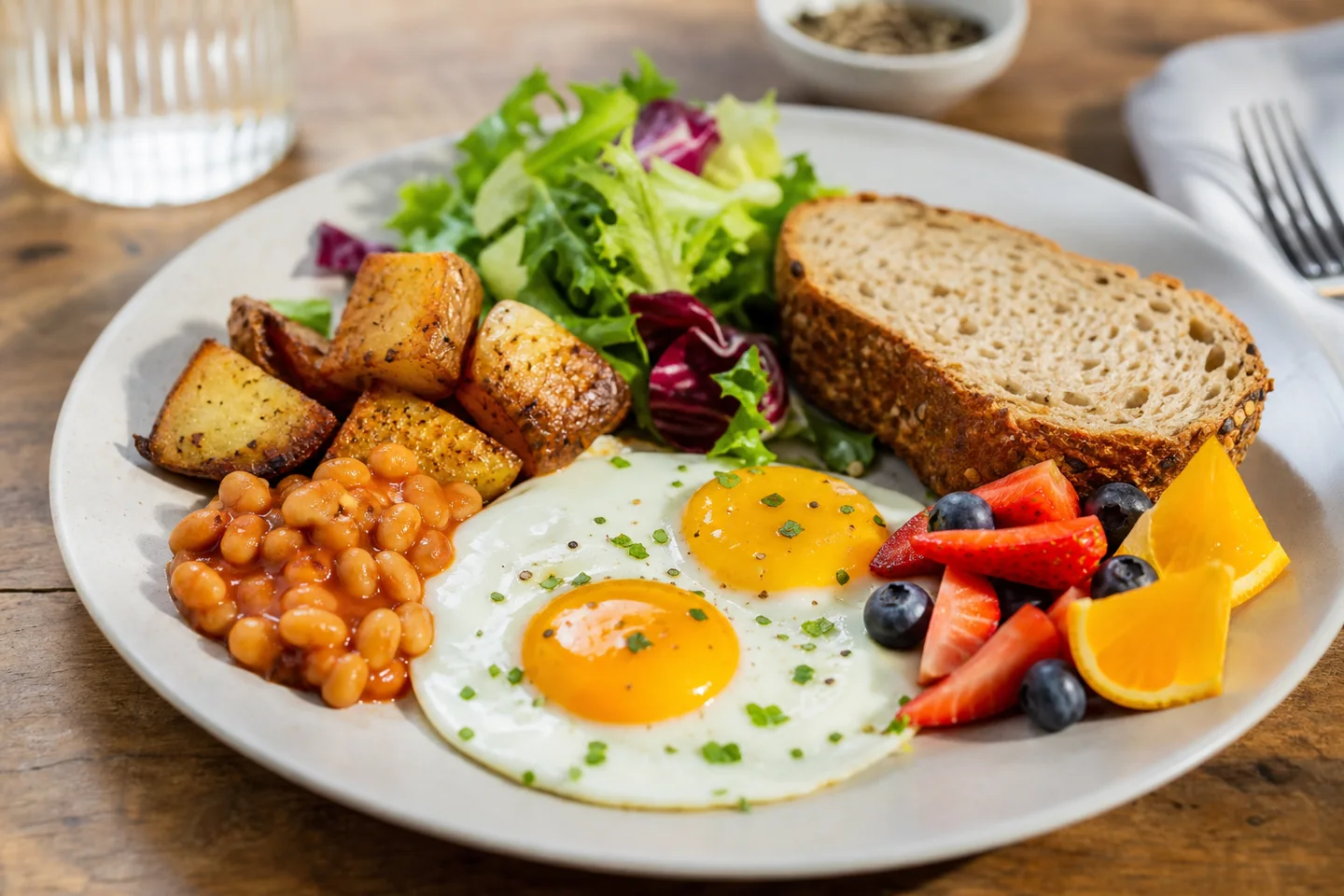
A filling brunch is best planned as a plate decision: choose a substantial anchor, add a starchy or grain component when it suits the menu, then add fruit or vegetables for contrast. For a buffet, the more useful choice is not the richest-looking dish; it is the format that gives every guest a clear main portion and a workable alternative. Pancake World treats “filling” as a practical menu question, not a promise about appetite or nutrition.
Use the brunch collection as the parent hub. This page compares the choices that change a brunch from a collection of snacks into a meal-shaped spread.
Direct verdict: build around the anchor, not the extras
Choose a plated egg, bean, fish, dairy, tofu, or other substantial main when brunch must carry guests through a long gathering. Choose a bake or composed platter when serving needs to be shared. Choose portable sandwiches or grain cups when people will stand or arrive in waves. Pastries, fruit, sauces, and sweet pancakes can make the spread more generous, but they work best as companions to a clearly portioned anchor rather than the only plan.
Route owner statement
This route owns the decision between brunch formats that feel substantial in real service. It compares plate structure, service style, dietary access, and portion planning. It does not claim that one ingredient controls fullness, that one portion fits every guest, or that any menu creates a health outcome.
What makes a brunch feel substantial in practice?
Start with a question that can be observed: will most guests need a meal, or only something alongside coffee? A meal-shaped brunch has a named main that can be served to each guest. Its support items—bread, potatoes, oats, fruit, greens, sauces, or sweets—make the main easier to enjoy and scale. A snack-shaped spread relies mostly on small, rich, or sweet items and can leave service uneven when the event is long.
The distinction matters because guests do not take equal amounts from a buffet. A separate main lets the host reserve or replenish portions. It also makes a vegetarian, fish-based, or dairy-free alternative visible instead of assuming that a side dish covers every need.
Plate-building rule: compare the same four criteria
Before choosing recipes, assess each menu option on the same criteria.
| Criterion | Question to ask | Practical consequence |
|---|---|---|
| Anchor | What is the identifiable main portion? | A named main makes headcount planning possible. |
| Structure | Is there a bread, grain, potato, oat, or pancake element where it helps? | It can make a plate easier to serve, without duplicating richness. |
| Contrast | What provides fresh, crisp, hot, or cold contrast? | Fruit, greens, or vegetables prevent every item from doing the same job. |
| Service | Are guests seated, circulating, or arriving at different times? | The best format changes with the serving pattern. |
This is a menu comparison, not a nutrition formula. Actual ingredients, labels, dietary needs, and recipe yields still belong to the specific dish being served.
Comparison matrix: three ways to make brunch more substantial
| Format | Best for | Strength | Watch-out | Starting range for planning |
|---|---|---|---|---|
| Composed plate | Seated brunch for a small group | Each guest receives the main and sides together | Last-minute plating can slow service | Plan one main portion per expected guest, then add sides from the recipe yield. |
| Sliceable bake or tray main | Buffet or family table | Easy to portion in batches and hold back a reserve | One pan may not suit every dietary need | Start with the recipe’s stated servings; prepare a separate alternative when needed. |
| Handheld main with a side | Standing event or staggered arrival | Guests can eat without a full place setting | Small items can disappear before everyone arrives | Set aside the first round of mains before opening extras. |
The ranges are starting points for service, not universal quantities. Check the actual recipe yield and use the event’s attendance estimate rather than turning a generic chart into a guarantee.
Menu examples by decision, not by ranking
For a seated table, a vegetable-and-egg dish alongside bread or pancakes, fruit, and a crisp salad gives the host a hot anchor and contrasting sides. For a buffet, a bean bake or frittata-style tray main can be sliced in controlled batches, with rolls, roasted vegetables, and yogurt or fruit served separately. For a standing brunch, a fish, egg, or vegetable sandwich with potatoes or a grain cup is more manageable than a table made only of loose toppings.
Readers looking for a guest-scale plan can compare the make-ahead split in easy brunch ideas for guests. For a faster service constraint, fast brunch ideas is a pending route in the same frozen R83 corpus; it is useful for choosing a shorter preparation path rather than adding another rich main.
Scenario analysis: when the recommendation changes
A late-morning meal that replaces breakfast and lunch
Prefer a composed plate or a portioned bake. The anchor should be the first decision, because it determines how many servings can be reserved. Add bread, potatoes, oats, or pancakes only where the menu needs another serviceable component; do not make every side equally heavy.
A casual open-house brunch
Prefer a sliceable tray main plus one separately marked alternative. Put sauces and concentrated toppings alongside, not into every portion. That keeps the initial serving clear and lets guests adjust without making the whole pan unusable for a dietary restriction.
A standing or travel-day gathering
Prefer a handheld main and a side that does not require a knife. Build small replenishment rounds rather than setting every portion out at once. FDA home food-safety guidance is relevant when temperature-sensitive foods will sit out: follow the specific dish’s handling instructions rather than using appearance as evidence that a platter is still suitable.
A mixed-diet group
Do not treat fruit or a token side as the only alternative. Offer a separately prepared main with its own ingredients and utensils where appropriate. FDA allergen information supports checking the current product label and avoiding assumptions about a substitution or shared topping.
Decision tree: choose the format before the recipes
- If people need a meal rather than a coffee accompaniment, select one identifiable main first.
- If service is seated, choose a composed plate; if it is self-service, choose a tray main that can be portioned in batches.
- If guests will stand or arrive at different times, use a handheld main and reserve an initial round.
- If the shared anchor excludes a guest, add a separate equivalent main before adding more decorative sides.
- If the main is already rich, select a simpler grain component and a fresh contrast instead of stacking several rich mains.
Portion planning without false precision
Use the yield printed in the chosen recipe as the working headcount number. Treat the main as the countable item: one planned main portion for each expected guest is a practical starting point, followed by supporting sides according to event length and attendance uncertainty. Do not assume every guest will take a meal-sized portion of each side.
For a small group, it can be easier to plate the main before setting out fruit, bread, or toppings. For a buffet, hold back part of the main for a second round and replenish in a controlled way. That protects late arrivals better than enlarging every side without a serving plan.
Exceptions that change the choice
Young children may need manageable textures and individually served portions. Guests following a clinician-led diet need their own plan rather than a general “filling brunch” label. An outdoor gathering raises holding and handling questions for eggs, dairy, fish, and other perishable items. In each case, a visible alternative and the specific recipe or label are more reliable than a generic claim about what will satisfy everyone.
The pending same-corpus route fish brunch ideas can help a host evaluate fish as one possible anchor, while low fat brunch is related reading for a different menu constraint. Neither is a substitute for current ingredient labels, recipe yields, or safe handling directions.
Final verdict
The most useful filling brunch idea is a decision, not a superlative recipe: choose a portionable main for the service style, add one supporting starch or grain when it earns its place, then use fruit or vegetables for contrast. When guests or constraints differ, change the format or add a separate main rather than expecting one rich table of extras to work for everyone.
Sources and editorial references
- U.S. Department of Agriculture, MyPlate —
https://www.myplate.gov/eat-healthy/what-is-myplate - U.S. Food and Drug Administration, Food Safety at Home —
https://www.fda.gov/consumers/consumer-updates/food-safety-home - U.S. Food and Drug Administration, Food Allergies —
https://www.fda.gov/food/nutrition-food-labeling-and-critical-foods/food-allergies - USDA FoodData Central —
https://fdc.nal.usda.gov/