Home Made Brunch Ideas
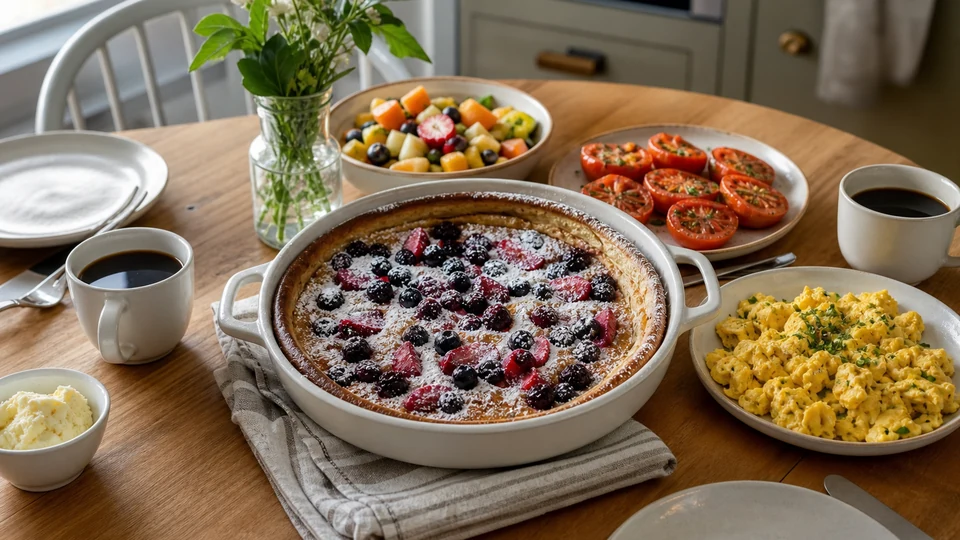
A home-made brunch works best when you choose one warm anchor, one prepared fresh component, and one supporting carb or vegetable—not a mini restaurant menu. This 15-idea reference helps you pick a format that fits your equipment, arrival pattern, and the amount of last-minute cooking you are willing to do. Pancake World treats “home made” as host-led planning: bread, yogurt, or a condiment may be bought, while the meal is still assembled and served thoughtfully at home.
Use the Brunch collection as the parent guide, then choose a single anchor below. The useful decision is not which plate looks most elaborate; it is which one lets the host sit down when the food is ready.
The selection rule
Start with four filters: time, heat, holding, and choice. Ask what can happen the day before, whether the oven or a burner is free, whether late arrivals matter, and whether diners need separate sweet, savoury, or egg-free paths. These are editorial selection criteria, not a claim that one format suits every household.
Fifteen genuinely different brunch ideas
1. Sheet-pan pancakes with berries
Bake one pancake in the oven, then bring berries and yogurt to the table. It suits guests arriving together; its limit is that it is not a made-to-order griddle experience.
2. Spinach and herb egg bake
Assemble vegetables and eggs ahead, then bake while drinks are made. It provides one shared savoury centre but is a poor default when egg preferences need distinct equipment.
3. Baked oats with citrus
Use baked oats as a warm make-ahead anchor with citrus or stewed fruit. It is low-drama in the morning, though it needs a savoury counterpart for a mixed table.
4. Toast board with warm mushrooms
Offer bread, mushrooms, greens, and a spread for flexible toast. Individual choice is clear; toaster or oven capacity is the constraint.
5. Potato and pepper skillet
Cook potatoes and peppers in one pan, then add a cold salad or fruit. It is lively for a small group but should be served promptly.
6. Yogurt, granola, and compote bar
Prepare fruit compote and set out yogurt, granola, and seeds. This is a low-heat format; pair it with one warm baked item if a fuller meal is wanted.
7. Savoury bread pudding
Soak bread with vegetables and savoury custard overnight, then bake. It shifts work earlier but needs a recipe with its own yield and safety directions.
8. Breakfast quesadilla wedges
Crisp a few large filled quesadillas and cut them into wedges with salsa or tomato salad. The hand-held format works in small batches but keeps a cook at the pan.
9. Lemon pancakes with fruit
A small pancake batch provides a fresh griddle moment. It is for a small table; check the pancake techniques guide before assuming a larger batch will hold well.
10. Roasted tomatoes, eggs, and bread
Roast tomatoes while the table is set, then cook eggs in one short window. Use recipe-specific food-safety directions rather than treating this plan as temperature advice.
11. Mini frittata cups
Bake individual vegetable-and-egg cups with fruit. Their distinct value is portioned service; they need enough pan space and do not benefit from long holding.
12. French-toast casserole
Assemble a bread-based casserole the night before and finish with fruit. It makes one sweet warm anchor for a group ready to share the same flavour direction.
13. Cornmeal breakfast bowls
Serve a savoury cornmeal base with roasted vegetables and a spoonable topping. It changes the eating format to a bowl, but requires stirring close to service.
14. Bagel, smoked fish, and cucumber spread
Lay out bagels, smoked fish, cucumber, herbs, and a creamy spread. It is a cold-assembly brunch where refrigerator room and separate utensils matter.
15. Waffles with warm fruit sauce
Make waffles as the cook-to-order anchor and prepare the fruit sauce ahead. A waffle iron makes the gathering feel interactive, but its throughput limits the group size.
Browse by service style
Mostly make-ahead: baked oats, bread pudding, French-toast casserole, and egg bake. One-pan finish: potato skillet, quesadilla wedges, roasted tomatoes with eggs. Self-serve assembly: toast board, yogurt bar, bagel spread. Cook-to-order: pancakes and waffles. These categories compare labour and service, not recipes or dietary labels.
Effort and audience matrix
| Idea | Morning heat | Best audience pattern | Main limitation |
|---|---|---|---|
| Sheet-pan pancakes | Oven | Arrive together | Not griddle-style |
| Egg bake | Oven | Shared savoury table | Egg preferences |
| Toast board | Low plus toaster | Mixed tastes | Bread capacity |
| Potato skillet | One burner | Small group | Serve promptly |
| Yogurt bar | None | Flexible cold brunch | Needs warm partner |
| Quesadilla wedges | One burner | Casual sharing | Final-pan attention |
| Waffles | Appliance | Small lingering table | Slow throughput |
How to make the choices fit together
Pair the anchor with contrast, not a duplicate. A warm baked dish needs something cold and crisp; a cold bagel spread benefits from one hot drink or vegetable, not another bread course. If potatoes are the warm piece, do not add a second starch automatically. The hot brunch ideas guide is useful when heat is the constraint, while hosting brunch menu ideas focuses on the guest plan.
Set two optional finishes at most. A crowded topping line makes guests decide more, not less. Keep raw-preparation tools away from ready-to-eat food, and follow FDA guidance when washing and holding produce.
Practical limits before you buy ingredients
This catalogue cannot calculate portions, verify an appliance, or establish an allergy-safe environment. Check recipe yields and labels rather than multiplying an imagined universal serving size. If one diner needs an egg-free option, choose an egg-free shared anchor or a separately prepared dish; splitting one casserole is not a reliable separation plan. For staggered arrivals, favour a portionable bake or a self-serve board over a skillet that peaks once.
Exclusion test: when to reject an idea
Reject an idea if it needs two final cooking stations you do not have; duplicates the role of another selected dish; requires a food-safety or dietary promise the menu cannot support; or leaves the host cooking while everyone else eats. Do not rescue a weak choice by adding another main dish. Replace it with a format from a different service category.
A sample bounded menu
For four diners, one sensible combination is an egg bake, prepared berries, and good bread. The bake is the warm anchor, berries supply freshness, and bread is the support. The night-before task is washing berries and assembling the dish; the final window is baking, making drinks, and setting bread on the table. It is a planning example, not tested portion or temperature advice.
Curator checklist
Before you commit, name one warm anchor, one contrasting support, and the one piece of equipment that controls the finish. Confirm who will be present, what can be made ahead, and whether the menu has a clear separate path for any known need. Then remove any dish that repeats the same role. A home-made brunch should be generous enough to share and simple enough that the host can join it.
Sources and editorial references
- U.S. Department of Agriculture Food Safety and Inspection Service —
https://www.fsis.usda.gov/food-safety/safe-food-handling-and-preparation/food-safety-basics/safe-temperature-chart - U.S. Food and Drug Administration —
https://www.fda.gov/consumers/consumer-updates/selecting-and-serving-produce-safely - USDA MyPlate —
https://www.myplate.gov/eat-healthy/what-is-myplate - Oregon State University Extension —
https://extension.oregonstate.edu/food/preservation/food-safety-storage