Brunch guide
Brunch-style food
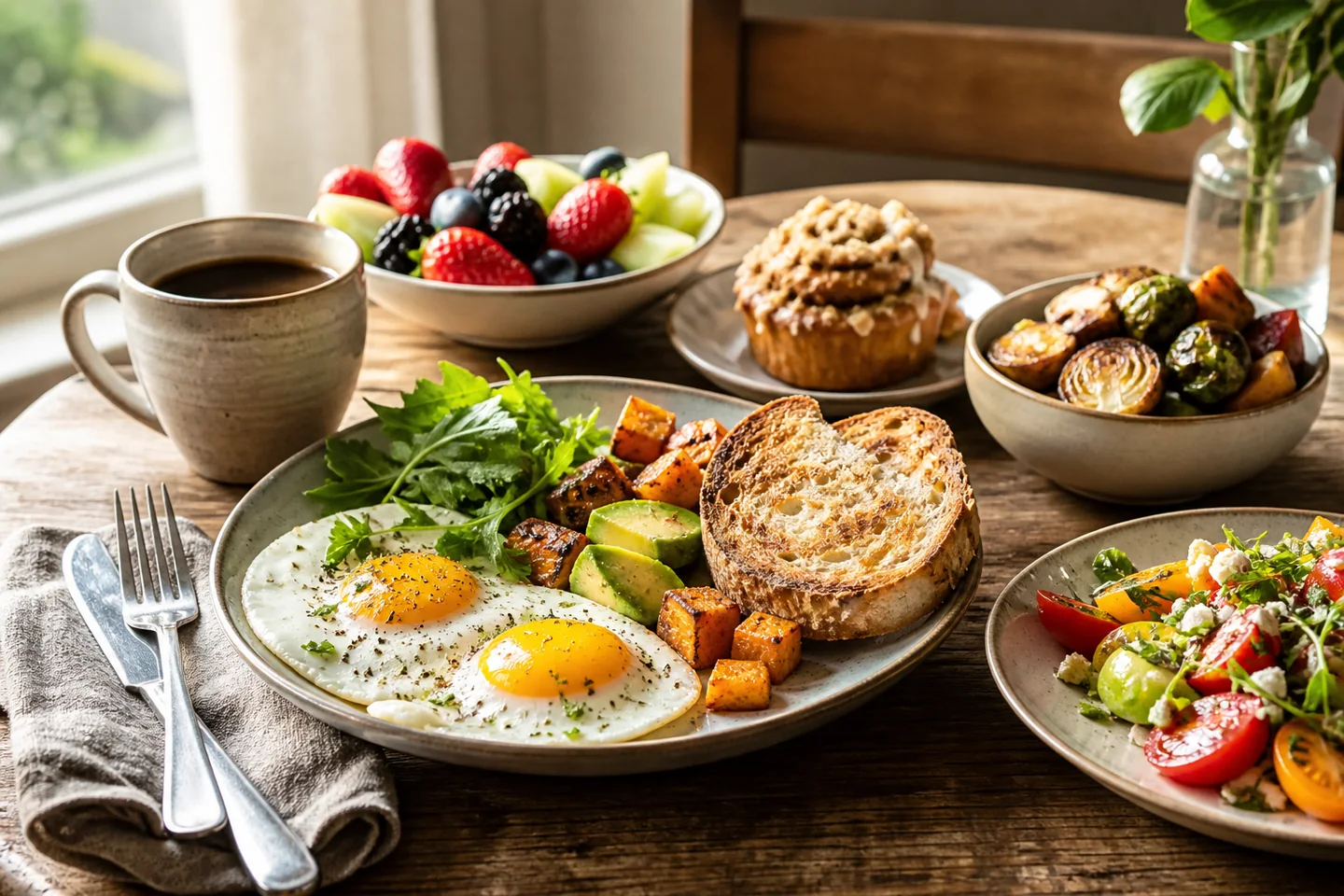
Brunch-style food is a flexible late-morning meal that combines breakfast and lunch cues around one substantial anchor, a contrasting fresh element, and drinks. It is not a fixed list of dishes: eggs, pancakes, a tart, or a grain bowl can all fit when their roles and service needs work together. Pancake World treats brunch as a menu decision; the brunch hub is the parent collection.
Direct answer: define the meal before choosing dishes
The direct answer is that brunch style describes a balanced occasion, not a prescribed menu. Its useful boundary is practical: guests should be able to assemble a complete, satisfying plate from a small number of complementary components. Breakfast foods can lead the table, but a lunch-weight item is appropriate when the gathering runs later or needs more staying power.
The route owner statement: brunch is a role-based menu
This route owns the question of what makes food feel brunch-like. It does not rank restaurants, certify authenticity, or prescribe nutrition. The core test is whether the menu gives one clear centre, contrast, a reliable base, and a drink plan without forcing every dish to do the same job.
Core food roles, not a catalogue
Start with an anchor: a baked egg dish, pancakes, a savoury tart, or a composed bowl. Add a fresh counterweight such as dressed leaves, tomatoes, or fruit. Then decide whether bread, potatoes, or another grain is needed. That structure prevents a table from becoming several soft, rich dishes competing for attention. Breakfast fried potatoes can be the crisp, substantial role when they suit the rest of the spread.
Timing changes the format, not the definition
Brunch is often served after a conventional breakfast window, yet clock time alone cannot make unrelated food coherent. A 10:30 table can lean toward coffee, fruit, eggs, and pancakes; a 13:00 table may need a more filling savoury anchor. The same idea can be plated, put on a buffet, or passed family-style. Service format determines how long food waits and how it is replenished; brunch style determines the mix and mood.
Sweet and savoury should have different jobs
When the anchor is sweet, such as pancakes with fruit, use a savoury or sharply fresh side rather than adding multiple pastries. When the anchor is a rich egg bake or tart, a fruit-led sweet can provide relief without turning the meal into dessert. Sweet brunch foods belong in this decision after the main anchor is chosen, not before it.
Worked example: a relaxed four-person table
For four people arriving at roughly the same time, make a vegetable frittata the anchor. Roast potatoes for warmth and texture, set out dressed greens or tomatoes, add bread, and finish with berries and coffee or tea. This is a worked example of role balance: one oven-made centre, one crisp or fresh element, one base, and a simple drink choice. It deliberately avoids a made-to-order station.
Worked example: pancakes without a dessert-only table
If pancakes are the anchor, serve a smaller stack with yogurt and fruit, then add a savoury companion such as eggs or a vegetable side. Use a clear flavour thread—lemon in a fruit topping and a dressing, for example—without repeating it in every bowl. The result reads as brunch because the pancake course is part of a complete plate rather than the whole menu. How to make pancakes is a useful technique route once that anchor has been selected.
Use service constraints as a selection filter
For a staggered arrival, select foods that can be brought out in small batches. For one seated moment, reserve a single item for immediate service and keep the rest stable. Label components when a guest has shared an ingredient need, and plan an entire combination rather than assuming garnish or fruit alone is a complete substitute. Food-safety controls, including time and temperature management, remain a separate operational obligation from menu style.
Diagnose an unfocused brunch table
A table feels random when several items claim the same role. Three sweet bakes leave no savoury anchor; several creamy dishes need a crisp or acidic counterpoint; several hot dishes that need identical timing create a queue. Give each dish a written role, remove the duplicate, and replace it only if a real gap remains. Brunch food options can help generate alternatives after the missing role is known.
What brunch style does not promise
There is no universal brunch plate, no guaranteed guest preference, and no nutrition outcome contained in the label. A very early gathering may simply be breakfast, while a late meal may be closer to lunch with breakfast cues. Children, outdoor service, dietary requirements, and available equipment can all change the final choices. The definition remains useful because it identifies the decision to make, not because it eliminates context.
Final decision: build the table in this order
This final summary is actionable: name the substantial anchor; add one fresh or crisp contrast; decide whether a starch or bread improves the plate; match the service format to the item with the shortest holding window; and remove any dish that duplicates another role.
Sources and editorial references
- U.S. Food and Drug Administration, Food Code 2022 — https://www.fda.gov/food/fda-food-code/food-code-2022
- U.S. Food and Drug Administration, Safe Food Handling — https://www.fda.gov/consumers/consumer-updates/food-safety-home
- U.S. Department of Agriculture, MyPlate — https://www.myplate.gov/eat-healthy/what-is-myplate
- Merriam-Webster, brunch — https://www.merriam-webster.com/dictionary/brunch