Breakfast with mimosas
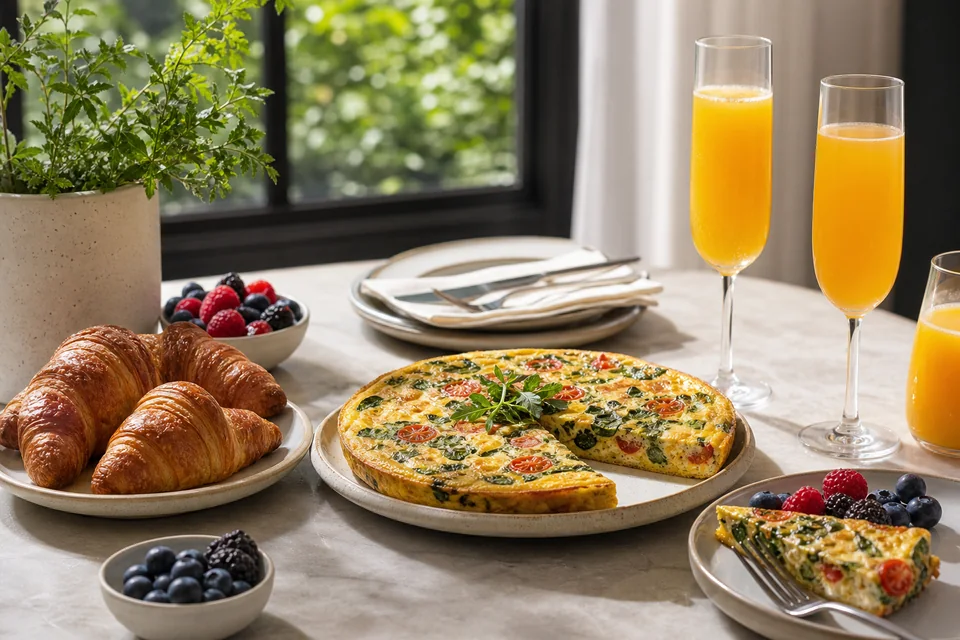
The verdict: choose the food before the glass
Breakfast with mimosas works best when the menu has one savoury anchor, one fresh or lightly acidic contrast, and a drink service that does not compete with food timing. Start with the eating experience, then decide whether a classic sparkling-and-citrus style or a zero-proof version fits the guests and the occasion. Pancake World and the Pancake World brunch guide can frame the meal, but a drink is not a substitute for a balanced plate. For a mixed group, offer the same visual ritual with a clearly labelled zero-proof option and never make alcohol the default requirement for participating.
One comparison table
| Menu condition | First trial | What to observe | Correction |
|---|---|---|---|
| Rich savoury anchor | Drier sparkling product with less citrus | Whether the drink tastes sweeter after the food | Reduce juice before changing the food |
| Fruit-led breakfast | Equal measured parts as the IBA classic reference | Whether fruit and drink repeat the same sweetness | Remove syrup or choose a tarter juice |
| Mixed drink preferences | Alcoholic and zero-proof bottles on separate labelled stations | Whether both paths look deliberate and remain identifiable | Use matching glass size, not matching labels |
| Long service window | Mix each glass to order | Loss of bubbles and warming | Keep components chilled and separate |
These are editorial tasting decisions, not physiological or universal sensory laws. Read the actual beverage labels and judge the food-and-drink combination at the table.
Supported ratio
The International Bartenders Association lists the Mimosa as 75 ml orange juice and 75 ml Champagne: a 1:1 classic reference. Use that as the documented baseline, not proof that every juice or sparkling product tastes the same. For a drier editorial trial, pour 60 ml sparkling product with 30 ml citrus; for a fruit-forward trial, return to equal measured parts without adding syrup. A zero-proof trial uses the same measured method with a labelled non-alcoholic sparkling product. Record the exact products and stop calling a ratio “better” unless the named menu and tasters prefer it.
Food-pairing matrix
| Food path | Drink trial | Observe | Correction |
|---|---|---|---|
| Eggs, toast or potatoes | Documented equal-parts classic, then one labelled drier trial | Whether either food or drink becomes hard to identify | Reduce juice before changing the plate |
| Yogurt, grain and fruit | Classic or zero-proof equivalent | Whether syrup, fruit and drink repeat sweetness | Keep syrup separate |
| Handheld sandwiches | Separate alcoholic and zero-proof stations | Whether glasses and tools remain identifiable | Label and separate service paths |
These are bounded tasting trials, not universal pairing laws.
Three complete menu examples
| Scenario | Food path | Drink trial | Condition to check |
|---|---|---|---|
| Savoury seated breakfast | Eggs, toast and potatoes | Documented equal-parts classic or a labelled drier trial | Taste the named products with the complete plate before changing the ratio |
| Fruit-led table | Plain yogurt, neutral grain and fresh fruit | Equal-parts classic or zero-proof equivalent | Keep syrup separate and judge whether the total menu repeats sweetness |
| Standing mixed-preference brunch | Sturdy sandwiches and fruit cups | Separate alcoholic and zero-proof stations | Use product labels, separate tools and an identifiable service sequence |
These are bounded host trials, not evidence that a particular food chemically pairs with every sparkling product.
Scenario decision tree
- If alcohol is unsuitable or unwanted, use the labelled zero-proof path and stop there.
- If a familiar Mimosa is the goal, begin with the IBA equal-parts reference.
- If the menu already has several sweet components, test one drier measured variation without claiming it is universally better.
- If the food and drink obscure each other, change one variable—juice amount, product style or one menu component—and taste again.
- If labels, local rules or guest needs conflict with the plan, follow those controls rather than the editorial trial.
Alcoholic and zero-proof boundaries
Use the product label and current local requirements for alcohol service. Do not serve alcohol to anyone who should not receive it, and never treat a zero-proof drink as automatically suitable for every dietary or medical situation. Keep bottles and glasses identified, offer water, and avoid pressuring guests to explain a private choice. For a public or mixed event, make the non-alcoholic path complete: it should have its own garnish or presentation only when that helps identification, not as an afterthought.
Service sequence
Chill the intended ingredients and glassware according to the complete beverage method, but do not let chilling replace food planning. Prepare the anchor, set the fresh elements, place labelled alternatives, and pour only when the table is ready. In a buffet, keep drink work away from the hottest food finishing job. In a small kitchen, make the zero-proof option first if it shares equipment and protect it from accidental mixing. A good sequence reduces waiting and makes the choice legible; it does not require a restaurant-style performance.
Host checklist
- Confirm the actual juice and sparkling-product labels.
- Keep alcoholic and zero-proof bottles, tools and glasses identifiable.
- Prepare exactly three menu scenarios only when they match the guests and service format.
- Use the equal-parts classic as the sole sourced ratio; label all other ratios as trials.
- Remove any pairing statement that cannot be observed at the table or mapped to a source.
- Offer water and do not pressure guests to explain their choice.
Begin with the documented equal-parts classic when a familiar Mimosa is the goal. Use any drier variation only as a measured editorial trial, keep the zero-proof path equally deliberate, and change one variable at a time. The final choice belongs to the named products, menu and guests—not to a universal pairing rule.
Conclusion
Choose the food first, use the documented classic only as a reference point, and keep alcoholic and zero-proof service equally deliberate. One comparison system and one bounded ratio system are sufficient for a clear host decision.
Related Reading
Sources and editorial references
- International Bartenders Association, Mimosa —
https://iba-world.com/iba-cocktail/mimosa/ - NIAAA, What Is a Standard Drink? —
https://rethinkingdrinking.niaaa.nih.gov/how-much-too-much/whats-standard-drink - NIAAA, Holiday Drinking and Your Health —
https://www.niaaa.nih.gov/about-niaaa/directors-page/niaaa-directors-blog/holiday-drinking-and-your-health - CDC, About Alcohol Use —
https://www.cdc.gov/alcohol/about-alcohol-use/index.html - FDA, Food Allergies —
https://www.fda.gov/food/food-labeling-nutrition/food-allergies - USDA FoodData Central —
https://fdc.nal.usda.gov/